The Problem with Solar Energy in North Africa
26 Oct 2021 Leave a comment
in development economics, energy economics, environmental economics, global warming, growth disasters Tags: solar power
Backing Net-Zero Emissions & Not Backing Nuclear Power Generation: You Can’t Be Serious
25 Oct 2021 Leave a comment


The anti-capitalist, anti-progress, anti-human climate zealot reveals himself by backing net-zero emissions while rejecting nuclear power generation.
The crony capitalist pursuing a net-zero target is, of course, easy to spot; with him, it’s a case of follow the money. Whip up the fear and imminent climate catastrophe and then point to the only ‘solution’ on offer in rent-seeker town: wind and solar power, only made possible by massive and endless subsidies, that naturally fuel his interest in ‘saving the planet’.
The crony capitalist will merrily line his pockets while depriving the Third World and the working poor in his own country of reliable and affordable electricity, and the jobs and prosperity it brings. His motive is simply greed and profit. Think Al Gore and his buddies.
The climate zealot does it because he has a burning antipathy towards all humans to do not share his doomsday-is-nigh sense of pessimism.
View original post 2,316 more words
Prescott on booms and busts
25 Oct 2021 Leave a comment
in budget deficits, business cycles, economic growth, history of economic thought, macroeconomics, monetarism, monetary economics
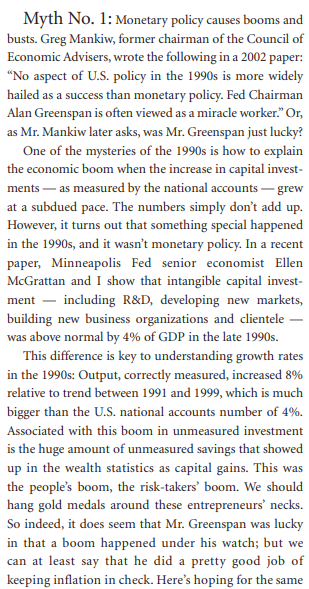
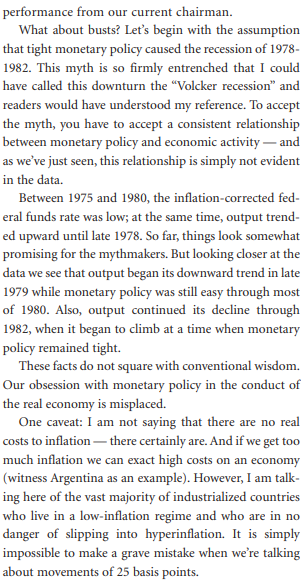
From Five Macroeconomic Myths, By Edward Prescott, The Wall Street Journal, December 11, 2006 https://www.minneapolisfed.org/~/media/files/research/prescott/wsj/wsj_12-11-06_five_macroeconomic_myths.pdf?la=en via https://www.minneapolisfed.org/research/prescott/wsj
When will #COVID19 job support cross into the zombie quagmire?
25 Oct 2021 Leave a comment
in budget deficits, business cycles, economic history, history of economic thought, income redistribution, industrial organisation, labour economics, macroeconomics, monetary economics, survivor principle, unemployment Tags: economics of pandemics, Japan, unintended consequences

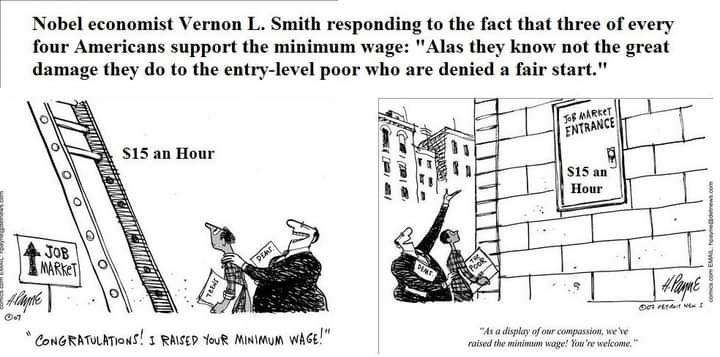
Minimum wages kill opportunity
25 Oct 2021 Leave a comment
in applied price theory, income redistribution, industrial organisation, labour economics, minimum wage, personnel economics, Public Choice, rentseeking, survivor principle, unemployment
Have You Seen The Guardian’s Climate Disaster? It Appears To Have Gone Missing!
25 Oct 2021 Leave a comment
Biden’s Befuddlement on Corporate Taxation
25 Oct 2021 Leave a comment

Let’s look today at the wonky issue of “book income” because it’s an opportunity to point out that there are three types of leftists.
- Honest leftists who understand economics and recognize tradeoffs (I think of them as “Okunites“).
- Dishonest leftists who understand economics but pretend that tradeoffs don’t exist (the “demagogues“).
- Leftists who have no idea what they’re saying or thinking (I think of them as, well, Joe Biden).
I’m being snarky about the President because of this recent tweet, which contains a couple of big, glaring mistakes.
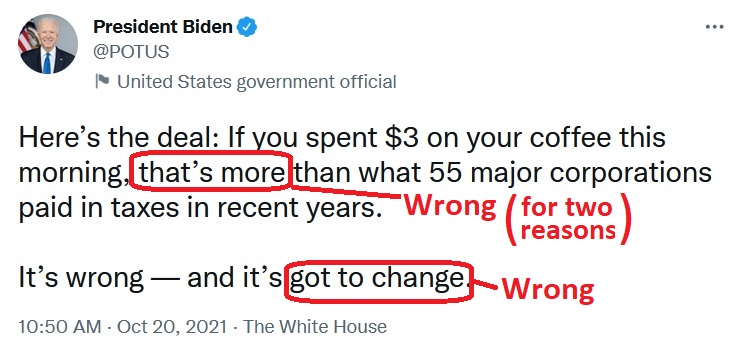
What are the mistakes (I’m not calling them lies because I don’t think Biden has the slightest idea that he is wrong, much less why he’s wrong).
- The first mistake is that corporations pay a lot of tax (payroll tax, property tax, etc) even if they are losing money and don’t owe any corporate income…
View original post 569 more words
David Friedman on national security without a state
25 Oct 2021 Leave a comment
in applied price theory, applied welfare economics, comparative institutional analysis, constitutional political economy, David Friedman, defence economics, economics of crime, law and economics, property rights
The Fog Of War
25 Oct 2021 Leave a comment
in defence economics, economics of bureaucracy, laws of war, movies, Public Choice, war and peace Tags: atomic bombings, Vietnam war, World War II
“The economic impact of climate and weather” by Richard Tol
25 Oct 2021 Leave a comment
in comparative institutional analysis, development economics, econometerics, economic history, energy economics, environmental economics, global warming, growth disasters, growth miracles Tags: economics of agriculture



Recent Comments