Jamie Whyte comments on lifestyle regulations at The Health of the State debate
03 Jan 2020 Leave a comment
in Alfred Marshall, applied price theory, comparative institutional analysis, constitutional political economy, economics of bureaucracy, economics of information, economics of regulation, health economics, law and economics, politics - New Zealand, Public Choice, public economics Tags: economics of smoking, meddlesome preferences, nanny state
Brennan and Buchanan explain modern monetary theory in The Power to Tax (1980)
03 Jan 2020 Leave a comment
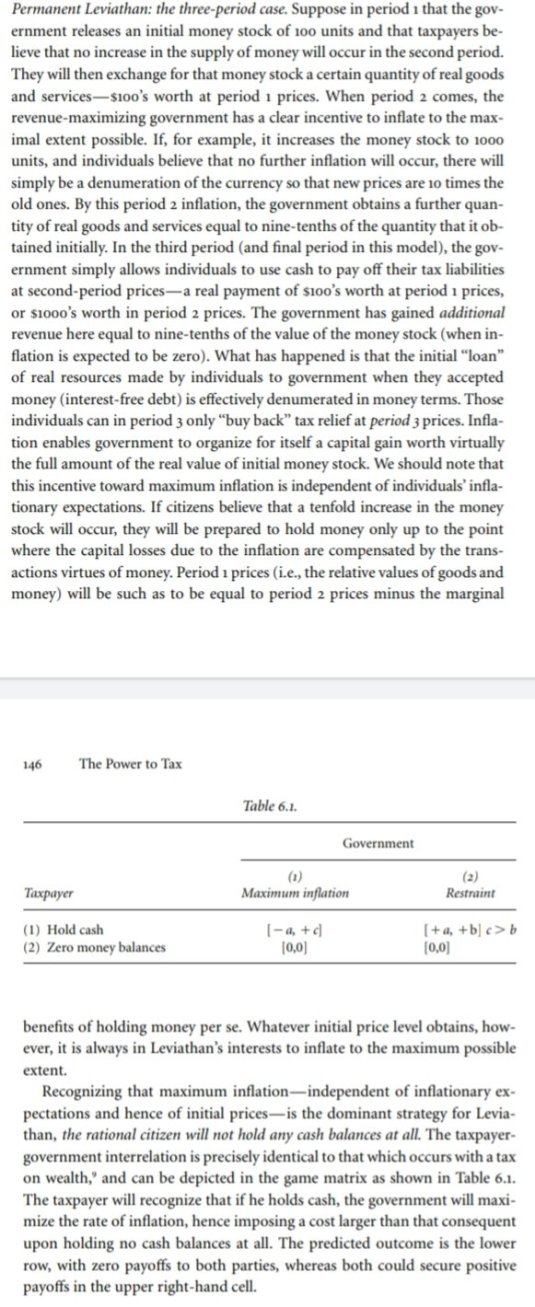
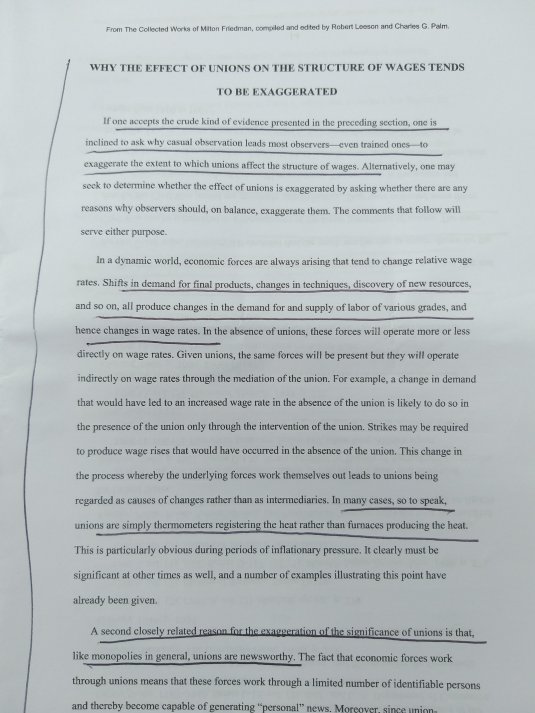
Does forward guidance work? Eugene Fama
03 Jan 2020 Leave a comment
in applied price theory, business cycles, econometerics, economic history, economics of information, financial economics, inflation targeting, macroeconomics, monetarism, monetary economics Tags: monetary policy
Blokes are bigger
03 Jan 2020 Leave a comment
in gender, sports economics Tags: political correctness, regressive left


How Vaping ‘Might Just Save Your Life!’
03 Jan 2020 Leave a comment
in economics of information, economics of regulation, health economics Tags: economics of smoking, meddlesome preferences, nanny state
Automakers face tough new standards in EU, starting now
02 Jan 2020 Leave a comment

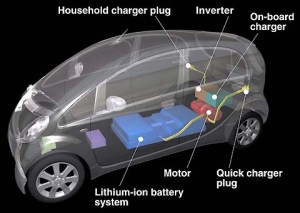 Typical electric car set-up
Welcome to the EU’s plan to strong-arm its way to victory in the electric car game, in the name of imaginary climate benefits. What happens if the manufacturers all start posting heavy losses due to poor EV sales, as a result of this coercion, is not yet clear. As the article says, tens of billions of euros are at stake.
Long-awaited light-duty vehicle emission rules will hit light-duty vehicle makers working in EU member countries on January 1, and automakers will soon have to deal with the consequences, says OilPrice.com.
Vehicle manufacturers will have to sell many more hybrid and electric vehicles or pay costly fines, a situation similar to China’s rules.
For automakers with product lineups with few EV offerings, they’ll need to sell lots of conventional cars and trucks, and use the profits to pay the fines.
Industry analysts expect plug-in hybrid, battery…
View original post 314 more words
W.E.B. Du Bois: Charting Black Lives @ the House of Illustration
02 Jan 2020 Leave a comment

W.E.B. Du Bois
William Edward Burghardt Du Bois (1868-1963) was a sociologist and historian. He helped co-found the NAACP (National Association for the Advancement of Colored People) and was author of the seminal book, The Souls of Black Folk. He was one of the most important black activists and intellectuals of the 20th century.
The commission
His status was confirmed when, in 1900, Du Bois was invited to create an exhibition for the world fair in Paris – the Exposition Universelle – about the condition of black people in contemporary America.
Du Bois and his sociology students from the University of Alabama were well aware that black people were going to be overwhelmingly portrayed at the world fair as primitives and savages, living in mud huts in Africa and photographed wearing picturesque tribal costumes, with long descriptions of their customs and rites which were all written to underpin and justify…
View original post 1,104 more words
#climateemergency @Greenpeace @Greens #globalwarming @NZGreens @jamespeshaw @mfe_news
02 Jan 2020 Leave a comment
in econometerics, environmental economics, global warming Tags: data mining

Endogenous Money
02 Jan 2020 Leave a comment

During my little vacation recently from writing about monetary policy, it seems that there has been quite a dust-up about endogenous money in econo-blogosphere. It all started with a post by Steve Keen, an Australian economist of the post-Keynesian persuasion, in which he expounded at length the greatness of Hyman Minsky, the irrelevance of equilibrium to macroeconomic problems, the endogeneity of the money supply, and the critical importance of debt in explaining macroeconomic fluctuations. In making his argument, Keen used as a foil a paper by Krugman and Eggerston “Debt, Delevereging, and the Liquidity Trap: A Fisher-Minsky-Koo Approach,” which he ridiculed for its excessive attachment to wrong-headed neoclassicism, as exemplified in the DSGE model in which Krugman and Eggerston conducted their analysis. I can’t help but note parenthetically that I was astounded by the following sentence in Keen’s post.
There are so many ways in which neoclassical economists misinterpret non-neoclassical…
View original post 1,362 more words

Blasphemy laws to return to NZ soon courtesy of @AndrewLittleMP @NZGreens @NZHumanRights
02 Jan 2020 Leave a comment
in economics of religion, politics - New Zealand Tags: Blasphemy, free speech, Freedom of religion, political correctness, regressive left

J’Accuse @Greens @VictorianGreens @GreenpeaceAP @sarahinthesen8
02 Jan 2020 Leave a comment
in economics of crime, economics of natural disasters, environmental economics, global warming, law and economics, politics - Australia, property rights Tags: climate alarmists

Andolfatto and McDonald (1996) on the cycle is the trend
02 Jan 2020 Leave a comment
in business cycles, econometerics, economic growth, economic history, economics of education, entrepreneurship, human capital, industrial organisation, macroeconomics, monetary economics, survivor principle, unemployment Tags: creative destruction, real business cycles, technology diffusion


Recent Comments