The Auckland University Freedom of Expression Statement looks very good. It is clear with few weasel words. Key extracts: The University actively fosters and supports lawful and constructive debate by its staff and students on any topic, including with the participation of external speakers invited by a staff member, or a recognised student association or student…
Auckland Uni gets it right
Auckland Uni gets it right
29 Dec 2025 Leave a comment
in economics of bureaucracy, economics of education, liberalism, Marxist economics, politics - New Zealand, Public Choice Tags: free speech, political correctness, regressive left
Celebrating Two Years of Libertarian Success in Argentina
27 Dec 2025 Leave a comment
in applied price theory, Austrian economics, budget deficits, comparative institutional analysis, constitutional political economy, development economics, economic growth, economics of bureaucracy, economics of regulation, fiscal policy, growth disasters, history of economic thought, income redistribution, industrial organisation, labour economics, liberalism, libertarianism, macroeconomics, Public Choice, rentseeking, unemployment Tags: Argentina
As explained in my four-part series (here, here, here, and here) and in this clip from a recent interview, Javier Milei’s first two years have been amazingly successful. There are two points in the interview that deserve emphasis. First, Javier Milei’s libertarian policies already have been extremely beneficial for the Argentine economy. Inflation has dramatically […]
Celebrating Two Years of Libertarian Success in Argentina
Fuel rationing chaos looms in New York State
25 Dec 2025 Leave a comment
in economics of bureaucracy, economics of climate change, economics of regulation, energy economics, environmental economics, environmentalism, global warming, politics - USA, Public Choice, transport economics Tags: electric cars
Rationing gasoline and diesel under the Climate Act is a predictable prescription for chaos. It is the mobility these motor fuels provide that guarantees rationing to meet the 2030 emissions target will not work.
Fuel rationing chaos looms in New York State
STEVE MILLOY: Trump Dismantles Climate-Industrial Complex
23 Dec 2025 Leave a comment
in economics of bureaucracy, economics of climate change, economics of education, economics of natural disasters, economics of regulation, energy economics, environmental economics, environmentalism, global warming, politics - USA, Public Choice Tags: climate alarmism
The Trump administration took a major whack at the climate-industrial complex this week. It’s a fantastic move. But another event this week spotlights the need to do more.
STEVE MILLOY: Trump Dismantles Climate-Industrial Complex
New Zealand’s Planning Revolution: bye bye RMA
13 Dec 2025 Leave a comment
in applied price theory, economics of bureaucracy, economics of regulation, law and economics, politics - New Zealand, property rights, Public Choice, urban economics Tags: housing affordability, land supply, zoning
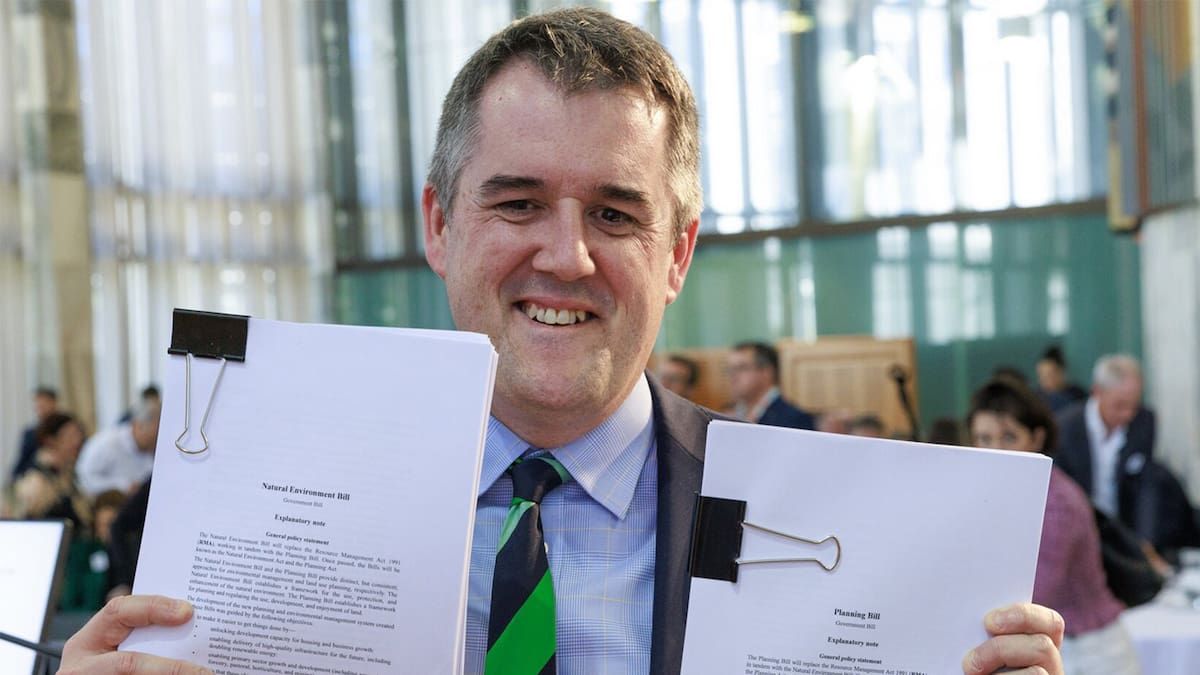
Inside the reform that will change how New Zealand is built Ani O’Brien writes – If you’ve ever tried to build a deck, subdivide a section, or watched a major infrastructure project slowly suffocate in a decade of “consenting hell,” you already know the RMA is New Zealand’s great productivity killer. For over 30 years, […]
New Zealand’s Planning Revolution: bye bye RMA
Greyhound racing law change is legal overreach
12 Dec 2025 Leave a comment
in economics of bureaucracy, economics of regulation, law and economics, politics - New Zealand, property rights, Public Choice, public economics, sports economics Tags: constitutional law, takings
Oliver Hartwich writes – Let me state this clearly at the outset: I have never placed a bet on a greyhound. I have never owned a greyhound. If I were a dog, I would likely prefer a soft sofa to a hard track. I am not writing this because I have a passion for racing, […]
Greyhound racing law change is legal overreach
Humphrey’s Estate and Jackson’s Experts: Supreme Court Justice Offers Surprising View of the Separation of Powers
10 Dec 2025 Leave a comment
in economics of bureaucracy, law and economics, politics - USA, Public Choice Tags: constitutional law

As I discussed in yesterday’s coverage of the oral arguments in Trump v. Slaughter, the argument went poorly for those…
Humphrey’s Estate and Jackson’s Experts: Supreme Court Justice Offers Surprising View of the Separation of Powers
Political pressure on the Fed
05 Dec 2025 Leave a comment
in business cycles, econometerics, economic history, economics of bureaucracy, macroeconomics, monetary economics, politics - USA, Public Choice Tags: monetary policy
From a forthcoming paper by Thomas Drechsel: This paper combines new data and a narrative approach to identify variation in political pressure on the Federal Reserve. From archival records, I build a data set of personal interactions between U.S. Presidents and Fed officials between 1933 and 2016. Since personal interactions do not necessarily reflect political…
Political pressure on the Fed
The Oddly Worded Instruments That Undid a Prince
05 Dec 2025 Leave a comment
in economics of bureaucracy, law and economics, property rights, Public Choice Tags: British constitutional law, British politics
In late October, it was announced that the King would formally strip Andrew Mountbatten-Windsor of his royal status. At the start of November, the Gazette announced that the King had issued a Warrant directing the Lord Chancellor and Secretary of State for Justice to remove Andrew from the Roll of the Peerage along with Letters […]
The Oddly Worded Instruments That Undid a Prince
The taxing problem of zombie and phoenix companies
04 Dec 2025 Leave a comment
in applied price theory, economics of bureaucracy, economics of crime, fiscal policy, law and economics, macroeconomics, politics - New Zealand, property rights, Public Choice, public economics, rentseeking Tags: Germany
Eric Crampton writes – Damien Grant isn’t normally the one making the case that the government needs to take more in tax. The liquidator and libertarian-minded columnist at the Sunday Star Times more typically wants what libertarians generally want – a government that spends less and that can let each of us keep more of […]
The taxing problem of zombie and phoenix companies
An Economist’s Case for Liberty | David Friedman
07 Nov 2025 Leave a comment
in applied price theory, comparative institutional analysis, David Friedman, economics of bureaucracy, economics of information, economics of regulation, history of economic thought, income redistribution, law and economics, libertarianism, market efficiency, Milton Friedman, property rights, Public Choice, rentseeking
Economists on the Trump Tariffs Supreme Court Case
07 Nov 2025 Leave a comment
in applied price theory, applied welfare economics, economic history, economics of bureaucracy, income redistribution, international economic law, international economics, International law, politics - USA, Public Choice Tags: free trade, tarrifs
It seems as if a few times every week, I see a headline about President Trump announcing a new tariff or repealing a tariff, sometimes involve many countries and sometime just a few. However, it is not at all clear that any president has a right to alter tariffs. This question was raised before Trump…
Economists on the Trump Tariffs Supreme Court Case
Does the state need to own houses to help families?
01 Nov 2025 Leave a comment
in applied price theory, economics of bureaucracy, industrial organisation, law and economics, managerial economics, market efficiency, organisational economics, politics - New Zealand, property rights, Public Choice, public economics, urban economics Tags: public housing, state ownership
A good report from the NZ Initiative that looks at whether ownership of state houses is the best way to help low income NZ families with housing. Some key extracts: That $29,000 per unit estimated cost is not the cost of income related rents – they are the same regardless of whether the state or […]
Does the state need to own houses to help families?
The BSA power grab: Post 2
22 Oct 2025 Leave a comment
in economics of bureaucracy, economics of regulation, industrial organisation, politics - New Zealand, Public Choice, survivor principle Tags: media bias
Media and Communications Minister, Paul Goldsmith’s handling of the BSA power grab follow 80 years of abysmal leadership by National Party governments re broadcasting, which have consistently betrayed their rhetoric about supporting competition and private enterprise. The National Party Holland/Holyoake government of 1949-1957, did nothing of consequence to roll back the Savage/Fraser Labour governments nationalisation […]
The BSA power grab: Post 2
State very expensive landlord
17 Oct 2025 Leave a comment
in applied price theory, economics of bureaucracy, industrial organisation, law and economics, politics - New Zealand, property rights, Public Choice, public economics, urban economics
A report by the New Zealand Initiative shows that the state is a very expensive landlord: Why does the government need to continue owning or managing more than 77,000 housing units, given its poor track record in this area, especially when state assistance can be provided without extensive government ownership? And why does it not […]
State very expensive landlord
 Utopia, you are standing in it!
Recent Comments