
Francis M. Bator on the high road and the low road for the public sector economists.
23 Jan 2015 Leave a comment

The economic models of global warming are crude, unsophisticated, static, and untested by data?
17 Jan 2015 Leave a comment


Brad de Long on the difference between the Left and Social Democrats
22 Dec 2014 Leave a comment
in applied price theory, comparative institutional analysis, constitutional political economy, economics of bureaucracy, Marxist economics, Public Choice Tags: Brad De Long, Leftover Left, Social Democrats


The role of bribery in the developing world
08 Dec 2014 Leave a comment
in development economics, economics of bureaucracy, growth disasters, growth miracles, rentseeking Tags: bribery and corruption
Kokoro Scanner monitors your pulse to tell if you’re telling fibs | Daily Mail Online
05 Dec 2014 Leave a comment
in economics of bureaucracy, economics of crime, politics


G. Warren Nutter on the rushed nature of political and bureaucratic decision-making
25 Nov 2014 Leave a comment

G. Warren Nutter on the continually agitated nature of political discourse | Cafe Hayek
24 Nov 2014 Leave a comment
in constitutional political economy, economics of bureaucracy, liberalism, Public Choice Tags: G. Warren Nutter

Pharmaceutical Regulation: A Matter of Life and Death | Sam Peltzman
13 Nov 2014 Leave a comment
in applied price theory, applied welfare economics, economics of bureaucracy, economics of regulation, liberalism, Sam Peltzman Tags: drug lags, Sam Peltzman
Wellington City Council builds inner city children’s sandpit next to red-stickered buildings marked for collapse in next earthquake
07 Nov 2014 Leave a comment
in economics of bureaucracy, health and safety, politics - New Zealand, Public Choice Tags: economics of natural disasters, expressive voting, health and safety, Taxpayers Union, Wellington City Council
Wild Swans and Star Trek
29 Mar 2014 1 Comment
in applied price theory, development economics, economics of bureaucracy, Marxist economics, Public Choice, technological progress, television Tags: economics of planning, star trek
About the only book I almost read in one sitting was Wild Swans. I stopped reading at 2 in the morning. This autobiography is 676 pages long. Wild Swans is the story of three generations of women and their families in 20th century China. It is the biggest grossing non-fiction paperback in publishing history.
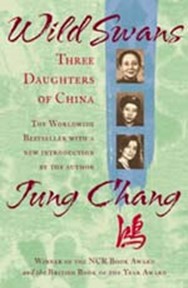
Wild Swans starts with Jung Chang’s grandmother whose feet were bound at the age of two in 1909. She was later to be a concubine to the local warlord. Her mother was a communist revolutionary in the 1940s onwards and her own story as among other things a teenage Red Guard in the Cultural Revolution. The Guardian described Wild Swan as “For many in the west, Wild Swans was their first real insight into life under the Chinese Communist party.”
I will only mention the part of it that reminded me of Steven Cheung’s analysis of how class ridden communist societies were.
A party membership card puts you above others. That card described in enormous detail what privileges you received depending on your rank in the party.
This is exactly what happened in wild swans. Jung Chang’s father was of the 14th rank while her mother was of the 17th rank. This rank decided what food you got, your accommodation, whether your parents could live with you and even the type of seat you got on the railways.
Star Trek was supposed to be a society that had abolished money and as a post-scarcity economy because everything was available through a replicator. The type of economics it is based on is cooperative economics. To quote Captain Picard:
A lot has changed in three hundred years. People are no longer obsessed with the accumulation of ‘things’. We have eliminated hunger, want, the need for possessions.
The economics of the future is somewhat different. You see, money doesn’t exist in the 24th century… The acquisition of wealth is no longer the driving force in our lives. We work to better ourselves and the rest of Humanity.
The Ferengi and their 285 rules of acquisition were a satire on capitalism. The Ferengi was originally meant to replace the Klingons as the Federation’s arch-rival but they were far too comical.
Gene Roddenberry’s love story with socialism is the most class-ridden society I have ever seen. In Star Trek, higher ranked officers had larger cabins, and most of all they always beamed back from the planet.
Anyone who beamed down with Captain Kirk dressed in those red security officer tops were expendables. Death and accommodation were class based on Star Trek.
The U.S.S. Enterprise also spent a lot of time negotiating trade treaties and visiting planets where the Earth colonists lived in agrarian poverty with famines and preventable diseases.


Recent Comments