Over 20 years ago, some middling economists (cite) estimated that the Small Business Set-Aside program reduced Forest Service Timber prices by 15%. By limiting the potential pool of available bidders to only smaller lumber mills, you get less competition and worse prices. Now San Francisco is re-learning that lesson. In 2016, it refused to do…
Using procurement for political ends gives you worse prices.
Using procurement for political ends gives you worse prices.
09 Mar 2024 Leave a comment
in applied price theory, economics of bureaucracy, entrepreneurship, income redistribution, industrial organisation, law and economics, politics - USA, Public Choice, public economics, rentseeking, theory of the firm, transport economics, urban economics Tags: cartels, competition and monopoly, competition law
The Russian February Revolution 1917 I THE GREAT WAR Week 137
09 Mar 2024 Leave a comment
in defence economics, economic history, economics of bureaucracy, income redistribution, liberalism, Marxist economics, Public Choice, rentseeking, war and peace Tags: Russian revolution, World War I
Even Lowerer Hutt
07 Mar 2024 Leave a comment
in applied price theory, comparative institutional analysis, economics of bureaucracy, economics of regulation, income redistribution, law and economics, politics - New Zealand, property rights, Public Choice, regulation, urban economics Tags: housing affordability, land supply, zoning
One annoying thing about writing a Saturday column for the Stuff papers is never knowing whether a piece will show up in print.I’d thought this one was a banger. I’ll be talking about related issues tomorrow night as part of a panel for A City for People. 🟨🟪 Our speaker line up has dropped! 🟪🟨Join us on…
Even Lowerer Hutt
DON BRASH: PERHAPS THE MOST IMPORTANT SPEECH FROM THE NEW GOVERNMENT SO FAR
03 Mar 2024 Leave a comment
in applied price theory, economics of bureaucracy, income redistribution, law and economics, liberalism, Marxist economics, politics - New Zealand, property rights, Public Choice, regulation, rentseeking, transport economics, urban economics Tags: land supply, zoning
Last week, Housing Minister Chris Bishop gave perhaps the most important speech by the new Government since the election. In a speech to the Wellington Chamber of Commerce, he said he wanted the ratio of house prices to median household income to more than halve to between 3 and 5 over the next 10…
DON BRASH: PERHAPS THE MOST IMPORTANT SPEECH FROM THE NEW GOVERNMENT SO FAR
The Uncompetitive Urban Land Markets Theory of Everything
03 Mar 2024 Leave a comment
in applied price theory, comparative institutional analysis, economics of bureaucracy, environmental economics, income redistribution, industrial organisation, law and economics, politics - New Zealand, property rights, Public Choice, regulation, rentseeking, urban economics Tags: housing affordability, land supply, zoning
The Housing Theory of Everything has one of those wonderful self-explanatory titles. A good title matters. The recent and thorough essay explains how the anglosphere’s unnecessarily expensive housing affects, well, everything. Or at least almost everything.Zoning makes it too hard to build houses where people want to build. Urban containment policies block new subdivisions, so…
The Uncompetitive Urban Land Markets Theory of Everything
On price control
25 Feb 2024 Leave a comment
in applied price theory, comparative institutional analysis, economic history, economics of bureaucracy, energy economics, environmental economics, global warming, income redistribution, industrial organisation, Public Choice, rentseeking Tags: price controls, The fatal conceit, unintended consequences, utility regulation

Superannuation, KiwiSaver, and New Zealand’s economic development
22 Feb 2024 Leave a comment
in economic growth, income redistribution, labour economics, labour supply, macroeconomics, politics - New Zealand, Public Choice, rentseeking Tags: ageing society
The Retirement Commissioner has released a paper on aspects of New Zealand Superannuation (NZS). Its focus includes affordability, fairness, age of eligibility, and the treatment of those over 65 who continue in the workforce whilst also receiving NZS. What the Commissioner does not discuss is the relationship between superannuation systems, domestic savings rates and capital […]
Superannuation, KiwiSaver, and New Zealand’s economic development
Florida’s One-Man Laffer Curve
16 Feb 2024 Leave a comment
in applied price theory, entrepreneurship, fiscal policy, income redistribution, labour economics, labour supply, macroeconomics, Public Choice, public economics Tags: taxation and entrepreneurship, taxation and investment, taxation and labour supply
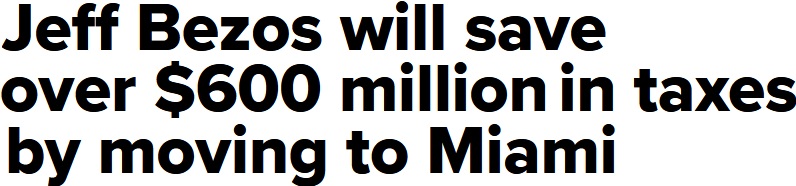
Inflation is having an effect on everything, even policy analysis. Back in 2013, I wrote that Phil Mickelson was “California’s One-Man Laffer Curve” because he wanted to escape the Golden State to save about $1.2 million per year in taxes. But now, when a goose that lays golden eggs wants to escape, the numbers are […]
Florida’s One-Man Laffer Curve
Jon Haidt goes after DEI
13 Feb 2024 Leave a comment
in comparative institutional analysis, constitutional political economy, economics of education, economics of media and culture, income redistribution, law and economics, liberalism, Marxist economics, politics - USA, Public Choice Tags: Age of Enlightenment, free speech, political correctness, regressive left

A lot of academics who haven’t previously gone after DEI (Diversity, Equity, and Inclusion) initiatives are coming out of the woodwork to criticize the philosophy and actions of DEI. New critics include Steve Pinker, who, in his Boston Globe article on how to fix the problems of Harvard, included “Disempowering DEI” as one of the […]
Jon Haidt goes after DEI
BRIAN EASTON: Te Tiriti as a social contract
12 Feb 2024 Leave a comment
in comparative institutional analysis, constitutional political economy, economics of bureaucracy, income redistribution, law and economics, liberalism, Marxist economics, politics - New Zealand, property rights, Public Choice, rentseeking Tags: Age of Enlightenment, constitutional law, regressive left
Interpreting the agreement made at Waitangi as a social contract is a way to move forward on treaty issues (This column follows ‘Our Understandings Of Te Tiriti Has Evolved Organically’.) Brian Easton writes – Te Tiriti is in the form of a social contract of the sort that political theorists have discussed since the seventeenth […]
BRIAN EASTON: Te Tiriti as a social contract
Charles Moore: The political class is only just realising that voters prefer prosperity over climate jingoism
11 Feb 2024 Leave a comment
in economic growth, economics of bureaucracy, economics of climate change, energy economics, environmental economics, environmentalism, global warming, income redistribution, liberalism, macroeconomics, Marxist economics, Public Choice, rentseeking, technological progress Tags: British politics, climate alarmism, wind power
By Paul Homewood From The Telegraph: Labour’s green U-turn reflects the shifting sands of climate policy If you want to see how the politics of climate change are shifting, compare today with late 2009. In both cases, a general election was approaching. In October 2009, with the Copenhagen climate summit […]
Charles Moore: The political class is only just realising that voters prefer prosperity over climate jingoism
The highly inconvenient Sir Apirana Ngata
10 Feb 2024 Leave a comment
in comparative institutional analysis, constitutional political economy, economic history, income redistribution, law and economics, liberalism, Marxist economics, politics - New Zealand, property rights, Public Choice, rentseeking Tags: constitutional law
Graham Adams writes — Sir Apirana Ngata has a pre-eminent place in the pantheon of Māori luminaries. He is widely regarded as a visionary leader who, in an illustrious political career, championed biculturalism when assimilationist policies were the norm. He energetically promoted Māori language and culture, and land reform. He was an MP for nearly […]
The highly inconvenient Sir Apirana Ngata
DON BRASH: WHAT KIND OF COUNTRY DO WE WANT TO BE?
03 Feb 2024 Leave a comment
in comparative institutional analysis, constitutional political economy, discrimination, economic history, income redistribution, law and economics, liberalism, Marxist economics, politics - New Zealand, property rights, Public Choice, rentseeking Tags: Age of Enlightenment, constitutional law, political correctness, racial discrimination, regressive left
Last Sunday, the Sunday Star-Times recalled on its front page the “fiery debate” triggered by my speech to the Orewa Rotary Club just 20 years earlier. Articles by several authors in the same paper brought the debate up-to-date and warned of the dangers of ACT’s Treaty Principles Bill, which the National Party’s coalition agreement with…
DON BRASH: WHAT KIND OF COUNTRY DO WE WANT TO BE?
Breaking the Culture of Welfare Dependency
02 Feb 2024 Leave a comment
in comparative institutional analysis, development economics, economic history, economics of education, entrepreneurship, health economics, human capital, income redistribution, labour economics, labour supply, law and economics, liberalism, property rights, Public Choice, unemployment, welfare reform Tags: Canada

One hope that has occasionally been expressed since the beginning of the modern era of Treaty of Waitangi (ToW) settlements, has been that the Iwi showered with money and empowered with control of hundreds of millions or even billions of dollars worth of assets, would be able to then make a difference to all the […]
Breaking the Culture of Welfare Dependency
MICHAEL BASSETT: Shane Jones deserves support about the Waitangi Tribunal
31 Jan 2024 Leave a comment
in constitutional political economy, income redistribution, law and economics, politics - New Zealand, property rights, Public Choice, rentseeking Tags: constitutional law
Michael Bassett writes – Shane Jones deserves full support for his round-arm swing at the Waitangi Tribunal which is now fiddling about with a constitutional inquiry and deciding who can take part in it. A clause in New Zealand First’s coalition agreement with the National Party commits the government to amending the Waitangi Tribunal’s legislation […]
MICHAEL BASSETT: Shane Jones deserves support about the Waitangi Tribunal
 Utopia, you are standing in it!
Recent Comments