According to the NZ Herald this morning: “Former Prime Minister Helen Clark has described the departure of former Prime Minister Jacinda Ardern from politics as “devastating for women around the world”.” Not this one. But then very little devastates me beyond the loss of a loved person or pet. Or dwelling on the suffering of…
Why I disagree with Helen Clark
Why I disagree with Helen Clark
20 Aug 2025 1 Comment
in economics of education, labour economics, labour supply, liberalism, Marxist economics, politics - New Zealand, poverty and inequality, Public Choice, welfare reform Tags: child poverty, family poverty
The Greens’ weekend gift to the government
19 Aug 2025 Leave a comment
in economic growth, entrepreneurship, fiscal policy, income redistribution, labour economics, labour supply, macroeconomics, Marxist economics, politics - New Zealand, poverty and inequality, Public Choice, public economics Tags: taxation and entrepreneurship, wealth tax
Roger Partridge writes – The Greens’ coronation of Chlöe Swarbrick at last weekend’s AGM delivered a manifesto for economic transformation that would make Soviet economists nostalgic for their glory days.
The Greens’ weekend gift to the government
House of Lords reform: a Victorian perspective
18 Aug 2025 Leave a comment
in constitutional political economy, economic history, Public Choice Tags: British constitutional law, British history, British politics

Unlike the House of Commons, which underwent major ‘democratic’ reform in the 19th century, the Lords remained virtually unchanged during the entire Victorian period. With a new hereditary peers bill now entering its final stages, Dr Philip Salmon explores how and why the House of Lords was able to survive the ‘age of reform’, highlighting […]
House of Lords reform: a Victorian perspective
Milei’s Achievements…and Challenges
17 Aug 2025 1 Comment
in development economics, economic growth, economics of bureaucracy, economics of regulation, fiscal policy, growth disasters, income redistribution, industrial organisation, labour economics, law and economics, liberalism, libertarianism, macroeconomics, Marxist economics, monetary economics, property rights, Public Choice, public economics, rentseeking, unemployment Tags: Argentina

I’m back in Argentina, the South American country with the world’s best leader. What Javier Milei has accomplished is amazing. And the economic effects have been wonderful. One of my meetings earlier this week was with Marcelo Elizondo, the head of the International Chamber of Commerce for Argentina. He shared a presentation with me that […]
Milei’s Achievements…and Challenges
The Vegetarian Migrant Dictator
17 Aug 2025 1 Comment
in economics of bureaucracy, International law, law and economics, Public Choice Tags: Nazi Germany

The title of this blog could be from any fictitious novel. A children’s book or even a fairy tale, but it actually describes a bizarre reality which caused so much destruction. The story of Hitler’s naturalization process resembles something of a farce. On April 7 1925 he had given up his Austrian citizenship, it was […]
The Vegetarian Migrant Dictator
For a de minimus threshold for mergers
16 Aug 2025 1 Comment
in applied price theory, economics of bureaucracy, industrial organisation, law and economics, politics - New Zealand, Public Choice Tags: competition law, merger law enforcement
I’ve spent the last couple of days at the Competition Law and Policy Institute’s annual workshop.Webb-Henderson’s Lucy Wright made a good case for a de minimus threshold for merger controls. Small mergers could have a safe harbour, or mergers in markets of insufficient NZ importance.If we need to set a monetary threshold for a market…
For a de minimus threshold for mergers
A median voter theory of right-wing populism
16 Aug 2025 1 Comment
in labour economics, labour supply, Public Choice Tags: voter demographics
From a recent paper: Populists are often defined as those who claim that they fill “political representation gaps” -differences between the policymaking by established parties and the “popular will.” Research has largely neglected to what extent this claim is correct. I study descriptively whether representation gaps exist and their relationship with populism. To this end, I analyze […]
A median voter theory of right-wing populism
FERC Must Seize the Supreme Court’s Energy Opportunity
15 Aug 2025 1 Comment
in applied price theory, comparative institutional analysis, economics of bureaucracy, economics of regulation, energy economics, environmental economics, environmentalism, law and economics, politics - USA, property rights, Public Choice, rentseeking Tags: nuisance suits
The Court has provided the legal framework. FERC must provide the will to use it.
FERC Must Seize the Supreme Court’s Energy Opportunity
Treasury states what we all knew
14 Aug 2025 Leave a comment
in fiscal policy, health economics, income redistribution, macroeconomics, politics - New Zealand, Public Choice, public economics Tags: economics of pandemics
The Herald reports: A new Treasury paper has criticised the last Government for overspending during the pandemic, leaving the country with a high level of public debt that makes it vulnerable to future shocks. The paper calculated the total cost of the pandemic at about $66 billion. It put the total fiscal contribution to the […]
Treasury states what we all knew
The Climate Beat Goes On
13 Aug 2025 Leave a comment
in economics of bureaucracy, economics of climate change, economics of regulation, energy economics, environmental economics, environmentalism, global warming, politics - USA, Public Choice Tags: climate alarmism

My response to 10 questions from the Associated Press on the DOE CWG report
The Climate Beat Goes On
Chlöe Swarbrick’s homelessness hyperbole
11 Aug 2025 Leave a comment
in applied price theory, economic history, economics of regulation, human capital, labour economics, law and economics, liberalism, Marxist economics, politics - New Zealand, poverty and inequality, property rights, Public Choice, rentseeking, transport economics, urban economics Tags: family poverty, homelessness, regressive left
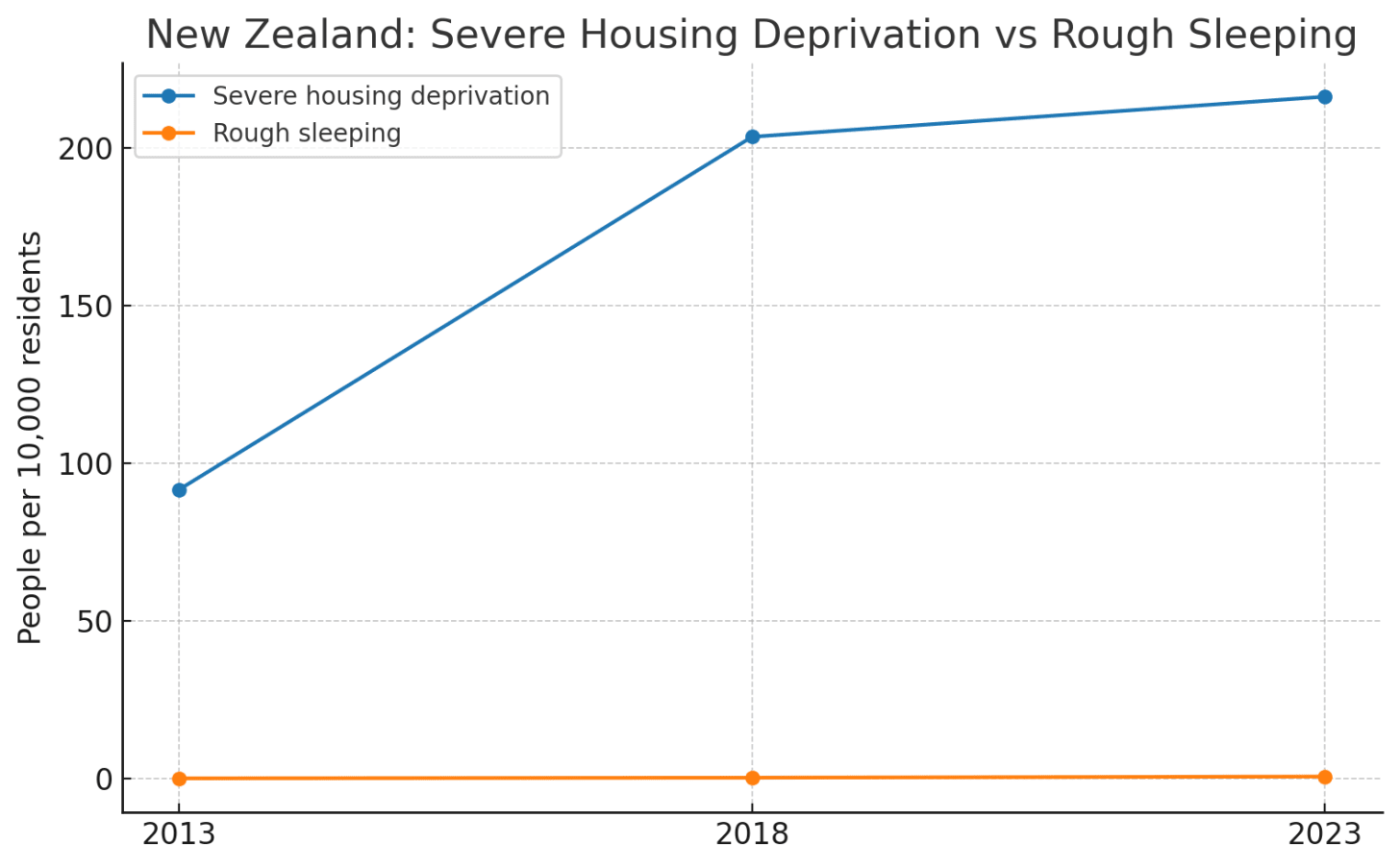
Ani O’Brien writes – Chlöe Swarbrick wants you to believe the Government is intentionally increasing homelessness. She told RNZ’s Mata with Mihingarangi Forbes: “The only conclusion that I can really come to is that this Government has intentionally increased homelessness…” It’s the kind of soundbite that plays well on social media. Outrage travels faster than nuance, and a […]
Chlöe Swarbrick’s homelessness hyperbole
Did the Minnesota housing reform lower housing costs?
07 Aug 2025 1 Comment
in applied price theory, law and economics, politics - USA, property rights, Public Choice, rentseeking, urban economics Tags: housing affordability, land supply, zoning
Yes: In December 2018, Minneapolis became the first U.S. city to eliminate single-family zoning through the Minneapolis 2040 Plan, a landmark reform with a central focus on improving housing affordability. This paper estimates the effect of the Minneapolis 2040 Plan on home values and rental prices. Using a synthetic control approach we find that the […]
Did the Minnesota housing reform lower housing costs?
GUEST POST: On the long-term costs of New Zealand Superannuation: more affordable now?
07 Aug 2025 Leave a comment
in income redistribution, labour economics, politics - New Zealand, Public Choice, public economics Tags: ageing society
A guest post by Michael Littlewood: As New Zealand’s population ages and, in particular, as the proportion of over-65s increases, the cost of New Zealand Superannuation (NZS) is rising. We know that and it doesn’t help us understand the issues to create headlines that catastrophise the expected costs. The pensions payable in the future, public […]
GUEST POST: On the long-term costs of New Zealand Superannuation: more affordable now?
Peters and Seymour tussle over ‘Maorification’
07 Aug 2025 Leave a comment
in constitutional political economy, economics of regulation, law and economics, politics - New Zealand, property rights, Public Choice Tags: constitutional law
Graham Adams writes – After NZ First leapfrogged Act last month in a Taxpayers’ Union-Curia poll — which led to much media excitement about the party’s rising fortunes — it seemed odd for Winston Peters to be quite so tetchy with journalists seeking his opinion on David Seymour’s views on karakia, traditional Māori prayers or incantations […]
Peters and Seymour tussle over ‘Maorification’
A Small But Important Victory for Taxpayers
05 Aug 2025 1 Comment
in economics of bureaucracy, fiscal policy, politics - USA, Public Choice

Regular readers know I’m not a Trumpie. Some of his policies are terrible (protectionism), while others are irresponsible (punting on entitlements) or misguided (new tax loopholes). But I have to give credit where credit is due. Unlike every other Republican president over the past six decades – including the great Ronald Reagan – Donald Trump […]
A Small But Important Victory for Taxpayers


Recent Comments