An introduction to Public Choice with Mike Munger
11 May 2017 Leave a comment
in applied price theory, comparative institutional analysis, constitutional political economy, economics of bureaucracy, income redistribution, Public Choice, rentseeking
Macroeconomic Consequences of Taxing the Rich
11 May 2017 Leave a comment
in fiscal policy, macroeconomics, politics - USA, Public Choice, public economics, sports economics Tags: taxation and labour supply, top 1%
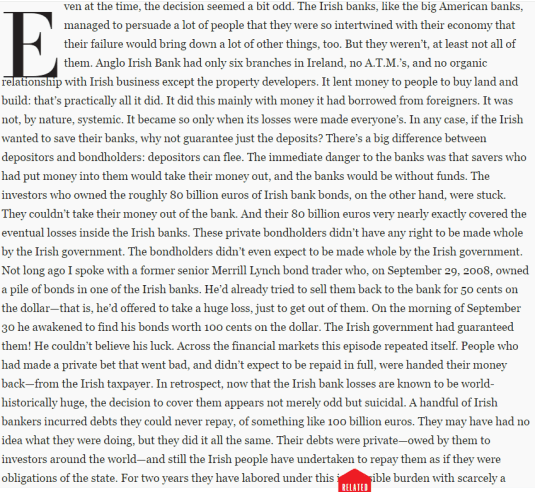
The one and only reason for the fall of the Celtic Tiger
11 May 2017 Leave a comment
in fiscal policy, macroeconomics, monetary economics, Public Choice, rentseeking
Why @JeremyCorbyn will lose #GE2017
09 May 2017 Leave a comment
in Public Choice Tags: 2017 British election

How to Discredit a Report, Minister
08 May 2017 Leave a comment
in economics of bureaucracy, Public Choice, television Tags: Yes Prime Minister
The Apartment – Seinfeld – rent control
07 May 2017 Leave a comment
in applied price theory, economics of regulation, Public Choice, rentseeking, television, urban economics Tags: rent control, Seinfeld
Yes, Minister – The Six Diplomatic Options
07 May 2017 Leave a comment
in economics of bureaucracy, Public Choice, televison Tags: Yes Minister
Who Really Pays Business Taxes?
06 May 2017 Leave a comment
in applied price theory, Milton Friedman, Public Choice, public economics Tags: tax incidence
Johan Norberg – Picking Winners or Losers
06 May 2017 Leave a comment
in applied price theory, economics of bureaucracy, industrial organisation, politics - New Zealand, Public Choice, rentseeking, survivor principle Tags: industry policy, picking winners
Causes of Corruption
29 Apr 2017 Leave a comment
in applied price theory, development economics, economic history, economics of bureaucracy, economics of regulation, growth disasters, Public Choice, rentseeking Tags: bribery and corruption
Trailblazers: The New Zealand Story – Full Video
29 Apr 2017 Leave a comment
in economic history, economics of regulation, industrial organisation, politics - New Zealand, Public Choice, public economics, rentseeking, survivor principle
#GarethMorgan wants sitting tenant laws
28 Apr 2017 Leave a comment
in applied price theory, applied welfare economics, economics of regulation, income redistribution, politics - New Zealand, Public Choice, rentseeking Tags: 2017 New Zealand election, offsetting behaviour, rent control, unintended consequences
Morgan wants to restrict the ability to evict tenants for reasons other than damage to the property and non-payment of rent. This includes not been able to evict a tenant on sale of the property.
We intend to change the regulations around residential tenancy law so leases make it far easier for a tenant to remain in the premises long term…
This will be achieved by restricting the conditions under which a landlord can evict a tenant to those of non-payment of rent or property damage. Sale of a property is not necessarily a legitimate reason for eviction. Tenants will be able to give 90 days notice.
That policy will make winding up of estates difficult. Houses will be have to be left vacant rather than rented while affairs are put in order. That is to name one of many flaws in a policy announced by a party that prioritises being different over been useful and right.
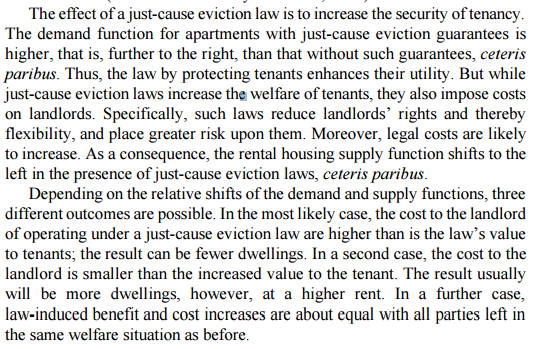
Source: RENTING Werner Z. Hirsch at encyclopedia of law and economics.
#Maori #atheists failed by @reomaori Maori Language Commission
27 Apr 2017 Leave a comment
in economics of bureaucracy, politics - New Zealand Tags: atheism, Freedom of religion, Maori economic development, Te reo Māori
Australian global warming policies are well near optimal
24 Apr 2017 Leave a comment
in applied price theory, applied welfare economics, energy economics, environmental economics, global warming, politics - Australia, Public Choice, rentseeking Tags: climate alarmism, global warming
The UN Climate Panel Report found that the cost of not doing something is less than 2% of GDP in about 2070. The cost of doing something will likely be higher than 6% of GDP.


Recent Comments