Justice Scalia on whether a disabled PGA golfer could ride a golf cart
14 Feb 2016 Leave a comment
in economics of bureaucracy, law and economics, sports economics
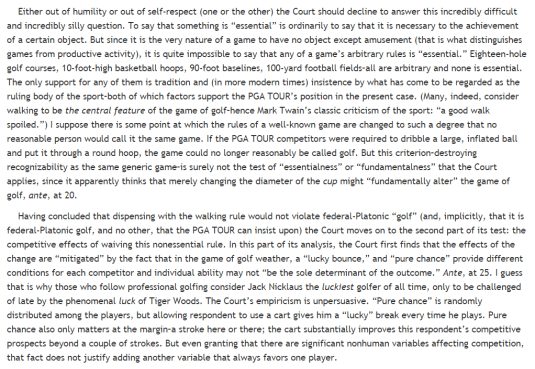
Source: PGA TOUR, INC. V. MARTIN via Jonathan Alder.
% billionaires who made their money through political connections or resource industries
13 Feb 2016 Leave a comment
in economics of bureaucracy, economics of regulation, energy economics, entrepreneurship, industrial organisation, poverty and inequality, privatisation, rentseeking, resource economics
The 1826 Billionaires in the Forbes 2015 list are classified as rich through political connections if they made their money through past political positions, close relatives or friends in government, or questionable licenses, privatisations or resource extraction industries.
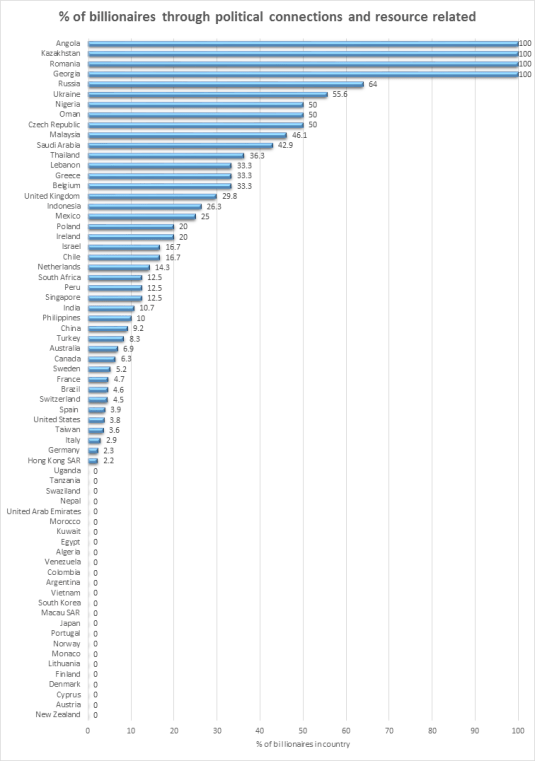
All privatizations were included in the politically-connected/resource-related category despite my data source acknowledging the possibility that the new owners may have transformed the company. Resource billionaires were all deemed to be lucky or cronies by my data source rather than diligent as some most certainly were. This is something of a slur by my data source given the industriousness of some resource billionaires some of whom were even geologists.
Political cronyism is a path to billionaire wealth mainly in the developing countries. Less than 10% of Chinese billionaires made their money through political connections, which is surprising.
Lynne Kiesling discusses Joseph Schumpeter
13 Feb 2016 Leave a comment
in entrepreneurship, history of economic thought, industrial organisation, Joseph Schumpeter
Gerrymandering is even more infuriating when you can actually see it
11 Feb 2016 Leave a comment
in constitutional political economy, politics - USA, Public Choice
https://twitter.com/bargemUK/status/687610265400152065

Source: Gerrymandering Is Even More Infuriating When You Can Actually See It | WIRED.
The only time that the left become supply-side economists
10 Feb 2016 Leave a comment
in applied price theory, Public Choice, public economics Tags: povertytraps, taxation and labour supply
Paid-in minimum capital (% of income per capita) required to start a business in OECD countries
10 Feb 2016 Leave a comment
in economics of bureaucracy, economics of regulation, law and economics, property rights, Public Choice Tags: doing business
The most mystifying bureaucratic rule I have come across is in Western Europe. A number of these countries require entrepreneurs deposit a minimum sum of money in a bank or before a notary up to a month before registration and 3 months after incorporation. If they cannot do this, they cannot start their business lawfully.
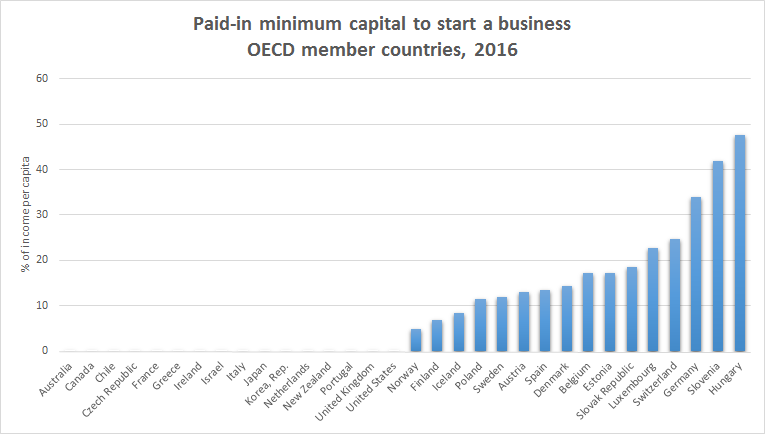
Source: Historical Data – Doing Business- World Bank Group.
I am mystified as to what this regulation is designed to do other than make it difficult to start a new business. It is a private commercial matter as to whether trade credit is extended to new businesses. That indeed is one of the challenges facing every entrepreneur: discovering who are reliable business partners or not.
One of the functions of banks is to issue letters of credit. These vouch for the financial strength of a customer when seeking new business or export markets.
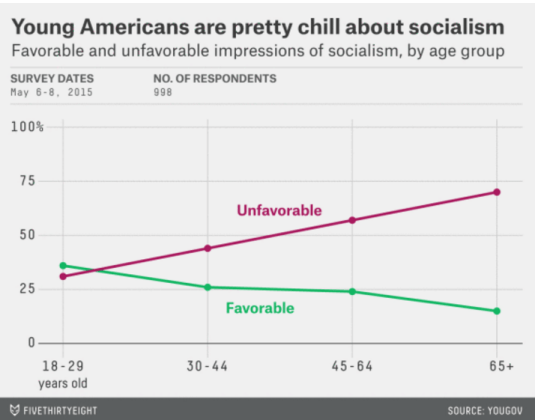
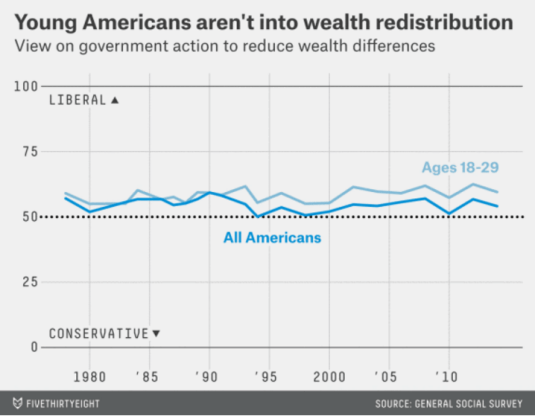
Young Democrats like @BernieSanders & socialism but oppose income redistribution as much as their parents do
09 Feb 2016 Leave a comment
in Marxist economics, politics - USA, Public Choice, public economics
@LivingWageUK documents the Achilles heel of the #livingwage
09 Feb 2016 1 Comment
in applied price theory, economics of bureaucracy, economics of regulation, entrepreneurship, managerial economics, minimum wage, organisational economics, personnel economics, politics - New Zealand, Ronald Coase, theory of the firm
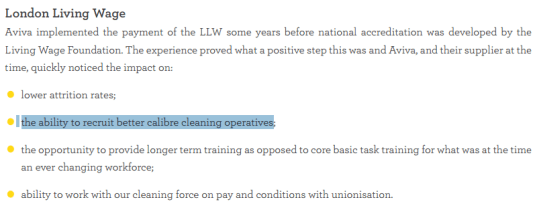
Research publicised by a Living Wage UK highlighted the Achilles heel of any living wage proposal. This Achilles heel applies to the voluntary adoption of the living wage and a living wage mandated through minimum wage laws.
The critique to follow accepts pretty much everything claimed by the living wage movement about the benefits of the living wage but simply traces out the consequence of this one promised benefit.
Source: New evidence of business case for adopting Living Wage Living Wage Foundation.
The living wage is substantially above the minimum wage. Offering the living wage will change the composition of the recruitment pool of low-wage employers. This is the Achilles heel of the living wage which Living Wage UK documents in its study it tweeted about and from which I have taken the above snapshot.
Jobseekers would not have considered vacancies by these employers will now apply because of the living wage increase. These better calibre applicants will win those jobs ahead of the jobseekers whose current productivity levels are less than that to justify the cost of the living wage.
Central to the living wage rhetoric is that somehow employees will be more productive because of the adoption of the living wage.
The simplest way of doing that for an employer is to hire more qualified, more productive employers are no longer a hire the type of people you currently hire. They will be unemployed or pushed into the non-living wage sector of the low-wage market.
Best 2 Minimum Wage Cartoons Ever, from Henry Payne, Updated for Seattle's $15 "Economic Death Wish" @HenryEPayne http://t.co/vatUzkHMss—
Mark J. Perry (@Mark_J_Perry) August 18, 2015
A living wage is an exclusionary policy where ordinary workers, often with families who are not productive enough to produce $19.25 per hour living wage plus overheads will never be interviewed.
The workers with the type of skills that currently win those jobs covered by a living wage increase will not be shortlisted because the quality of the recruitment pool will increase because of the living wage.
There will be an influx of more skilled workers attracted by the higher wages for living wage jobs. They will go to the head of the queue and displaced workers who currently apply for and win these jobs before the adoption of the living wage.
Any extra labour productivity from paying a living wage increase is in doubt because low skilled service sectors are notorious for their low potential for productivity gains. They are the bread-and-butter of Baumol’s disease.
The modern theories of the firm focus, in part or in full on reducing opportunistic behaviour, cheating and fraud in employment relationships. The cost of discovering prices and making and enforcing contracts and getting what you pay for are central to Coase’s theory of the firm put forward in 1937.
The profits of entrepreneurs for running a firm is directly linked from their successful policing of the efforts of employees and sub-contractors to ensure the team and each member perform as promised and individual rewards matched individual contributions (Alchian and Demsetz 1972; Barzel 1987). Alchian and Demsetz’s (1972) theory of the firm focused on moral hazard in team production. As they explain:
Two key demands are placed on an economic organization-metering input productivity and metering rewards.
The main rationale in personnel economics from everything ranging from employer funding of retirement pensions to the structure of promotions and executive pay including stock options is around better rewarding self-motivating employees who strive harder and reducing the costs of monitoring employee effort.
At bottom, the efficiency wage hypothesis is entrepreneurs are unaware of the higher quality and greater self-motivation of better paid recruits for vacancies but wise bureaucrats and farsighted politicians notice these gaps in the market. Bureaucrats and politicians notice these gaps in the market before those who gain from superior entrepreneur alertness to hitherto untapped opportunities for profit do so and instead leave that money on the table.
It’s kicking the living wage movement when it is down to mention that low paid workers with families will lose a considerable part of the living wage increase because of reductions in family tax credits and in-kind assistance from the government that are linked to their pay.
Their jobs are put at risk because of a large increase in the cost of employing them to their employers. Their take-home pay after taxes, family tax credits and other government assistance increases by much less. This is a pointless gamble with job security because of the much small increase in the take-home pay of many breadwinners on the living wage.
@philquin My experience with UN junkets
09 Feb 2016 Leave a comment
Back in the day, MFAT got around to reviewing its contributions to various UN organisations. They discovered they were contributing $250,000 to some obscure committee that was part of the UN Food and Agricultural organisation.

When this particular committee heard that their contribution was under review, they immediately dispatched 6 bureaucrats from Rome to Wellington to make their case.
These flying UN diplomats could have been so stupid as to not notice that 6 UN bureaucrats showing up out of nowhere after years of silence as soon as their budget contribution was under review might not improve what little goodwill they had left in the Wellington bureaucracy. No one could remember why we were contributing. Their willingness to spend so freely in airfares certainly did not help.
The same goes for the European Bank for Reconstruction and Development. This bank was formed shortly after the fall of the Berlin Wall. New Zealand joined for reasons now forgotten.
I happen to call upon the Australian Executive Director representing New Zealand at that Bank while passing through London representing the New Zealand Treasury. Naturally, he felt the need to call upon his New Zealand masters in Wellington shortly after. MFAT did not know what to do with them because they could not remember why New Zealand was still a member of that bank.
This London based Australian international diplomat did better than the Australian Executive Director representing New Zealand on the World Bank. He managed to visit all 12 Pacific islands but never visited New Zealand in his entire 4 years of office. This included after the establishment of the New Zealand Agency for International Development.
What more, this Australian Executive Director flew to Canberra for consultations with his Australian authorities just before Christmas every year. He felt rather put upon when his New Zealand deputy insisted that he take personal days while attending his grandson’s christening.
I visited the World Bank once or twice. It was like visiting a brothel. Absolutely everyone propositioned me from money.
The first people I spoke to try to sell New Zealand some oil debts that Mozambique are defaulted on to Angola. The last person I spoke to tried to interest New Zealand and investing in Latin American trade research.
They are all hopeless is give me directions to the Cato Institute. They seemed to know very little about American politics and Washington DC think tanks.
One of my first jobs at the New Zealand Treasury was to form a position on what the OECD Secretariat should do about its seriously underfunded pension plan. It provided for a 50% life pension after 10 years of service.
I suggested what was done with underfunded superannuation funds in Australia, which was to close them to new members.
An OECD official called upon me in Wellington at my desk a few weeks later. I do not think he made a special trip to Wellington just to put me right, but he made sure I was included on his itinerary.
Regulating Monopolies: A History of Electricity Regulation
09 Feb 2016 Leave a comment
in applied price theory, economic history, economics of bureaucracy, economics of religion, industrial organisation, law and economics, Public Choice, rentseeking, survivor principle Tags: competition law, electricity industry, natural monopolies, network industries
Why Do Politicians All Sound the Same? @BernieSanders
08 Feb 2016 Leave a comment
in constitutional political economy, politics - Australia, politics - New Zealand, politics - USA, Public Choice Tags: 2016 presidential election, median voter theorem
Here’s where Republicans and Democrats differ on the role of government
08 Feb 2016 Leave a comment
in defence economics, economics of bureaucracy, economics of education, economics of information, economics of media and culture, economics of regulation, energy economics, entrepreneurship, environmental economics, income redistribution, politics - USA, Public Choice, rentseeking Tags: 2016 presidential election Republican Party, Democratic Party, votor demographics
@jacindaardern wrong to say Australia is last place to follow in race relations
07 Feb 2016 Leave a comment
in constitutional political economy, discrimination, economic history, law and economics, politics - Australia, politics - New Zealand, property rights, Public Choice Tags: Aboriginal land rights, Maori economic development, native title, racial discrimination
From 1965 onwards, 1/3rd of terrestrial Australia – 2.5 million sq kms of land – was returned to indigenous owners, with half of that since the Native Title decision in 1993. Tasmania pioneered aboriginal land rights with the Cape Barron Island Act 1912.
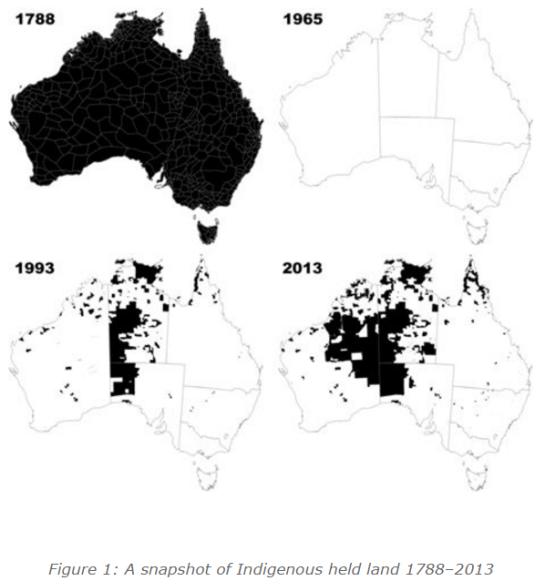
Source: Jon Altman, The political ecology and political economy of the Indigenous land titling ‘revolution’ in Australia, March 2014 Māori Law Review.
New Zealand extinguished native title twice in its history with the 2nd of these takings of Māori land by the last Labour government with the foreshore and seabed legislation. In her op-ed today, has Jacinda Ardern forgotten why the Māori party came into being?
Unlike New Zealand, Australia welcomed migrants from a wide range of ethnicities after the Second World War. It abolished the White Australia policy in the 1960s along with any discrimination in its Constitution against aboriginals.
Australia takes 8 times as many refugees as New Zealand on a per capita basis.
Sweden – the OECD's highest per capita recipient of asylum seekers bit.ly/1vfFEUh http://t.co/y6DmdJjAsE—
Guardian Data (@GuardianData) December 02, 2014
This redress of indigenous grievances was done out of the generosity of the Australian heart. Aboriginals are a tiny minority in Australia with little independent political pull.


Recent Comments