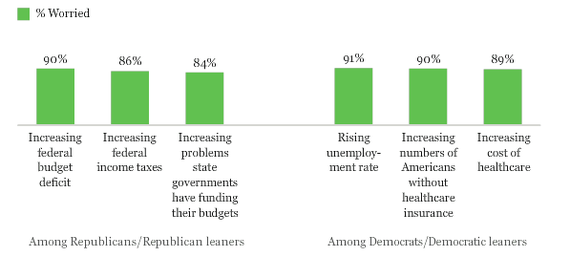
Should we redistribute money from rich to poor? What voters of each party said. blogs.lse.ac.uk/generalelectio… http://t.co/aqc8yO3OYE—
Martin Hickman (@martin_hickman) April 26, 2015
UKIP are a bunch of fellow travellers
27 Apr 2015 Leave a comment
in applied welfare economics, constitutional political economy, income redistribution, Public Choice, rentseeking Tags: British election, expressive voting, rational ignorance, rational irrationality, UK politics, UKIP
Murphy’s Law of Economic Policy
26 Apr 2015 Leave a comment
in applied price theory, applied welfare economics, comparative institutional analysis, constitutional political economy, economic history, economics of bureaucracy, Public Choice, rentseeking Tags: Alan Blinder, evidence-based policy, expressive politics, free trade, protectionism, rational ignorance, rational irrationality, rent seeking
Greg Mankiw on one of the few things economists agree on: free trade. That's the problem. nyti.ms/1GrLisQ http://t.co/WrLuP3oBSW—
The Upshot (@UpshotNYT) April 25, 2015
Be careful for what you wish for when you call for moderation and bipartisanship in politics
20 Apr 2015 Leave a comment
in economic history, income redistribution, politics - USA, Public Choice, rentseeking Tags: bipartisanship, expressive voting, growth in government, ideology, median voter theorem, political polarisation, rational irrationality
If You’ve Got A Business, You Didn’t Build That
19 Apr 2015 Leave a comment
in entrepreneurship, industrial organisation, Public Choice, rentseeking, survivor principle Tags: creative destruction, entrepreneurial alertness, market selection, top 1%, working rich
The rich are working rich who earn their incomes through entrepreneurial alertness. They move assets from low value uses to higher value uses and profit through capital gains. Entrepreneurial alertness is not a skill that can be taught.
Where the rich make their income: Capital gains, writes @robtfrank urbn.is/1Gx6Eos (h/t @TaxPolicyCenter) http://t.co/LkErbQ25LW—
Urban Institute (@urbaninstitute) April 10, 2015
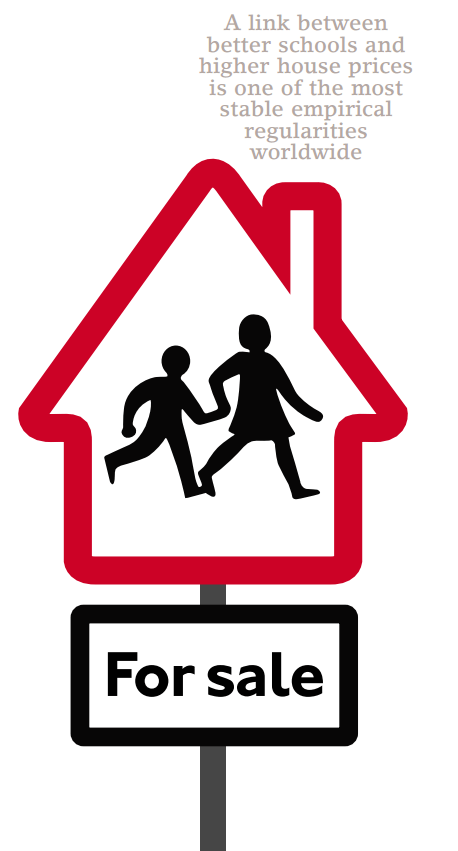
Friedman’s 2nd Law –the government cannot give anything away: free public schools version
17 Apr 2015 Leave a comment
in economics of education, Public Choice, rentseeking
The Uber effect on taxi medallion prices
17 Apr 2015 Leave a comment
in economics of regulation, Public Choice, rentseeking Tags: taxi regulation, Uber
https://twitter.com/Mark_J_Perry/status/576460181862801408/photo/1
$TAXI Ruh roh. Big jump in cabbies having trouble paying their loans on time. Aging of medallion loans '13 vs '14. http://t.co/Ayn69u1mgK—
Donut Shorts (@DonutShorts) March 12, 2015
The Scottish National Party manifesto
15 Apr 2015 Leave a comment
in income redistribution, Public Choice, rentseeking Tags: British general election, British politics, Scotland, Scottish National party
SNP manifesto. #PrivateEye http://t.co/oD3iuyajBl—
Wire Spy (@wirespyuk) April 02, 2015
Hollywood’s highest paid star Leonardo DiCaprio earns three times average FTSE 100 boss | City A.M.
15 Apr 2015 Leave a comment
in applied welfare economics, entrepreneurship, Marxist economics, politics - USA, Public Choice, Rawls and Nozick, rentseeking Tags: Occupy Wall Street, top 1%
This top 1% gets a pass from the Occupy activists

Hillary is running as some sort of class war warrior against the big end of town
14 Apr 2015 Leave a comment
in income redistribution, politics - USA, Public Choice, rentseeking Tags: 2016 presidential election, campaign finance report form, expressive voting, Hillary Clinton, median voter theorem, rational ignorance, rational irrationality, special interests
Top 20 Hillary Clinton campaign contributors, 1999-2014, in case you were wondering. http://t.co/c8KTOkJ30X—
Downtown Josh Brown (@ReformedBroker) April 14, 2015

Capitalism and freedom is noticeably missing from this survey of UN effectiveness
09 Apr 2015 Leave a comment
in comparative institutional analysis, constitutional political economy, development economics, growth disasters, growth miracles, Public Choice, rentseeking Tags: capitalism and freedom, overseas development assistance, UN
perceptions of the UN's impact from the development community http://t.co/k8XYisxGaK—
Laurence Chandy (@laurencechandy) October 07, 2014
People forget California is pretty much a desert, yet it is a major producer of fruit and vegetables
08 Apr 2015 Leave a comment
in applied price theory, Public Choice, rentseeking Tags: California, drought, water pricing
Why California's drought is a disaster for your favorite fruits and vegetables bit.ly/1c11TGf #WorldWaterDay http://t.co/1GoecvI1WH—
Mother Jones (@MotherJones) March 22, 2015

Gordon Tullock explains his theory of popular revolutions and palace coups
01 Apr 2015 Leave a comment
in economics of bureaucracy, Gordon Tullock, income redistribution, Public Choice, rentseeking Tags: Arab Spring, autocracy, military coups, palace coups, popular revolutions
[I]n most revolutions, the people who overthrow the existing government were high officials in that government before the revolution.
If they were deeply depressed by the nature of the previous government’s policies, it seems unlikely that they could have given enough cooperation in those policies to have risen to high rank. People who hold high, but not supreme, rank in a despotism are less likely to be unhappy with the policy of that despotism than are people who are outside the government.
Thus, if we believed in the public good motivation of revolutions, we would anticipate that these high officials would be less likely than outsiders to attempt to overthrow the government.
From the private benefit theory of revolutions, however, the contrary deduction would be drawn. The largest profits from revolution are apt to come to those people who are (a) most likely to end up at the head of the government, and (b) most likely to be successful in overthrow of the existing government. They have the highest present discounted gain from the revolution and lowest present discounted cost.
Thus, from the private goods theory of revolution, we would anticipate senior officials who have a particularly good chance of success in overthrowing the government and a fair certainty of being at high rank in the new government, if they are successful, to be the most common type of revolutionaries.



Recent Comments