Honest broker The Opportunities Party forgets its own history
23 Feb 2017 Leave a comment
in applied price theory, fiscal policy, politics - New Zealand, Public Choice, public economics

How much will Morgan’s capital tax cost you?
19 Feb 2017 3 Comments
in fiscal policy, politics - New Zealand, public economics
| Average house value January 2017 | Morgan capital tax 6% return |
Morgan capital tax 3.5% return |
|
|
New Zealand |
$631,302 |
$11,363 |
$6,629 |
|
Main Urban Areas |
$754,572 |
$13,582 |
$7,923 |
|
Auckland Area |
$1,047,699 |
$18,859 |
$11,001 |
|
Wellington Area |
$582,322 |
$10,482 |
$6,114 |
|
Far North District |
$389,811 |
$7,017 |
$4,093 |
|
Whangarei District |
$463,319 |
$8,340 |
$4,865 |
|
Kaipara District |
$463,896 |
$8,350 |
$4,871 |
|
Rodney District |
$933,456 |
$16,802 |
$9,801 |
|
Rodney – Hibiscus Coast |
$908,966 |
$16,361 |
$9,544 |
|
Rodney – North |
$961,450 |
$17,306 |
$10,095 |
|
North Shore City |
$1,214,291 |
$21,857 |
$12,750 |
|
North Shore – Coastal |
$1,387,368 |
$24,973 |
$14,567 |
|
North Shore – Onewa |
$971,364 |
$17,485 |
$10,199 |
|
North Shore – North Harbour |
$1,189,924 |
$21,419 |
$12,494 |
|
Waitakere City |
$836,574 |
$15,058 |
$8,784 |
|
Auckland City |
$1,225,096 |
$22,052 |
$12,864 |
|
Auckland City – Central |
$1,065,420 |
$19,178 |
$11,187 |
|
Auckland_City – East |
$1,532,815 |
$27,591 |
$16,095 |
|
Auckland City – South |
$1,107,912 |
$19,942 |
$11,633 |
|
Auckland City – Islands |
$1,036,288 |
$18,653 |
$10,881 |
|
Manukau City |
$901,422 |
$16,226 |
$9,465 |
|
Manukau – East |
$1,158,197 |
$20,848 |
$12,161 |
|
Manukau – Central |
$686,567 |
$12,358 |
$7,209 |
|
Manukau – North West |
$781,110 |
$14,060 |
$8,202 |
|
Papakura District |
$684,172 |
$12,315 |
$7,184 |
|
Franklin District |
$660,557 |
$11,890 |
$6,936 |
|
Thames-Coromandel District |
$645,780 |
$11,624 |
$6,781 |
|
Hauraki District |
$359,520 |
$6,471 |
$3,775 |
|
Waikato District |
$441,525 |
$7,947 |
$4,636 |
|
Matamata-Piako District |
$398,682 |
$7,176 |
$4,186 |
|
Hamilton City |
$531,337 |
$9,564 |
$5,579 |
|
Hamilton – North East |
$678,886 |
$12,220 |
$7,128 |
|
Hamilton – Central & North West |
$489,611 |
$8,813 |
$5,141 |
|
Hamilton – South East |
$482,333 |
$8,682 |
$5,064 |
|
Hamilton – South West |
$466,235 |
$8,392 |
$4,895 |
|
Waipa District |
$490,723 |
$8,833 |
$5,153 |
|
Otorohanga District |
$243,964 |
$4,391 |
$2,562 |
|
South Waikato District |
$188,852 |
$3,399 |
$1,983 |
|
Waitomo District |
$172,405 |
$3,103 |
$1,810 |
|
Taupo District |
$418,130 |
$7,526 |
$4,390 |
|
Western Bay of Plenty District |
$575,089 |
$10,352 |
$6,038 |
|
Tauranga City |
$672,752 |
$12,110 |
$7,064 |
|
Rotorua District |
$379,865 |
$6,838 |
$3,989 |
|
Whakatane District |
$380,691 |
$6,852 |
$3,997 |
|
Kawerau District |
$177,183 |
$3,189 |
$1,860 |
|
Opotiki District |
$248,261 |
$4,469 |
$2,607 |
|
Gisborne District |
$271,632 |
$4,889 |
$2,852 |
|
Wairoa District |
$161,966 |
$2,915 |
$1,701 |
|
Hastings District |
$392,182 |
$7,059 |
$4,118 |
|
Napier City |
$419,099 |
$7,544 |
$4,401 |
|
Central Hawkes Bay District |
$253,787 |
$4,568 |
$2,665 |
|
New Plymouth District |
$415,761 |
$7,484 |
$4,365 |
|
Stratford District |
$234,372 |
$4,219 |
$2,461 |
|
South Taranaki District |
$198,934 |
$3,581 |
$2,089 |
|
Ruapehu District |
$156,971 |
$2,825 |
$1,648 |
|
Whanganui District |
$207,752 |
$3,740 |
$2,181 |
|
Rangitikei District |
$163,111 |
$2,936 |
$1,713 |
|
Manawatu District |
$289,350 |
$5,208 |
$3,038 |
|
Palmerston North City |
$348,581 |
$6,274 |
$3,660 |
|
Tararua District |
$163,877 |
$2,950 |
$1,721 |
|
Horowhenua District |
$258,047 |
$4,645 |
$2,709 |
|
Kapiti Coast District |
$482,723 |
$8,689 |
$5,069 |
|
Porirua City |
$484,164 |
$8,715 |
$5,084 |
|
Upper Hutt City |
$433,538 |
$7,804 |
$4,552 |
|
Lower Hutt City |
$482,632 |
$8,687 |
$5,068 |
|
Wellington City |
$702,081 |
$12,637 |
$7,372 |
|
Wellington – Central & South |
$703,433 |
$12,662 |
$7,386 |
|
Wellington – East |
$753,259 |
$13,559 |
$7,909 |
|
Wellington – North |
$627,791 |
$11,300 |
$6,592 |
|
Wellington – West |
$808,685 |
$14,556 |
$8,491 |
|
Masterton District |
$276,020 |
$4,968 |
$2,898 |
|
Carterton District |
$321,476 |
$5,787 |
$3,375 |
|
South Wairarapa District |
$370,839 |
$6,675 |
$3,894 |
|
Tasman District |
$498,111 |
$8,966 |
$5,230 |
|
Nelson City |
$508,343 |
$9,150 |
$5,338 |
|
Marlborough District |
$423,753 |
$7,628 |
$4,449 |
|
Kaikoura District |
$398,058 |
$7,165 |
$4,180 |
|
Buller District |
$183,573 |
$3,304 |
$1,928 |
|
Grey District |
$211,780 |
$3,812 |
$2,224 |
|
Westland District |
$234,405 |
$4,219 |
$2,461 |
|
Hurunui District |
$378,276 |
$6,809 |
$3,972 |
|
Waimakariri District |
$434,854 |
$7,827 |
$4,566 |
|
Christchurch City |
$497,539 |
$8,956 |
$5,224 |
|
Christchurch – East |
$371,157 |
$6,681 |
$3,897 |
|
Christchurch – Hills |
$667,077 |
$12,007 |
$7,004 |
|
Christchurch – Central & North |
$588,632 |
$10,595 |
$6,181 |
|
Christchurch – Southwest |
$477,247 |
$8,590 |
$5,011 |
|
Christchurch – Banks Peninsula |
$514,403 |
$9,259 |
$5,401 |
|
Selwyn District |
$547,094 |
$9,848 |
$5,744 |
|
Ashburton District |
$348,788 |
$6,278 |
$3,662 |
|
Timaru District |
$335,449 |
$6,038 |
$3,522 |
|
MacKenzie District |
$420,915 |
$7,576 |
$4,420 |
|
Waimate District |
$229,085 |
$4,124 |
$2,405 |
|
Waitaki District |
$260,433 |
$4,688 |
$2,735 |
|
Central Otago District |
$411,111 |
$7,400 |
$4,317 |
|
Queenstown-Lakes District |
$1,032,560 |
$18,586 |
$10,842 |
|
Dunedin City |
$359,055 |
$6,463 |
$3,770 |
|
Dunedin – Central & North |
$372,295 |
$6,701 |
$3,909 |
|
Dunedin – Peninsular & Coastal |
$320,180 |
$5,763 |
$3,362 |
|
Dunedin – South |
$342,080 |
$6,157 |
$3,592 |
|
Dunedin – Taieri |
$375,669 |
$6,762 |
$3,945 |
|
Clutha District |
$190,208 |
$3,424 |
$1,997 |
|
Southland District |
$236,549 |
$4,258 |
$2,484 |
|
Gore District |
$200,826 |
$3,615 |
$2,109 |
|
Invercargill City |
$239,252 |
$4,307 |
$2,512 |
Liability is 6 percent of your capital equity which is then taxed at 30%. The return is assumed to be equal to the long-term bond rate for the last 10 years. That was 6% when Morgan wrote his book in 2011; that average long-term rate is about 3% now. I used his 2011 assumptions.
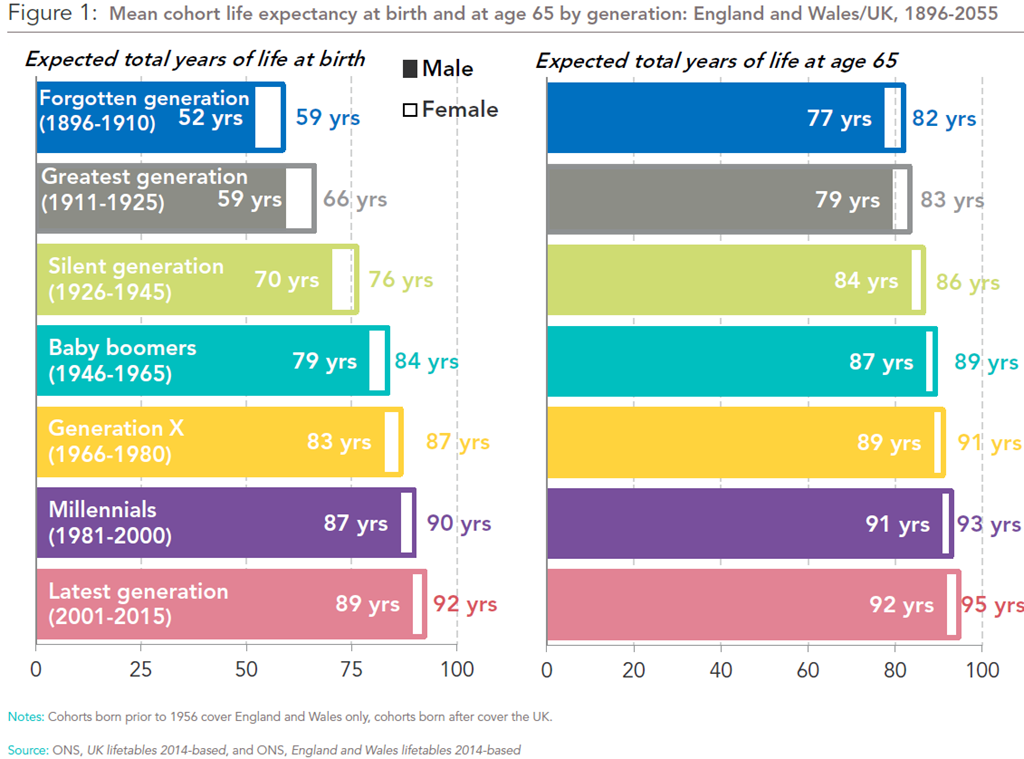
Lucky bastards, grizzling about #safespaces all the way to their 100th birthday
17 Jan 2017 Leave a comment
in health economics, public economics Tags: ageing society, demographic crisis, life expectancies, The Great Enrichment, The Great Escape
Randall Kroszner’s advice for the next president
02 Dec 2016 Leave a comment
in applied price theory, economic growth, entrepreneurship, international economics, macroeconomics, politics - USA, public economics Tags: 2016 presidential election, company tax
Which is worse? The tax or regulation?
30 Nov 2016 Leave a comment
in applied price theory, economics of regulation, Public Choice, public economics Tags: tax incidence theory
Post-disaster co-operation: The voluntary provision of weakest-shot public goods
16 Nov 2016 Leave a comment
in applied price theory, economics of natural disasters, public economics Tags: economics of alliances, free riding, post-disaster cooperation, public goods, weakest shot public goods
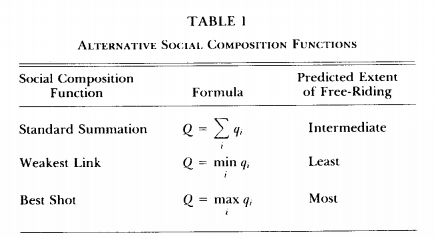
After a natural disaster, both the economic and social fabric and the survival of individual employers each become weakest-shot public goods. The provision of these public goods temporarily depend by much more than is usual on the minimum individual contributions made – the weakest shots made for the common good. The supply of most public goods usually is not dependent on the contributions of any one user.
The classic example of a weakest shot public good by that brilliant applied price theorist Jack Hirschleifer is a dyke or a levee wall around a town. It is only as good as the laziest person contributing to its maintenance on their part of the levee. Vicary (1990, p. 376) lists other examples:
Similar examples would be the protection of a military front, taking a convoy across the ocean going at the speed of the slowest ship, or maintaining an attractive village/landscape (one eyesore spoils the view).
Many instances of teamwork involve weak-link elements, for example moving a pile of bricks by hand along a chain or providing a theatrical or orchestral performance (one bad individual effort spoils the whole effect.)
Most doing the duty is essential to the survival of all after a natural disaster. The alliances we call societies and the firm, normally not in danger of collapse, are threatened if there is a natural disaster. In these highly unusual circumstances, alliance-supportive activities, greater cooperativeness and self-sacrifice become an important public good.
In normal periods when threats are small, what social control mechanisms that are in place are sufficient and there is no need for exceptional behaviour and self-sacrifice.
Everyone has an interest in the continuity of the economic and social fabric and the survival of their employers in times of adversity. Individual contributions to these national and local public goods become much more decisive after a natural disaster.
In normal times people behave in a conventionally cooperative way because individually they find it profitable to do so. There is some slippage around the edges and there are social control mechanisms to deter illegal conduct and supply public goods.
As the threat to the social and economic fabric grows after a natural disaster, eventually the social and economic balance may hang by a hair. When this is so, any single person can reason that his own behaviour might be the social alliance’s weakest link. International military and political alliances also rise and fall on this weakest link basis.
Taxman – The Beatles
07 Sep 2016 Leave a comment
in applied price theory, public economics Tags: superstar wages, taxation and labour supply, The Beatles
% employees working more than 50 hours per week, 2014 OECD area
15 Aug 2016 6 Comments
in labour economics, labour supply, occupational choice, public economics Tags: hours worked, taxation and labour supply
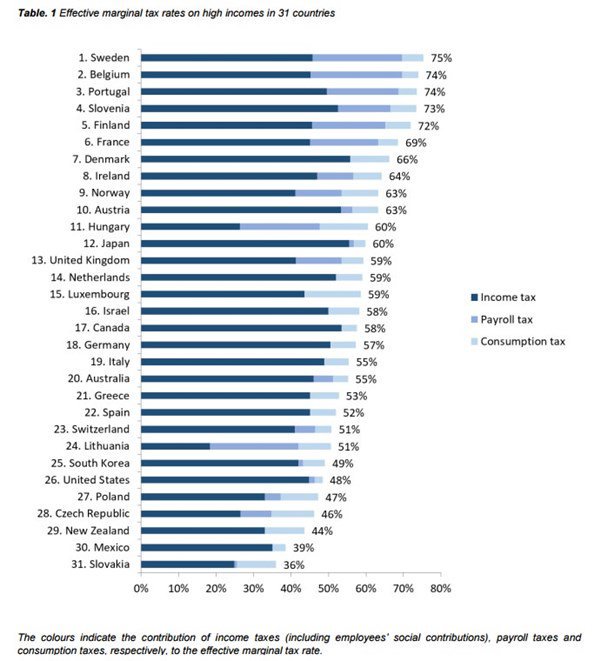
Not coincidentally, countries with high marginal income tax rates have low levels of long hours worked per week.
Data extracted on 14 Aug 2016 01:52 UTC (GMT) from OECD.Stat; Data does not include the self-employed.


Recent Comments