What the mountain that will host the Beijing Olympics looks like in the middle of winter read.bi/1fOQvzu http://t.co/UCq1WkEnIf—
Business Insider (@businessinsider) July 31, 2015
Despite a lack of snow, water, or winter sports, Beijing will host the 2022 Winter Olympics
01 Aug 2015 Leave a comment
in sports economics Tags: Olympics
Cecil
30 Jul 2015 Leave a comment
Before #CecilTheLion, hunter Kendall Jones said hunting is crucial to conservation. False. bit.ly/1tvr5wj http://t.co/SV5FeANMsE—
(@PolitiFact) July 30, 2015PHOTO: #ZebraLivesMatter http://t.co/fUGjFKfJXP—
Mark J. Perry (@Mark_J_Perry) August 03, 2015


| Peter Klein |
 No doubt you’ve heard about Walter Palmer, the American dentist who shot the lion, “Cecil,” in Zimbabwe, pushing aside Sir Tim Hunt as the Internet’s Most Hated Person. (Aside from calling Palmer cruel and depraved — even wishing his death by bow and arrow — some are labeling him a sociopath, which makes me wonder, are lions now considered members of society? Orgheads?)
I don’t hunt and have no particular emotional attachment to lions, so I find the outrage level bewildering. However, I think this can be a teachable moment. Specifically, there are lessons here about trophy hunting and endangered species. Not surprisingly to anyone who has studied property-rights economics, there is evidence that allowing trophy hunting is a good means of protecting endangered species. This is a version of the general argument that defining and enforcing property rights in scarce resources, including wildlife, provides incentives…
View original post 71 more words
Why hasn’t the Occupy Wall Street movement protested against this?
29 Jul 2015 Leave a comment
in sports economics Tags: CEO pay, Occupy Wall Street, superstar wages, superstars, top 0.1%, top 1%
Rising incomes in sports: Top salaries in baseball & basketball are higher than in football
bit.ly/1DEfFtc http://t.co/DUyJld5iah—
Max Roser (@MaxCRoser) July 21, 2015
The rising incomes of major league baseball players since 1890
Part of the inequality story in the USBy @VisualEcon http://t.co/m5GgaKGwSv—
Max Roser (@MaxCRoser) July 19, 2015
The cost of sports stadium races to the bottom and the cost of going to Pluto compared
20 Jul 2015 Leave a comment
in rentseeking, sports economics Tags: corporate welfare, expressive voting, NASA, Pluto, space, sports, sports stadiums, welfare
Minimum salaries of American professional sports players and media coverage
13 Jul 2015 Leave a comment
in applied price theory, discrimination, economics of media and culture, entrepreneurship, gender, industrial organisation, labour economics, occupational choice, sports economics, survivor principle Tags: gender wage gap, media bias, sex discrimination, superstar wages, superstars
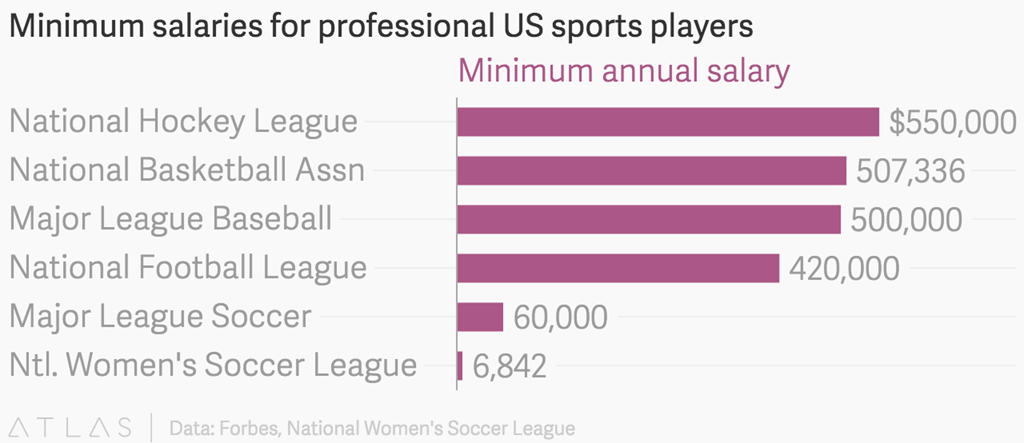

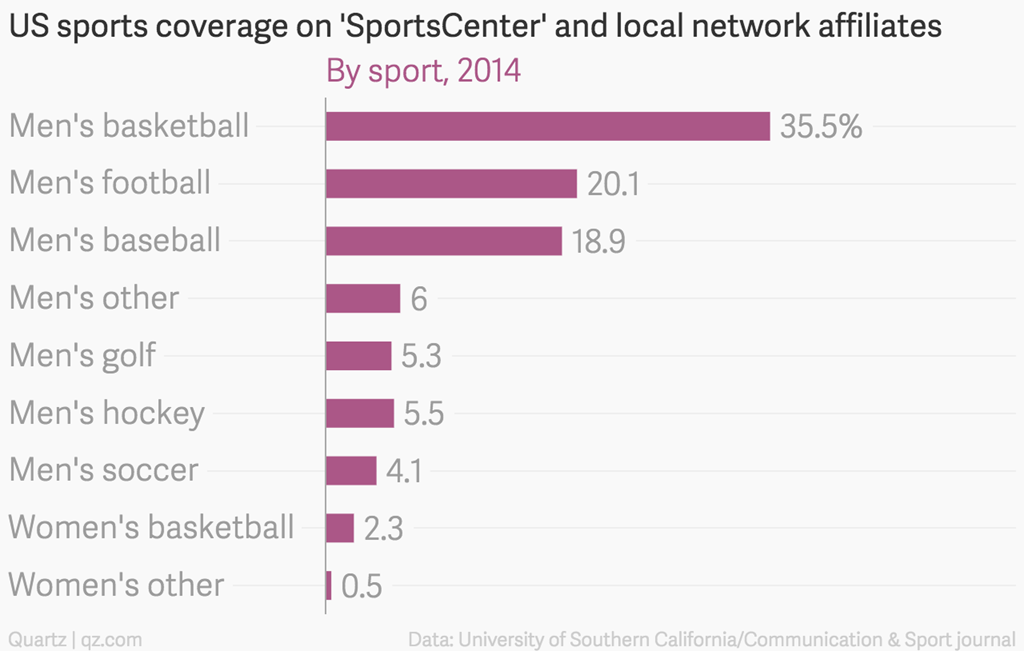
FIFA became a really big business quickly
03 Jul 2015 Leave a comment
in sports economics Tags: bribery and corruption, FIFA
#FIFA generated more than $2bn in 2014 revenues (as a tax-exempt non-profit)
forbes.com/sites/niallmcc… http://t.co/sR13qU4DJC—
Statista (@StatistaCharts) May 27, 2015
World Cup host country spending
03 Jul 2015 Leave a comment
in sports economics Tags: bribery and corruption, soccer, World Cup
The World Cup is a huge deal to Qatar bloom.bg/1JWRtW4 http://t.co/4RxIevaY0k—
Bloomberg VisualData (@BBGVisualData) June 02, 2015
"You didn’t build that" – which of sport superstars, celebrities and top CEOs earn their pay more?
25 Jun 2015 Leave a comment
in applied price theory, applied welfare economics, entrepreneurship, financial economics, industrial organisation, Marxist economics, politics - New Zealand, politics - USA, rentseeking, sports economics, survivor principle Tags: CEO pay, Leftover Left, obama, superstar wages, superstars, top 1%
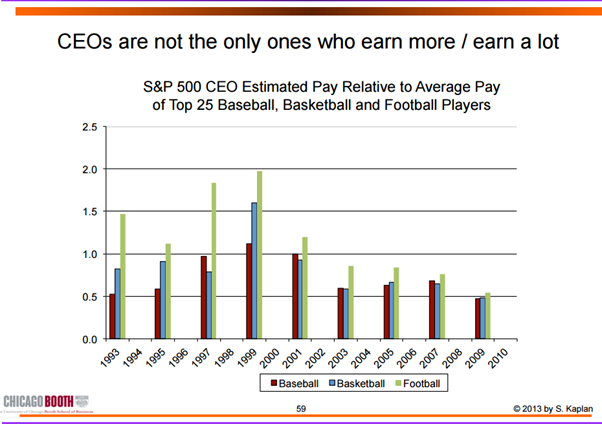
Defenders have also pointed to the pay of pro ballplayers or Hollywood stars, but they do not determine their own pay (as CEOs do) and are paid based on performance. Once they begin to fail, they are dumped. By contrast, CEO pay isn’t tied to performance in any meaningful way.
It’s a big concession to say that athletes and celebrities earn their pay but top CEOs don’t. Most of all, that concession changes the case against the top 1% from inequality to just desert – a big shift in theories of distributive justice. It’s also a big risk to base the argument for greater equality and a 80% top tax rate not only on the excesses of CEOs but on the very specific and testable hypothesis that these CEOs determine their own pay.
if we are to look at CEOs, top athletes and Hollywood celebrities, it is the athletes and celebrities who benefited the most from the windfall of been able to service huge markets through the global media market.
Figure 1: CEO pay and share market performance
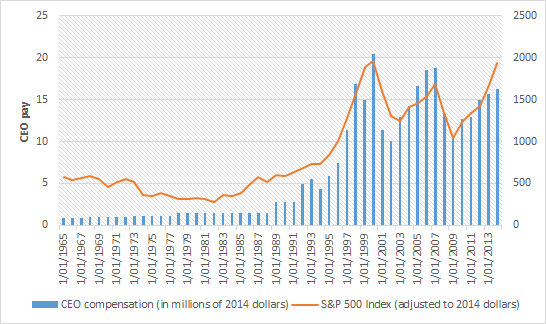
Source: Economic Policy Institute.
CEOs actually have to run large complex companies to earn their pay, which is why their compensation tracks the share market relatively closely. Athletes and celebrities don’t do that what they do any better than in the past. They simply do it in front of a global media market. Since the late 1970s, the ratio of average pay of CEOs of large public companies to the average market value of those companies has stayed relatively constant: CEO pay grew hand in hand with corporations.
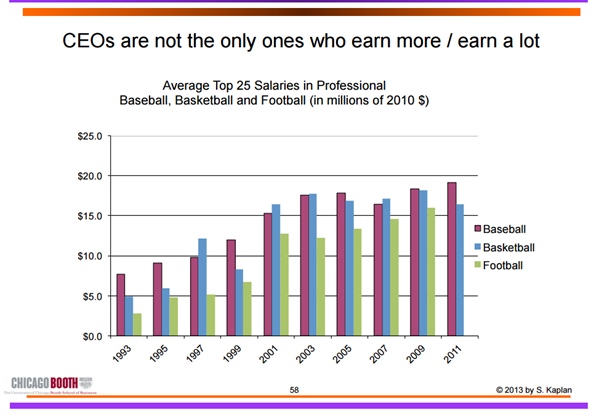
Steven Kaplan and Joshua Rauh make a number of basic points backed up by detailed evidence about CEO pay:
- While top CEO pay has increased, so has the pay of private company executives and hedge fund and private equity investors;
- ICT advances increase the pay of many – of professional athletes (technology increases their marginal product by allowing them to reach more consumers), Wall Street investors (technology allows them to acquire information and trade large amounts more easily), CEOs and technology entrepreneurs in the Forbes 400; and
- Technology allows top executives and financiers to manage larger organizations and asset pools – a loosening of social norms and a lack of independent control of CEO pacesetting does not explain similar increases in pay for private companies– technology explains it;
To put it simply:
If the reason for growth of incomes at the very top is, say, managerial power in publicly owned companies, then one would expect the increases in income at the top levels to be much larger for that group.
But the breadth of the occupations that have seen a rise in top income levels is much more consistent with the argument that the increase in “superstar” pay (or pay at the top) has been driven by the growth of information and communications technology, and the ways this technology allows individuals with particular skills that are in high demand to expand the scale of their performance.
As for the turnover argument, that underperforming athletes and celebrities are dropped, prior to the GFC, CEO turnover was already on the rise:
Turnover is 14.9% from 1992 to 2005, implying an average tenure as CEO of less than seven years. In the more recent period since 1998, total CEO turnover increases to 16.5%, implying an average tenure of just over six years.
Internal turnover is significantly related to three components of firm performance – performance relative to industry, industry performance relative to the overall market, and the performance of the overall stock market.
Only 21.3% of CEOs in 1992 remained in that role in 1999; only 16.35% of CEOS on the job in 2000 were there in 2007. In any given year, one out of six Fortune 500 CEOs loses their jobs, compared to one out of 10 in the 1970s.
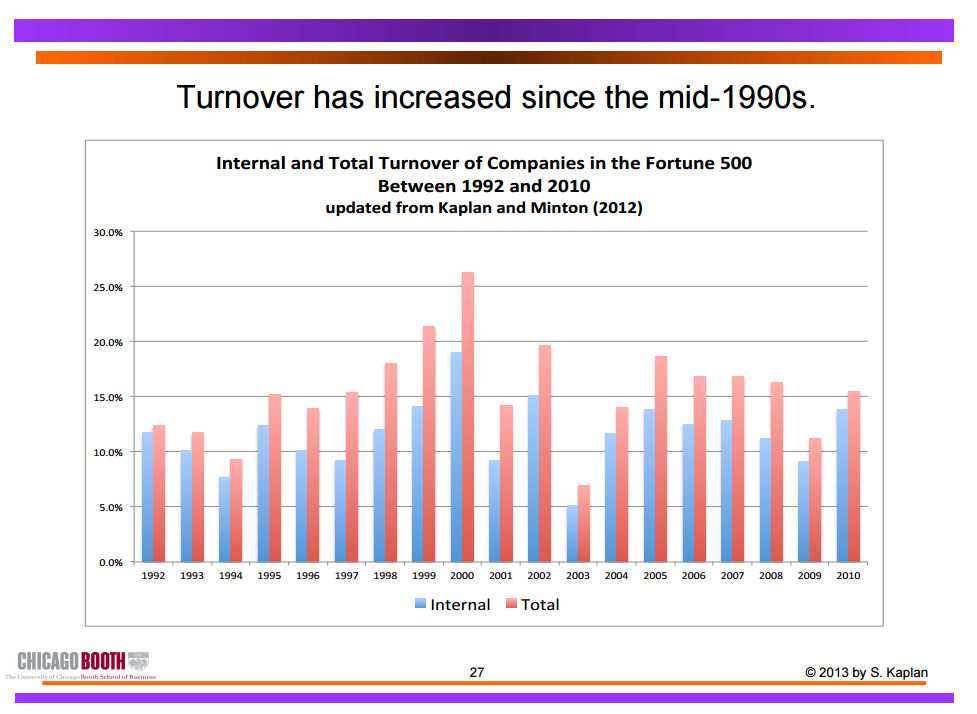
Dirk Jenter and Fadi Kanaan in a study of of 3,365 CEO turnovers from 1993 to 2009 found that:
CEOs are significantly more likely to be dismissed from their jobs after bad industry and, to a lesser extent, after bad market performance. A decline in industry performance from the 90th to the 10thpercentile doubles the probability of a forced CEO turnover.
In another study, Kaplan found that average CEO pay increased substantially during the 1990s, but declined by more than 30% from peak levels reached around 2000.
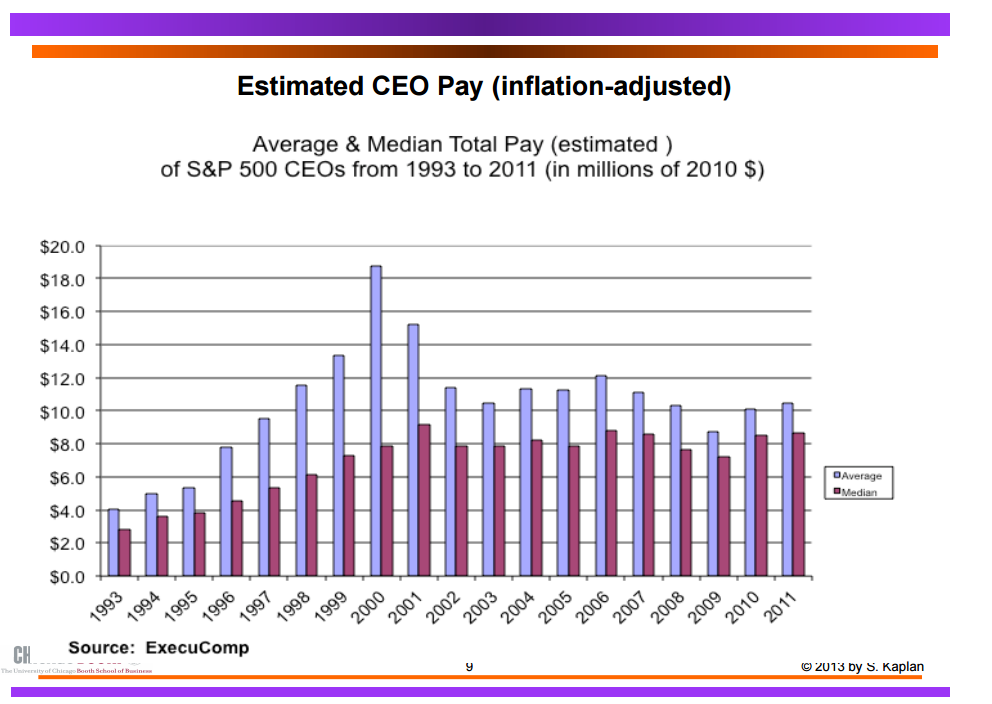
In addition, private company executives have seen their pay increase by at least as much as public companies. Private company executives with fewer agency problems have increased by more than public company executives. To close with another quote from Kaplan:
The point of these comparisons is to confirm that while public company CEOs earn a great deal, they are not unique. Other groups with similar backgrounds–private company executives, corporate lawyers, hedge fund investors, private equity investors and others—have seen significant pay increases where there is a competitive market for talent and managerial power problems are absent.
Again, if one uses evidence of higher CEO pay as evidence of managerial power or capture, one must also explain why these professional groups have had a similar or even higher growth in pay. It seems more likely that a meaningful portion of the increase in CEO pay has been driven by market forces as well.
The impact of top tax rates on the migration of superstars
22 Jun 2015 Leave a comment
in human capital, labour economics, labour supply, occupational choice, politics - Australia, politics - New Zealand, politics - USA, public economics, sports economics Tags: British economy, CEO pay, Denmark, economics of migration, endogenous growth theory, Spain, superstar wages, taxation and entrepreneurship, taxation and superstars, taxation and the labour supply, Thomas Piketty, top 1%
Emmanuel Saez is leading a literature showing how sensitive migration decisions of superstars are to top marginal tax rates. Specifically, he and his co-authors studied Spain’s Beckham’s law.
Cristiano Ronaldo moved from Manchester United to Real Madrid in 2009 partly to avoid the announced 50% top marginal income tax in the UK to benefit from “Beckham Law” in Spain. Beckham’s Law was a preferential tax scheme of 24% on foreign residents in Spain. When David Beckham transferred to Real Madrid, the manager of Arsenal football club commented that the supremacy of British soccer was at risk unless the U.K.’s top marginal tax rate changed.
A number of EU member states offer substantially lower tax rates to immigrant football players, including Denmark (1991), Belgium (2002) and Spain (2004). Beckham’s law had a big impact in Spain:
…when Spain introduced the Beckham Law in 2004, the fraction of foreigners in the Spanish league immediately and sharply started to diverge from the fraction of foreigners in the comparable Italian league.
Moreover, exploiting the specific eligibility rules in the Beckham Law, we show that the extra influx of foreigners in Spain is driven entirely by players eligible for the scheme with no effect on ineligible players.

Suez also found evidence from tax reforms in all 14 countries that the location decisions of players are very responsive to tax rates. Suez in another paper with Thomas Piketty wants the top tax rate to be 80%. However, their work on taxation and the labour supply supports a much lower rate:
First, higher top tax rates may discourage work effort and business creation among the most talented – the so-called supply-side effect. In this scenario, lower top tax rates would lead to more economic activity by the rich and hence more economic growth. If all the correlation of top income shares and top tax rates documented on Figure 1 were due to such supply-side effects, the revenue-maximising top tax rate would be 57%.
Suez and Piketty then go on to argue that the pay of chief executives of public companies, a subset of the top 1% and top 0.1%, may not reflect their productivity but that is a much more complicated argument about agency costs and the separation of ownership and control which they make rather weakly.
Much of their other work on top incomes is about the emergence of a working rich whose top incomes are wages earned by holding superstar jobs in a global economy. It would be peculiar and perhaps overzealous to organise the entire taxation of high incomes around the correction of agency costs arising from the separation of ownership and control of some of the companies listed on the stock exchange.
Figure 1: Percentage of national income (including capital gains) received by top 1%, and each primary taxpayer occupation in top 1%, USA
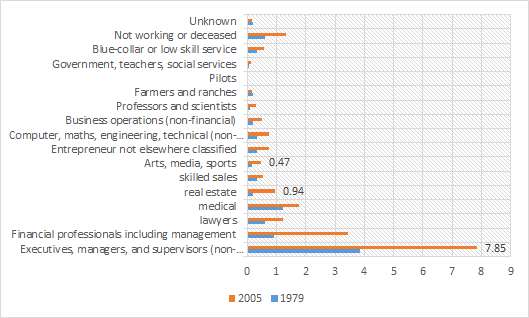
Source: Jon Bakija, Adam Cole and Bradley T. Heim “Jobs and Income Growth of Top Earners and the Causes of Changing Income Inequality: Evidence from U.S. Tax Return Data”.
There is a long history showing how the labour supply of sports stars is highly sensitive to top marginal income tax rates. For a very long time, boxing was the only really big-money sport for athletes:
The 1950s was the era of the 90 percent top marginal tax rate, and by the end of that decade live gate receipts for top championship fights were supplemented by the proceeds from closed circuit telecasts to movie theatres.
A second fight in one tax year would yield very little additional income, hardly worth the risk of losing the title. And so, the three fights between Floyd Patterson and Ingemar Johansson stretched over three years (1959-1961); the two between Patterson and Sonny Liston over two years (1962-1963), as was also true for the two bouts between Liston and Cassius Clay (Muhammad Ali) (1964-1965).
Then, the Tax Reform Act of 1964 cut the top marginal tax rate to 70 percent effective in 1965. The result: two heavyweight title fights in 1965, and five in 1966. You can look it up.
Ufuk Akcigit, Salome Baslandze, and Stefanie Stantcheva found that the migration of superstar inventors is highly responsive to top marginal tax rates.
#Braindrain is real, even quantifiable — as per NBER paper 21024. Geniuses don't tolerate extra taxes easily. http://t.co/HVP8uEFAfz—
Amity Shlaes (@AmityShlaes) June 07, 2015
Ufuk Akcigit, Salome Baslandze, and Stefanie Stantcheva studied the international migration responses of superstar inventors to top income tax rates for the period 1977-2003 using data from the European and US Patent offices.
our results suggest that, given a ten percentage point decrease in top tax rates, the average country would be able to retain 1% more domestic superstar inventors and attract 38% more foreign superstar inventors.

Emmanuel Saez and co-authors also found that a preferential top tax scheme for high earning migrants in their first three years in Denmark was highly successful in attracting highly skilled labour to that country:
…the number of foreigners in Denmark paid above the eligibility threshold (that is the group affected by the tax scheme) doubles relative to the number of foreigners paid slightly below the threshold (those are comparison groups not affected by the tax scheme) after the scheme is introduced.
This effect builds up in the first five years of the scheme and remains stable afterwards. As a result, the fraction of foreigners in the top 0.5% of the earnings distribution is 7.5% in recent years compared to a 4% counterfactual absent the scheme.
This very large behavioural response implies that the resulting revenue-maximising tax rate for a scheme targeting highly paid foreigners is relatively small (about 35%). This corresponds roughly to the current tax rate on foreigners in Denmark under the scheme once we account for other relevant taxes (VAT and excises).

This blog post was motivated by a courageous tweet about Tony Atkinson saying that increases in the top tax rate have little effect on the supply of labour! Not so.
Why the Women’s World Cup doesn’t harm host city economies the way the Men’s World Cup does
13 Jun 2015 Leave a comment
in rentseeking, sports economics Tags: is of, soccer World Cup, World Cup
The Qatar World Cup has a terrible safety record
12 Jun 2015 Leave a comment
in health and safety, labour economics, sports economics Tags: Qatar, soccer, World Cup
"The shocking human toll of FIFA’s corruption" – The Washington Post – wapo.st/1cjC0BZ @BrankoMilan http://t.co/NXa5dqPOVk—
Old Whig (@aClassicLiberal) May 27, 2015
Some think that some members of the top 0.1% are underpaid
05 Jun 2015 Leave a comment
in labour economics, sports economics Tags: baseball, superstar wages, superstars, top 0.1%, top 1%
Why Baseball Players Are Actually Underpaid theatlantic.com/business/archi… | http://t.co/qBgcmxLWca—
Charts and Maps (@ChartsandMaps) April 04, 2015
Major league baseball salary growth is slowing http://t.co/Jw6gYG1ylQ—
Charts and Maps (@ChartsandMaps) April 04, 2015
Baseball salaries hit a record high http://t.co/AfvlMEVHbf—
Charts and Maps (@ChartsandMaps) April 12, 2015
How Qatar is the odd man out in World Cup hosting
01 Jun 2015 Leave a comment
Six ways in which Qatar doesn't make a lot of sense as a World Cup host 53eig.ht/1BpVlrH #FIFA http://t.co/0N87zTO07x—
(@FiveThirtyEight) May 30, 2015
 Utopia, you are standing in it!
Recent Comments