Caught a fun phone call from an accountant after this week’s column over at the Dom Post (and Christchurch Press, etc) on the court’s decision in the Uber case.If Uber drivers are employees, rather than contractors, as the Court sees things, how will depreciation on their cars be handled? Contractors can count all those expenses…
Uber messy
Uber messy
11 Sep 2024 Leave a comment
in applied price theory, comparative institutional analysis, economics of regulation, entrepreneurship, industrial organisation, labour economics, labour supply, law and economics, occupational choice, politics - New Zealand, property rights, Public Choice, transport economics, urban economics Tags: employment law, Uber
Rent controls make many tenants worse off in the Netherlands
10 Sep 2024 Leave a comment
in applied price theory, economic history, economics of regulation, income redistribution, Public Choice, rentseeking, transport economics, urban economics Tags: rent control
Rent controls have created shortages of housing, every time and in every place that they have been tried. In the latest futile attempt to create working rent controls, the Netherlands has worsened its housing shortage. As Bloomberg reported recently (paywalled, but try this alternative link):Two years ago, Nine Moraal and her two children moved into a…
Rent controls make many tenants worse off in the Netherlands
Uber ruling – driving in the wrong direction
09 Sep 2024 Leave a comment
in applied price theory, economics of regulation, labour economics, labour supply, law and economics, occupational choice, occupational regulation, property rights, Public Choice, rentseeking, transport economics, urban economics Tags: employment law, Uber
Dr Oliver Hartwich writes – Last week, an Uber driver surprised me in a conversation about the recent Court of Appeal decision classifying four Uber drivers as employees rather than contractors. My driver was blunt. He has no desire to be an employee. He values his flexibility to take breaks and drive when and where […]
Uber ruling – driving in the wrong direction
From the comments, on moving to the suburbs
07 Sep 2024 Leave a comment
in economic history, politics - USA, transport economics, urban economics
As Ed Banfield observed, the flight to the suburbs pre-dated the car because people prefer cheaper housing and more space: “The first elevated steam railroads were in New York in the 1870s, and twenty years later every sizable city had an electric trolley system. Railroads and trolleys enabled more people to commute and to commute […]
From the comments, on moving to the suburbs
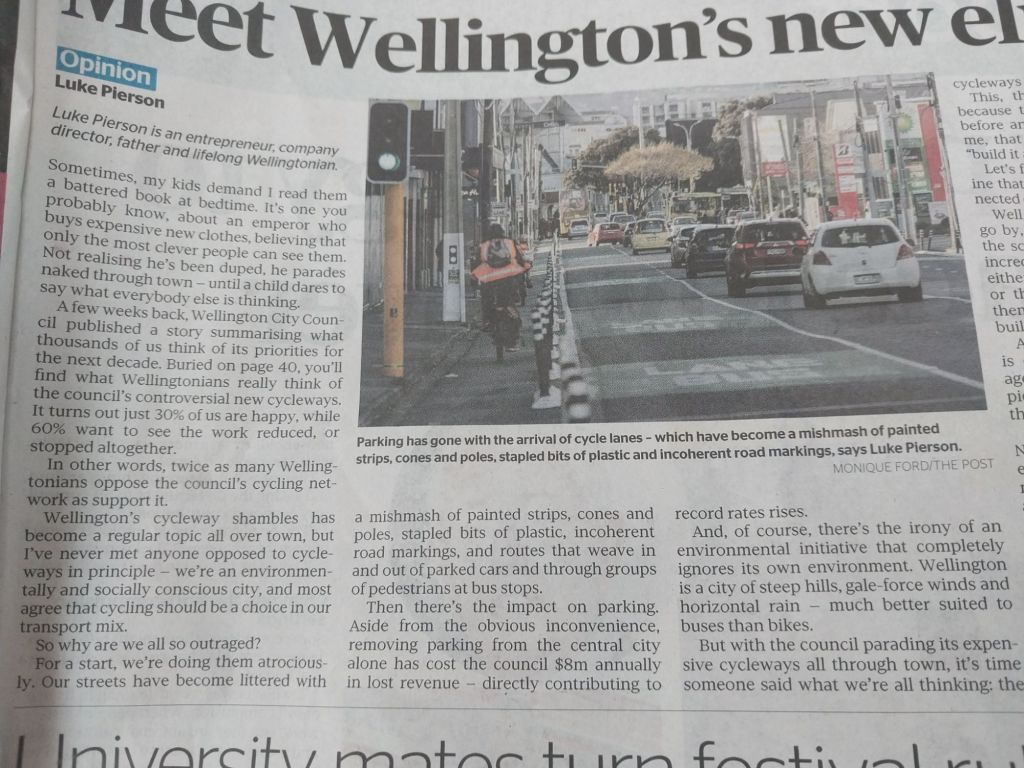
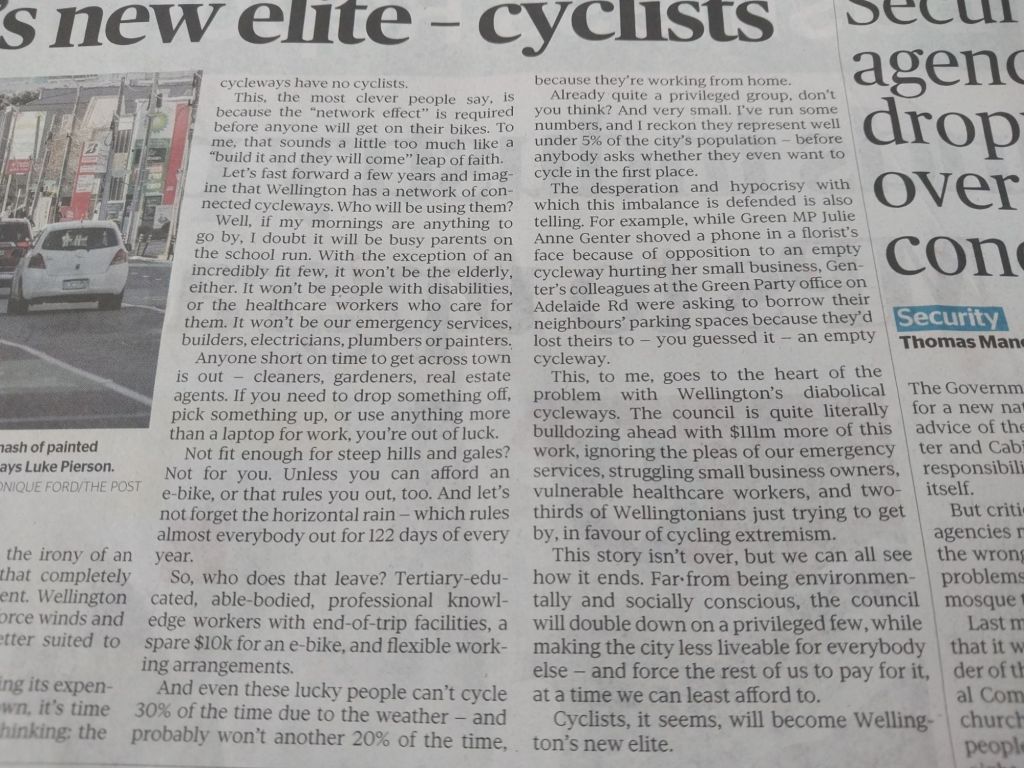
Top notch DomPost op-ed #OTD on bloody cyclists
07 Sep 2024 Leave a comment
in environmentalism, politics - New Zealand, transport economics
Volvo ditches electric car plans
06 Sep 2024 Leave a comment
in economics of climate change, energy economics, environmental economics, environmentalism, global warming, transport economics Tags: electric cars

By Paul Homewood h/t Philip Bratby Volvo has ditched plans to sell only electric cars by 2030 amid waning demand for battery powered vehicles. The Swedish carmaker blamed the move on changing market conditions, amid fears many of the public continue to prefer petrol and diesel models. It comes as major […]
Volvo ditches electric car plans
Petrol cars ‘rationed to meet eco targets’
04 Sep 2024 Leave a comment
in economics of regulation, energy economics, environmental economics, global warming, transport economics Tags: British politics, unintended consequences

By Paul Homewood h/t Doug Brodie I predicted this would happen: Car makers are rationing sales of petrol and hybrid vehicles in Britain to avoid hefty net zero fines, according to one of the country’s biggest dealership chains. Robert Forrester, chief executive of Vertu Motors, said manufacturers were delaying deliveries of cars […]
Petrol cars ‘rationed to meet eco targets’
Lets switch sides!!-Dagen H: Sweden’s Historic Switch to Right-Hand Traffic
03 Sep 2024 Leave a comment
in economic history, transport economics Tags: Sweden
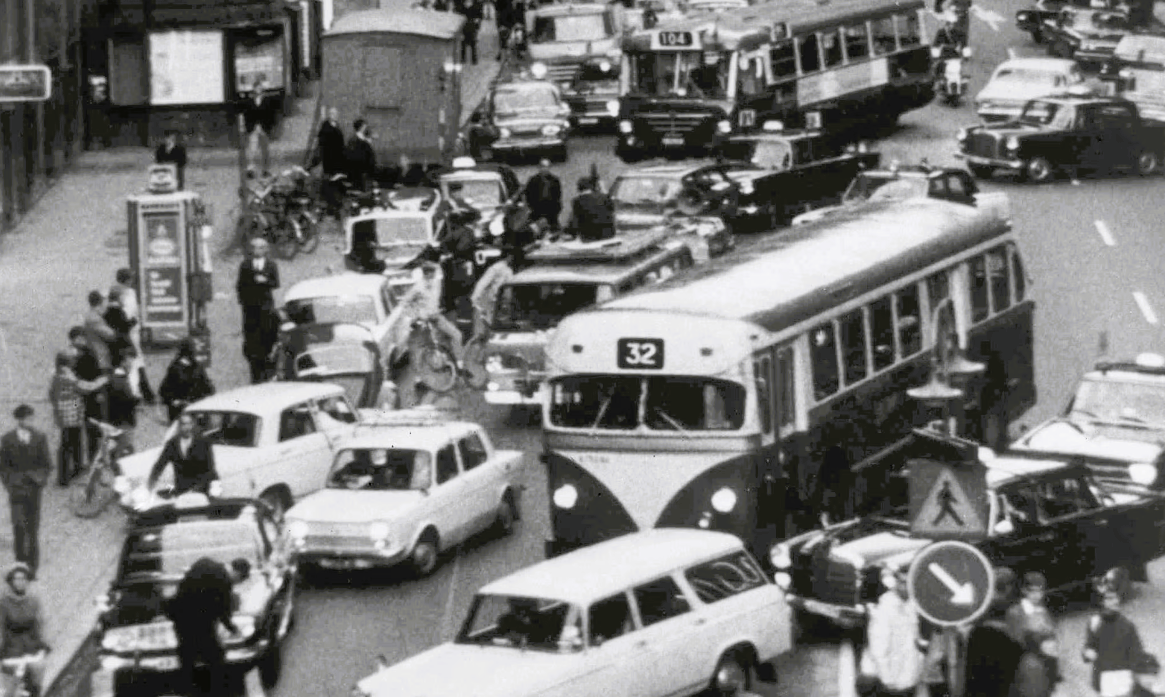
“Dagen H,” or “H Day,” stands for “Högertrafikomläggningen” in Swedish, meaning “The right-hand traffic diversion.” This term refers to one of the most significant and carefully planned transportation changes in Sweden’s history: the switch from driving on the left-hand side of the road to the right. On September 3, 1967, Sweden made this monumental change, […]
Lets switch sides!!-Dagen H: Sweden’s Historic Switch to Right-Hand Traffic
Don’t Invest in a Light-Rail Boondoggle
12 Aug 2024 Leave a comment
in comparative institutional analysis, politics - USA, Public Choice, transport economics, urban economics
Last week, I observed that “Transit’s failure to recover from the pandemic is due largely to its downtown-centric orientation in most urban areas.” An op-ed in yesterday’s Baltimore Sun makes a similar point about the planned Red Line light-rail project for that city. “The problem with Baltimore transit is not … Continue reading →
Don’t Invest in a Light-Rail Boondoggle
Gary Moller on Wellington cycleways
10 Aug 2024 Leave a comment
in politics - New Zealand, Public Choice, public economics, rentseeking, transport economics, urban economics
Garry Moller writes: If I had it my way, I would scrap many of Wellington’s cycleways, and do it better. Allow me to elaborate. … For Wellington to thrive, ample on-street parking is essential. Despite the influx of more public service employees and contractors in recent years, central Wellington is struggling. Many long-term Wellington residents, […]
Gary Moller on Wellington cycleways
Germany Green Transition Collapse: Electric Vehicle Sales Plummet 47% In First Half of This Year!
08 Aug 2024 Leave a comment
in energy economics, environmental economics, environmentalism, global warming, transport economics Tags: electric cars
Meanwhile petrol and diesel engine car sales have risen 24% and 20% respectively.
Germany Green Transition Collapse: Electric Vehicle Sales Plummet 47% In First Half of This Year!
Air New Zealand scraps its 2030 carbon emissions target, saying solutions are costly and scarce
01 Aug 2024 Leave a comment
in energy economics, environmental economics, global warming, politics - New Zealand, transport economics

By Paul Homewood From the Independent: Air New Zealand scrapped its 2030 carbon emissions reduction targets on Tuesday, citing lags in producing new planes, a lack of alternative fuel and “challenging” regulatory and policy settings. The move by the national carrier — one of New Zealand’s biggest companies by revenue — was the highest-profile […]
Air New Zealand scraps its 2030 carbon emissions target, saying solutions are costly and scarce
Wellington rates skyrocket
31 Jul 2024 Leave a comment
in economics of bureaucracy, environmental economics, income redistribution, law and economics, politics - New Zealand, property rights, Public Choice, rentseeking, transport economics, urban economics
The Post reports: Many Wellington City home owners have received a nasty surprise after new rates costs came out with increases higher than the already-eye-watering planned increases. My rates have gone up over $900 a year, or just over 20%. This is not due to more investment in water infrastructure. This is due to the […]
Wellington rates skyrocket
Just Stop Oil Activists Disrupt Flights, Demand Fossil Fuel End by 2030
25 Jul 2024 Leave a comment
in economics of crime, energy economics, environmental economics, global warming, law and economics, transport economics Tags: climate activists
…the Heathrow arrestees may find the UK justice system will be less forgiving than their previous experiences.
Just Stop Oil Activists Disrupt Flights, Demand Fossil Fuel End by 2030
Sadiq Khan to impose congestion charge on electric vehicles
08 Jul 2024 1 Comment
in energy economics, environmental economics, global warming, transport economics, urban economics Tags: British politics

By Paul Homewood Sadiq Khan is extending London’s congestion charge to all zero-emission vehicles from the end of next year.
Sadiq Khan to impose congestion charge on electric vehicles
 Utopia, you are standing in it!
Recent Comments