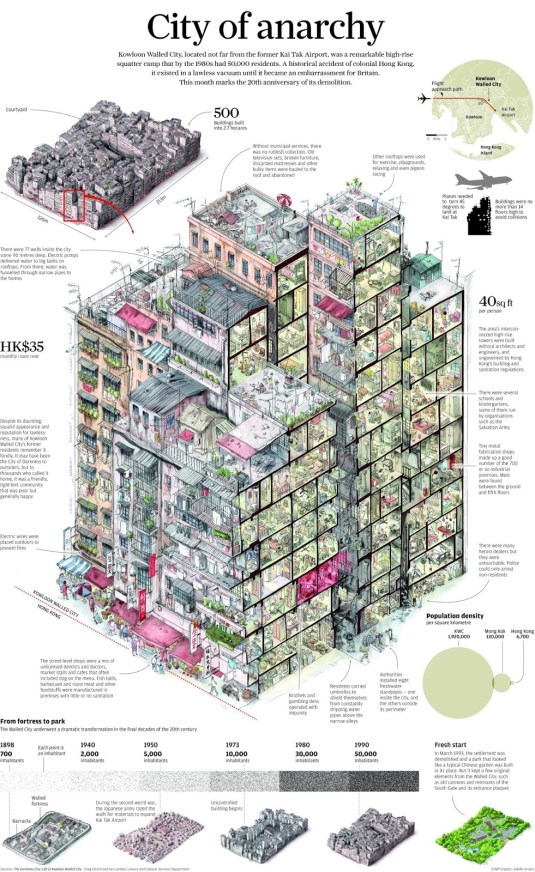
Top 10 Infamous Barrier Walls Throughout History

Too many terrorists were released from #Gitmo

image

Image

#TPPA CTU @FairnessNZ appeals to secretive @ILO committee to challenge NZ sovereignty over employment law

The unions are very much against investor state dispute settlement provisions of trade agreements, but are happy to be serial complainants to secretive International Labour Organisation (ILO) committees about employment law amendments they do not like. A fair defeat in the floor of parliament was not good enough for them.

As far back as 1993 the Council of Trade Unions has complained to secretive ILO committees about labour market deregulation in New Zealand. These secretive committees are formed under ILO conventions in New Zealand signed decades go.

Source: Submission of the New Zealand Council of Trade Unions Te Kauae Kaimahi to the Transport and Industrial Relations Select Committee on the Employment Relations Amendment Bill Part, Wellington 25 July 2013.

The competence of these ILO committees are clearly in question if they hear an appeal under a convention New Zealand has not ratified. Imagine the outrage if an investor state dispute settlement panel heard on appeal despite New Zealand having a carve-out for the topic concerned. An example would be tobacco regulation.

Justice Scalia has a fine critique of those who believe in activist judges and living constitutions that applies just as well as to activist international adjudicators and living international treaties:

You think there ought to be a right to abortion? No problem. The Constitution says nothing about it. Create it the way most rights are created in a democratic society. Pass a law. And that law, unlike a Constitutional right to abortion created by a court can compromise. It can…I was going to say it can split the baby! …A Constitution is not meant to facilitate change. It is meant to impede change, to make it difficult to change.

Rather than use normal democratic means – trying to persuade each other and elections – the union movement threatened to go to a secretive ILO committee made up of members of uncertain competence and impartiality over the recent laws on collective bargaining.

Source: Submission of the New Zealand Council of Trade Unions Te Kauae Kaimahi to the Transport and Industrial Relations Select Committee on the Employment Relations Amendment Bill Part, Wellington 25 July 2013.

The union movement was outraged at the fact that New Zealand laws it likes could be questioned at international forums. It said this in a recent submission to the Health Select Committee of Parliament.

Source: Submission of the New Zealand Council of Trade Unions Te Kauae Kaimahi to the Health Select Committee on the Smoke Free Environments (Tobacco Plain Packaging) Amendment Bill, Wellington March 2014.

The unions were equally outraged about dispute settlement procedures in the recent free trade agreement with Korea. The unions were absolutely affronted at the idea that the sovereignty of the New Zealand Parliament could be challenged at a foreign forum.

Source: Submission of the New Zealand Council of Trade Unions Te Kauae Kaimahi to the Foreign Affairs, Defence and Trade Select Committee on the Free Trade Agreement between New Zealand and the Republic of Korea, Wellington 24 April 2015.

These protestations of the union movement would have much more credibility if union did not run off to a UN or ILO committee every time they were on the losing side of a vote in parliament. The unions are happy with those parts of international economic law that serve its interests but behave hypocritical about the other parts that do not. As United States Supreme Court Justice Antonin Scalia said

The virtue of a democratic system [with a constitutionally guaranteed right to free speech] is that it readily enables the people, over time, to be persuaded that what they took for granted is not so and to change their laws accordingly.

Nothing stirs up the impassioned (and most other people as well) more than depriving them of their right to support or oppose what is important to them through political campaigns and at an election.

The losing side, and we all end up on the losing side at one time or another, are much more likely to accept an outcome if they had their say and simply lost the vote at the election or in Parliament. Power to the people as long as I am on the winning side instead is the motto of the union movement.

The unions losing on labour market deregulation is no different from any other political difference within New Zealand. Both sides passionately but respectfully attempt to persuade their fellow citizens to accept their views.

Win or lose, advocates for today’s losing causes can continued pressing their cases, secure in the knowledge that an electoral loss today can be negated by a later electoral win, which is democracy in action as Justice Kennedy explained recently in the US context:

…a democracy has the capacity—and the duty—to learn from its past mistakes; to discover and confront persisting biases; and by respectful, rationale deliberation to rise above those flaws and injustices…

It is demeaning to the democratic process to presume that the voters are not capable of deciding an issue of this sensitivity on decent and rational grounds.

The process of public discourse and political debate should not be foreclosed even if there is a risk that during a public campaign there will be those, on both sides, who seek to use racial division and discord to their own political advantage.

An informed public can, and must, rise above this. The idea of democracy is that it can, and must, mature. Freedom embraces the right, indeed the duty, to engage in a rational, civic discourse in order to determine how best to form a consensus to shape the destiny of the Nation and its people. These First Amendment dynamics would be disserved if this Court were to say that the question here at issue is beyond the capacity of the voters to debate and then to determine.


This part of the good old days should stage a comeback

https://twitter.com/ThatBucketList/status/683405030762741760

Image

Partition of India and Pakistan 1947

Refugee camps in France and Turkey

https://twitter.com/intlspectator/status/696835437759889408

The great Palestinian lie

@billshortenMP Why @TurnbullMalcolm will back Kevin Rudd for UN Secretary General

What a splendid opportunity! In an Australian election year, Kevin Rudd will be back in the Australian news, frequently front page.

This re-emergence of Kevin747 will remind Australian voters of how dysfunctional he was and how dysfunctional the last Labour government was.

Most of the reporting of Kevin Rudd in the Australian media be about how that control freak and social cripple will bring his dysfunctionality to United Nations and international relations generally.

Bill Shorten must hate the idea. The last thing he wants as an unpopular opposition leader is for the last Labour Prime Minister, who he stabbed in the back as prime minister first time round, to be back in the news.

Mark Latham uses to say that the only reason Kevin Rudd was popular with the Australian people was that never met him.

#TPPANoWay sovereignty objections apply equally to @ILO conventions

New Zealand has signed and ratified dozens of International Labour Organisation Conventions dating back to 1921. They all fetter the sovereignty of New Zealand. As a member of the ILO, New Zealand is required to report on its application of ILO Conventions.

That limitation on the sovereignty of New Zealand is no more and no less than in an international trade agreement. New Zealand can renounce an international trade agreement and has renounced nine International Labour Organisation conventions.

Jane Kelsey makes the following points about the legal implications of the Trans-Pacific Partnership agreement:

The 30 chapter Trans-Pacific Partnership Agreement (TPPA) constrains domestic law and policy at central government level, and in places by local government and SOEs, in diverse areas beyond traditional aspects of international trade.

…The TPP provides cumulative opportunities for foreign states and corporations to influence domestic decisions which may be burdensome and intrusive.

The exact same objections apply to the ILO conventions. The union movement does not hesitate to argue that the democratic process in New Zealand should be overridden because the proposal at hand purportedly conflicts with an ILO convention.

For example, when the government was choosing to deregulate collective bargaining, the sovereignty of Parliament was questioned because of an ILO convention. Helen Kelly, CTU President said:

in Parliament on 4 June, the Minister was asked if he agreed with advice from officials that the ability for employers to opt out of multi-employer bargaining may breach our obligations under ILO Convention 98 on the right to organise and collective bargaining.

…There is no point attending such an important UN ILO conference at the time your Government is being advised it is breaching its undertakings to that very organisation…

The CTU President also referred to the regulatory impact statement prepared for that collective bargaining legislation:

The paper also points out that these changes open NZ up to international examination by the International Labour Organisation (ILO) for non-compliance with Convention 98 – on the Right to Organise and Collectively Bargain, which New Zealand has signed up to.

Helen Kelly says “at least four of the proposals are deemed to be inconsistent with our international obligations, and two of them are classified as uncertain. Why the Government wants law changes that damage our international obligations is unclear.”

Council of Trade Unions submissions to minimum wage reviews have at least a dozen references to ILO conventions and the requirement to honour their provisions.


Posner and Goldsmith rightly argue that international law is a product of states pursuing their interests on the international stage. It does not induce states to comply contrary to their interests. The possibilities for what it can achieve are limited.

Government sign-up to various international agreements depending on their political priorities. You cannot complain that governments that you did not vote do what government you voted for also did, which was sign up to international agreements that suited their political agendas. The solution is to work harder to win the next general election.

As for opposing trade agreements on sovereignty grounds, it is rank hypocrisy for the union movement to do so given the number of times it cites international labour agreements when it suits them and seeks their inclusion in trade agreements to raise labour costs in developing countries.

Why @HelenClarkUNDP will not be UN Secretary General

Back in the day, I was having a beer in Bob Hawke’s office along with the rest of the economic division staff from his department. We were told to avoid discussing racing as Hawke would never stop talking about it.

Somehow the conversation got on to Malcolm Fraser becoming secretary general of the Commonwealth Secretariat. He had recently lost the race.

Bob Hawke told us a story about a conversation he had with Margaret Thatcher on the candidature of Malcolm Fraser.

Hawke said that Thatcher said do you really want Malcolm Fraser beating down your door every day about apartheid. She had a point.

I took that remark by Hawke to mean that Fraser had independent stature as a former prime minister. He could annoy powerful people because he had nothing to lose and everything to gain.

The Nigerian chief who got the job will be so grateful for the appointment that he would not upset his sponsors. That is why Helen Clark will not become UN Secretary General. She is overqualified.

UN Secretary General is not the best job Clark has ever had. She has independent gravitas and everything to gain and nothing to lose by being an activist secretary general.

All previous Secretary Generals were obscure foreign ministers who will be just so grateful for the big promotion. They did not have independent gravitas.

If you look at positions such as president of the European commission, managing director of the IMF or president of the World Bank and other international appointments, they do not go to statesman.

@TrevorMallard what next for #TPPANoWay? Repeal CER?

image

New Zealand filmmakers have used trade treaties to pry open access to foreign markets by challenging failures to honour promises of nondiscrimination in trade and investment in the Federal Court of Australia.

This should please the Twitter Left because they are also a film going left as are most members of the educated middle class as a point of identity and snobbery.

Back in the day, New Zealand television programming was sold cheaply into the Australian market. Many cultural and other products are exported into foreign markets and sold for whatever they can get above the price of shipping or digital transmission. What else explains all that rubbish on cable TV?

Under the Closer Economic Relations agreement that creates a single market between Australia and New Zealand, New Zealand made television programming content must be treated the same way as Australian content so it was included in their 50% local content rules for commercial television back from whenever I remember this story from.

There was a Federal Court of Australia case that ruled that New Zealand television programming was Australian content programming for the purposes of the relevant media regulations because of Closer Economic Relations.

From the late 1990s, with revival of the New Zealand film and television industry, New Zealand content was starting to flood the Australian market, especially in the off-season in the summer when stations were looking for cheap content to fill a low ratings period.

Naturally, this Kiwi invasion did not please the rent seeking Australian television programme production industry and many a mendicant actor, writer and producer

Where there is a will, where there is a way: minimum quality standards are introduced into the Australian content rules defined by price – a price that happen to be above what the television stations used to pay for New Zealand made programming in the off-season.

This court victory in favour of various New Zealand film industry in enforcing a trade and investment treaty puts the Twitter left in a bit of a conundrum. Which is more important? The New Zealand film industry or their hatred of globalisation and the rule of law.

What would be the opening offer of @jeremycorbyn at Syrian Civil War peace talks?

https://www.youtube.com/watch?v=h7M9NuiQXgs&feature=youtu.be

The best part of Hilary Benn’s speech when he explain the benefits of airstrikes. Benn pointed out that 14 months ago, ISIS was at the gates of Baghdad but airstrikes beat them back. Benn then referred to the Kurds where they were in retreat until there were airstrikes. They now have a border with ISIS they can defend.

Jim Rose's avatarUtopia, you are standing in it!

image

Exactly what would Jeremy Corbyn put on that negotiating table for a comprehensive peace settlement to the Syrian Civil War that:

  1. would end the military threat from ISIS in Syria, and
  2. allow the Kurdish succession opposed by all others plus Turkey, Iraq and Russia?

Without the resumption of military strikes as negotiating coin if such peace talks break down, why would anyone fighting on the ground in Syria care about what proposals the Western powers might put up?

The possibility of a temporary cessation in current and intensifying Western military airstrikes is one of the few reasons for the parties to sit down at a negotiating table with the Western powers and Russia if only to string out that cessation of those airstrikes while they regroup and re-equip. The parties to the Syrian Civil War only respect force, not moral authority.

The ability to negotiate a credible peaceful settlement between…

View original post 307 more words

I am not responsible for the ads on my blog

Image

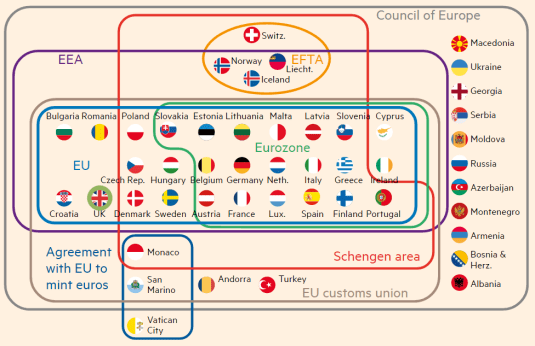
The most confusing international borders

Refugee populations by country of asylum – UK, USA, France and Germany since 1960

Jim Rose's avatarUtopia, you are standing in it!

I had to use two charts because Germany hosted so many refugees after in the early 1990s that it made the reading the remaining data not possible because of the scale of the axis.

UNHCR – UNHCR Statistical Online Population Database.


UNHCR – UNHCR Statistical Online Population Database.

View original post

Previous Older Entries Next Newer Entries

Reason.com

Celebrating humanity's flourishing through the spread of capitalism and the rule of law

Coyote Blog

Celebrating humanity's flourishing through the spread of capitalism and the rule of law

Thoughts from the North

Celebrating humanity's flourishing through the spread of capitalism and the rule of law

Fardels Bear

A History of the Alt-Right

Vincent Geloso

Econ Prof at George Mason University, Economic Historian, Québécois

Bassett, Brash & Hide

Celebrating humanity's flourishing through the spread of capitalism and the rule of law

Truth on the Market

Scholarly commentary on law, economics, and more

The Undercover Historian

Beatrice Cherrier's blog

Matua Kahurangi

Celebrating humanity's flourishing through the spread of capitalism and the rule of law

Temple of Sociology

Celebrating humanity's flourishing through the spread of capitalism and the rule of law

Velvet Glove, Iron Fist

Celebrating humanity's flourishing through the spread of capitalism and the rule of law

Why Evolution Is True

Why Evolution is True is a blog written by Jerry Coyne, centered on evolution and biology but also dealing with diverse topics like politics, culture, and cats.

NoTricksZone

Celebrating humanity's flourishing through the spread of capitalism and the rule of law

Homepaddock

A rural perspective with a blue tint by Ele Ludemann

Kiwiblog

DPF's Kiwiblog - Fomenting Happy Mischief since 2003

The Dangerous Economist

Celebrating humanity's flourishing through the spread of capitalism and the rule of law

Watts Up With That?

The world's most viewed site on global warming and climate change

The Logical Place

Tim Harding's writings on rationality, informal logic and skepticism

Doc's Books

A window into Doc Freiberger's library

The Risk-Monger

Let's examine hard decisions!

Uneasy Money

Commentary on monetary policy in the spirit of R. G. Hawtrey

Barrie Saunders

Thoughts on public policy and the media

Liberty Scott

Celebrating humanity's flourishing through the spread of capitalism and the rule of law

Point of Order

Politics and the economy

James Bowden's Blog

A blog (primarily) on Canadian and Commonwealth political history and institutions

Science Matters

Reading between the lines, and underneath the hype.

Peter Winsley

Economics, and such stuff as dreams are made on

A Venerable Puzzle

"The British constitution has always been puzzling, and always will be." --Queen Elizabeth II

The Antiplanner

Celebrating humanity's flourishing through the spread of capitalism and the rule of law

Bet On It

Celebrating humanity's flourishing through the spread of capitalism and the rule of law

History of Sorts

WORLD WAR II, MUSIC, HISTORY, HOLOCAUST

Roger Pielke Jr.

Undisciplined scholar, recovering academic

Offsetting Behaviour

Celebrating humanity's flourishing through the spread of capitalism and the rule of law

JONATHAN TURLEY

Res ipsa loquitur - The thing itself speaks

Conversable Economist

In Hume’s spirit, I will attempt to serve as an ambassador from my world of economics, and help in “finding topics of conversation fit for the entertainment of rational creatures.”

The Victorian Commons

Researching the House of Commons, 1832-1868

The History of Parliament

Articles and research from the History of Parliament Trust

Books & Boots

Reflections on books and art

Legal History Miscellany

Posts on the History of Law, Crime, and Justice

Sex, Drugs and Economics

Celebrating humanity's flourishing through the spread of capitalism and the rule of law

European Royal History

Exploring the Monarchs of Europe

Tallbloke's Talkshop

Cutting edge science you can dice with

Marginal REVOLUTION

Small Steps Toward A Much Better World

NOT A LOT OF PEOPLE KNOW THAT

“We do not believe any group of men adequate enough or wise enough to operate without scrutiny or without criticism. We know that the only way to avoid error is to detect it, that the only way to detect it is to be free to inquire. We know that in secrecy error undetected will flourish and subvert”. - J Robert Oppenheimer.

STOP THESE THINGS

The truth about the great wind power fraud - we're not here to debate the wind industry, we're here to destroy it.