SummaryIn this chapter, Rothbard advocates the abolition of publicly-owned streets and roads:Abolition of the public sector means, of course, that all pieces of land, all land areas, including streets and roads, would be owned privately, by individuals, corporations, cooperatives, or any other voluntary group ings of individuals and capital.He begins by explaining that in a…
Before the 2023 presidential election in Argentina, 108 left-leaning economists released a letter warning that Javier Milei’s “economic proposals…are fraught with risks that make them potentially very harmful for the Argentine economy.” Voters ignored those warnings and elected Milei. And the 108 lefty economists – including class-warfare ideologues such as Thomas Piketty and Gabriel Zucman – wound up with […]
SummaryIn this chapter, Rothbard makes the case for the abolition of public schooling. While he somewhat surprisingly views Friedman’s voucher system as “a great improvement over the present system in permitting a wider range of parental choice and enabling the abolition of the public school system,” Rothbard will settle for nothing less than the separation…
Tweet… is from page 15 of the late Brian Doherty’s excellent 2007 book, Radicals for Capitalism: A Freewheeling History of the Modern American Libertarian Movement: Libertarianism is based in economic theory, as economic science teaches how workable order can arise from the seeming chaos of free actions uncoordinated by a single outside intelligence, and how…
Given my enthusiasm for Javier Milei and his libertarian reforms, I’m excited to be in Buenos Aires for a week-long program on “Understanding Argentina’s Transformations Under Milei.” This means a heavy does of Milei-ism this week. For today’s column, I’m going to share some slides from a presentation by Alejandro Rodriguez on the “Inheritance” Milei […]
The Herald reports: Senior Government minister Louise Upston visited Gloriavale in late January, months after refusing to rule out closing the religious community following allegations of child abuse in the community. Newstalk ZB has confirmed Upston visited the sect on January 30, alongside officials from the Ministry of Social Development. This story is puzzling. As…
[Update: I’m on vacation next Friday, so the next installment of this book club will be in two weeks.]SummaryIn this chapter on “Personal Liberty,” Rothbard puts run-of-the-mill “civil libertarians” to shame. He’s more radical than most of the left on traditional civil liberties like freedom of speech, drugs, and wiretapping. He stands up for the…
…on March 12 we’ll be launching Liberalism.org, a new project from IHS [Institute for Humane Studies]. We’re aiming to build something akin to a modern-day coffee house of the liberal tradition—a digital gathering place where today’s most innovative liberal thinkers can weigh tradeoffs, think across differences, and apply liberal values to the challenges of today and…
Pacifism presents itself as the highest moral ground: a principled refusal to engage in violence, an insistence that all killing is always wrong, and a hope that moral purity can disarm brutality. In practice, however, pacifism is not merely naïve but morally evasive. It refuses responsibility for consequences, confuses intentions with outcomes, and ultimately relies […]
SummaryRothbard now applies the normative standards developed in chapter 2 to explain what libertarians have against government (or as Rothbard, inspired by Germanic capitalization, calls it, “the State”). The argument is simple: If a private individual did what governments do, almost everyone would call him a criminal. If I took your money without your consent, I’d…
SummaryIn this chapter (“Property and Exchange”), Rothbard introduces the “non-aggression axiom,” also often known as the “non-initiation of force axiom.” The intuition is simple enough: No one has the right to start using physical violence or the threat thereof against another person or his property. This is one of the first moral rules we learn as…
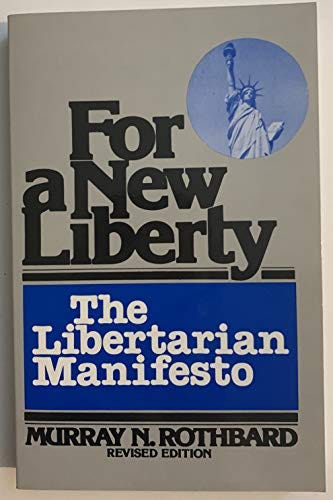
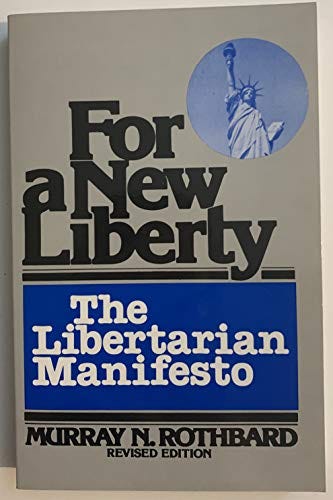
Here’s my plan: I’ll lead off each discussion of Murray Rothbard’s For a New Liberty with (a) a brief summary of the chapter of the week, and (b) some critical comments. But this is your book club, so in the comments feel free to not only to discuss my summary and critique, but any thoughts…
The paternalistic assumption is an important strand within socialist critiques of markets, though it is not the whole story, and it varies significantly across socialist traditions. A clear way to frame it is this: some socialist opposition to markets rests on a guardianship model of society, in which experts, planners, or the state are assumed to make better […]
Last month, Econoboi hosted a debate on poverty between myself and Matt Bruenig. Here are my reflections on that debate.I was pleasantly surprised by Bruenig’s openness to most of my proposed supply-side reforms. He wasn’t just pro-immigration, but also pro-deregulation of housing and pro-nuclear. He was happy to admit that these policies aren’t just good…
Why Evolution is True is a blog written by Jerry Coyne, centered on evolution and biology but also dealing with diverse topics like politics, culture, and cats.
In Hume’s spirit, I will attempt to serve as an ambassador from my world of economics, and help in “finding topics of conversation fit for the entertainment of rational creatures.”





Recent Comments