John Cowperthwaite, Hong Kong and the dangers of collecting statistics

The Colonial Office sent John Cowperthwaite to Hong Kong in 1945 to serve eventually as its financial secretary from 1961.
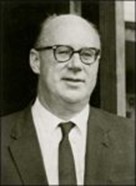
This Scotsman was very much a disciple of Adam Smith. In his first budget speech, in 1961, he said:

In the long run, the aggregate of decisions of individual businessmen, exercising individual judgment in a free economy, even if often mistaken, is less likely to do harm than the centralised decisions of a government, and certainly the harm is likely to be counteracted faster.

In his decade as financial secretary, real wages rose by 50 % and the share of the population in acute poverty fell from 50% to 15%. Milton Friedman met Cowperthwaite in 1963 and asked about the lack of economic statistics. Cowperthwaite answered:

“If I let them compute those statistics, they’ll want to use them for planning.” Friedman thought “How wise”.

Murray Rothbard got into a debate with George Stigler in the early 1960s about the dangers of collecting statistics. Rothbard argued that:

The individual consumer, in his daily rounds, has little need of statistics; through advertising, through the information of friends, and through his own experience, he finds out what is going on in the markets around him. The same is true of the business firm.

The businessman must also size up his particular market, determine the prices he has to pay for what he buys and charge for what he sells, engage in cost accounting to estimate his costs, and so on.

But none of this activity is really dependent upon the omnium gatherum of statistical facts about the economy ingested by the federal government. The businessman, like the consumer, knows and learns about his particular market through his daily experience.

… Statistics are the eyes and ears of the bureaucrat, the politician, the socialistic reformer. Only by statistics can they know, or at least have any idea about, what is going on in the economy.

… Cut off those eyes and ears, destroy those crucial guidelines to knowledge, and the whole threat of government intervention is almost completely eliminated

Cowperthwaite refused to collect economic statistics

for fear that I might be forced to do something about them

This action bias is a common bias of bureaucracies. Peter Lilley in the UK said:

…when there is a problem – a perceived political problem – officials come up with a range of options which excludes one option. I observed this when I was a humble PPS at the Department of Environment and suggested that we always ought to include this option on the list and it became known as “Lilley’s option” and that was do nothing.

Other psychological biases of bureaucracies are motivated reasoning, the focusing illusion, the affect heuristic and the illusion of competence. When Friedman asked him in 1963 to explain the mechanism which kept the Hong Kong dollar pegged to the pound, Cowperthwaite said that the Hong Kong & Shanghai Bank (through which the currency peg was operated) did not understand it:

Better they shouldn’t. They would mess it up.

His 2008 Guardian obituary noted that when asked what was the key thing that poor countries should do, Cowperthwaite once remarked:

They should abolish the office of national statistics.

The ideal faceless bureaucrat, Cowperthwaite said of his record:

I did very little. All I did was to try to prevent some of the things that might undo it.

.

Milton Friedman on the power of greed

So that the record of history is absolutely crystal clear. That there is no alternative way, so far discovered, of improving the lot of the ordinary people that can hold a candle to the productive activities that are unleashed by a free enterprise system.

Video

The market is the basis of social peace as well as prosperity

Milton Friedman pointed specifically to the anonymity and impersonal nature of the market as a way that people that would otherwise hate each other if they met on any other basis could instead co-operate, work productively together and become friendly with each other.

“The great virtue of a free market system is that it does not care what colour people are; it does not care what their religion is; it only cares whether they can produce something you want to buy. It is the most effective system we have discovered to enable people who hate one another to deal with one another and help one another.”

Milton Friedman

Benevolence is not enough. The market process ensures that the unpopular and unpleasant also get fed and have jobs. The market is the basis of social peace as well as the only method by which the masses escaped from grinding poverty.

A taxonomy of political disagreement

It is just too comforting to think that those you disagree with are ignorant or steeped in moral turpitude, preferably both.

clip_image001

Milton Friedman argued that people agree on most social objectives, but they differ often on the predicted outcomes of different policies and institutions.

This leads us to Robert and Zeckhauser’s taxonomy of disagreement:

Positive disagreements can be over questions of:
1. Scope: what elements of the world one is trying to understand?
2. Model: what mechanisms explain the behaviour of the world?
3. Estimate: what estimates of the model’s parameters are thought to obtain in particular contexts?

Values disagreements can be over questions of:
1. Standing: who counts?
2. Criteria: what counts?
3. Weights: how much different individuals and criteria count?

Any positive analysis tends to include elements of scope, model, and estimation, though often these elements intertwine; they frequently feature in debates in an implicit or undifferentiated manner.

Likewise, normative analysis will also include elements of standing, criteria, and weights, whether or not these distinctions are recognised.

The origin of political disagreement is a broad church indeed in a liberal democracy. Those you disagree with are not evil, they just disagree with you. As Karl Popper observed:

There are many difficulties impeding the rapid spread of reasonableness. One of the main difficulties is that it always takes two to make a discussion reasonable. Each of the parties must be ready to learn from the other.

A nice case against the notion of the ignorance and moral turpitude of your opponents is the obituary by Brad DeLong for Milton Friedman which was as good as any written saying:

His wits were smart, his perceptions acute, his arguments strong, his reasoning powers clear, coherent, and terrifyingly quick. You tangled with him at your peril. And you left not necessarily convinced, but well aware of the weak points in your own argument

AND

Milton Friedman’s thought is, I believe, best seen as the fusion of two strongly American currents: libertarianism and pragmatism. Friedman was a pragmatic libertarian. He believed that–as an empirical matter–giving individuals freedom and letting them coordinate their actions by buying and selling on markets would produce the best results… For right-of-center American libertarian economists, Milton Friedman was a powerful leader. For left-of-center American liberal economists, Milton Friedman was an enlightened adversary. We are all the stronger for his work. We will miss him.

What is neoliberalism? Please tell me – show me one.

I want to meet someone who believes neoliberalism was the leading light of the economic reforms since 1980. They can then tell me what neoliberalism is. Please, tell me.

The prefix “neo-” makes “neoliberalism” sound like something that morphed into something bad. Is neoliberalism something more than a sustained sneer – a personal attack as a way of avoiding debate?

Not only is there no single definition of neoliberalism, there is no one who identifies himself or herself as a neoliberal. At least communists and socialists were proud to be called so.

In Neoliberalism: From New Liberal Philosophy to Anti-Liberal Slogan, Taylor Boas & Jordan Gans-Morse went in search of anyone who identifies one’s self as a neoliberal:

  • They did not uncover a single contemporary instance in which an author used the term self-descriptively, and only one – an article by New York Times columnist Thomas Friedman (1999) – in which neoliberal was applied to the author’s own policy recommendations.
  • Digging into the archives, they did find that while Milton Friedman (1951) embraced the neoliberal label and philosophy in one of his earliest political writings, he soon distanced himself from the term, trumpeting “old-style liberalism” in later manifestoes (Friedman 1955). See “Neo-liberalism and its Prospects”, Milton Friedman Papers, Box 42, Folder 8, Hoover Institution Archives. 1951. Hardly a smoking gun?

What Boas and Gans-Morse found, based on a content analysis of 148 journal articles published from 1990 to 2004, was that the term is often undefined. It is employed unevenly across ideological divides; it is used to characterise an excessively broad variety of phenomena.

That is academic speak for neoliberalism is an empty slogan.

Neoliberalism was supposed to rule the roost under Reagan, Thatcher, Hawke and Lange-Douglas. The local branches of neoliberalism were Thatchernomics, Rogernomics, and Reaganomics.

Milton Friedman is said to have mesmerised several countries with a flying visit. The Friedman Monday Conference on ABC in 1975 and by Hayek in 1976 are still ruling the Australian policy roost, if some serious public commentators are to be believed.

In the 1980s and up to the mid-1990s, despite all the neo-liberal deregulation and Milton Friedman taking over monetary policy, mentioning Friedman’s name at job interviews would have been extremely career limiting, and that was at the Australian Treasury.

Back then, the much less radical Friedman was just graduating from being a wild man in the wings to just a suspicious character.

If you name dropped Hayek in the early 1990s, any sign of name recognition would have indicated that you were being interviewed by educated people.

When the Left gets on its high horse and goes on about Hayek and Friedman running neoliberalism, with Hayek as Friedman’s mentor, it is refreshing to remind all how little they had in common on macroeconomics. The University of Chicago Department of Economics did not offer Hayek a job in the late 1940s despite his outstanding record at LSE as Keynes’ principal critic in the 1930s.

While working at the next desk to a monetary policy section in the late 1980s, when mortgage rates were 18%, I heard not a word of Friedman’s Svengali influence:

  • The mantra for several years was that the market determined interest rates, not the Reserve Bank. Joan Robinson would have been proud that her 1975 Monday conference was still holding the reins.
  • Monetary policy was targeting the current account. Read Edwards’ biography of Paul Keating’s time as Treasurer and Prime Minister and his extracts from very Keynesian treasury briefings to Keating signed by David Morgan that reminded me of Keynesian Macro 101.

As a commentator on an Australian Treasury seminar paper in 1986, Peter Boxhall – freshly educated from the 1970s Chicago School – suggested using monetary policy to reduce the inflation rate quickly to zero. David Morgan and Chris Higgins almost fell off their chairs. These Treasury Deputy CEOs had never heard of such radical ideas.

In their breathless protestations, neither Morgan nor Higgins were sufficiently in tune with their Keynesian education to remember the role of sticky wages or even the need for monetary growth reductions to be gradual and, more importantly, credible, as per Milton Friedman.

By the way, Friedman’s presidential address to the AEA in 1967 is now recognised as perhaps the single most influential journal article of the 20th century. That article is the essence of good communication and empirical testing of competing hypotheses as was his 1976 Noble Prize lecture. No wonder both were hidden from impressionable undergraduates such as me a few years after.

Next Newer Entries

Libertarian Land

Celebrating humanity's flourishing through the spread of capitalism and the rule of law

Arin’s Substack

Celebrating humanity's flourishing through the spread of capitalism and the rule of law

David Andolfatto

Celebrating humanity's flourishing through the spread of capitalism and the rule of law

Monetary Non-Neutrality

Celebrating humanity's flourishing through the spread of capitalism and the rule of law

Reason Magazine

Celebrating humanity's flourishing through the spread of capitalism and the rule of law

Coyote Blog

Celebrating humanity's flourishing through the spread of capitalism and the rule of law

Thoughts from the North

Celebrating humanity's flourishing through the spread of capitalism and the rule of law

Fardels Bear

A History of the Alt-Right

Vincent Geloso

Econ Prof at George Mason University, Economic Historian, Québécois

Bassett, Brash & Hide

Celebrating humanity's flourishing through the spread of capitalism and the rule of law

Truth on the Market

Scholarly commentary on law, economics, and more

The Undercover Historian

Beatrice Cherrier's blog

Matua Kahurangi

Celebrating humanity's flourishing through the spread of capitalism and the rule of law

Temple of Sociology

Celebrating humanity's flourishing through the spread of capitalism and the rule of law

Velvet Glove, Iron Fist

Celebrating humanity's flourishing through the spread of capitalism and the rule of law

Why Evolution Is True

Why Evolution is True is a blog written by Jerry Coyne, centered on evolution and biology but also dealing with diverse topics like politics, culture, and cats.

NoTricksZone

Celebrating humanity's flourishing through the spread of capitalism and the rule of law

Homepaddock

A rural perspective with a blue tint by Ele Ludemann

Kiwiblog

DPF's Kiwiblog - Fomenting Happy Mischief since 2003

The Dangerous Economist

Celebrating humanity's flourishing through the spread of capitalism and the rule of law

Watts Up With That?

The world's most viewed site on global warming and climate change

The Logical Place

Tim Harding's writings on rationality, informal logic and skepticism

Doc's Books

A window into Doc Freiberger's library

The Risk-Monger

Let's examine hard decisions!

Uneasy Money

Commentary on monetary policy in the spirit of R. G. Hawtrey

Barrie Saunders

Thoughts on public policy and the media

Liberty Scott

Celebrating humanity's flourishing through the spread of capitalism and the rule of law

Point of Order

Politics and the economy

James Bowden's Blog

A blog (primarily) on Canadian and Commonwealth political history and institutions

Science Matters

Reading between the lines, and underneath the hype.

Peter Winsley

Economics, and such stuff as dreams are made on

A Venerable Puzzle

"The British constitution has always been puzzling, and always will be." --Queen Elizabeth II

The Antiplanner

Celebrating humanity's flourishing through the spread of capitalism and the rule of law

Bet On It

Celebrating humanity's flourishing through the spread of capitalism and the rule of law

History of Sorts

WORLD WAR II, MUSIC, HISTORY, HOLOCAUST

Roger Pielke Jr.

Undisciplined scholar, recovering academic

Offsetting Behaviour

Celebrating humanity's flourishing through the spread of capitalism and the rule of law

JONATHAN TURLEY

Res ipsa loquitur - The thing itself speaks

Conversable Economist

In Hume’s spirit, I will attempt to serve as an ambassador from my world of economics, and help in “finding topics of conversation fit for the entertainment of rational creatures.”

The Victorian Commons

Researching the House of Commons, 1832-1868

The History of Parliament

Articles and research from the History of Parliament Trust

Books & Boots

Reflections on books and art

Legal History Miscellany

Posts on the History of Law, Crime, and Justice

Sex, Drugs and Economics

Celebrating humanity's flourishing through the spread of capitalism and the rule of law

European Royal History

Exploring the Monarchs of Europe

Tallbloke's Talkshop

Cutting edge science you can dice with