Ethnic differences in household incomes in the USA
16 Sep 2016 Leave a comment
in discrimination, human capital, labour economics, labour supply, politics - USA Tags: racial discrimination, racial wage gaps
@Greens @PaulineHansonOz are peas in a pod
15 Sep 2016 1 Comment
in international economics, politics - Australia
This chart from coming on 20 years ago by Lyndon Rowe illustrates that the Australian Greens, Pauline Hanson’s One Nation and a now-defunct Australian political party of self-proclaimed do-gooders have plenty in common and still do.
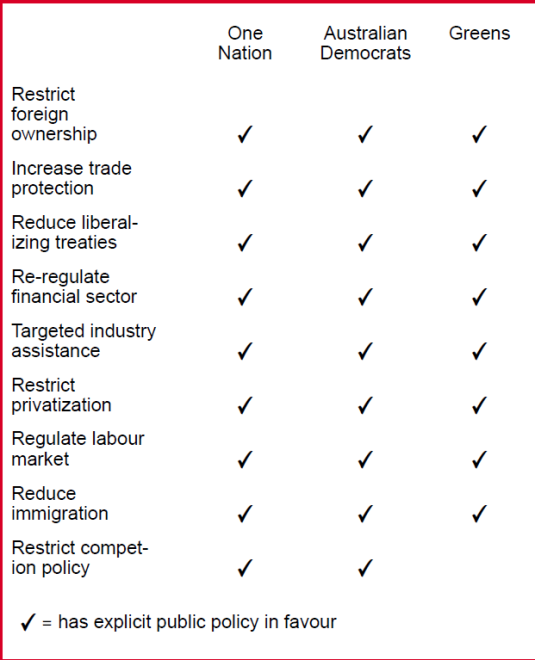
Pauline Hanson and the Australian Greens will vote the same way many times despite the Greens self-righteously boycotting the maiden speech of a fellow economic nationalist.
The war on alcohol and the war on drugs were symbiotic campaigns
14 Sep 2016 Leave a comment
in applied price theory, applied welfare economics, economics, economics of regulation, law and economics, politics - USA Tags: economics of prohibition, war on drugs
NZ inflation rate since 1991 with 1% CPI bias adjustment
13 Sep 2016 Leave a comment
in economic history, inflation targeting, macroeconomics, monetary economics, politics - New Zealand Tags: CPI bias, inflation rate
The inflation rate is overstated by about 1% each year because of difficulties in measuring new goods entering the consumer price index and improvements in the quality of existing goods in the consumer price index. With that adjustment of 1% in the chart below, a common measure of that bias, New Zealand has had zero to negative inflation for four years
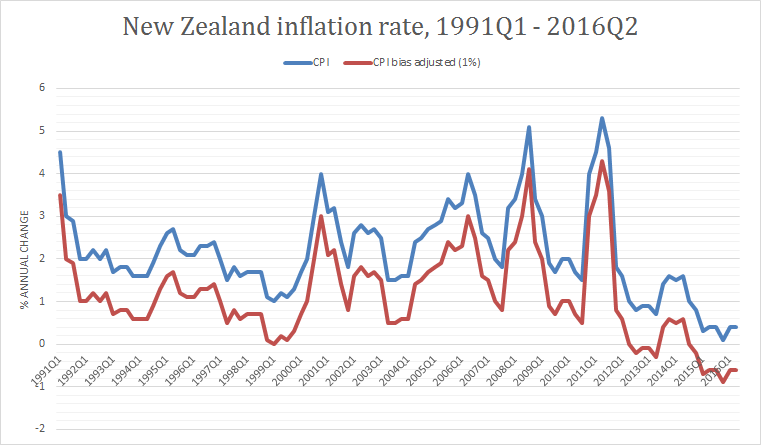
Source: Reserve Bank of New Zealand Key Statistics.
One of the reasons for an inflation target band of 1 to 3% is an inflation rate of 1% is actually an inflation rate of 0%.
Land affordability, not housing affordability is the problem to be solved
11 Sep 2016 1 Comment
in applied price theory, economics of regulation, politics - New Zealand, urban economics
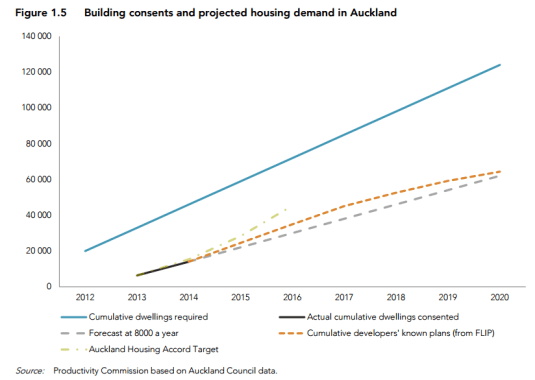
The Greens and Labour both want to build 100,000 affordable houses over 10 years. Neither explain where the land will come from. Nor do the Greens explain how to make houses more affordability without making land cheaper.
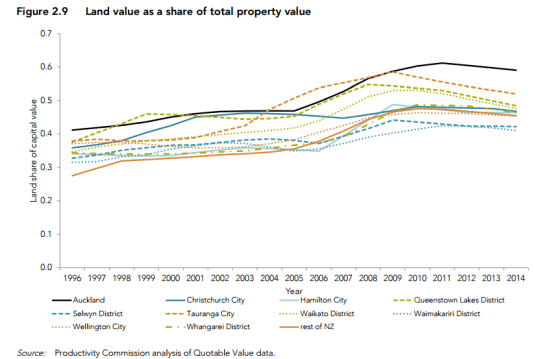
Labour is the best of the two parties because they propose to abolish the Auckland urban limit and the constraint on land supply which that represents. 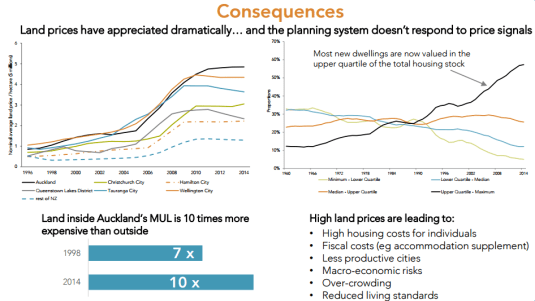
The Greens propose to get to where they want to go with taxes and bans on foreign buyers. Those proposals of the Greens do not increase the amount of land available and therefore the number of houses that will be built.
9/11 was 15 years ago
11 Sep 2016 Leave a comment
in politics - USA, war and peace Tags: 9/11, war on terror
Women and WW II – Rosie the Riveter
10 Sep 2016 Leave a comment
in economics, labour economics, labour supply, occupational choice, politics - USA, population economics, war and peace Tags: female labour force participation, female labour supply, World War II

Latest cherry picking of homelessness data allegation is from @MaxRashbrooke
09 Sep 2016 Leave a comment
in labour economics, politics - New Zealand, poverty and inequality Tags: homelessness, social insurance, social safety net, welfare state
I cherry picked data again by plotting it in full using the data labels and headings in the data tables at the original data source. I stand accused.
Max Rashbrooke is the latest to spit the dummy when reminded that the Otago report on homelessness actually was about the seriously housing deprived; their words, not mine.
UOW researcher Dr Kate Amore, from the Health Research Council-funded He Kainga Oranga/Housing and Health Research Programme, measured the “severely housing deprived” population.
Table 2 below is from the media release Rashbrooke suggested I read to enlighten myself as to what homelessness is and is not. I am going to commit my third strike at cherry picking with snap-shots of the tables from the original source. I am a recidivist cherry picker.
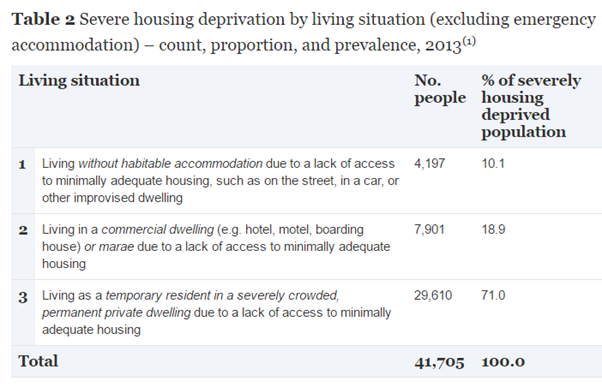
Source: 3 June 2016, Homelessness accelerates between censuses, News, University of Otago, New Zealand.
Labour, the Greens and Max Rashbrooke all conflated living with friends and family or in commercial accommodation with homelessness. Saying that serious housing deprivation has gone up is not much of a sound bite compared to claiming homelessness is up with the associated images of people living rough or in cars. Who is spinning, who is cherry picking and who just can’t handle the truth? Homelessness has not increased under the National party government.
A statistical definition of homelessness that includes 70% of data observations as people living with friends and relatives on a temporary basis is miles away from sleeping rough, in a car or emergency accommodation such as a shelter or refuge run by an NGO. But at one point the Otago study does include these vastly different social situations under the same heading
“If the homeless population were a hundred people, 70 are staying with extended family or friends in severely crowded houses, 20 are in a motel, boarding house or camping ground, and 10 are living on the street, in cars, or in other improvised dwellings. They all urgently need affordable housing.”
Definitions are supposed to clarify, not confuse but the Statistics New Zealand definition does
Homelessness is defined as a living situation where people with no other options to acquire safe and secure housing are: without shelter, in temporary accommodation, sharing accommodation with a household, or living in uninhabitable housing.
The Oxford dictionary definition of homeless is “ (Of a person) without a home, and therefore typically living on the streets”.
Homelessness is different from those living in a hotel paid for by WINZ pending rehousing. Sleeping in the streets, in a car or living in emergency accommodation and waiting in a hotel for social housing are separate policy problems.
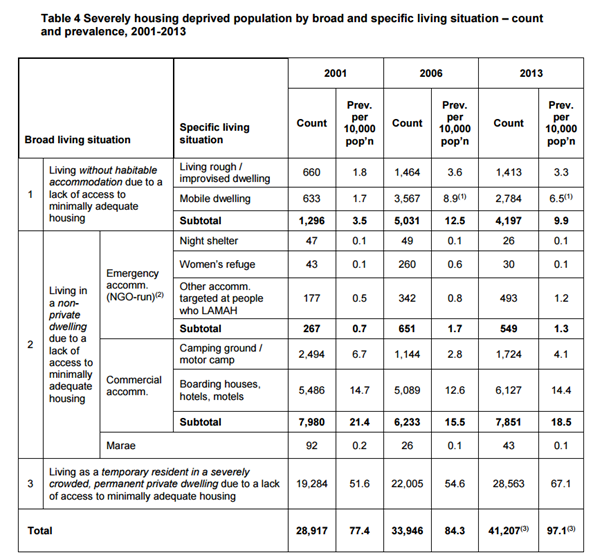
Source: Severe housing deprivation in Aotearoa/New Zealand 2001-2013 Kate Amore (2016).
Some of the seriously housing deprived data from the Otago study show the system failing, such as sleeping rough or in a car. Other parts of the data shows the social safety net working when people are in a hotel or emergency accommodation pending a move to better quarters.
Including in the same definition of homelessness someone who is sleeping in the street or in a car with someone who is in the queue for social housing but booked into a hotel insults those who are homeless. This spin mixes up situations where the social safety net has failed with situations where it is working to help those down on their luck but perhaps not to our full satisfaction.
Pro-Clinton Group Goes Nuclear on Donald Trump
07 Sep 2016 Leave a comment
in defence economics, politics - USA Tags: 2016 presidential election
20 Years Ago, Welfare Reform Was Signed Into Law
07 Sep 2016 Leave a comment
in applied price theory, applied welfare economics, comparative institutional analysis, economic history, labour economics, labour supply, politics - USA Tags: 1996 US welfare reforms
Housing affordability in Auckland is just getting worse
06 Sep 2016 Leave a comment
in economics of regulation, politics - New Zealand, urban economics
Hard left @TheDailyBlogNZ has no idea of the power of an effective opposition party
06 Sep 2016 Leave a comment
in constitutional political economy, politics - New Zealand, Public Choice
The hard left Daily Blog is so detached from power that it has forgotten that an effective opposition can slow governments down, sometimes to a dead stop. Stealing the opposition’s policies is a basic political skill. 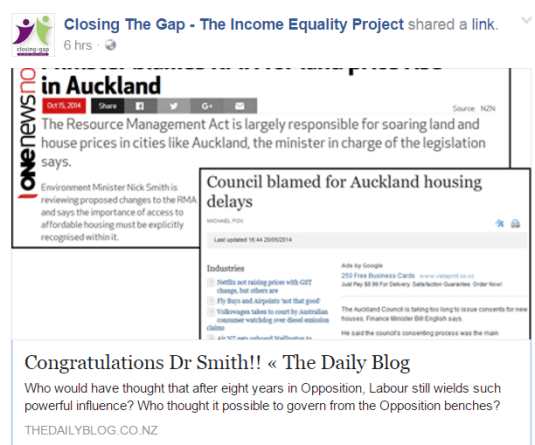
Watching a third term government fight like a cornered animal against an effective opposition in with a good chance of winning the next election is an ugly sight for those who do not like the sight of blood. The current third term government in New Zealand is not particularly tired and certainly is not facing an effective opposition smelling victory at the next election.
This far left blog has little appreciation of the median voter theorem and the propensity of political parties that actually win power to position themselves closely to each other. For that reason, governments are hesitant to adopt policies that take them too far away from what the opposition might do in response and thereby win votes in the next election.
The hard left has little knowledge of this because it really participates in putting up an effective opposition to government policies. Little of what the hard left says appeals to the median voter so a National party government does not have to worry much about what are the hard left says in opposition to its policies. The high left opposing a policy changes few votes.
Housing affordability New Zealand is an obvious example of the power of an effective opposition party. The National party-led government is unwilling to take risks for fear of losing votes to the opposition Labour Party at the next election. New Zealand election is always close because of MMP. Winning margins are one or two seats.
One of the great complaints against the British Labour Party now by ordinary voters including those are never vote for them is that the Tory government faces no effective opposition to their plans and because there is no effective opposition, there is no break on what they could do. They are not challenged; their ideas are not being tested in Parliament and elsewhere and perhaps found wanting.
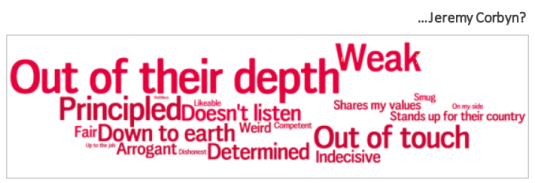
A leading reason for the mass resignations from the shadow cabinet recently was the lack of an effective opposition to government policies was letting the Tories have a free reign. The first step in slowing the Tories down is having a leader in the opposition who is not widely regarded as a clown.
What do @GreenpeaceNZ, #McDonalds and @Forest_and_Bird no longer have in common?
05 Sep 2016 Leave a comment
in economics of information, economics of media and culture, politics - New Zealand Tags: brand names, economics of advertising, Forest and Bird, Greenpeace, Leftover Left, McDonald's, New Zealand Greens
Like McDonalds, Greenpeace globally is a brand. Forest and Bird is a local conservation brand. Until last year, I was utterly clueless as to who its leaders were. That is a deliberate branding decision in the past by McDonalds.
Greenpeace New Zealand and Forest and Bird were also pretty faceless in terms of who their chief executives were.This meant people were less likely to conflate the far left backgrounds of its leaders and activist support base with their self appointed environmental do-gooders brands.
No more, no longer. Greenpeace NZ appointed the former leader of the New Zealand Greens as its Chief Executive last year. Forest and Bird now appointed the Green MP who wanted to succeed him as leader of the Greens as their chief executive. Both bring political baggage.
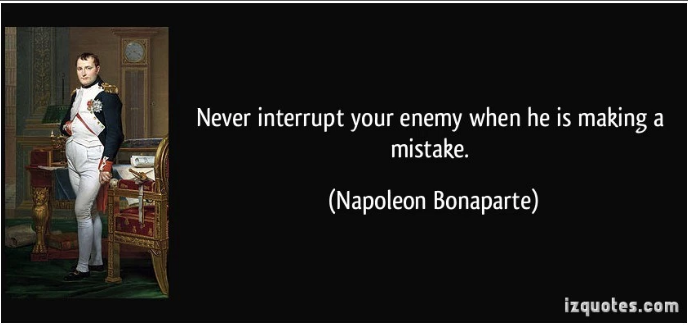
I do not wish Greenpeace well with its anti-growth, anti-science, anti-human agenda, so I hope this was a mistake they made last year. I hope I am not interrupting them in making that mistake. Forest and Bird appears to be antigrowth as well so let them make this mistake as well.
.@esra_nz discovers constitutional political economy because far-left flops at elections
04 Sep 2016 Leave a comment
in constitutional political economy, politics - New Zealand Tags: Leftover Left, Old Left, progressive left
The far left has decided to establish its own think tank to carry on the fight against neoliberalism. Obviously, the university sociology and history departments are not carrying their weight anymore in research and idea dissemination.
The new far left think tank convened by Sue Bradford has several enquiry groups. The one that intrigued me was into political and organisation. Its mission statement is
We are interested in the different ways in which people organise politically, including novel forms of organisation operating outside of the traditional parliamentary sphere. We situate ourselves within a period of international political experimentation and innovation, and are committed to conducting research from a strongly anti-capitalist position.
By working with activists, academics, unionists, workers, beneficiaries, and others, we aim to facilitate rigorous and useful research that can further political thinking and organisational practices.
This is a welcome development. Maybe the far left has finally noticed how dismally it has performed in the last two New Zealand elections under the banner of the Mana party.
In 2011, it was assured of a seat in parliament, but Mana struggled to win more than 1% of the vote. I was deeply surprised at how small the far left boat was in New Zealand. The massively funded hard left campaign in the 2014 election won 1.2% of the party vote. The sitting Mana party MP lost his seat.
In the 2011 election, the same hard left party, when woefully underfunded, won 1.1% of the party vote. Getting the message out appears to have absolutely no effect on the party vote of the hard left. The median voter theory rules.
The British Labour Party under the leadership of Tony Blair also had a metamorphosis similar to this new far left think tank when it came to political organisation. In the House of Commons, those crazies to the right or left of you are tempered by a general election only every 5 years.
Little wonder UK Labor reconsidered devolution, an assembly for London, and regional government after 15 years of Maggie Thatcher, good and hard, with her unfettered right to ask the house of commons to make or unmake any law whatsoever.
Developing positive alternatives on the Left includes what to do about the rotation of power and fettered versus unfettered parliamentary and executive power. The failure of the Left to develop its own constitutional political economy is a major strategic shortcoming. Frequenting wine bars, cafes and blogs muttering to each other ‘our day will come, our day will come’ is not enough.
Too many on the left, in Richard Posner’s view, want to remake democracy with the faculty workshop as their model but followed up by a street march wherever possible. Such deliberation has demanding requirements for popular participation in the democratic process, including a high level of knowledge and analytical sophistication and a severe curtailment of self-interested motives.
The biggest challenge this new far left think tank must consider is democratic socialism is pointless because electoral power is fleeting: sooner or later, the left wing parties representing the socialist alternative lose power, and capitalism is resorted. How can democratic socialism work without entertaining the certain prospects of the right-wing winning office in 6, 9, 12 years time and undoing everything?
Under pension fund socialism, with the majority of the share market owned by superannuation funds, any call for wide-spread nationalisations is political suicide for the far left. The same for re-nationalisation later when the left-parties get another turn in office.

The rotation of power is common in democracies, and the worst rise to the top. So it is wise to design constitutional safeguards to minimise the damage done when those crazies to the right or left of you get their chance in office, as they will. New Zealand Parliamentary elections are always close because of proportional representation. This makes reality of ending up in the minority again very quickl at the next election if not the one after very real.
It is unfortunate that this far left think tank is starting to think of extra-parliamentary means of social change. The great strength of democracy is a small group of concerned and thoughtful citizens can band together and change things by mounting single issue campaigns or joining a political party and running for office and winning elections or influencing who wins.
That is how new Australian parties in the 20th century such as the Australian Labour Party, the Country Party, Democratic Labour Party, Australian Democrats and Greens changed Australia. Most of these parties started in someone’s living room, full of concerned citizens aggrieved with the status quo. In the 21st century, Australian democracy could not be more democratic, with a wide range of totally obscure new political parties winning seats in the state upper houses and the Senate.
The recent Senate election in Australia vindicates the view that the wrong sort of people get into parliament all the time. By wrong I mean people that the establishment parties would prefer not to be there including the establishment of the Australian Greens.
Indeed, it is that very strength of democracy – small groups of concerned citizens banding together – is what is holding up legislating on an end of life choice. It is not that minorities are powerless and individuals are voiceless. Exactly the opposite.
It is wise to design constitutional safeguards to minimise the damage done when those crazies to the right or left of you get their chance in office, as they will sooner or later rather than focus on the powers you and those that currently agree with you should have in your few days in which you fleetingly have a majority.
Too many policies and ideas of the one political party or another assume that they are the face of the future, rather than just another political party that will hold power as often as not and always for an uncertain time. Too many policies and ideas of the Left assume that they are the face of the future, rather than just another political party that will hold power as often as not.
State power was something that the classical liberals feared, and the problem of constitutional design is insuring that such power would be effectively limited. Sovereignty must be split among several levels of collective authority; federalism was designed to allow for a decentralization of coercive state power. At each level of authority, separate branches of government were deliberately placed in continued tension, one with the other. The legislative branch is further restricted by the establishment of two strong houses, each of which organised on a separate principle of representation.
Unfettered power loses its shine when it must be shared with your political opponents at least once a decade. The far left should look favourably upon federalism as a brake on neoliberalism.
Privatisation and deregulation is a lot slower in a federal system with an effective upper house elected by proportional representation. Regulatory powers and public asset ownership is spread over different levels of federations, with different parties always in power at various levels at the same time, all worried about losing office by going to far away from what the majority wants.
The will of the people is constantly tested and measured in a federal system with elections at one level or another every year or so contested on a mix of local and national issues. Any failings of privatisation or deregulation in pioneering jurisdictions would quickly become apparent and would not be copied by the rest of the country. These errors could be undone where they originated by incoming progressive governments.
As James Buchanan pointed out in 1954, the great strength of democracies is majorities are temporary so the exploitation by the majority of the minority is never permanent. If electoral majorities are other than temporary, the minority would have no choice but to fight.
Because of political ignorance and apathy, Richard Posner championed Schumpeter’s view of democracy. Schumpeter disputed the widely held view that democracy was a process by which the electorate identified the common good, and that politicians carried this out:
- The people’s ignorance and superficiality meant that they were manipulated by politicians who set the agenda.
- Although periodic votes legitimise governments and keep them accountable, their policy programmes are very much seen as their own and not that of the people, and the participatory role for individuals is limited.
Schumpeter’s theory of democratic participation is that voters have the ability to replace political leaders through periodic elections. Citizens do have sufficient knowledge and sophistication to vote out leaders who are performing poorly or contrary to their wishes.
The power of the electorate to turn elected officials out of office at the next election gives elected officials an incentive to adopt policies that do not outrage public opinion and administer the policies with some minimum honesty and competence. That is the best that the hard left can do. Help throw the rascals out in the hope that the replacements might be a bit better.
The preference for this new far left think tank for extra-parliamentary action is a confession. In Australia, it is possible for just about anyone except a Trot to win a seat at the next election on issues that are important to them because they don’t need that many others to share their concerns and aspirations to win that last upper house seat on preferences.
The hard left in general failed abysmally in taking advantage of the unrest after the global financial crisis. Bernie Sanders can be explained by Clinton being a terrible candidate for president despite her practice run in 2008. Gary Johnson is attracting attention simply because Clinton and Trump are such appalling candidates. Corbyn got were he got because the 35 heroes of #Tories4Corbyn did understand the role of MPs in filtering out fringe candidates.
Europe elected centre-right governments in the aftermath of the global financial crisis. The parties that are on the rise are anti-immigration, anti-foreigner populist parties that support the welfare state. They currently play identity politics better than the left.


Recent Comments