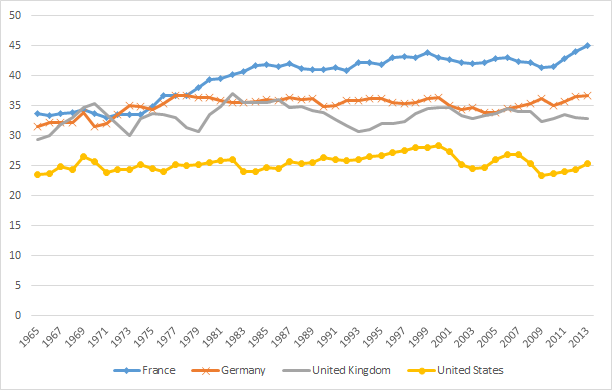
Figure 1: Tax revenue as percentage of French, German, British and US GDP, 1965–2013
Source: OECD StatExtract.
Celebrating humanity's flourishing through the spread of capitalism and the rule of law
28 May 2015 Leave a comment
in economic history, politics - USA, public economics, taxation Tags: British economy, France, Germany, growth of government
Figure 1: Tax revenue as percentage of French, German, British and US GDP, 1965–2013
Source: OECD StatExtract.
27 May 2015 Leave a comment
in economics of crime, law and economics, politics, politics - Australia, politics - New Zealand, politics - USA, war and peace Tags: Amnesty International, BDS, Gaza Strip, Hamas, Left-wing hypocrisy

Can there be any other explanation for why the BDS activists are not protesting in the streets against these summary executions by Hamas other than mass kidnappings.
What else is stopping them from protest against these flagrant human rights violations and calling for boycotts, disinvestment and sanctions against the Gaza Strip? Kudos to Amnesty International for finally putting out this report.
27 May 2015 Leave a comment
Habeaus Corpus Act (strengthening person's right to challenge unlawful arrest) passes in England #OnThisday in 1679. http://t.co/MAYp7ttLg1—
✍ Bibliophilia (@Libroantiguo) May 27, 2015
26 May 2015 Leave a comment
in politics - USA Tags: 2016 presidential election
The presidential candidates keep getting older and we keep staying the same age. wapo.st/1yQNWFY http://t.co/yFYiU83sdB—
Chris Cillizza (@TheFix) April 23, 2015
26 May 2015 Leave a comment
in economic history, politics - Australia, politics - New Zealand, politics - USA Tags: Director's Law, growth of government
Long live the Slopegraph. Long live Edward Tufte. tinyurl.com/naeh7rc http://t.co/C8Lgnupxz9—
Amity Shlaes (@AmityShlaes) May 16, 2015
25 May 2015 Leave a comment
in politics - Australia, politics - New Zealand, Public Choice Tags: Australian Greens, Australian Labor Party, expressive voting, Inner-city Left, New Zealand Greens, voter demographics
25 May 2015 Leave a comment
in economic history, labour economics, politics - Australia, politics - New Zealand, politics - USA, unions Tags: Australia, British economy, Canada, trade union density, union power, union wage premium

Source: OECD StatExtract
25 May 2015 Leave a comment
in economics of regulation, politics - USA Tags: meddlesome preferences, nanny state, safety Nazis, San Francisco
24 May 2015 Leave a comment
in economic history, labour economics, minimum wage, politics - Australia, politics - New Zealand, politics - USA Tags: Australia, British economy, Canada
Figure 1: minimum wage relative to median wage in full-time worker, UK, USA, Canada, New Zealand and Australia, 1960 – 2012

Source: OECD StatExtract
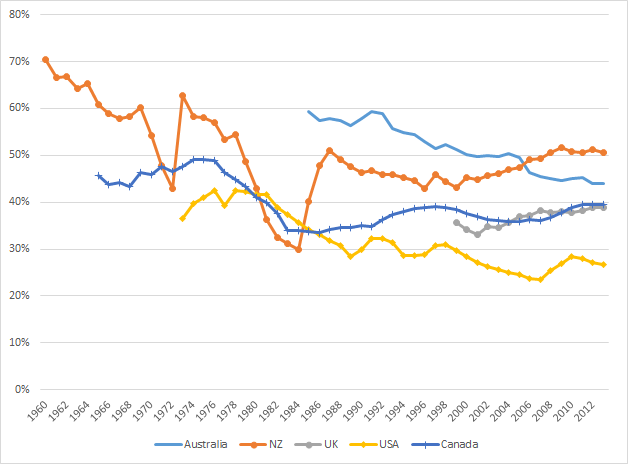
Figure 2: minimum wage relative to mean wage in full-time worker, UK, USA, Canada, New Zealand and Australia, 1960 – 2012
Source: OECD StatExtract
24 May 2015 Leave a comment
in economic history, energy economics, politics - Australia, politics - New Zealand, politics - USA, technological progress Tags: Fossil Fuels, The Great Fact
24 May 2015 Leave a comment
in politics - Australia, politics - New Zealand, Public Choice, rentseeking Tags: animal rights, Australian Greens, do gooders, expressive voting, New South Wales election, New Zealand Greens, voter demographics, workers rights
24 May 2015 Leave a comment
24 May 2015 Leave a comment
in economics of regulation, politics - Australia, politics - New Zealand, politics - USA, urban economics Tags: British general election, expressive voting, offsetting behaviour, rational irrationality, rent controls, The fatal conceit, UK politics, unintended consequences
24 May 2015 Leave a comment
Via @PrivateEyeNews http://t.co/w3IMNRViJJ—
Emily Gray (@missemilygray) May 15, 2015
Celebrating humanity's flourishing through the spread of capitalism and the rule of law
Celebrating humanity's flourishing through the spread of capitalism and the rule of law
Celebrating humanity's flourishing through the spread of capitalism and the rule of law
Celebrating humanity's flourishing through the spread of capitalism and the rule of law
Celebrating humanity's flourishing through the spread of capitalism and the rule of law
Celebrating humanity's flourishing through the spread of capitalism and the rule of law
A History of the Alt-Right
Econ Prof at George Mason University, Economic Historian, Québécois
Celebrating humanity's flourishing through the spread of capitalism and the rule of law
Scholarly commentary on law, economics, and more
Beatrice Cherrier's blog
Celebrating humanity's flourishing through the spread of capitalism and the rule of law
Celebrating humanity's flourishing through the spread of capitalism and the rule of law
Celebrating humanity's flourishing through the spread of capitalism and the rule of law
Why Evolution is True is a blog written by Jerry Coyne, centered on evolution and biology but also dealing with diverse topics like politics, culture, and cats.
Celebrating humanity's flourishing through the spread of capitalism and the rule of law
A rural perspective with a blue tint by Ele Ludemann
DPF's Kiwiblog - Fomenting Happy Mischief since 2003
Celebrating humanity's flourishing through the spread of capitalism and the rule of law
The world's most viewed site on global warming and climate change
Tim Harding's writings on rationality, informal logic and skepticism
A window into Doc Freiberger's library
Let's examine hard decisions!
Commentary on monetary policy in the spirit of R. G. Hawtrey
Thoughts on public policy and the media
Celebrating humanity's flourishing through the spread of capitalism and the rule of law
Politics and the economy
A blog (primarily) on Canadian and Commonwealth political history and institutions
Reading between the lines, and underneath the hype.
Economics, and such stuff as dreams are made on
"The British constitution has always been puzzling, and always will be." --Queen Elizabeth II
Celebrating humanity's flourishing through the spread of capitalism and the rule of law
Celebrating humanity's flourishing through the spread of capitalism and the rule of law
WORLD WAR II, MUSIC, HISTORY, HOLOCAUST
Undisciplined scholar, recovering academic
Celebrating humanity's flourishing through the spread of capitalism and the rule of law
Res ipsa loquitur - The thing itself speaks
In Hume’s spirit, I will attempt to serve as an ambassador from my world of economics, and help in “finding topics of conversation fit for the entertainment of rational creatures.”
Researching the House of Commons, 1832-1868
Articles and research from the History of Parliament Trust
Reflections on books and art
Posts on the History of Law, Crime, and Justice
Celebrating humanity's flourishing through the spread of capitalism and the rule of law
Exploring the Monarchs of Europe
Cutting edge science you can dice with
Small Steps Toward A Much Better World



Recent Comments