Child poverty in America using the Supplementary Poverty Measure of the Census Bureau
09 Mar 2015 Leave a comment
in politics - USA, population economics, poverty and inequality, welfare reform Tags: child poverty, measurement of poverty

Measuring child poverty after tax and income transfers from the welfare state make a big difference to the measurement of poverty in the USA.


via What If We Had Measured Poverty Differently for the Past 50 Years? – CityLab.
Capitalism and the abolition of extreme poverty – mobile phones addition
07 Mar 2015 Leave a comment
Charts showing there’s never been a better time to own a car
06 Mar 2015 Leave a comment
in population economics, technological progress, transport economics Tags: the good old days, The Great Enrichment


David Friedman on global warming, population and problems with the externality argument
02 Mar 2015 Leave a comment
in applied price theory, applied welfare economics, comparative institutional analysis, constitutional political economy, David Friedman, economic history, economics of information, economics of regulation, environmental economics, environmentalism, global warming, law and economics, population economics, property rights Tags: climate alarmism, competition as a discovery procedure, David Friedman, externalities, global warming, population bomb, The fatal conceit, The pretence to knowledge

Yes it is possible to end poverty
17 Feb 2015 Leave a comment
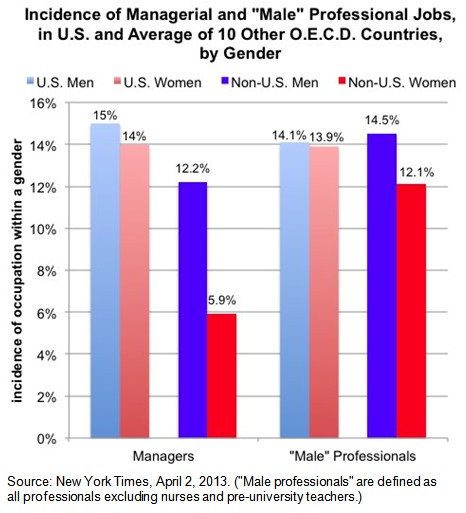
Lessons from a Feminist Paradise
12 Feb 2015 Leave a comment
in discrimination, economics of love and marriage, gender, labour economics, population economics Tags: gender wage gap
Lower Working Age Population and Secular Stagnation
11 Feb 2015 Leave a comment
in labour economics, labour supply, population economics Tags: ageing society, ageing workforce, Population demographics

The rise of single parenthood in the USA
09 Feb 2015 Leave a comment
in labour economics, politics - USA, population economics, welfare reform Tags: single parenthood

Widespread concerns about extremism in Muslim nations, and little support for it | Pew Research Center
08 Feb 2015 Leave a comment


The average American household was poorer in 2013 than it was in 1983 – Vox
31 Jan 2015 1 Comment
in applied welfare economics, population economics, poverty and inequality, technological progress Tags: Brad De Long, The Great Enrichment, The Great Escape, The Great Fact, time machines
/cdn0.vox-cdn.com/uploads/chorus_asset/file/3351202/vox-chart_net-worth-change-v2_1024.0.png)
US net worth rose considerably over that period, which is what you would expect to see.
Technology has improved and productivity increased, so society has a greater capacity for wealth building. America was also quite a bit older on average in 2013 than it was in 1983, so average wealth should have gone up.
But all of these gains went to the top 20 percent of the population. It’s worse than that, actually.
Over 100 percent of the gains went to the top 20 percent, because the bottom 60 percent of the population got poorer.
What does this claim by Matthew Yglesias exactly mean? He writes frequently on economics, so his editor must think he knows something about it.
http://t.co/0hEAL8X1kS—
EPI Chart Bot (@epichartbot) July 04, 2015
If 60% of the population got poorer as compared to 1983, they would be better off stepping into a time machine to go back to 1983. That is the only logical interpretation of this claim about 60% of the population. I owe this time machine thought experiment to Brad De Long.

Of course, going back to 1983, would involve giving up all products and services invented since then, and all product upgrades since then.
https://twitter.com/classicepics/status/561432237976322048
More importantly, for a good proportion of the population, they have become very sick or die immediately when they stepped out side of the Time Machine. This is because of shorter life expectancies in 1983 and the unavailability of a whole range of lifesaving medicines.

Am I just pedantic because I want access to crucial diabetic and other medications unavailable 30 years ago? No Internet, no cable, no international travel and no mobile phones.

In his original thought experiment, De Long asks how much you would want in additional income to agree to go back in time to a specific year. De Long was an economic historian examining the differences in living standards as compared to 1890 and 1990 and how that gap is greatly underestimated in economic statistics. De Long would have refused to go into the time machine to return to 1890 unless he could pack a very large bag to take with him:
I would want, first, health insurance: the ability to go to the doctor and be treated with late-twentieth-century medicines.
Franklin Delano Roosevelt was crippled by polio. Without antibiotic and adrenaline shots I would now be dead of childhood pneumonia.
The second thing I would want would be utility hookups–electricity and gas, central heating, and consumer appliances.
The third thing I want to buy is access to information–audio and video broadcasts, recorded music, computing power, and access to databases.
None of these were available at any price back in 1890.
 Utopia, you are standing in it!
Recent Comments