
Another Great Escape
19 Mar 2020 Leave a comment
in development economics, economic history, growth disasters, growth miracles, health economics Tags: child mortality, infant mortality, The Great Escape


The Kingdom of Ireland: Part III
18 Mar 2020 Leave a comment

Home-rule movement
From the Act of Union on January 1, 1801, until December 6, 1922, the island of Ireland was part of the United Kingdom of Great Britain and Ireland. During the Great Famine, from 1845 to 1849, the island’s population of over 8 million fell by 30%. One million Irish died of starvation and/or disease and another 1.5 million emigrated, mostly to the United States.

From 1874, and particularly under Charles Stewart Parnell from 1880, the Irish Parliamentary Party gained prominence. This was firstly through widespread agrarian agitation via the Irish Land League, that won land reforms for tenants in the form of the Irish Land Acts, and secondly through its attempts to achieve Home Rule, via two unsuccessful bills which would have granted Ireland limited national autonomy.
In April 1916, Irish republicans launched the Easter Rising against British rule and proclaimed an Irish Republic. Although it was crushed…
View original post 710 more words
Fake News: Tasmania’s 200% Renewable Energy Vanity Project, 100% Dependent on Coal-Fired Power from Victoria
18 Mar 2020 Leave a comment

 Victorian coal-fired power: what provides Tasmania’s energy safety net.
The renewable energy zealot is all care and no responsibility. Claims that the world can run on sunshine and breezes and become “100% renewable” have been outdone by Tasmania with its claim that it will soon be 200% renewable.
But, dig a little deeper, and the 200% claim is just as hollow as the 100% claim; neither have ever been achieved at grid scale, and neither of them ever will be.
Unless, of course, you turn a blind eye to the fact that behind every wind turbine and solar panel there’s a coal, gas or nuclear plant chugging away in the background to keep the lights on.
Of the so-called “renewables”, stored hydro at least has the ability to deliver power 24 x 7. However, that’s for only as long as there’s sufficient water sitting behind the dam wall. And the…
View original post 835 more words
.@Bryan_Caplan’s best presentation of the case against education
18 Mar 2020 Leave a comment
in applied price theory, applied welfare economics, comparative institutional analysis, economics of education, economics of information, history of economic thought, human capital, income redistribution, industrial organisation, labour economics, labour supply, managerial economics, occupational choice, organisational economics, personnel economics, Public Choice, public economics, rentseeking, survivor principle Tags: adverse selection, asymmetric information, College premium, graduate premium, screening, self-selection, signaling

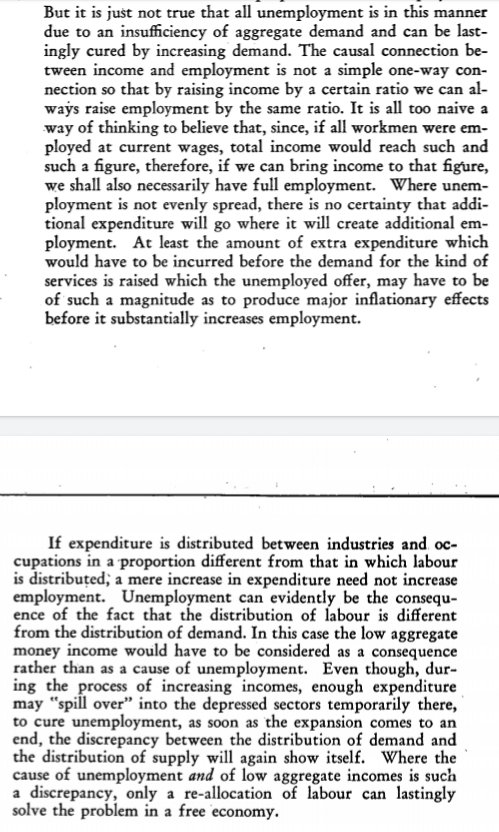
Hayek (1950) on why the current stimulus will fail
18 Mar 2020 Leave a comment
in Austrian economics, business cycles, economic history, economics of information, F.A. Hayek, fiscal policy, history of economic thought, labour economics, labour supply, macroeconomics, monetary economics, occupational choice, Public Choice, public economics Tags: fiscal policy, Keynesian macroeconomics
Patrick Moore: 12 Fake Invisible Catastrophes and Threats of Doom
18 Mar 2020 Leave a comment
in economic history, economics of information, economics of natural disasters, energy economics, environmental economics, environmentalism, global warming, Marxist economics Tags: pessimism bias
Share buybacks limit free cash and managerial excesses
18 Mar 2020 Leave a comment
in economics of information, entrepreneurship, financial economics, industrial organisation, labour economics, law and economics, managerial economics, organisational economics, property rights, survivor principle, theory of the firm Tags: agent principal problem

Milton Friedman never liked the IMF
18 Mar 2020 Leave a comment
in comparative institutional analysis, development economics, economic history, economics of bureaucracy, international economics, macroeconomics, Milton Friedman, monetary economics

Freedom of religion is right, not a new privilege to go your own way
18 Mar 2020 Leave a comment
in constitutional political economy, economics of religion, law and economics, Public Choice

Objections to women in the police, army and fire brigade because of differences in strength and aggression were shouted down in 80s & 90s
18 Mar 2020 Leave a comment
in defence economics, discrimination, gender, labour economics, labour supply, law and economics, occupational choice, occupational regulation Tags: The fatal conceit
How cozy is your country?
18 Mar 2020 Leave a comment
in economics of media and culture, urban economics

Source: OECD Better Life Index at Data extracted on 17 Mar 2020 23:23 UTC (GMT) from OECD.Stat


Recent Comments