
From Bryan Caplan’s latest book
11 Sep 2022 Leave a comment
in discrimination, economics of crime, economics of education, human capital, labour economics, occupational choice, poverty and inequality
Buy “The Great Recession: Market Failure or Policy Failure”
10 Sep 2022 Leave a comment

It official! Bob Hetzel’s book “The Great Recession: Market Failure or Policy Failure” is finally out. Buy it! Needless to say I ordered it long ago.
We all know it – Bob Hetzel has a Market Monetarist explanation for the Great Recession. It was caused by overly tight monetary policy – what Bob calls the Monetary Disorder view of the Great Recession.
John Taylor has a favourable review of the book here.
David Beckworth comments on Taylor here.
Scott Sumner comments on Hetzel, Taylor and Beckworth.
And finally Bill Woolsey also has a wrap-up on Hetzel, Taylor, Beckworth and Sumner (and Marcus Nunes for that matter).
Do I need to add anything? Well no, other than just buy that book NOW!!
Here is that official book description:
“Since publication of Robert L. Hetzel’s The Monetary Policy of the Federal Reserve (Cambridge University Press, 2008), the intellectual consensus…
View original post 141 more words
Brad, Ben (Beckworth?) and Bob
10 Sep 2022 Leave a comment
I have been a bit too busy to blog recently and at the moment I am enjoying a short Easter vacation with the family in the Christensen vacation home in Skåne (Southern Sweden), but just to remind you that I am still around I have a bit of stuff for you. Or rather there is quite a bit that I wanted to blog about, but which you will just get the links and some very short comments.
First, Brad DeLong is far to hard on us monetarists when he tells his story about“The Monetarist Mistake”. Brad story is essentially that the monetarists are wrong about the causes of the Great Depression and he is uses Barry Eichengreen (and his new book Hall of Mirrors to justify this view. I must admit I find Brad’s critique a bit odd. First of all because Eichengreen’s fantastic book “Golden Fetters” exactly…
View original post 1,167 more words
When Women Went to Court: Gendered Agency in European Legal Systems, 1300-1800
10 Sep 2022 Leave a comment

Guest post by Julie Hardwick, 9 September 2022.
In July, 1725, Justine Gantier walked along the streets in Lyon, France’s second city, to the greffe (the building that served as the depository of legal documents and evidence) for the royal court of first instance (a sénéchausée). There she handed a court official a bundle of seven letters she had received from her intimate partner, Louis Delagard.Perhaps in consultation with her lawyer, or perhaps on her own initiative because seemingly women did not usually provide such evidence, she deposited them as evidence in support of her paternity suit against him. Gantier was six months pregnant and Delagard had reneged on his repeated promises to marry her. Her actions transformed those letters, the material culture of intimacy that originally embodied the connection and commitment between them, into legal evidence of betrayal.
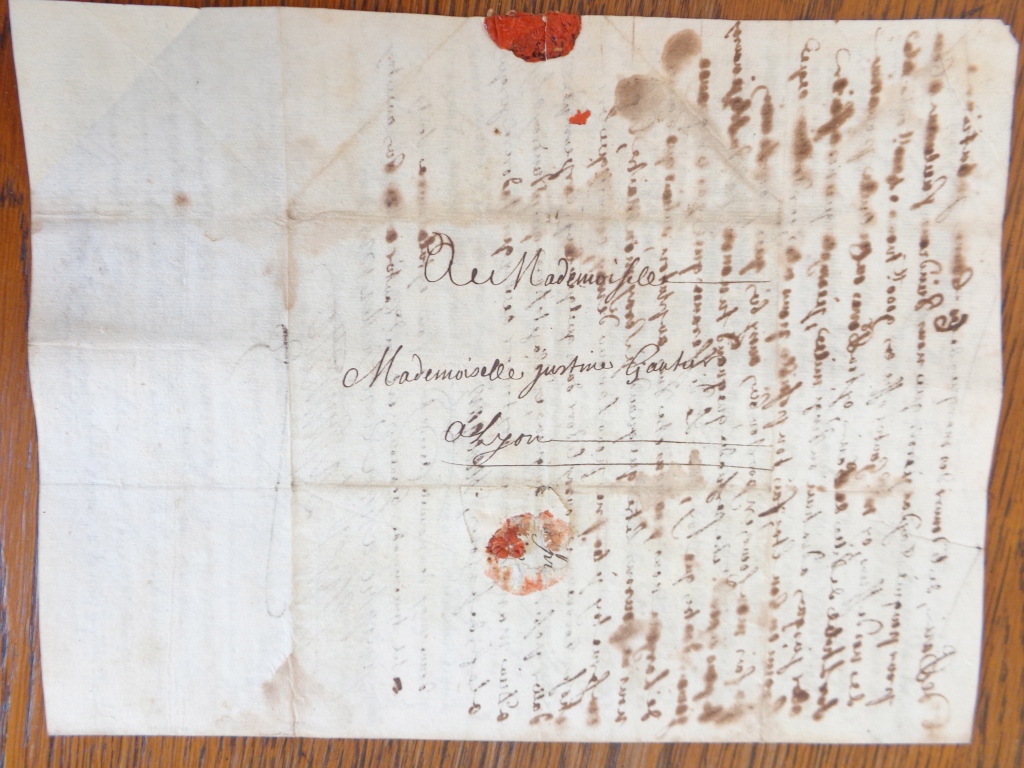
Dossier of…
View original post 2,321 more words
The Socialists Call for Peace – But the Plans Do Not I THE GREAT WAR – Week 59
10 Sep 2022 Leave a comment
in defence economics, war and peace Tags: World War I
What Is Hygiene Like For Astronauts In Space?
10 Sep 2022 Leave a comment
in economics of media and culture Tags: space
Eliot Ness: The Untouchable Lawman
10 Sep 2022 Leave a comment
in economics of crime, law and economics
Ten things to know about the next Accession and Coronation
09 Sep 2022 Leave a comment


 Last month Robert Hazell and Bob Morris published two reports about the next Accession and Coronation, which were discussed in a previous blog. Along the way they gathered a lot of extra information, which has now been published on the Monarchy pages of the Constitution Unit website. The following represents a selection of the most frequently asked questions.
1. Will Prince Charles become King Charles III?
Not necessarily. He is free to choose his own regnal title. King Edward VII chose Edward as his regnal title, although hitherto he had been known by his first name of Albert. King Edward VIII also chose Edward as his regnal title, although he was known to his family and friends as David. Prince Charles’s Christian names are Charles Philip Arthur George. Instead of becoming King Charles he might choose to become King George VII, or King Philip, or King Arthur, although Clarence…
View original post 1,056 more words
Demise of the Crown: what happens next?
09 Sep 2022 Leave a comment


Queen Elizabeth II sadly died yesterday, bringing to a close the longest reign in British history. Robert Hazell and Bob Morris offer a brief guide to what happens next, as King Charles III prepares for both the funeral of his predecessor and his own coronation. They also explore how the new king will have to adapt to his changed constitutional status.
At the age of 96 and after a record-breaking reign of 70 years, Queen Elizabeth II has died. A life of service to which she committed herself as a young woman has ended:
I declare before you all that my whole life whether it be long or short shall be devoted to your service and the service of our great imperial family to which we all belong.
But I shall not have strength to carry out this resolution alone unless you join in it with me, as I now…
View original post 1,702 more words


Recent Comments