
Trickle down effect explained @Greens @NZGreens @AOC @BernieSanders
26 Oct 2020 Leave a comment
in economic history, liberalism, Marxist economics, politics - Australia, politics - New Zealand, politics - USA, poverty and inequality Tags: creative destruction, The Great Enrichment
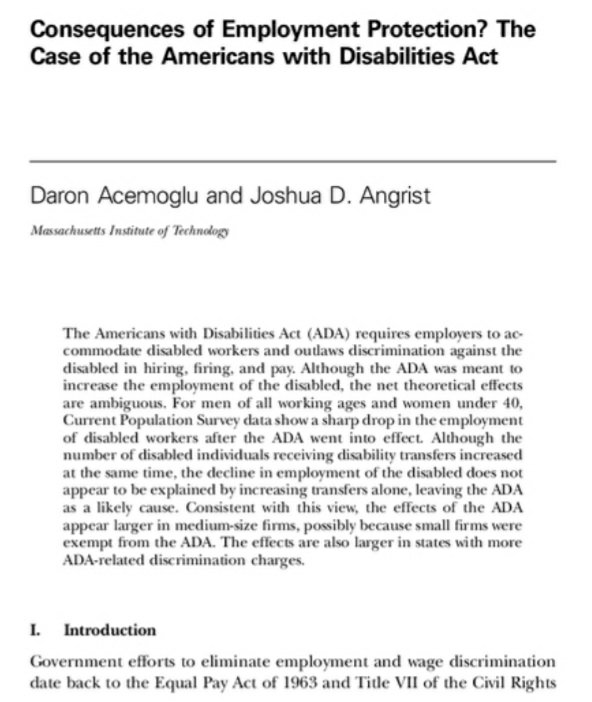
Employment Protection laws reduces hiring of risky applicants
26 Oct 2020 Leave a comment
in applied price theory, comparative institutional analysis, discrimination, economics of bureaucracy, economics of education, economics of information, health economics, human capital, industrial organisation, labour economics, labour supply, law and economics, managerial economics, organisational economics, personnel economics, politics - USA, poverty and inequality, Public Choice, survivor principle Tags: employment law, employment protection laws, offsetting behaviour, The fatal conceit, unintended consequences
Richard Posner 2008 interview on antitrust law
26 Oct 2020 Leave a comment
in applied price theory, comparative institutional analysis, economic history, economics of bureaucracy, economics of regulation, history of economic thought, industrial organisation, law and economics, politics - USA, Public Choice, Richard Posner, theory of the firm Tags: competition law
Professor Robert E. Lucas Jr.,
26 Oct 2020 Leave a comment
in comparative institutional analysis, development economics, economic growth, economic history, economics of education, growth disasters, growth miracles, history of economic thought, human capital, labour economics, labour supply, law and economics, macroeconomics, occupational choice, occupational regulation, poverty and inequality, property rights, Robert E. Lucas Tags: industrial revolution
Ethical Supply of electric cars: The Search for Cobalt Beyond the Congo
25 Oct 2020 Leave a comment
in development economics, energy economics, environmental economics, global warming, growth disasters, labour economics, labour supply Tags: child labour, electric cars

An unsung hero in the war against terror
25 Oct 2020 Leave a comment
in defence economics, economics of crime, law and economics Tags: India, war against terror

Tesla’s Battery Supply Problem
25 Oct 2020 Leave a comment
in defence economics, development economics, economics of crime, energy economics, growth disasters, international economics, labour economics, labour supply, law and economics, politics - Australia, politics - New Zealand, politics - USA Tags: child labour
Martial Law in Moscow, but is the Cavalry coming? – WW2 – 113 – October 24, 1941
25 Oct 2020 Leave a comment
in defence economics, laws of war, war and peace Tags: World War II
.@ActionAidUK
25 Oct 2020 Leave a comment
in development economics, discrimination, economics of crime, law and economics Tags: ODA, overseas aid, political correctness, regressive left, useful idiots

.@Greens condone domestic violence through silence
25 Oct 2020 Leave a comment
in discrimination, economics of crime, law and economics, politics - Australia Tags: law and order, political correctness, racial discrimination, regressive left

What provokes blasphemy
25 Oct 2020 Leave a comment
in discrimination, economics of crime, economics of religion, law and economics, politics - Australia, politics - New Zealand, politics - USA Tags: Age of Enlightenment, Blasphemy, Freedom of religion, political correctness, regressive left

Lost on @AOC but less so on @BernieSanders
25 Oct 2020 Leave a comment
in discrimination, economics of crime, law and economics, politics - USA Tags: 2020 presidential election, law and order, political correctness, regressive left

The most feminist religion
25 Oct 2020 Leave a comment
in economics of religion, law and economics, liberalism, Marxist economics, politics - Australia, politics - New Zealand, politics - USA Tags: Freedom of religion, political correctness, regressive left


Migration Patterns and Class-Warfare Taxation
25 Oct 2020 Leave a comment

When I opine about class-warfare taxation, I generally focus on the obvious argument that it’s not a good idea to penalize people for creating prosperity.
 This argument against punitive tax policy is based on the fact that entrepreneurs, investors, business owners, and other successful people can choose to reduce their levels of work, saving, investment, and risk taking.
And it’s also based on the fact that they can shift their economic activity to tax-favored (but generally unproductive) sectors such as municipal bonds.
Moreover, I don’t want politicians to have more money to finance a bigger burden of government.
But we should also consider how class-warfare taxes also can cause the “geese with the golden eggs” to simply fly away.
The New York Timesreports that one of the New York’s richest taxpayers is moving his business to Florida.
…on Wednesday, Mr. Singer, a billionaire who…
View original post 1,301 more words


Recent Comments