Patrick Minford explains #Brexit
22 Jun 2016 Leave a comment
in applied welfare economics, comparative institutional analysis, economics, international economic law, international economics, International law, Public Choice Tags: Brexit, British economy, British politics, Common market, European Union
“Yes, Minister” on the Brexit Referendum
16 Jun 2016 Leave a comment
in constitutional political economy, international economics Tags: Brexit, British economy, British politics, Common market, European Union
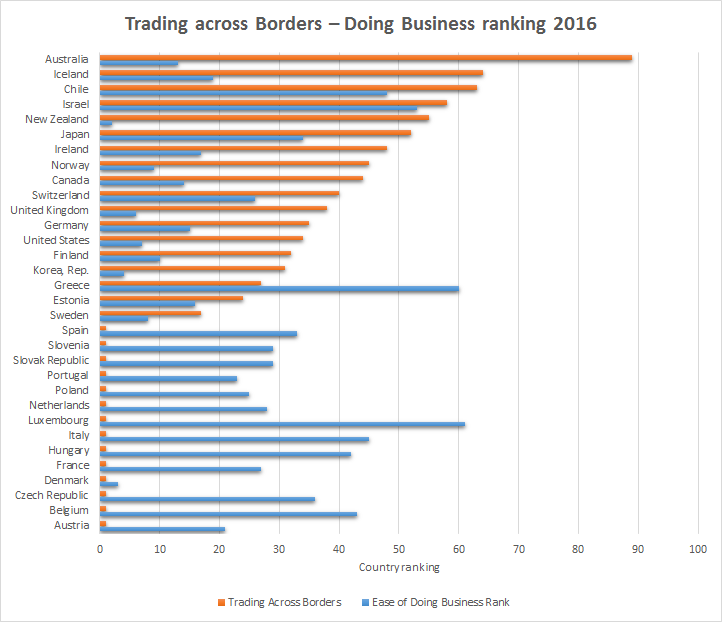
Trading across Borders Doing Business ranking 2016 – high income OECD countries
30 May 2016 Leave a comment
in international economics Tags: Australia, British economy, Common market, customs unions, economics of borders, European Union, free trade areas, Germany
What did Australia do wrong to have the worst ranking of the high income countries for doing business across borders. New Zealand is not much better. The British are not benefiting as much as they could from the common market. Being in continental Europe must have advantages except if your Germany.
The renewable energy curse – does corruption turn clean energy into dirty? @GarethMP
30 Apr 2016 Leave a comment
in comparative institutional analysis, constitutional political economy, energy economics, environmental economics, global warming, Public Choice, rentseeking Tags: European Union, expressive voting, green rent seeking, Italy, renewable energy, solar power, wind power
Massimo Tavoni and Caterina Gennaioli published a nice paper showing that corruption and violence was higher in the high wind provinces of Italy after the installation of wind generators. They built on earlier work about countries with abundant renewable resources and weak institutions. The main question in their paper
… is whether an increase in the expected returns of investments in wind energy, following the introduction of the new policy regime based on a green certificate system, has driven economic agents, namely bureaucrats and entrepreneurs, to engage more in rent seeking activities.
As they studied Italy, there is no surprise about the answer which was yes. High winds ensure high returns of the wind farm investment, but whether this translates into more bribery depends on institutional quality. There was more corruption, and so especially in high-wind provinces of Italy.
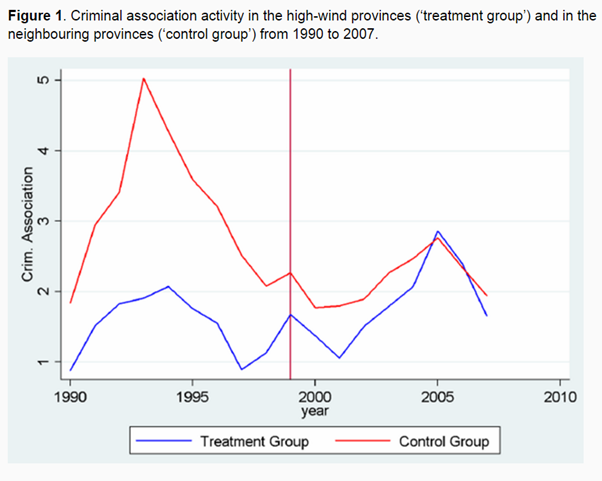
Source: Green policy and corruption | VOX, CEPR’s Policy Portal.
The construction of an average wind park is associated with an increase of criminal association activity of 6%. Italy will have more corruption than elsewhere in the old European Union.
The wider problem is renewable energy is a celebrity technology. In the context of expressive politics, so many cheer for solar and wind power that standards drop in terms of who qualifies for subsidies and who should lose support when their investments do not turn out as promised.
https://twitter.com/CountCarbon/status/715136022414299138
Wind power is not new, it is intermittent, is unsuitable for modern work, and is land constrained but it is still subsidised. Green rent seeking is a real risk even in countries with the best political institutions.
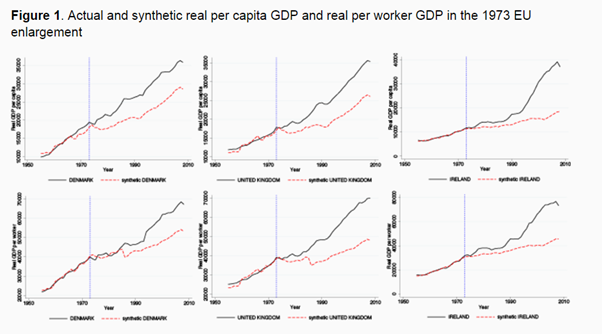
Actual and synthetic real per capita GDP and real per worker GDP in the 1973 EU enlargement
27 Apr 2016 Leave a comment
in economic history, international economics Tags: British economy, Common market, customs unions, Denmark, EU membership, European Union, Ireland
@StatModeling @ryanmcmaken Europe sub-Reddit just can’t handle the truth about how poor they are!?
17 Apr 2016 Leave a comment
in applied welfare economics, economic history, economics of media and culture, politics - USA Tags: European Union, living standards, rational ignorance, rational irrationality, Reddit

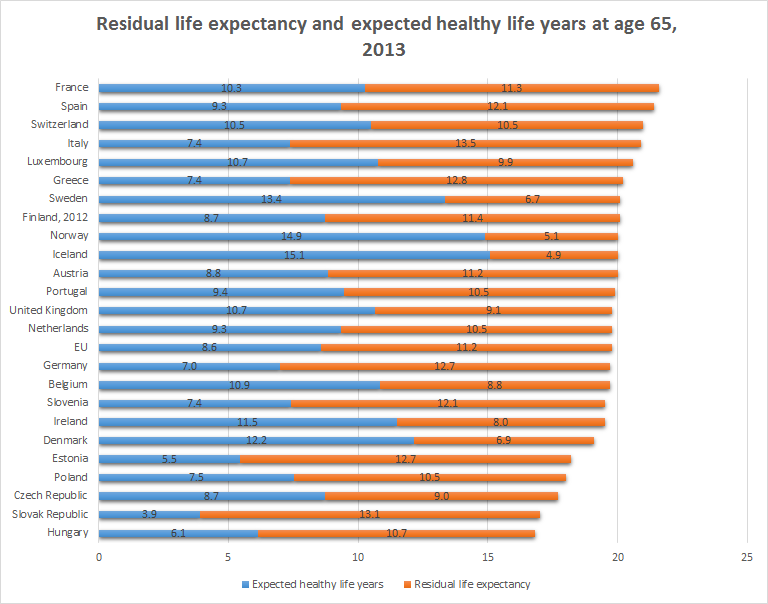
How long have you got in Europe when you are waiting for God?
13 Apr 2016 Leave a comment
in health economics Tags: European Union, healthy life expectancies, life expectancies, The Great Escape
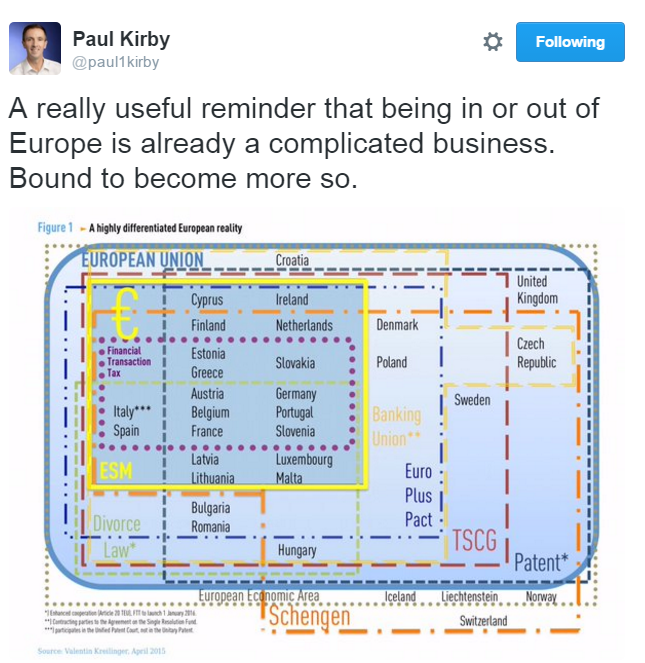
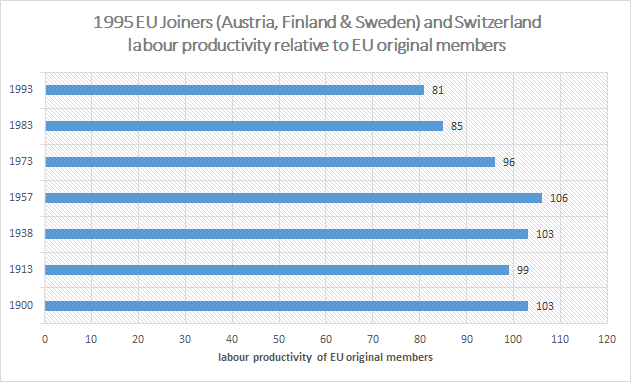
EU late joiners relative labour productivities @NickCohen4 @iainmartin1 @CapX
17 Jan 2016 Leave a comment
in currency unions, economic growth, economic history, international economics, macroeconomics Tags: Common market, customs unions, European Union, trading blocs preferential trading agreements
Original EU Labor Productivities Relative to U.S. @NickCohen4 @iainmartin1 @CapX
17 Jan 2016 Leave a comment
in currency unions, economic growth, economic history, Euro crisis, international economics, macroeconomics Tags: Brexit, Common market, customs unions, European Union, free trade agreements, preferential trading agreements
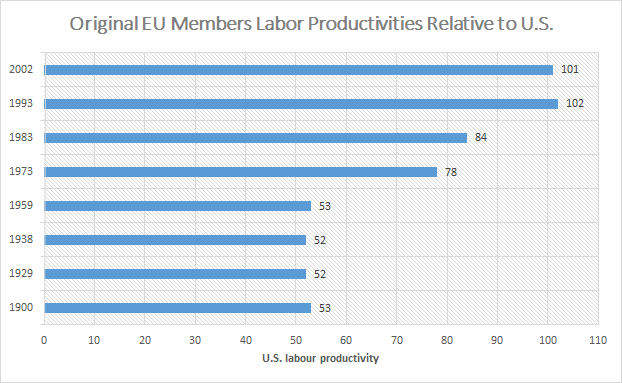
Source: Edward Prescott.
Real GDP per working age British, Dane and Swede 1950 – 2012, PPP
24 Sep 2015 Leave a comment
in economic history Tags: British disease, British economy, Common market, customs unions, Denmark, European Union, Margaret Thatcher, Sweden, Swedosclerosis
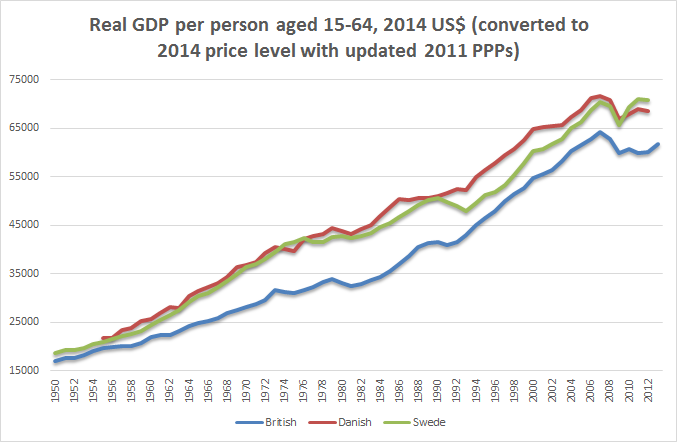
Source: Computed from OECD StatExtract and The Conference Board. 2015. The Conference Board Total Economy Database™, May 2015, http://www.conference-board.org/data/economydatabase/
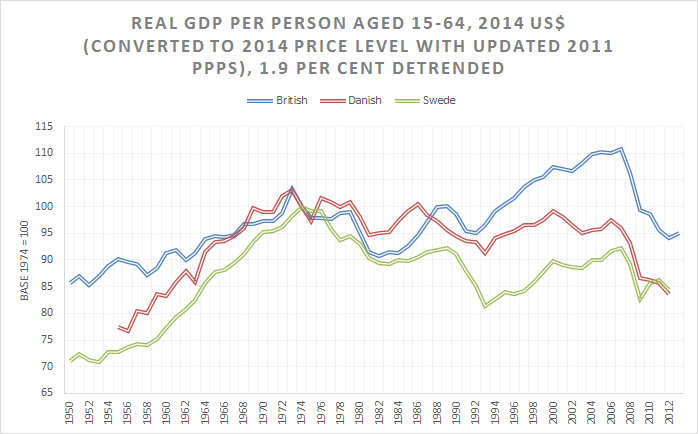
Source: Computed from OECD StatExtract and The Conference Board. 2015. The Conference Board Total Economy Database™, May 2015, http://www.conference-board.org/data/economydatabase/
The data is detrended at 1.9% per year – the trend rate of growth for the USA in the 20th century. A rising line means growth greater than 1.9% for that year, a falling line means growth of less than 1.9% for the year. A flat line is growth of 1.9% for that year.
Britain, Sweden and Denmark all grew quickly up until the 1970s in a period known as post-war catch up.In the 1970s and early 1980s, there was the British disease. The 1970s to the early 1990s was Swedosclerosis. There was a boom in the British economy subsequent to the economics of Mrs Thatcher.
European integration explained in one easy chart
25 Jul 2015 Leave a comment
in currency unions, Euro crisis, international economics, macroeconomics Tags: Common market, customs unions, economics of immigration, EU, Euro, Euroland, European free trade area, European Union, free trade agreements, free trade areas, open borders, preferential trading agreements
AMAZING chart on European integration. One to pin to your office wall. Nice job by @Nic_Koenig delorsinstitut.de/2015/wp-conten… http://t.co/zZbOA29mYP—
Maxime Sbaihi (@MxSba) July 24, 2015
Who are the members of Euroland?
17 Jun 2015 Leave a comment
in currency unions, Euro crisis, macroeconomics Tags: Euroland, European Union
Since today is Europe Day, a look at which countries have and haven't adopted the Euro brilliantmaps.com/eurozone2015/ http://t.co/N8tGhBe8eN—
Brilliant Maps (@BrilliantMaps) May 09, 2015


Recent Comments