There’s an enormous amount of data showing that people in the United States enjoy much higher livings standards than Europeans. That’s not too surprising since most European governments have adopted large-sized welfare states while Americans are (comparatively!) lucky in that we have a medium-sized welfare state. That’s all very straightforward and uncontroversial. What’s not completely […]
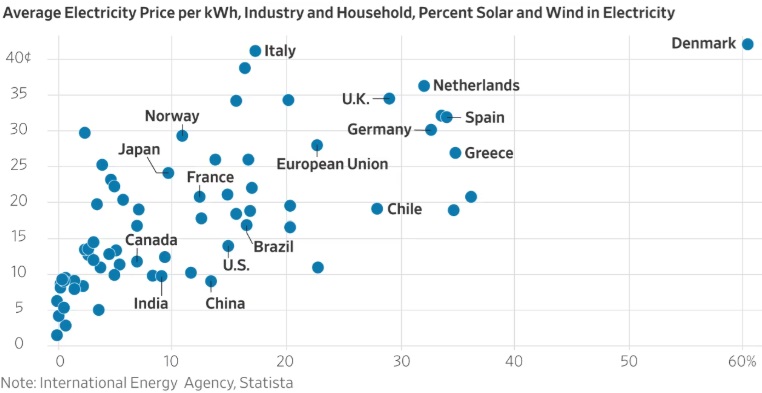
The American version of the Green New Deal included some subsidies for inefficient wind and solar, but it was largely just a marketing gimmick for a big expansion in the burden of government (everything from Medicare for All to student loan bailouts). The European version, by contrast, has been more focused on making energy more […]
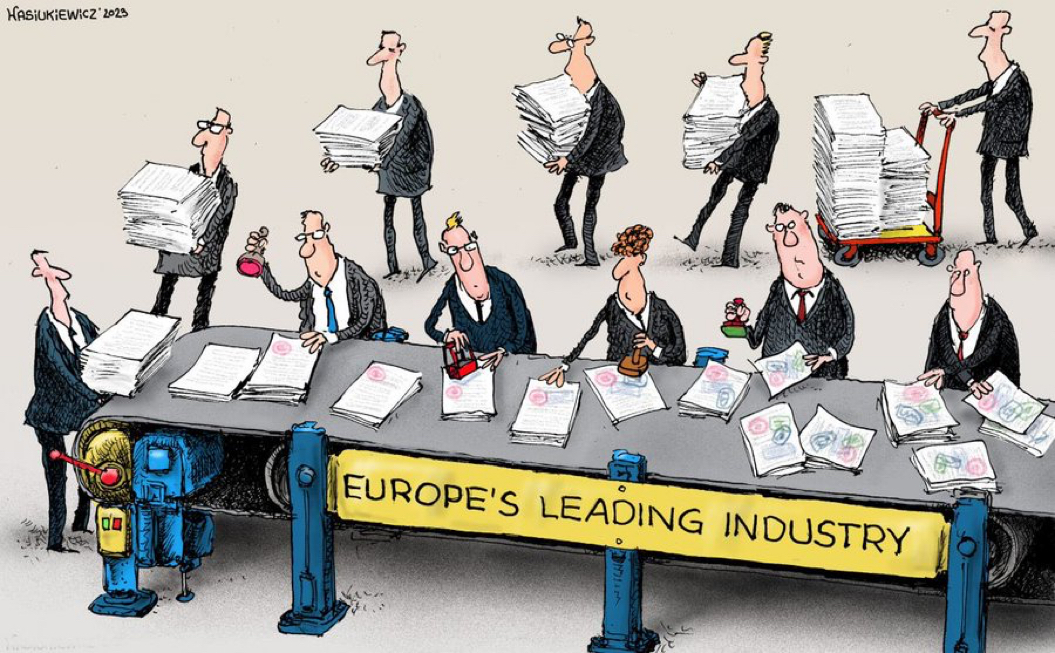
I have a special page for humor involving Europe, but I have not added to it since sharing some Brexit humor in 2016. Let’s being the process of catching up with some amusing cartoons and memes mocking our government-loving cousins on the other side of the Atlantic Ocean. I’ve made the serious point that bureaucrats […]
By Paul Homewood h/t Dennis Ambler The EU is going to plough on with Net Zero insanity, regardless of the cost: The EU is looking to front-load massive anticipatory investments into its energy infrastructure, shifting risk from industry to consumers and risking a landscape with unneeded or under-used pylons. Amid its green transition, […]
Wind power acolytes exhibit all the hallmarks of a cult. 20 years on, and anyone with critical faculties can explain in a sentence why wind power will never amount to meaningful power generation source. But the cultist still believes – running on a mix of blind faith, ignorance and blissful stupidity. Cults are never big […]
The upheaval of the UK constitution from 2016 onwards has been associated with a host of individuals, from David Cameron to Boris Johnson to Dominic Cummings, who have received the significant bulk of academic attention in recent years. And yet, another individual has had a substantial impact upon the UK constitution during this time: Nigel […]
By Paul Homewood h/t Dennis Ambler New Green Jobs Update! BRUSSELS — The European Commission is in early-stage talks on emergency measures to buoy drowning EU solar manufacturers who say Chinese subsidies are suffocating the industry, according to two people familiar with the matter. On Monday, the Commission will make a […]
There were few difference across the political spectrum as to why voters voted to Remain or Leave. This is according to Lord Ashcroft’s survey on referendum day of over 12,000 voters.
Labour and Tory voters who wanted to remain thought the EU and its single market was a good deal not worth putting at risk. It is all about identity politics, not inequality.
Irony is the economic pain fuelling #Brexit vote is owing to decades of austerity, privatisation, neoliberalism. All in-house policy, really
— Julie Anne Genter (@JulieAnneGenter) June 24, 2016
Leavers see more threats than opportunities to their standard of living from the way the economy and society are changing, by 71% to 29% – more than twice the margin among remainers…
By large majorities, voters who saw multiculturalism, feminism, the Green movement, globalisation and immigration as forces for good voted to remain in the EU; those who saw them as a force for ill voted by even larger majorities to leave.
More from my 12k referendum-day poll on how leavers and remainers see the world differently: pic.twitter.com/VgQ7Z6v9XK
Why Evolution is True is a blog written by Jerry Coyne, centered on evolution and biology but also dealing with diverse topics like politics, culture, and cats.
In Hume’s spirit, I will attempt to serve as an ambassador from my world of economics, and help in “finding topics of conversation fit for the entertainment of rational creatures.”





Recent Comments