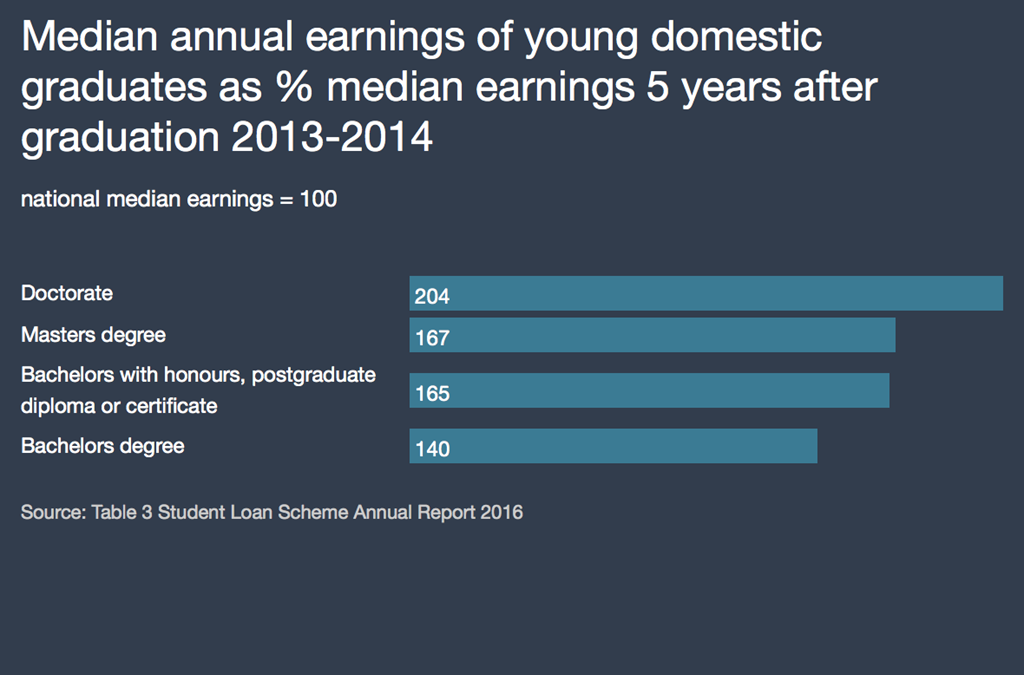
Time for an equal pay day for young urban males?
24 Mar 2017 Leave a comment
in discrimination, economics of education, gender, human capital, labour economics, labour supply, occupational choice, urban economics Tags: College premium, gender way, graduate premium, reversing gender gap, urban wage premium
Graduate numbers quadruple! Zero economic growth premium?
29 Sep 2016 Leave a comment
in economic growth, economic history, economics of education, human capital, labour economics, macroeconomics Tags: education premium, endogenous growth theory, graduate premium
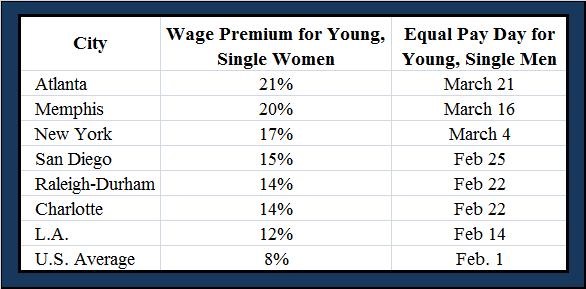
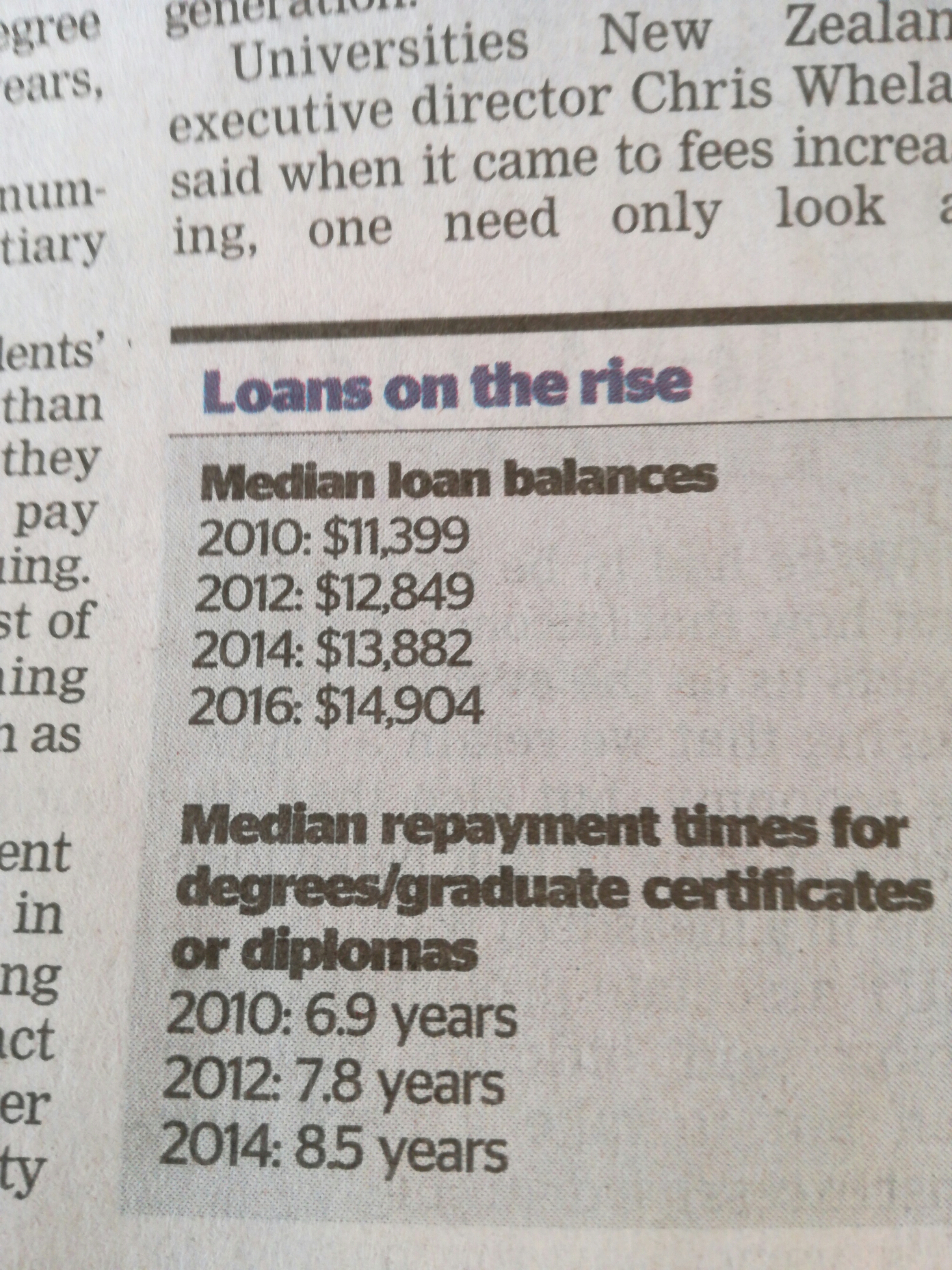
Some people get quite excited about the growth benefits and externalities from investing in more human capital such as more young people going to university. In New Zealand, the number of graduates quadrupled over the last 30 years but the trend GDP growth rate is unchanged. Please explain?
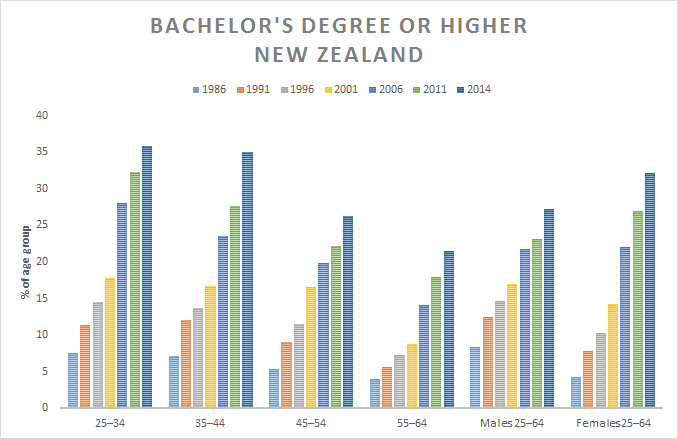
Source: Educational attainment of the adult population: The Social Report 2016 – Te pūrongo oranga tangata.
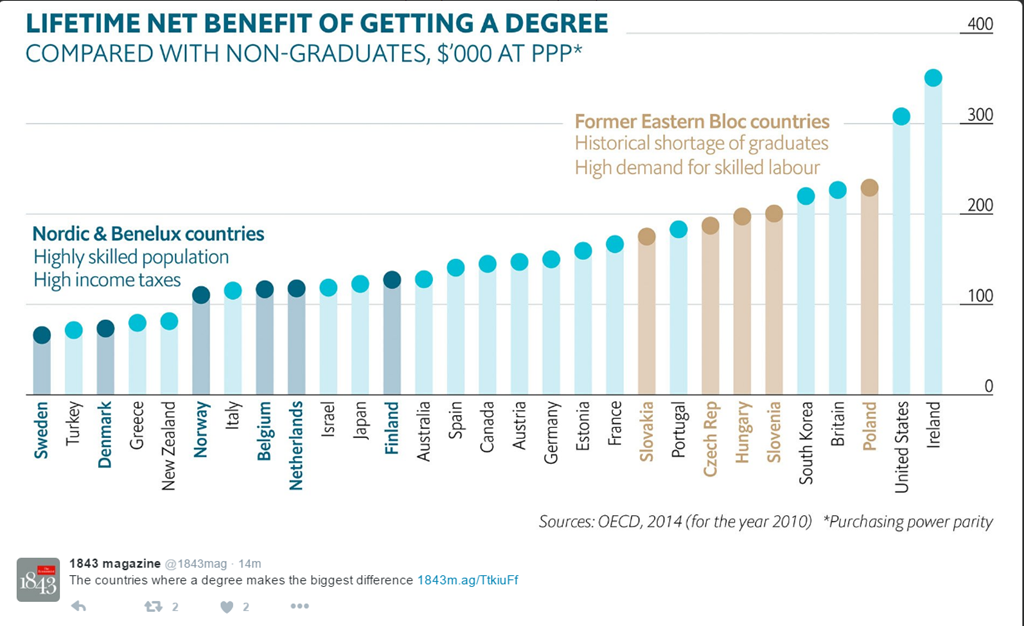
College and post-graduate wage premium in the English speaking countries, France, S. Korea, Finland, Denmark, Norway and Sweden
31 Jul 2016 Leave a comment
in economics of education, human capital, labour economics, occupational choice Tags: Australia, British economy, Canada, College premium, Denmark, education premium, Finland, France, graduate premium, Ireland, Korea, Norway, post-graduate premium, Sweden
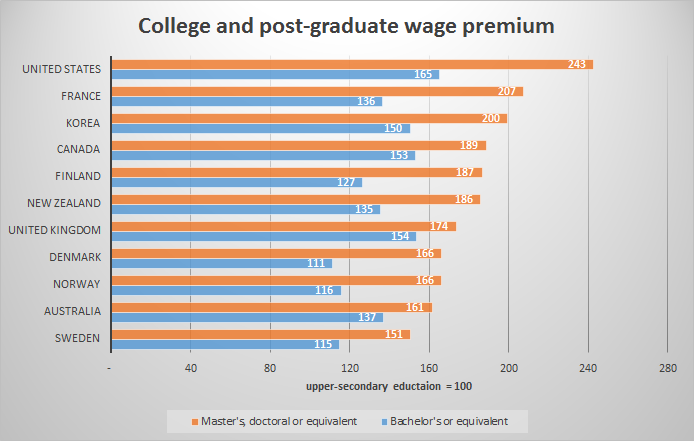
Source: Education at a Glance 2015, section 6.
Tertiary attainment of 25-34 and 55-64 year-olds across the OECD
06 Jul 2016 Leave a comment
in economic growth, economics of education, human capital, labour economics, macroeconomics Tags: endogenous growth theory, graduate premium
Some countries have experienced large increases in the number of young people graduating from University when compared to their parents. Germany and the USA aside, all countries have experienced a noticeable increase in young adults with tertiary degrees.
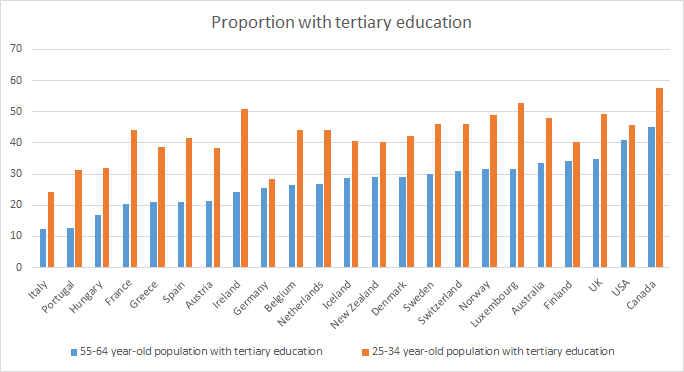
Source: Education at a Glance 2015 – © OECD 01-01-2015.
If human capital is such a major driver of economic growth, should not these countries with large increases in tertiary educated workers be anticipating a growth spurt? The gaps in tertiary attainment across the OECD are much less than they used to be for young adults. Ireland’s burst in tertiary educated workers was after the Celtic Tiger years, not before or during.
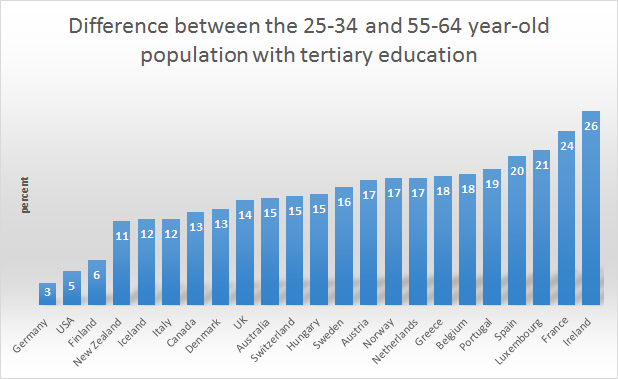
Source: Education at a Glance 2015 – © OECD 01-01-2015.
The gender pay gap for high school leavers and graduates aged 35-44 in the US, UK, Canada, Denmark, Sweden, Australia and New Zealand
10 Mar 2016 Leave a comment
in discrimination, economics of education, gender, human capital, labour economics, labour supply, occupational choice Tags: compensating differentials, education premium, female labour force participation, gender wage gap, graduate premium, maternal labour force participation
The USA, the gender pay gap gets worse if you go to college. By contrast, in Sweden and especially Canada the gender pay gap is much less for graduates than for those with a high school education.
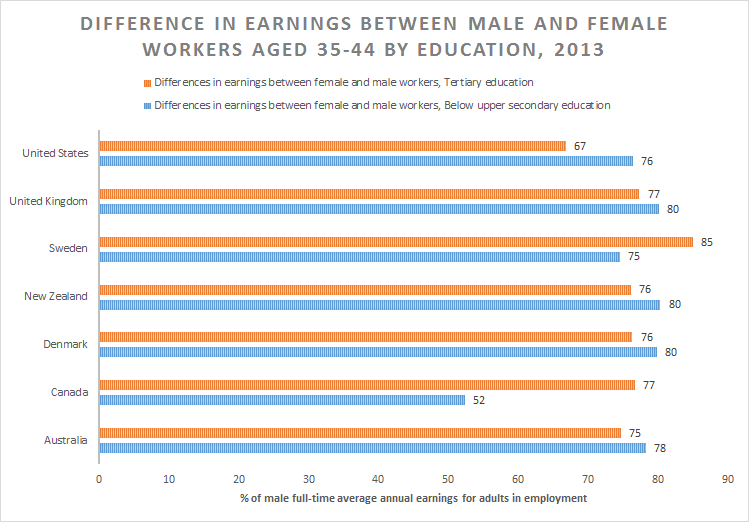
Data extracted on 09 Mar 2016 22:28 UTC (GMT) from OECD.Stat.
In most countries in the chart above, going on to university and graduating does not reduce the gender pay gap by the time you reach your late 30s and early 40s. Best explanation for that is that part of the graduate wage premium is traded for work-life balance.
The case against free university educations
26 Jan 2016 Leave a comment
in economics of education Tags: graduate premium
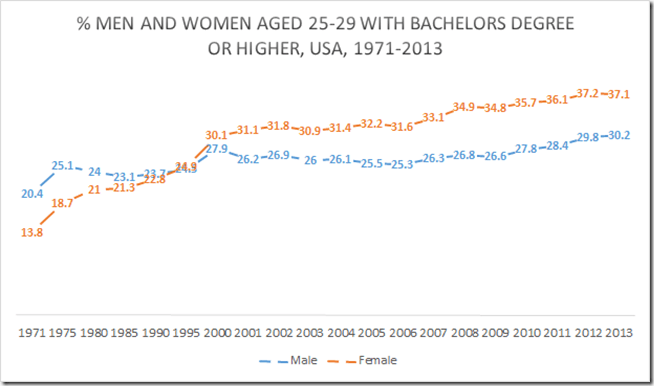
Percentage of American men and women aged 25 to 29 with bachelors degree or higher, 1971 – 2013
13 Jan 2016 1 Comment
in discrimination, economic history, economics of education, gender, human capital, labour economics Tags: College premium, education premium, graduate premium, reversing gender gap
The gender gap in higher education reversed in the year 2000
Earnings distribution by level of education
13 Dec 2015 Leave a comment
in economics of education, human capital, labour economics Tags: College premium, education premium, graduate premium, high school dropouts
White Brits are the ethnic group least likely to go to university
24 Nov 2015 Leave a comment
in discrimination, economics of education, human capital, labour economics Tags: British economy, College premium, graduate premium, tertiary attainment, university premium
Graduate premium by subject major
28 Oct 2015 Leave a comment
in discrimination, economics of education, gender, human capital, labour economics, occupational choice Tags: College premium, graduate premium, skill premium
Skill premium: The payoff of a university education depends on what you study – not where. econ.st/1H9cDfZ http://t.co/ZAqqvrecBm—
Max Roser (@MaxCRoser) June 16, 2015
A rising majority of university students around the world are women
26 Oct 2015 Leave a comment
in development economics, discrimination, economic history, economics of education, gender, growth disasters, growth miracles, human capital, labour economics Tags: College premium, compensating differentials, education premium, graduate premium, marriage and divorce, reversing gender gap
A rising majority of university students around the world are women (HT @cblatts) http://t.co/6loTmSgrk9—
William Easterly (@bill_easterly) June 15, 2015
More evidence on the emergence of the working rich
25 Oct 2015 Leave a comment
in applied price theory, applied welfare economics, economics of education, entrepreneurship, human capital, labour economics, labour supply, Marxist economics, occupational choice Tags: College premium, creative destruction, education premium, entrepreneurial alertness, graduate premium, Leftover Left, superstar wages, superstars, top 1%
 Utopia, you are standing in it!
Recent Comments