Democracy and Political Ignorance: Why Smaller Government Is Smarter
11 Jun 2016 Leave a comment
in applied price theory, applied welfare economics, comparative institutional analysis, constitutional political economy, economics, economics of information, income redistribution, Public Choice, public economics, rentseeking Tags: rational ignorance, rational irrationality, voter demographics
Most @BernieSanders’ supporters don’t want to #FeelTheBern in their hip-pocket
13 May 2016 Leave a comment
in politics - USA, public economics Tags: 2016 presidential election, Bernie Sanders, expressive voting, Left-wing hypocrisy, rational ignorance, rational irrationality
66 percent of Sanders supporters are unwilling to pay more than $1,000 in higher taxes for universal health care. This includes the 8 percent of Sanders supporters who aren’t willing to pay anything more!
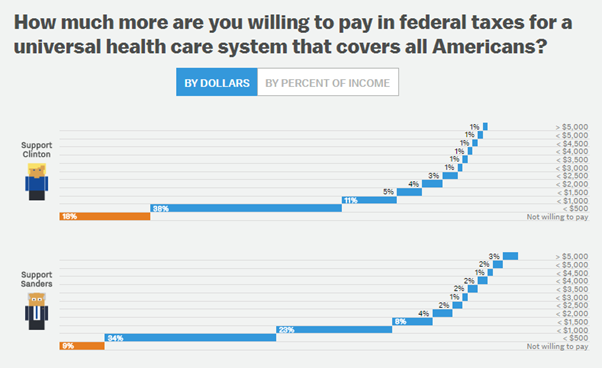
Source: Most Bernie Sanders supporters aren’t willing to pay for his revolution – Vox.
Sanders supporters want free public college tuition but 14 percent said they don’t want to pay additional taxes for it; another half said they would only pay up to $1,000 a year!
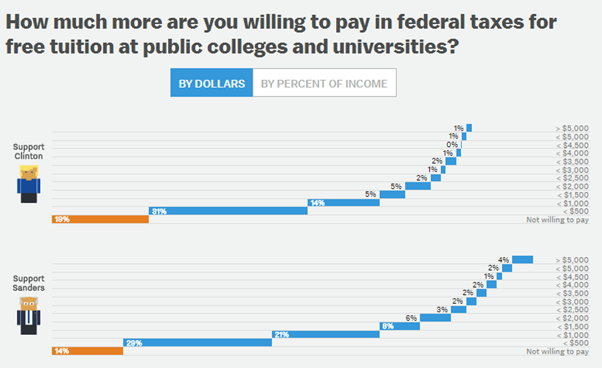
Source: Most Bernie Sanders supporters aren’t willing to pay for his revolution – Vox.
@BernieSanders should be the @realdonaldtrump’s running mate
08 May 2016 Leave a comment
in applied price theory, applied welfare economics, international economics, politics - USA Tags: 2016 presidential election, comparative advantage, free trade, left-wing popularism, rational ignorance, rational rationality, right-wing popularism
Why environmentalists are adverse to real solutions #earthday
22 Apr 2016 Leave a comment
in applied price theory, applied welfare economics, comparative institutional analysis, constitutional political economy, economics of media and culture, economics of regulation, energy economics, entrepreneurship, environmental economics, environmentalism, global warming, politics - USA Tags: anti-market bias, Earth Day, expressive voting, rational ignorance, rational rationality

Source: Quotation of the day for Earth Day on the ‘science of economics versus the religion of environmentalism’ … – AEI | Carpe Diem Blog » AEIdeas from Steven E. Landsburg’s book “The Armchair Economist: Economics and Everyday Life,” in his chapter titled “Why I Am Not an Environmentalist: The Science of Economics versus the Religion of Ecology“.
@StatModeling @ryanmcmaken Europe sub-Reddit just can’t handle the truth about how poor they are!?
17 Apr 2016 Leave a comment
in applied welfare economics, economic history, economics of media and culture, politics - USA Tags: European Union, living standards, rational ignorance, rational irrationality, Reddit

Americans used to be much more trusting of government
15 Apr 2016 Leave a comment
in constitutional political economy, economics of bureaucracy, income redistribution, politics - USA, Public Choice, rentseeking Tags: rational ignorance, rational irrationality, special interests, voter demographics
The 1st @Paul Krugman (1994) on “Competitiveness: A Dangerous Obsession”
24 Mar 2016 Leave a comment
in international economics, politics - USA Tags: anti-foreign buyers, anti-market buyers, Leftover Left, Paul Krugman, public intellectuals, rational ignorance, rational irrationality, renegade Left

@NZGreens @nzlabour @uklabour @berniesanders bite a gift horse in the mouth when complaining about the ignorance of the average voter
23 Feb 2016 Leave a comment
in applied price theory, economic history, economics of information, politics - New Zealand, Public Choice Tags: anti-foreign bias, anti-market bias, Bryan Caplan, Deirdre McCloskey, make-work bias, New Zealand Greens, New Zealand Labour, pessimism bias, rational ignorance, rational irrationality, votor demographics
Fascinating. Yawning chasm between why Labour members think they lost and why voters think they did. From @thetimes http://t.co/MvhZYI2CTr—
Joe Watts (@JoeWatts_) July 23, 2015
Left-wingers do whinge about voters not understanding; about how if only the voters understood better their arguments than they do now. The Left thinks voters just keep getting it wrong.
They do not know how lucky they are. Rational ignorance and rational irrationality are a rich harvest for the policies of Labour and the Greens.
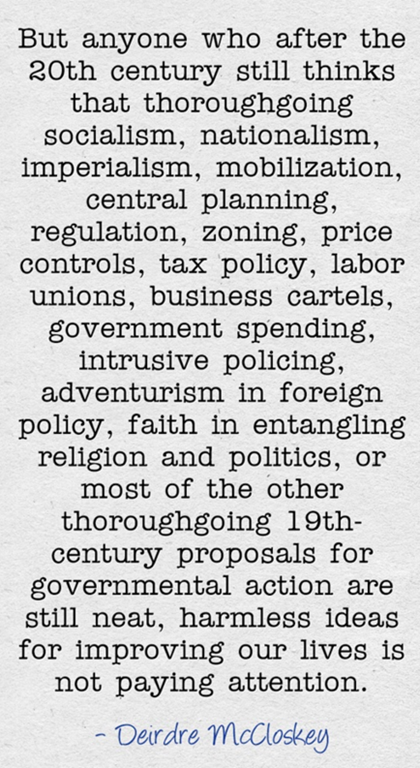
Most of the policies of Labour and the Greens are premised on cultivating the rational irrationalities of voters. These lead to Bryan Caplan’s pessimism bias, an anti-market bias, an anti-foreign bias and make-work bias:
The evidence—most notably, the results of the 1996 Survey of Americans and Economists on the Economy—shows that the general public’s views on economics not only are different from those of professional economists but are less accurate, and in predictable ways.
The public really does generally hold, for starters, that prices are not governed by supply and demand, that protectionism helps the economy, that saving labour is a bad idea, and that living standards are falling.
Politicians mindful of re-election must pander to these four biases.
Fortunately, for the New Zealand Labour Party and the Green Party of Aotearoa New Zealand, voters have no rational reason to correct these four biases. Voters are rationally irrational. As each individual counts so little, why spend any time correcting biased political beliefs?
Anti-market bias: The tendency to underestimate the benefits of the market mechanism. The typical voter equates market phenomena such as profitability and interest as examples of unbridled monetary confiscations by ‘greedy’ businesses. This biased against the market, despite all its successes, is a rich field to till for both Labour and the Greens
Anti-foreign bias: The tendency to underestimate the economic benefits of interaction with foreigners. This antagonism towards such trends as outsourcing employment overseas, or selling raw materials to faraway traders, is reminiscent of the mercantilism Adam Smith so brilliantly demolished but it still lives on today in the hearts of the voting citizenry. Labour and the Greens play to that bias shamelessly.
Make-work bias: The tendency to underestimate the economic benefits from conserving labour. Those who look to the visible face of job losses overlook the job gains (often by those who lost their jobs) to be made tomorrow in emerging industries. The Greens and Labour are sure-fire enemies of creative destruction.
Pessimistic bias: The tendency to overestimate the severity of economic problems, and to underestimate the recent past, present and future performance of the economy. In The Progress Paradox (2003), Gregg Easterbrook ridicules abundance denial:
Our forebears, who worked and sacrificed tirelessly in the hopes their descendants would someday be free, comfortable, healthy, and educated, might be dismayed to observe how acidly we deny we now are these things.
Many average voters seem to feel that Malthus was correct in diagnosing the allegedly poor prospects for the market economy.
Where would the voting base of the Greens be without a pessimism bias? They are professional pessimists and doomsday prophets from their earliest days. Labour assumes working class Tories are dupes of what is left of fading media barons such as Rupert Murdoch.

Note from @paulkrugman to @BernieSanders @JeremyCorbyn and their supporters
23 Feb 2016 Leave a comment
in applied price theory, comparative institutional analysis, constitutional political economy, economic history, economics of media and culture, economics of regulation, labour economics, macroeconomics, Marxist economics, politics - USA Tags: 2016 presidential election, antiforeign bias, antimarket bias, British politics, Leftover Left, make-work bias, rational ignorance, rational irrationality, renegade Left, Twitter left

Youth voting trend for US Presidential elections
22 Feb 2016 Leave a comment
in politics - USA, Public Choice Tags: rational ignorance, rational irrationality, voter turnout
@BernieSanders has the type of friends that make you prefer your enemies
22 Feb 2016 Leave a comment
in applied price theory, fiscal policy, labour economics, labour supply, macroeconomics, politics - USA Tags: 2016 presidential election, ageing society, cranks, demographic crisis, older workers, quackery, rational ignorance, rational irrationality
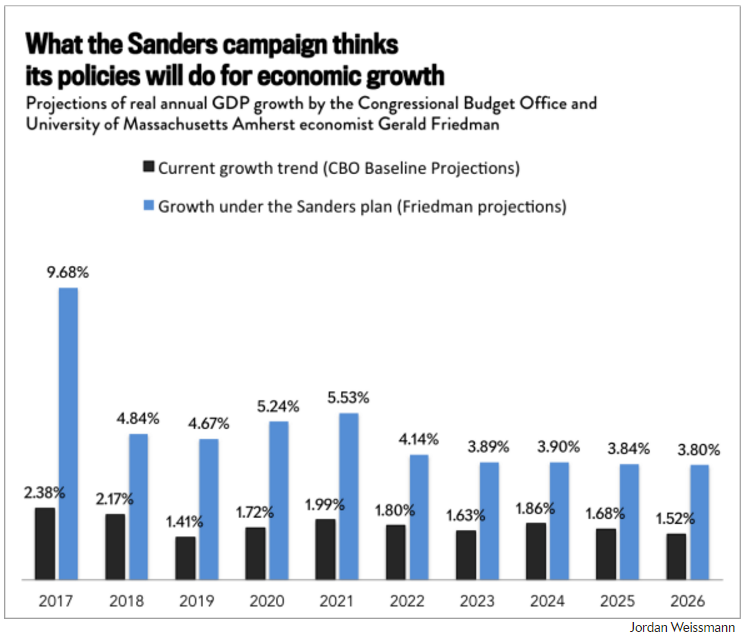
The economist costing the economic plan of a 74-year-old candidate forgot there is an ageing society in his labour force participation rate projections.
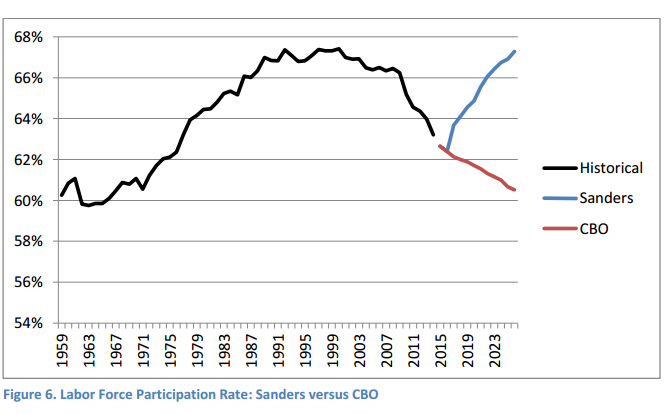
Source: Gerald Frieldman (2016).
And people vote for @BernieSanders because he is honest
21 Feb 2016 Leave a comment
in fiscal policy, income redistribution, macroeconomics, politics - USA, Public Choice, public economics, rentseeking Tags: 2016 presidential election, cranks, quackery, rational ignorance, rational irrationality
There is widespread ignorance of The Great Escape
13 Feb 2016 Leave a comment
in development economics, economic history, growth miracles Tags: rational ignorance, rational rationality, The Great Escape
Explaining free trade to @realdonaldtrump @BernieSanders with the same biased, bought and paid for video
08 Feb 2016 Leave a comment
in applied welfare economics, international economics, politics - USA Tags: 2016 presidential election, free trade, left-wing popularism, rational ignorance, rational irrationality, right-wing popularism
 Utopia, you are standing in it!
Recent Comments