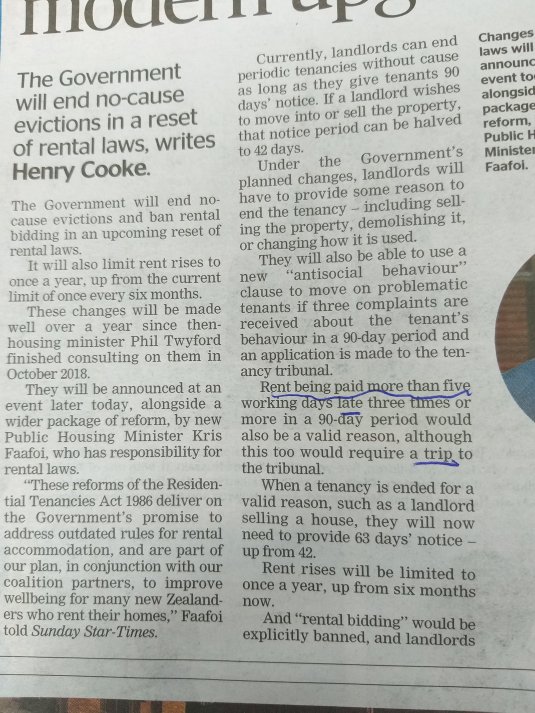
No landlord with rent to tenants with less than stellar credentials from now on.
17 Nov 2019 Leave a comment
in applied price theory, applied welfare economics, economics of regulation, politics - New Zealand, Public Choice, rentseeking Tags: offsetting behaviour, rent control, The fatal conceit, unintended consequences

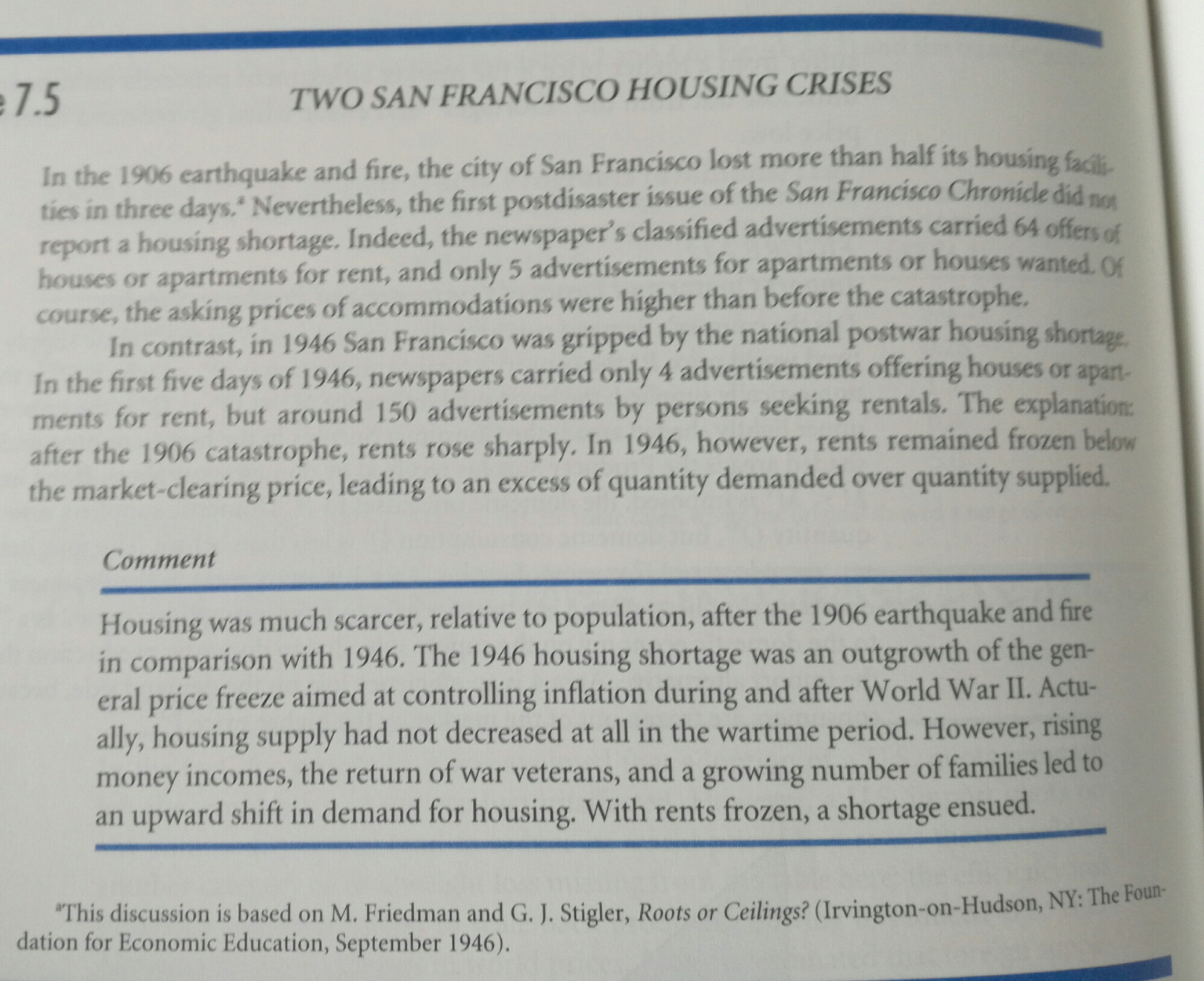
Roofs or Ceilings? The Current Housing Problem
15 Sep 2019 Leave a comment
in applied price theory, comparative institutional analysis, economics of regulation, George Stigler, income redistribution, law and economics, Milton Friedman, politics - USA, property rights, Public Choice, public economics, rentseeking Tags: offsetting behaviour, rent control, The fatal conceit, unintended consequences
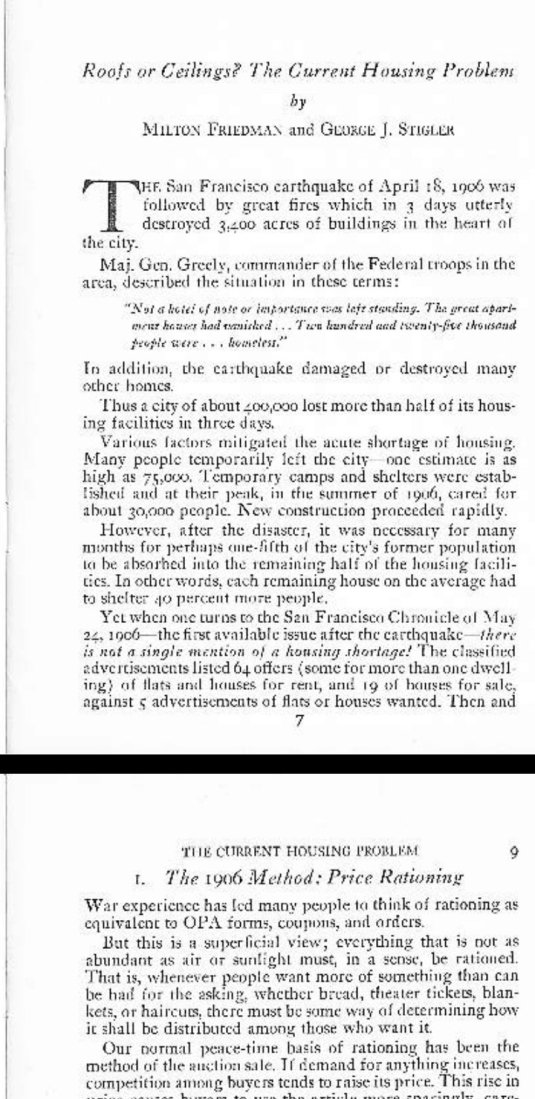
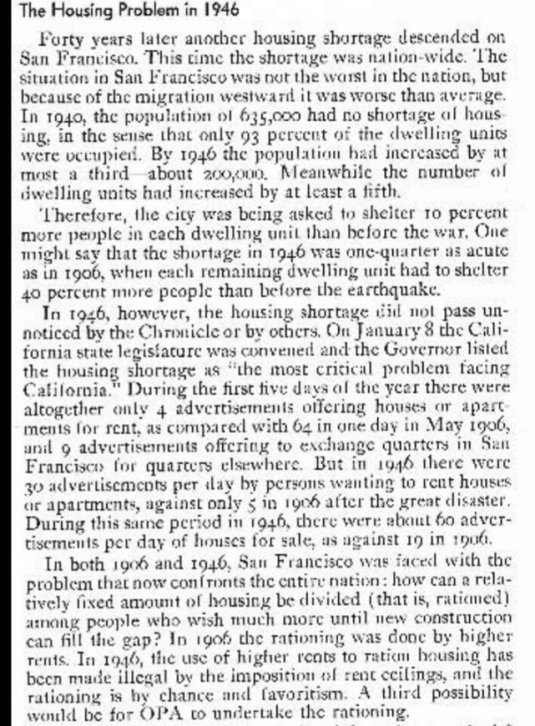
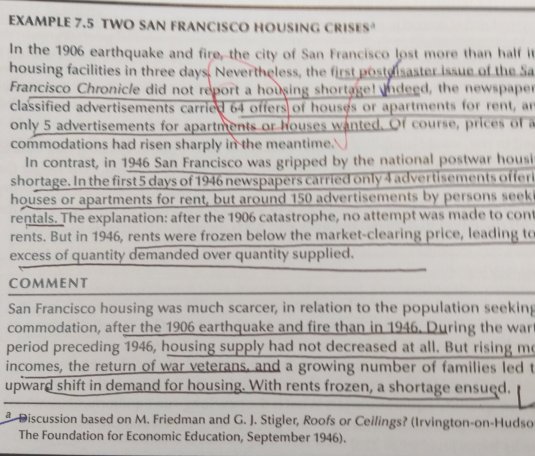
Econ Duel: Why Is the Rent So Damn High?
11 Sep 2019 Leave a comment
in applied price theory, comparative institutional analysis, economic history, economics of regulation, law and economics, politics - Australia, politics - New Zealand, politics - USA, property rights, Public Choice, rentseeking, urban economics Tags: housing affordability, land supply, rent control
Jack Hirshleifer: economics in one page
13 Aug 2019 Leave a comment
in applied price theory, applied welfare economics, economics of regulation, health economics, international economics, labour economics, law and economics, Public Choice, rentseeking Tags: gender wage gap, marijuana decrimilization, rent control

Facts and Fallacies with Thomas Sowell
23 Feb 2019 Leave a comment
in applied price theory, economics of education, economics of information, economics of regulation, labour economics, law and economics, macroeconomics Tags: rent control
Who is the working economist is this @dompost report today?
28 Aug 2018 Leave a comment
in applied price theory, comparative institutional analysis, discrimination, economics of regulation, law and economics, politics - New Zealand, property rights, Public Choice, rentseeking Tags: offsetting behaviour, rent control
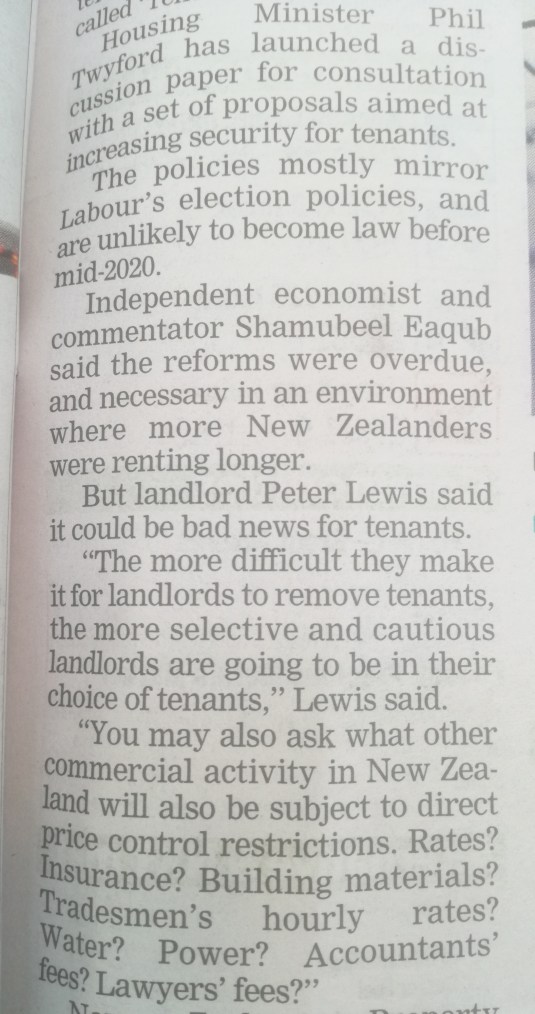
Is Auckland Action Against Poverty secretly neoliberal on housing habitability laws? @_AAAP_
16 Aug 2018 Leave a comment
in applied price theory, economics of bureaucracy, economics of regulation, law and economics, politics - New Zealand, property rights, Public Choice Tags: offsetting behaviour, rent control, unintended consequences

Demsetz on racism and rent controls
10 Jul 2018 Leave a comment
in applied price theory, discrimination, economics of regulation Tags: Harold Demsetz, racial discrimination, rent control


Rent controls are not the answer
09 May 2017 Leave a comment
in applied price theory, economics of regulation Tags: rent control
The Apartment – Seinfeld – rent control
07 May 2017 Leave a comment
in applied price theory, economics of regulation, Public Choice, rentseeking, television, urban economics Tags: rent control, Seinfeld
#GarethMorgan wants sitting tenant laws
28 Apr 2017 Leave a comment
in applied price theory, applied welfare economics, economics of regulation, income redistribution, politics - New Zealand, Public Choice, rentseeking Tags: 2017 New Zealand election, offsetting behaviour, rent control, unintended consequences
Morgan wants to restrict the ability to evict tenants for reasons other than damage to the property and non-payment of rent. This includes not been able to evict a tenant on sale of the property.
We intend to change the regulations around residential tenancy law so leases make it far easier for a tenant to remain in the premises long term…
This will be achieved by restricting the conditions under which a landlord can evict a tenant to those of non-payment of rent or property damage. Sale of a property is not necessarily a legitimate reason for eviction. Tenants will be able to give 90 days notice.
That policy will make winding up of estates difficult. Houses will be have to be left vacant rather than rented while affairs are put in order. That is to name one of many flaws in a policy announced by a party that prioritises being different over been useful and right.
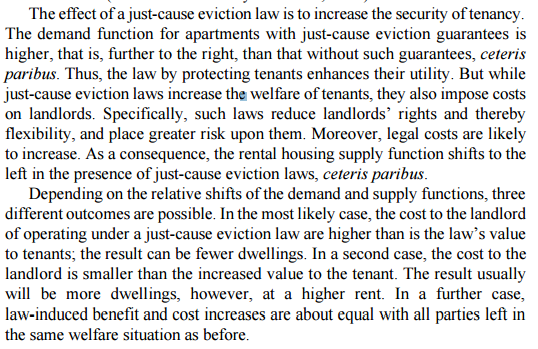
Source: RENTING Werner Z. Hirsch at encyclopedia of law and economics.


Recent Comments