Deposit insurance

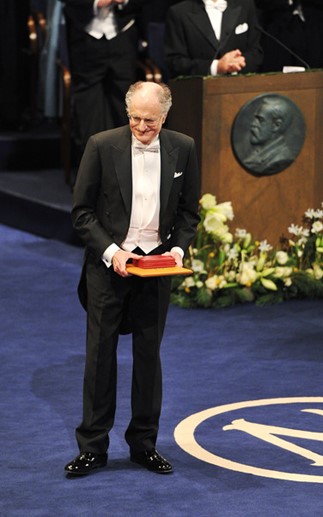
Many of the key issues about what modern macroeconomics has to say on global financial crises and deposit insurance are discussed in a 2010 interview with Thomas Sargent

Sargent said that two polar models of bank crises and what government lender-of-last-resort and deposit insurance do to arrest or promote them were used to understand the GFC. They are polar models because:

  • in the Diamond-Dybvig and Bryant model of banking runs, deposit insurance and other bailouts are purely a good thing stopping panic-induced bank runs from ever starting; and
  • in the Kareken and Wallace model, deposit insurance by governments and the lender-of-last-resort function of a central bank are purely a bad thing because moral hazard encourages risk taking unless there is regulation or there is proper surveillance and accurate risk-based pricing of the deposit insurance.

In the Diamond-Dybvig and Bryant model, if there is government-supplied deposit insurance, people do not initiate bank runs because they trust their deposits to be safe. There is no cost to the government for offering the deposit insurance because there are no bank runs! A major free lunch.

Tom Sargent considers that the Bryant-Diamond-Dybvig model has been very influential, in general, and among policy makers in 2008, in particular.

Governments saw Bryant-Diamond-Dybvig bank runs everywhere. The logic of this model persuaded many governments that if they could arrest the actual or potential runs by convincing creditors that their loans were insured, that could be done at little or no eventual cost to taxpayers.

In 2008, the Australian and New Zealand governments announced emergency bank deposit insurance guarantees. In Bryant-Diamond-Dybvig style bank panics, these guarantees ward off the bank run and thus should cost nothing fiscally because the deposit insurance is not called upon. These guarantees and lender of last resort function were seen as key stabilising measures. These guarantees were called upon in NZ to the tune of $2 billion.

  • 1. The Diamond-Dybvig and Bryant model makes you sensitive to runs and optimistic about the ability of deposit insurance to cure them.
  • The Kareken and Wallace model’s prediction is that if a government sets up deposit insurance and doesn’t regulate bank portfolios to prevent them from taking too much risk, the government is setting the stage for a financial crisis.
  • The Kareken-Wallace model makes you very cautious about lender-of-last-resort facilities and very sensitive to the risk-taking activities of banks.

Kareken and Wallace called for much higher capital reserves for banks and more regulation to avoid future crises. This is not a new idea.

Sam Peltzman in the mid-1960s found that U.S. banks in the 1930s halved their capital ratios after the introduction of federal deposit insurance. FDR was initially opposed to deposit insurance because it would encourage greater risk taking by banks.

Michael Reddell's avatarcroaking cassandra

Late on Friday afternoon, Stuff posted an op-ed piece calling for the introduction of a (funded) deposit insurance scheme in New Zealand.  It was written by Geof Mortlock, a former colleague of mine at the Reserve Bank, who has spent most of his career on banking risk issues, including having been heavily involved in the handling of the failure, and resulting statutory management, of DFC.

As the IMF recently reported, all European countries (advanced or emerging) and all advanced economies have deposit insurance, with the exception of San Marino, Israel and New Zealand.   An increasing number of people have been calling for our politicians to rethink New Zealand’s stance in opposition to deposit insurance.   I wrote about the issue myself just a couple of months ago, in response to some new material from the Reserve Bank which continues to oppose deposit insurance.

Different people emphasise different arguments in making the case for New Zealand to…

View original post 1,963 more words

Lunch and Conversation with Thomas J. Sargent

Did fiscal austerity in 2010 have credible academic support?

Image

Did the GFC catch modern macroeconomists by surprise?

via Interview with Thomas Sargent | Federal Reserve Bank of Minneapolis

‏@sjwrenlewis The stimulus package ignored what we have learned in the last 60 years of macroeconomic research

Interview with Thomas Sargent | Federal Reserve Bank of Minneapolis.

.

Tom Sargent keynote address Emergency Economic Summit for Greece (1 June 2015)

The Beauty of Uncertainty – Thomas J. Sargent

Margaret Thatcher, Hayek & Friedman | Margaret Thatcher Foundation

Thatcher read Hayek’s Road to Serfdom as an undergraduate at Oxford. She took away two key lessons for her life: you cannot compromise with socialism, even the mild social democratic forms; and she saw her own party was doing just that, which put her deeply at odds with its leadership.

After she became Leader of the Opposition, Thatcher cut short a leftish member of her own  Conservative Party Research Department by showing him a copy of The Constitution of Liberty, slamming it down on the table declaring “this is what I believe”.

Thatcher’s relationship with Milton Friedman was different to that of Hayek and not as long standing. Friedman met Thatcher for the first time at a dinner in 1978.

After Thatcher came to office in 1979, Friedman was a critic of the monetary regime of the Thatcher government, questioning her monetary policy targets,  questioning the raising of the value added tax to finance income tax cuts,  and urging deeper spending cuts in the 1979 budget. Friedman was also a strong critic of the monetary policies of the Fed at that time as well, arguing that they lacked credibility, transparency and were very erratic.

In a letter to the Times on 3 March 1980 Friedman stated that he opposed “fine-tuning” and strongly preferred:

a steady monetary and fiscal policy announced long in advance and strictly adhered to

Hayek disagreed with Friedman about the role of gradualism in a letter to the Times on 26 March 1980:

The chief practical issue today is how fast inflation can be and ought to be stopped.

On this, I am afraid, my difference from Friedman makes me take an even more radical position.

The reason is that I believe that the artificial stimulus which inflation gives to business and employment lasts only so long as inflation accelerates, that is, so long as prices turn out to be higher than expected.

Inflation clearly cannot accelerate indefinitely, but as soon as it ceases to accelerate, all the windfalls due to prices turning out higher than expected, which kept unprofitable businesses and employment going, disappear.

Every slowing down of inflation must therefore produce temporary conditions of extensive failures and unemployment.

No inflation has yet been terminated without a “stabilization crisis”.

To advocate that inflation should be slowed down gradually over a period of years is to advocate a long period of protracted misery. No government could stand such a course.

Milton Friedman’s general views on Britain when Thatcher first came to office were clear-cut and were also stated in his letter to the Times on 3 March 1980:

…while monetary restraint is a sufficient condition for controlling inflation, it is a necessary but not sufficient condition for improving Britain’s productivity – the fundamental requirement for restoring Britain to full economic health.

That requires measures on a broader front to restore and improve incentives, promote productive investment, and give a greater scope for private enterprise and initiative.

Both Hayek and Friedman wrote privately about the Thatcher policies of the early 1980s, decrying them as gradualism. So much for the retired professors as the ring masters of neo-liberalism and Thatcher as their pawn.

Friedman and Hayek disagreed with each other, in important respects, about both gradualism in monetary policy and  macroeconomics in general.

Thatcher did not follow their conflicting policy advice to her. At best, Thatcher was a wayward disciple of squabbling prophets.

Friedman was a strong critic of Austrian macroeconomics and its supposed role in the 1930s policy response or lack of a response to the Great Depression:

I think the Austrian business-cycle theory has done the world a great deal of harm.

If you go back to the 1930s, which is a key point, here you had the Austrians sitting in London, Hayek and Lionel Robbins, and saying you just have to let the bottom drop out of the world.

You’ve just got to let it cure itself. You can’t do anything about it. You will only make it worse. You have Rothbard saying it was a great mistake not to let the whole banking system collapse.

I think by encouraging that kind of do-nothing policy both in Britain and in the United States, they did harm.

Hayek was equally critical of the macroeconomics of Milton Friedman and his methodology in general:

I do indeed regard the abandonment of the whole macroeconomics nonsense as very important, but it is for me a very delicate matter and I have for some time avoided stating my views too bluntly and would not have time to state them adequately.

The source of the difficulty is the constant danger that the Mont Pelerin society might split into a Friedmanite and a Hayekian wing.

 I have long regretted my failure to take time to criticise Friedman’s Positive Economics almost as much as my failure to return to the critique of Keynes General Theory after I had dealt with his Treatiese.

It still seems to me paradoxical that Keynes, who was rather contemptuous of econometrics, should have become the main source of the revival of macroeconomics – which incidentally was also the reason why Milton was for a time a Keynesian.

I believe a good and detailed critical analysis of macroeconomics would be very desirable.

Brad Delong pointed out in 2000 that the New Keynesian macroeconomic research program was developed in the 20th century monetarist tradition mostly in the work of Milton Friedman.

Tom Sargent argued in 1981 that Thatcher’s medium term economic strategy was gradualism, and the sustained budget deficits would result in unpleasant monetarist arithmetic:

…In order that the current British plan be viewed as credible it is necessary that the large prospective government deficits over the next several years be counterbalanced by prospective surpluses further down the line.

It is difficult to point to much either in current legislation,  or equally importantly, in the general British political climate that could objectively support such an outlook.

…Gradualism invites speculation about future reversals with U-turns in policy.

Large contemporary government deficits unaccompanied by concrete prospects for future government surpluses promote realistic doubts about whether monetary restraint must be abandoned sooner or later to help finance the deficits.

Such doubts not only call into question the likelihood that the plan can successfully permanently reduce inflation, but also can  induce high real cost in terms of depressed industry and lengthened unemployment in response to what may be viewed as only temporary downward movements in nominal aggregate demand that the monetary restraint induces.

What did Thatcher actually do?

by discrediting socialism so thoroughly, she prompted in due course the adoption by the Labour Party of free market economics, and so, as she wryly confessed in later years, “helped to make it electable”.

The archives of the Margaret Thatcher foundation has released extensive correspondence and other documents about Thatcher, Hayek and Friedman.

via MT, Hayek & Friedman | Margaret Thatcher Foundation.

Tom Sargent on the Fundamentals of Currency Union Crises

Tom Sargent at Hong Kong University in April 2013 in four parts


Paul Krugman, Tom Sargent and Me

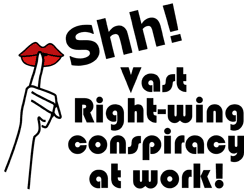
Paul Krugman seems to be implying that I am the double-secret ring-leader of a vast right-wing conspiracy.

clip_image001

Today in his blog at the New York Times, Krugman said:

…why the sudden attention to Sargent’s 2007 speech?

I think it’s fairly obvious: it’s essentially stealth anti-Keynesian propaganda, cloaked in the form of a widely respected and liked economist uttering what sound like eternal truths.

But they aren’t, and the real goal here is to undermine the case for fighting unemployment in the here and now. There are virtues to that 2007 talk, but right now is no time for 2007 Sargent.

In my reply at his blog, I said that I originally posted the link to Sargent’s speech to make a point that most economic analysis is free of politics because the average economist is a moderate Democrat. Tom Sargent is a life-long Democrat.

To add to my reply at Krugman’s blog, Krugman said earlier in his blog that:

It’s not so much that what Sargent said is wrong, although some of his principles are by no means universally agreed upon, even in normal times.

What’s so striking about Sargent’s points is that it’s hard to think of a worse time to cite them.

And the people citing that old speech clearly have ulterior motives.

I live in New Zealand. Not everything is about U.S. domestic politics.

I rather prophetical said on Marginal Revolution on the 20th that “Too many on social media such as Reddit responded by smearing Sargent as a right-winger and neo-liberal. He is a life-long Democrat.”

My conspiratorial minions span the globe to include initially Newmark’s Door and then Marginal Revolution,  Stephen WilliamsonVox.com, the American Enterprise Institute, Catallaxyfiles and the Business Insider to name but a few. There are other unindicted co-conspirators.

Karl Popper argued that conspiracy theories overlook the pervasive unintended consequences of political and social action; conspiracy theorists assume that all consequences must have been intended by someone.

Krugman agrees that Sargent’s 12-points are not that controversial in themselves. Krugman then plays the man rather than the ball:

“How to discredit an unwelcome report:

… Stage Four: Discredit the person who produced the report. Explain (off the record) that
1. He is harbouring a grudge against the Department.
2. He is a publicity seeker.
3. He is trying to get a Knighthood/Chair/Vice Chancellorship.
4. He used to be a consultant to a multinational.
5. He wants to be a consultant to a multinational.

Sir Humphrey, The Greasy Pole

Stumbling and Mumbling: 12 alternative principles to Thomas Sargent’s

1. People have different motivations: wealth, power, pride, job satisfaction and so on. Incentive structures which suit one set of motives might not work for another.

2. Many things are true but not very significantly so.

3. Power matters: conventional economics under-states this.

4. Luck matters. The R-squareds in Mincer equations are generally low.

5. There is a great deal of ruin in a nation, and in an organization.

6. Individual rationality sometimes produces outcomes which are socially optimal as in Adam Smith’s invisible hand, and sometimes not.

7. Trade-offs between values are more common than politicians pretend, but are not ubiquitous.

8. Cognitive biases are everywhere.

9. Everything matters at the margin, but the margin might not be very extensive.

10. The social sciences are all about mechanisms. The question is: which ones work when and where? This means there are few if any universal laws in the social sciences; context matters.

11. Accurate economic forecasting is impossible. But time-varying risk premia might give us a little predictability.

12. Risk comes in many types. Reducing one type of it often means increasing exposure to another type.

Chris Dillow at Stumbling and Mumbling: 12 alternative principles.

Favourite Lucas and Sargent quotes

Lucas and Sargent from After Keynesian Macroeconomics (1979):

For policy, the central fact is that Keynesian policy recommendations have no sounder basis, in a scientific sense, than recommendations of non-Keynesian economists or, for that matter, non-economists

Thomas J. Sargent

Robert Lucas from Tobin and Monetarism: A Review Article (1981):

Keynesian theory is in deep trouble, the deepest kind of trouble in which an applied body of theory can find itself: It appears to be giving seriously wrong answers to the most basic questions of macroeconomic policy.

Proponents of a class of models which promised 3 to 4 per cent unemployment to a society willing to tolerate annual inflation rates of 4 to 5 per cent have some explaining to do after a decade such as we have just come through.

A forecast error of this magnitude and central importance to policy has consequences, as well it should.

We got the high-inflation decade, and with it as clear-cut an experimental discrimination as macroeconomics is very likely to see, and Friedman and Phelps were right.

Haberler, Jacob Viner, Robertson, Pigou and Frank Knight pointed out in their reviews of the General Theory that it lacked originality, and presented old ideas often incorrectly in confusing new vocabularies that made the book difficult to read. These reviews are worth reading today such as this by Frank Knight:

Many of Mr. Keynes’s own doctrines are, as he would proudly admit, among the notorious fallacies to combat which has been considered a main function of the teaching of economics.

Tom Sargent’s 12 lessons from economics for public policy

Tom Sargent is a life-long Democrat who is old enough to remember when Democrats were fiscal conservatives.

At a graduation speech at Berkeley, Sargent listed these lessons:

    1. Many things that are desirable are not feasible.
    2. Individuals and communities face trade-offs.
    3. Other people have more information about their abilities, their efforts, and their preferences than you do.
    4. Everyone responds to incentives, including people you want to help. That is why social safety nets don’t always end up working as intended.
    5. There are trade-offs between equality and efficiency.
    6. In an equilibrium of a game or an economy, people are satisfied with their choices. That is why it is difficult for well-meaning outsiders to change things for better or worse.
    7. In the future, you too will respond to incentives. That is why there are some promises that you’d like to make but can’t. No one will believe those promises because they know that later it will not be in your interest to deliver. The lesson here is this: before you make a promise, think about whether you will want to keep it if and when your circumstances change. This is how you earn a reputation.
    8. Governments and voters respond to incentives too. That is why governments sometimes default on loans and other promises that they have made.
    9. It is feasible for one generation to shift costs to subsequent ones. That is what national government debts and the U.S. social security system do (but not the social security system of Singapore).
    10. When a government spends, its citizens eventually pay, either today or tomorrow, either through explicit taxes or implicit ones like inflation.
    11. Most people want other people to pay for public goods and government transfers (especially transfers to themselves).
    12. Because market prices aggregate traders’ information, it is difficult to forecast stock prices and interest rates and exchange rates

Next Newer Entries

Bassett, Brash & Hide

Celebrating humanity's flourishing through the spread of capitalism and the rule of law

Truth on the Market

Scholarly commentary on law, economics, and more

The Undercover Historian

Beatrice Cherrier's blog

Matua Kahurangi

Celebrating humanity's flourishing through the spread of capitalism and the rule of law

Temple of Sociology

Celebrating humanity's flourishing through the spread of capitalism and the rule of law

Velvet Glove, Iron Fist

Celebrating humanity's flourishing through the spread of capitalism and the rule of law

Why Evolution Is True

Why Evolution is True is a blog written by Jerry Coyne, centered on evolution and biology but also dealing with diverse topics like politics, culture, and cats.

Down to Earth Kiwi

Celebrating humanity's flourishing through the spread of capitalism and the rule of law

NoTricksZone

Celebrating humanity's flourishing through the spread of capitalism and the rule of law

Homepaddock

A rural perspective with a blue tint by Ele Ludemann

Kiwiblog

DPF's Kiwiblog - Fomenting Happy Mischief since 2003

The Dangerous Economist

Celebrating humanity's flourishing through the spread of capitalism and the rule of law

Watts Up With That?

The world's most viewed site on global warming and climate change

The Logical Place

Tim Harding's writings on rationality, informal logic and skepticism

Doc's Books

A window into Doc Freiberger's library

The Risk-Monger

Let's examine hard decisions!

Uneasy Money

Commentary on monetary policy in the spirit of R. G. Hawtrey

Barrie Saunders

Thoughts on public policy and the media

Liberty Scott

Celebrating humanity's flourishing through the spread of capitalism and the rule of law

Point of Order

Politics and the economy

James Bowden's Blog

A blog (primarily) on Canadian and Commonwealth political history and institutions

Science Matters

Reading between the lines, and underneath the hype.

Peter Winsley

Economics, and such stuff as dreams are made on

A Venerable Puzzle

"The British constitution has always been puzzling, and always will be." --Queen Elizabeth II

The Antiplanner

Celebrating humanity's flourishing through the spread of capitalism and the rule of law

Bet On It

Celebrating humanity's flourishing through the spread of capitalism and the rule of law

History of Sorts

WORLD WAR II, MUSIC, HISTORY, HOLOCAUST

Roger Pielke Jr.

Undisciplined scholar, recovering academic

Offsetting Behaviour

Celebrating humanity's flourishing through the spread of capitalism and the rule of law

JONATHAN TURLEY

Res ipsa loquitur - The thing itself speaks

Conversable Economist

Celebrating humanity's flourishing through the spread of capitalism and the rule of law

The Victorian Commons

Researching the House of Commons, 1832-1868

The History of Parliament

Articles and research from the History of Parliament Trust

Books & Boots

Reflections on books and art

Legal History Miscellany

Posts on the History of Law, Crime, and Justice

Sex, Drugs and Economics

Celebrating humanity's flourishing through the spread of capitalism and the rule of law

European Royal History

Exploring the Monarchs of Europe

Tallbloke's Talkshop

Cutting edge science you can dice with

Marginal REVOLUTION

Small Steps Toward A Much Better World

NOT A LOT OF PEOPLE KNOW THAT

“We do not believe any group of men adequate enough or wise enough to operate without scrutiny or without criticism. We know that the only way to avoid error is to detect it, that the only way to detect it is to be free to inquire. We know that in secrecy error undetected will flourish and subvert”. - J Robert Oppenheimer.

STOP THESE THINGS

The truth about the great wind power fraud - we're not here to debate the wind industry, we're here to destroy it.

Lindsay Mitchell

Celebrating humanity's flourishing through the spread of capitalism and the rule of law

Alt-M

Celebrating humanity's flourishing through the spread of capitalism and the rule of law

croaking cassandra

Economics, public policy, monetary policy, financial regulation, with a New Zealand perspective

The Grumpy Economist

Celebrating humanity's flourishing through the spread of capitalism and the rule of law

International Liberty

Restraining Government in America and Around the World