Newsroom has a summary of taxpayer money spent on Mt Ruapehu: How often have we been told this is the final assistance. We are now deep into the sunk cost fallacy.
$50 million of taxpayer money on a ski field
$50 million of taxpayer money on a ski field
01 Mar 2025 Leave a comment
in applied price theory, fiscal policy, industrial organisation, macroeconomics, politics - New Zealand, Public Choice, public economics, rentseeking, survivor principle Tags: corporate welfare
Can Enhanced Street Lighting Improve Public Safety at Scale?
28 Feb 2025 Leave a comment
in applied price theory, econometerics, economics of crime, labour economics, law and economics, occupational choice Tags: crime and punishment, criminal deterrence, law and order
Street lighting is often believed to influence street crime, but most prior studies have examined small-scale interventions in limited areas. The effect of large-scale lighting enhancements on public safety remains uncertain. This study evaluates the impact of Philadelphia’s citywide rollout of enhanced street lighting, which began in August 2023. Over 10 months, 34,374 streetlights were […]
Can Enhanced Street Lighting Improve Public Safety at Scale?
Paris Accord could determine election
28 Feb 2025 Leave a comment
in applied price theory, economics of bureaucracy, economics of climate change, economics of regulation, energy economics, environmental economics, environmentalism, global warming, politics - New Zealand, Public Choice, rentseeking Tags: carbon tax
The government’s commitment to the Paris Accord has garnered opposition from farmers and farming organisations. Federated Farmers is not supportive: The Government’s announcement today of a 2035 climate target of a 51-55% emissions reduction has signed New Zealand up for a decade more of planting pine on productive land, Federated Farmers meat and wool chair […]
Paris Accord could determine election
Mandated Board Diversity Reduces Firm Value
27 Feb 2025 Leave a comment
in applied price theory, discrimination, econometerics, economics of regulation, financial economics, gender, industrial organisation, labour economics, occupational choice, politics - USA Tags: efficient markets hypothesis, sex discrimination
Jon Klick finds that when courts in CA surprisingly invalidated a set of DEI laws, the market value of firms subject to those laws increased: California mandated that firms headquartered in the state include women (SB 826) and underrepresented minorities (AB 979) on their corporate boards. These laws, passed in 2018 and 2020 respectively, were […]
Mandated Board Diversity Reduces Firm Value
If You Date Me, You Date My Debt
27 Feb 2025 Leave a comment
in applied price theory, economics of education, economics of love and marriage, gender, law and economics Tags: College premium, dating markets, marriage and divorce
Romance can pose challenges to those with large credit balances, student loans or other financial obligationsBy Julia Munslow of The WSJ. Excerpts:”For daters, debt can be a turnoff. In a 2024 survey from the Achieve Center for Consumer Insights, 64% of respondents said they wouldn’t want to date someone with a lot of debt.””The economics…
If You Date Me, You Date My Debt
Does the Feldstein-Horioka Puzzle mean National’s Foreign Investment Ambitions Won’t Raise NZ Productivity?
26 Feb 2025 Leave a comment
in applied price theory, econometerics, economic history, financial economics, history of economic thought, international economics, macroeconomics, politics - New Zealand Tags: foreign investment
The NZ Herald’s Editor has declared its journalists will be promoted or fired on the basis of factors like how many clicks they get on their articles. Yes, the Herald is now officially “click bait”. We’re trying to avoid the mistake of writing shallow nonsense at this Blog. So on that note, here’s a somewhat…
Does the Feldstein-Horioka Puzzle mean National’s Foreign Investment Ambitions Won’t Raise NZ Productivity?
Hire Don’t Fire at the FDA
26 Feb 2025 Leave a comment
in applied price theory, comparative institutional analysis, economics of regulation, health economics, politics - USA Tags: 2024 presidential election, drug lags
As a longtime critic of the FDA, you might expect me to support firing FDA employees—not so! My focus has always been on reducing approval time and costs to speed drugs to patients and increase the number of new drugs. Cutting staff is more likely to slow approvals and raise costs. To be fair, we’re […]
Hire Don’t Fire at the FDA
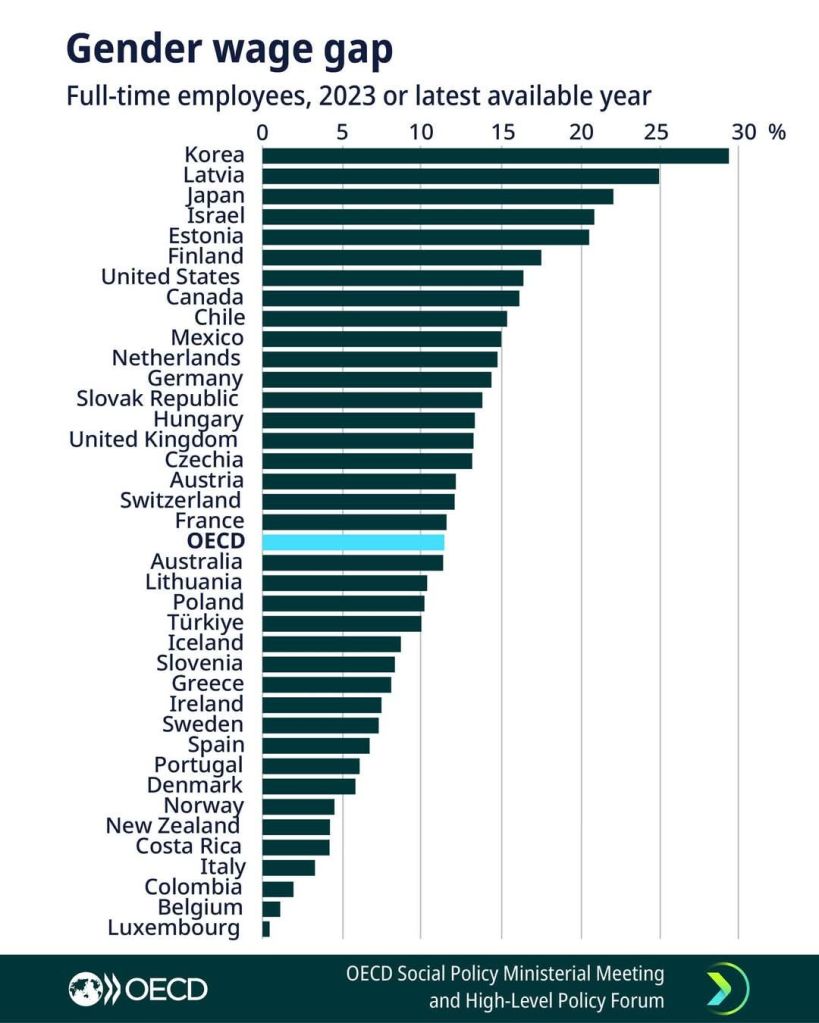
Gender gap
25 Feb 2025 Leave a comment
in applied price theory, discrimination, gender, health and safety, human capital, labour economics, labour supply, occupational choice, poverty and inequality Tags: gender wage gap
The Accumulation of Regulation
21 Feb 2025 1 Comment
in applied price theory, economics of bureaucracy, economics of regulation, labour economics, labour supply, law and economics, politics - USA, property rights, Public Choice, regulation Tags: employment law
Like many who do business in California, I often complain about the regulatory burden (free at last!) People will ask, “So what one regulation would you get rid of?” The problem is that this is a really hard question to answer because in most cases it is not any one regulation in particular, but the…
The Accumulation of Regulation
The Spectacular Economic Ignorance of Peter Navarro
20 Feb 2025 1 Comment
in applied price theory, Austrian economics, history of economic thought, industrial organisation, international economics, labour economics, labour supply, survivor principle, unemployment Tags: 2024 presidential election, free trade, tarrifs
TweetHere’s a letter to the New York Times. Editor: Encountering, in David Leonhardt’s report, a summary of Peter Navarro’s attempted justifications of Trump’s tariffs makes the head spin (“A Disagreement on Tariffs,” February 18). Navarro’s arguments are so illogical, self-contradictory, and economically ignorant that they’d be merely laughable were he not an advisor to the…
The Spectacular Economic Ignorance of Peter Navarro
Selfishly Speaking, Who Should Skip College?
20 Feb 2025 Leave a comment
in applied price theory, economics of education, economics of information, human capital, James Buchanan, labour economics, labour supply, occupational choice Tags: adverse selection, asymmetric information, College premium, signaling

The central thesis of my The Case Against Education is that actually-existing education is a terrible waste of taxpayer money. Since signaling, not building human capital, is the main function of education, the main effect of government subsidies is credential inflation. In economic jargon, my claim is that education has a low (indeed, negative) social…
Selfishly Speaking, Who Should Skip College?
Effects of the minimum wage on the nonprofit sector
19 Feb 2025 Leave a comment
in applied price theory, econometerics, economic history, labour economics, labour supply, minimum wage
After a few days of ‘rest’ (by which I really mean some intensely long work days), I’m going to pick up again on my recent series of posts about the minimum wage (see here for the most recent post), but returning to more familiar ground – the disemployment effects of the minimum wage. The story…
Effects of the minimum wage on the nonprofit sector
Trump Officially Ends Biden-Era War On American Appliances
17 Feb 2025 1 Comment
in applied price theory, economics of climate change, economics of regulation, energy economics, environmental economics, environmentalism, global warming, liberalism, politics - USA Tags: 2024 presidential election, climate activists, climate alarmism
“In recent years, burdensome and ideologically motivated regulations have impeded the development of these resources, limited the generation of reliable and affordable electricity, reduced job creation, and inflicted high energy costs upon our citizens,” Trump stated in the executive order. “These high energy costs devastate American consumers by driving up the cost of transportation, heating, utilities, farming, and manufacturing, while weakening our national security.”
Trump Officially Ends Biden-Era War On American Appliances
Must watch – Gigi Foster on lockdowns at PAEC
17 Feb 2025 Leave a comment
in applied price theory, applied welfare economics, comparative institutional analysis, econometerics, economics of natural disasters, health economics, politics - Australia Tags: economics of pandemics
Minimum Wages, Efficiency, and Welfare
17 Feb 2025 Leave a comment
in applied price theory, applied welfare economics, econometerics, labour economics, labour supply, minimum wage
Recently Alex raised some doubts, to say the least, about the Card-Krueger view of minimum wage hikes. Well, it turns out there is more, and a new consensus is on the verge of forming. Here are David Berger, Kyle Herkenhoff, and Simon Mongey, from a new Econometrica piece: Many argue that minimum wages can prevent efficiency […]
Minimum Wages, Efficiency, and Welfare
 Utopia, you are standing in it!
Recent Comments