Monopsony has a monopoly on ambiguity and sexing up search frictions as exploitation too
17 Jul 2019 Leave a comment
in applied price theory, applied welfare economics, comparative institutional analysis, economic history, labour economics, labour supply, managerial economics, organisational economics, personnel economics Tags: job search, labour market search, monopsony, search and matching

George Stigler on the contribution of monopsonistic competition
17 Jul 2019 Leave a comment
in applied price theory, George Stigler, history of economic thought, industrial organisation

From George Stigler Five Lectures in Economic Problems 1949.
Why some bastard will always cheat on the agreement. Get your retaliation in first too.
17 Jul 2019 Leave a comment
in applied price theory, economics of information, industrial organisation, law and economics Tags: cartel enforcement, cartel theory, competition law, game theory, oligopoly

Science 101: Null Test All Claims
17 Jul 2019 Leave a comment

Francis Menton provides some essential advice for non-scientists in his recent essay at Manhattan Contrarian You Don’t Need To Be A Scientist To Know That The Global Warming Alarm “Science” Is Fake. Excerpts in italics with my bolds.
When confronted with a claim that a scientific proposition has been definitively proven, ask the question: What was the null hypothesis, and on what basis has it been rejected?
As Menton explains, you don’t need the skills to perform yourself the null test, just the boldness to check how they dismissed the null hypothesis.
Consider first a simple example, the question of whether aspirin cures headaches. Make that our scientific proposition: aspirin cures headaches. How would this proposition be established? You yourself have taken aspirin many times, and your headache always went away. Doesn’t that prove that the aspirin worked? Absolutely not. The fact that you took aspirin 100 times and the…
View original post 601 more words
No wage premium for bilingualism. Lack of fluency in dominant language carries a wage penalty for migrants and indigenous peoples.
17 Jul 2019 Leave a comment
in applied price theory, discrimination, economics of education, human capital, labour economics, labour supply, poverty and inequality Tags: economics of languages

A Hamas ‘Great Return March’ speech the BBC is unlikely to report
16 Jul 2019 Leave a comment
Back in May 2017 BBC audiences were told that Hamas had abandoned “anti-Jewish language” with the publication of a new policy document.

“It also says Hamas’s struggle is not with Jews but with “occupying Zionist aggressors”. The 1988 charter was condemned for its anti-Jewish language.
The text is seen as an effort by Hamas, which rules Gaza, to soften its image.
“The document gives us a chance to connect with the outside world,” spokesman Fawzi Barhoum said.
“To the world, our message is: Hamas is not radical. We are a pragmatic and civilized movement. We do not hate the Jews. We only fight who occupies our lands and kills our people. […]
For years there has been criticism of Hamas over the language of its charter, in particular articles which were branded anti-Semitic.
The charter speaks of the need to fight “warmongering Jews” and cites a hadith – a report of what…
View original post 400 more words
Can’t cope with the pressure of international cricket? Put things in perspective by taking advice from Keith Miller
16 Jul 2019 Leave a comment
Psychologists, psychotherapists and what-have-you seem to be doing good business from helping players cope with something that – when all is said and done – is sport.
They are helping nerve-shattered fans, too, after the tense Cricket World Cup final between England and New Zealand, a game ultimately decided by the number of boundaries scored by each side.
On the strength of this, England won the cup.
Would the toss of a coin have been fairer? Or should the title have been shared?
No matter. The fact is a lot of Black Cap fans found their stress levels raised and the NZ Herald fretted:
“Kiwis have been left emotionally bruised today after New Zealand came just centimetres from winning the Cricket World Cup.”
View original post 724 more words
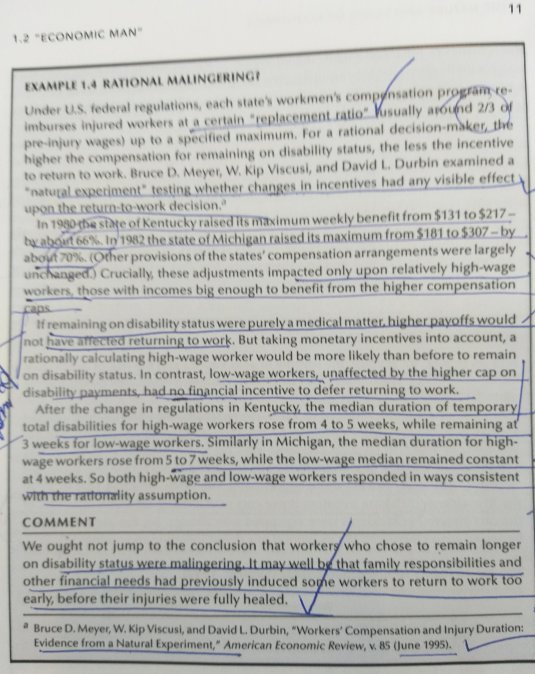
Is there an upper limit for #Fightfor15 logic for further pay rises? What if they are wrong?
16 Jul 2019 Leave a comment
in applied price theory, industrial organisation, labour economics, labour supply, minimum wage, poverty and inequality, survivor principle

If wages go up under the minimum wage increase but employment does not fall, where does the extra output and revenue come from to cover the greater payroll bill?
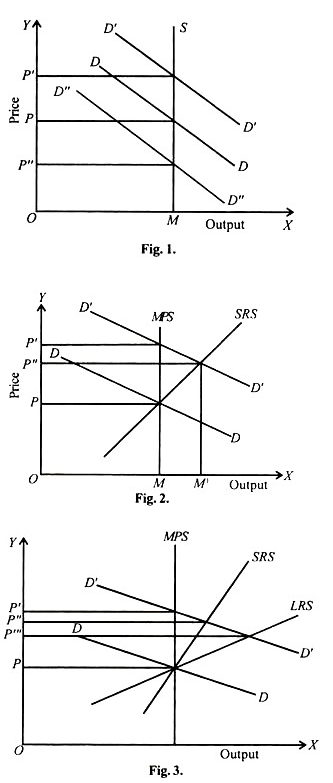
Even small minimum wage increase have ambiguous employment effects under monopsonistic competition
16 Jul 2019 Leave a comment
in applied price theory, applied welfare economics, industrial organisation, labour economics, labour supply, minimum wage, politics - New Zealand, politics - USA, survivor principle Tags: offsetting behaviour, The fatal conceit, unintended consequences

Elizabeth Warren Wants to Be President. Very Bad Idea.
16 Jul 2019 Leave a comment

Elizabeth Warren has moved into second place among the vast array of Democrats wanting to be president. Presumably because no one is listening to what she has to say. Let me review a few bits:
She promises to Import at least 700% more refugees to the U.S.
She wants a total moratorium on all new fossil fuel leases.
She promises on her “first day” as president to set up a commission to investigate U.S. Crimes against immigrants.
Warren’s Immigration plan will decriminalize illegal immigration, end the detention of border crossers.
Crossing the border illegally should not be a criminal offense.
Warren is committed to ending the Israeli occupation of Palestine (?)
A New tax on the Rich will pay for day care for every newborn in the U.S.
Then a new wealth tax will take care of her modest $1.25 trillion debt-and-tuition deal, a tax on “Wall Street Speculators
View original post 124 more words
Friedman Fundamentals: What We Learned About 70% Tax Rates 50 Years Ago
16 Jul 2019 Leave a comment
in applied price theory, economic history, economics of education, entrepreneurship, fiscal policy, human capital, income redistribution, labour economics, labour supply, occupational choice, poverty and inequality, Public Choice, public economics Tags: taxation and entrepreneurship, taxation and investment, taxation and labour supply
McCloskey on the minimum wage and labour productivity
15 Jul 2019 Leave a comment
in applied price theory, labour economics, minimum wage Tags: offsetting behaviour, The fatal conceit, unintended consequences

Spot on on growth mismeasurement
15 Jul 2019 Leave a comment
in applied price theory, economic growth, entrepreneurship, industrial organisation, macroeconomics

BDS is failing – the never ending story (July 2019)
15 Jul 2019 Leave a comment
Here’s the latest installment in our ongoing series of posts documenting BDS fails.
Political
German Protestant church cancels BDS event linked to Palestinian terrorism
The Protestant Church of Germany has canceled an event that was scheduled to feature two hardcore pro-BDS activists, one of whom has ties to fund-raising for the Popular Front for the Liberation of Palestine, which the EU and the US have designated a terrorist organization.
“We at Church Day have a clear attitude and have therefore asked the @rosaluxstiftung to disinvite the controversial speakers or to cancel the event,” the church tweeted on Thursday. “The foundation has canceled the event planned for Friday.”
‘Jerusalem Post’ exposé leads to closure of BDS group’s bank account in Germany
After a series of Jerusalem Post investigative reports on the bank account of the pro-BDS group Jewish Voice for a Just Peace in the Middle East, the German Bank for…
View original post 2,008 more words
Recent Comments