Let us hope: Britain is seeing early signs of a long-awaited turnaround of its productivity woes, according to an alternative measure that suggests output per hour worked has risen at a pace not seen since before the financial crisis. The Resolution Foundation said a “blistering” productivity surge has been masked by problems with official statistics and pointed…
Is there a British productivity comeback?
Is there a British productivity comeback?
20 Jan 2026 Leave a comment
in applied price theory, econometerics, economic growth, economic history, industrial organisation, macroeconomics Tags: British disease
AI, labor markets, and wages
18 Jan 2026 Leave a comment
in applied price theory, econometerics, economic growth, industrial organisation, labour economics, labour supply, macroeconomics, poverty and inequality Tags: creative destruction, pessimist bias
There is a new and optimistic paper by Lukas Althoff and Hugo Reichardt: Artificial intelligence is changing which tasks workers do and how they do them. Predicting its labor market consequences requires understanding how technical change affects workers’ productivity across tasks, how workers adapt by changing occupations and acquiring new skills, and how wages adjust…
AI, labor markets, and wages
‘Market Power in Antitrust Cases,’ by William M. Landes and Richard A. Posner
17 Jan 2026 Leave a comment
in applied price theory, economics of regulation, history of economic thought, industrial organisation, law and economics, politics - USA, Richard Posner Tags: competition law

William M. Landes and Richard A. Posner’s 1981 Harvard Law Review article “Market Power in Antitrust Cases” is a true classic. Showing the value of interdisciplinary work within the law & economics tradition, it brought real clarity to what “market power” means and how courts should assess it—cutting through vague labels like “monopoly power” and…
‘Market Power in Antitrust Cases,’ by William M. Landes and Richard A. Posner
Quotation of the Day…
14 Jan 2026 Leave a comment
in applied price theory, economics of regulation, income redistribution, law and economics, property rights, Public Choice, rentseeking, Thomas Sowell, urban economics Tags: housing affordability, land supply

Tweet… is from page 152 of Thomas Sowell’s Compassion Versus Guilt, a 1987 collection of some of his popular essays; specifically, it’s from Sowell’s June 14th, 1985, column titled “Chances versus Guarantees”: People who bought homes in a quiet little town often become resentful when other people begin moving in, expanding and changing the community.…
Quotation of the Day…
Profile of George Borjas and his influence
12 Jan 2026 Leave a comment
in applied price theory, income redistribution, labour economics, labour supply, politics - USA, Public Choice Tags: economics of immigration
More recently, his research has found new attention and urgency in President Donald Trump’s second term: Borjas, 75, worked as a top economist on the Council of Economic Advisers, a post he stepped down from last week. Borjas is an immigrant and refugee who escaped Cuba for the United States in 1962 and later obtained…
Profile of George Borjas and his influence
Trump’s Shameful Economic Illiteracy
11 Jan 2026 1 Comment
in applied price theory, economics of regulation, financial economics, income redistribution, politics - USA, Public Choice, regulation, rentseeking

No, today’s column is not about Trump’s inane protectionism, which is definitely an example of economic illiteracy. It’s about another area where Trump is copying Joe Biden, channeling Elizabeth Warren, mind-melding with AOC, and acting like Bernie Sanders. Though it probably is indirectly connected with protectionism. “Affordability” has become a big issue, in part because […]
Trump’s Shameful Economic Illiteracy
Quotation of the Day…
10 Jan 2026 Leave a comment
in applied price theory, entrepreneurship, international economics

Tweet… is from page 11 of Menzie Chinn’s and Douglas Irwin’s superb 2025 textbook, International Economics: There is a parable about an entrepreneur who invents an amazing machine. Wheat, soybeans, lumber, and oil are fed into one end of the contraption. As if by magic, smartphones, coffee, and tea, and all manner of clothing and…
Quotation of the Day…
Reflections on the Caplan-Bruenig Poverty Debate
09 Jan 2026 Leave a comment
in applied price theory, history of economic thought, labour economics, labour supply, liberalism, libertarianism, Marxist economics, politics - USA, poverty and inequality, welfare reform Tags: child poverty, family poverty
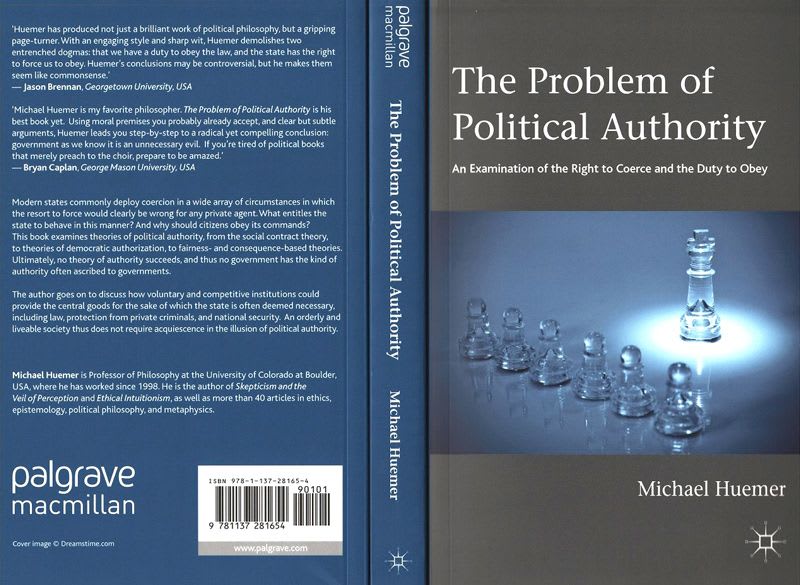
Last month, Econoboi hosted a debate on poverty between myself and Matt Bruenig. Here are my reflections on that debate.I was pleasantly surprised by Bruenig’s openness to most of my proposed supply-side reforms. He wasn’t just pro-immigration, but also pro-deregulation of housing and pro-nuclear. He was happy to admit that these policies aren’t just good…
Reflections on the Caplan-Bruenig Poverty Debate
Building more will boost labor’s share
06 Jan 2026 1 Comment
in applied price theory, labour economics, labour supply
This paper argues that the decline in the labor share is not driven by the overall quantity of capital, but by its changing composition. Constructing annual macro data for 16 advanced countries over two centuries, we show that, since 1980, the relative decline in buildings capital and the associated increase in real prices of buildings…
Building more will boost labor’s share
Why Some US Indian Reservations Prosper While Others Struggle
06 Jan 2026 Leave a comment
in applied price theory, development economics, economics of bureaucracy, economics of regulation, entrepreneurship, growth disasters, growth miracles, industrial organisation, labour economics, law and economics, politics - USA, property rights, Public Choice

Our colleague Thomas Stratmann writes about the political economy of Indian reservations in his excellent Substack Rules and Results. Across 123 tribal nations in the lower 48 states, median household income for Native American residents ranges from roughly $20,000 to over $130,000—a sixfold difference. Some reservations have household incomes comparable to middle-class America. Others face persistent…
Why Some US Indian Reservations Prosper While Others Struggle
Some Links
04 Jan 2026 1 Comment
in applied price theory, politics - USA
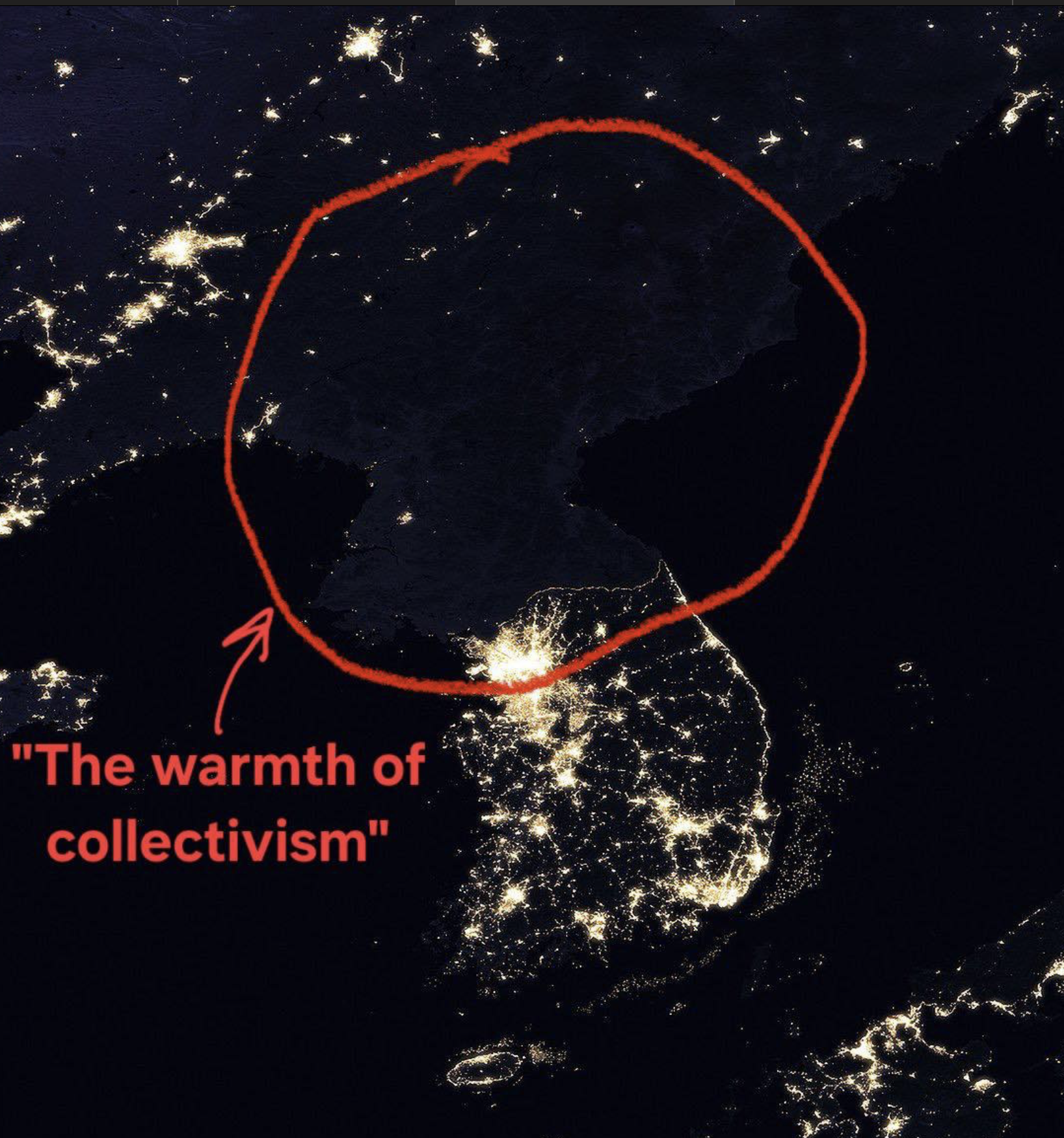
TweetSteven Greenhut decries the current condition of the Republican Party. A slice: We’ve become numb to narcissistic rage posts from our president, but the highly publicized Turning Point USA convention last week offers a preview into where the Republican Party is going after Donald Trump exits the stage. It’s not pretty. As we’ve seen recently…
Some Links
Keynes: Free Trade and the Nationalist Impulse
04 Jan 2026 1 Comment
in applied price theory, economic history, history of economic thought, international economics
In 1933, John Maynard Keynes gave the first Finlay Lecture delivered at University College, Dublin, on the subject of “National Self-Sufficiency” (Studies: An Irish Quarterly Review,” June 1933, 22: 86, pp. 177-193). The Irish Free State of 1933 was a transition phase: after the Irish War of Independence that had ended in 1921, but before…
Keynes: Free Trade and the Nationalist Impulse
Economic Inequality Does Not Cause Lower Subjective Ratings of Well-Being
03 Jan 2026 Leave a comment
in applied price theory, labour economics, poverty and inequality
It’s become a nearly standard claim that economics inequality makes people feel worse-off, or perhaps even leads to mental illness. However, Nicolas Sommet, Adrien A. Fillon, Ocyna Rudmann, Alfredo Rossi Saldanha Cunha and Annahita Ehsan did what is called a “meta-analysis” of the available studies–that is, they went back and looked at the underlying data, methods, and findings…
Economic Inequality Does Not Cause Lower Subjective Ratings of Well-Being
What Star Wars AND Star Trek can teach us about economics
01 Jan 2026 Leave a comment
in applied price theory, comparative institutional analysis, defence economics, economics of regulation, international economics, labour economics, labour supply, movies, television, TV shows, unions
This is not a “Star Wars vs Star Trek” post. I’m non-partisan. I enjoy both Star Wars and Star Trek about equally. And it turns out that I am not alone. Last December, John Hawkins (University of Canberra) wrote in The Conversation about what Star Wars can teach us about economics. This year, Hawkins (with Tesfaye…
What Star Wars AND Star Trek can teach us about economics
Why not leave rubbish collection to the private sector?
31 Dec 2025 Leave a comment
in applied price theory, comparative institutional analysis, economics of bureaucracy, environmental economics, industrial organisation, politics - New Zealand, privatisation, Public Choice, urban economics
Radio NZ reports: Auckland Councillors have voted not to proceed with a six-month trial of fortnightly kerbside rubbish collections in parts of the city, after considering public feedback. The proposed trial would’ve halved the number of kerbside collections in Te Atatū, Panmure, Tāmaki, Clendon Park and Weymouth, with the intention of reducing waste to landfill.…
Why not leave rubbish collection to the private sector?
 Utopia, you are standing in it!
Recent Comments