HL Mencken on the Harmful Digital Communication Bill
26 Jun 2015 Leave a comment
in applied price theory, applied welfare economics, comparative institutional analysis, constitutional political economy, economics of crime, economics of media and culture, economics of regulation, law and economics, liberalism, politics - New Zealand, Public Choice Tags: chilling effect, disorderly conduct, free speech, infotopia, Internet trolls, meddlesome preferences, nanny state, offsetting behaviour, The fatal conceit, The pretence to knowledge, unintended consequences
Is investor state dispute settlement a form of overseas development assistance?
24 Jun 2015 Leave a comment
in comparative institutional analysis, constitutional political economy, development economics, growth disasters, growth miracles, international economic law, international economics, law and economics, property rights, Public Choice, rentseeking, Richard Posner Tags: European Court of Justice, free trade agreements, International Court of Justice, international law, investor state dispute settlement, ODA, overseas development assistance, preferential trade agreements, regional trade agreements, WTO
Would objections to the Investor State Dispute Settlement provisions in the proposed Trans-Pacific Partnership wilt away if the adjudicating body was the International Court of Justice? The left-wing opponents of investor state dispute settlement genuflect at the very mention of the International Court of Justice and international law generally (unless it is international economic law).

Disputes over the provisions of European union treaties are adjudicated by the European Court of Justice. The judgements of that court brought by individuals against member states so annoy the British that it is a leading reason for many British wanting to leave the European Union and replace the Human Rights Act 1998 with a British Bill Of Rights policed by British courts rather than by the European Court of Justice and European human rights law.
It is routine for any treaty to have some provision for arbitration of disputes. This includes trade and investment treaties.
The World Trade Organisation treaty includes a dispute settlement provision with arbitrators based in Geneva. Some of the more than 400 cases heard have been motivated by discrimination against imports on the basis of a breached environmental protection policies of the importing country.

A number of countries want to ban imports that are produced in ways that upset them. Others want to include labour and environmental standards in trade agreements to impose developed country standards on developing countries in what is a new form of colonialism.
I have previously said that investor State Dispute Settlement provisions have no place in trade and investment treaties between democracies. I must now admit there are good reasons to have arbitration clauses in treaties between democracies.
The puzzle is why refer these trade and investment disputes to a little-known arbitration body adjunct to the World Bank rather than the far more prestigious International Court of Justice.
Perhaps the reason is both sides want an arbitrator who is not too strong and not too credible. It would look very bad if the International Court of Justice was to rule against you.
William Landes and Richard Posner contended that judicial independence maximises the value of legislative deals with interest groups by enhancing the durability of those deals.
Why no International Court of Commercial Law? When deciding what type in judiciary to enforce international trade bargains, the signatories may prefer a less credible adjudication and enforcement mechanism in case they want to opt out of it or chip around the decision.
The jurisdiction of the International Court of Justice is to settle, in accordance with international law, legal disputes submitted to it by special agreement and matters specifically provided for in treaties and conventions in force.
UN member states are the parties to any litigation but that doesn’t stop them raising cases on behalf of individuals. That said, organizations, private enterprises, and individuals cannot have their cases taken to the International Court, such as to appeal a national supreme court’s ruling. Only the states can bring the cases and become the defendants of the cases.
The International Court of Justice is different from the European Court of Justice because individuals cannot easily bring complaints before it. One of the causes of action before the European Court of Adjusters is under European competition law over member states providing financial aid to industries.
Democratic countries with high levels of economic and social integration, such as the European union, do find it in advantage to set up a European wide Court to adjudicate disputes over rights under European law.
Why then would a democracy sign up to an investment protection treaty with a developing country? One reason is overseas development assistance.
Developing countries with corrupt and incompetent courts, politicians and bureaucracies sign international treaties as a way of assuring foreign investors and trading partners of some degree of security of their property rights and their ability to enforce contracts with suppliers and buyers.
By folding these assurances into trade treaties, the developing country has a stronger incentive to honour its promises. There will be domestic constituencies wanting to retain reciprocal export market access who will lobby for the honouring of the promises of legal protection to investors and businesses in their home country.
New Zealand signing up to the Trans-Pacific Partnership is an example of this form of overseas development assistance. Exporters and investors from the developing country who export and invest in New Zealand have another reason to support more secure property rights and better enforcement of contracts in their home country as a way of securing their treaty rights to export and invest in New Zealand.
The Left of the political spectrum should be keen on this form of overseas development considering their general belief in greatly increasing the amount spent on overseas development assistance. Rather than pay cash to the development country, the payment is in kind as reciprocal legal promises.
Trade treaties that include investor state dispute settlement are forms of governance assistance to developing countries. The reciprocal exchange of promises about investor protection and the enforcement of contracts and property rights improves the quality of governance in the developing country.
The countries most likely to be subject to investor state dispute settlement are those with weaker governance. Even in the European Union, the member states most likely to be sued are former communist countries. The most common course of action was the cancellation of a licence or permit.

Investor state dispute settlement clauses are no different from any other international treaty include environmental and human rights treaties. All these treaties require countries to give up part of their sovereignty.

Democracies give up their sovereignty in investor state dispute settlement in the hope that developing country partners to the treaty will improve the development potential of their country through better governance and more secure property rights.
That is an overseas development aid objective the Left of the political spectrum should support, but it does not. The Left of the political spectrum is happy to use trade agreements to impose developed country labour and environmental standards on poor countries desperate for access to rich country markets, but is not willing to give up anything in return.
Millennials’ Political Views Don’t Make Any Sense
22 Jun 2015 Leave a comment
in applied price theory, comparative institutional analysis, constitutional political economy, economics of information, economics of media and culture, income redistribution, politics - USA, Public Choice, rentseeking Tags: antiforeign bias, antimarket bias, expressive voting, make-work bias, rational ignorance, rational irrationality, voter demographics
Millennial politics is simple, really. Young people support big government, unless it costs any more money. They’re for smaller government, unless budget cuts scratch a program they’ve heard of. They’d like Washington to fix everything, just so long as it doesn’t run anything.

Young people lean way left on issues like gay marriage, pot, and immigration. On abortion and gun control, they swim closer to the rest of the electorate.
But on economics, they’re all over the map. You get the sense, reading the Reason Foundation and Pew studies, that a savvy pollster could trick a young person into supporting basically any economic policy in the world with the right combination of triggers. Conservative and liberal partisans can cherry-pick this survey to paint Millennials as whatever ideology they want.

On spending:
Conservatives can say: 65 percent of Millennials would like to cut spending.
Liberals can say: 62 percent would like to spend more on infrastructure and jobs.On taxes:
Conservatives can say: 58 percent of Millennials want to cut taxes overall.
Liberals can say: 66 percent want to raise taxes on the wealthy.On government’s role in our lives:
Conservatives can say: 66 percent of Millennials say that “when something is funded by the government, it is usually inefficient and wasteful.”
Liberals can say: More than two-thirds think the government should guarantee food, shelter, and a living wage.On government size:
Conservatives can say: 57 percent want smaller government with fewer services (if you mention the magic word “taxes”).
Liberals can say: 54 percent want larger government with more services (if you don’t mention “taxes”).

via Millennials’ Political Views Don’t Make Any Sense – The Atlantic and This poll proves that millennials have totally incoherent political views – Vox.
The ancient Greek origins of ostracism
20 Jun 2015 Leave a comment
in constitutional political economy, economic history, Public Choice Tags: Ancient Greece
But how could we pick just one? http://t.co/cHtz4wKcHc—
(@YALiberty) April 25, 2015
Fidel Castro developed a taste for luxury early
18 Jun 2015 Leave a comment
in constitutional political economy, economics of bureaucracy, Marxist economics, Public Choice, rentseeking Tags: bribery and corruption, Cuba, fall of communism, Fidel Castro
Fidel Castro, wearing 2 rolexes, lighting a cigar while visiting the USSR for the first time buff.ly/1GzeezX http://t.co/ig70RuEJjw—
Business Insider (@businessinsider) June 11, 2015
Longest-serving (non-hereditary) world leaders
18 Jun 2015 Leave a comment
in constitutional political economy, economic history, Public Choice Tags: autocracy
Where would Sepp Blatter rank among the longest-serving (non-hereditary) world leaders? bit.ly/1Fe5qZs http://t.co/O1Nvv7ytsx—
Guardian Data (@GuardianData) May 29, 2015
Mises on the dangers of specialisation and economic analysis
17 Jun 2015 Leave a comment
in applied price theory, applied welfare economics, comparative institutional analysis, constitutional political economy, Ludwig von Mises Tags: division of labour, methodology of economics, philosophy of economics, The fatal conceit, The pretence to knowledge
Would a referendum on euthanasia pass in New Zealand?
14 Jun 2015 Leave a comment
in constitutional political economy, economics of crime, politics - New Zealand, Public Choice Tags: advance directives, Blackstone's ratio, Citizen initiated referendum, death with dignity, direct democracy, euthanasia, referendums, representative democracy, right to life, rule of law, William Blackstone
A New Zealand First MP along with his populist leader have proposed that the morally tricky question of euthanasia be addressed in New Zealand by a referendum rather than by a vote on a private member’s bill in Parliament.
Although about 80% of the public support euthanasia when asked about it in principle, when the 120 members in New Zealand Parliament elected by proportional representation are asked to vote on it in practice with procedures for safeguards, be last time this was tried in 2003 the Bill failed by three votes. The reason why it failed to pass was a substantial number of MPs who voted against the bill was reservations about abuse.
A badly drafted bill may offer insufficient assurances to some MPs about preventing abuse and ensuring people who are depressed are not offered options that are not in their best interests.
Others have moral or religious objections. The religious objections were summarised by Blackstone, in his Commentaries on the Laws of England, where he wrote that suicide was also a spiritual offence:
…in evading the prerogative of the Almighty, and rushing into his immediate presence uncalled for
If a referendum was to fail, that would make our morally timid MPs even more timid about ever passing a bill on euthanasia.

There is a considerable risk that a referendum on euthanasia will fail because people don’t know exactly what they are voting for. Because of that they will listen to those who opposed euthanasia who will point to the risk of abuse. A referendum strengthens the hands of those that oppose euthanasia. They can play to the lack of detail on what exactly is to be approved.
Many people have very strong views on exactly when and when not euthanasia is permissible because of their views about the sanctity of life and the risk of abuse. The recent High Court judgement on an unsuccessful application are an exception to the criminal law on assisted suicide said that:
The sanctity of human life principle underpins the criminal law relating to culpable homicide. It was said by Blackstone to be the first rule of English law.
When making an exception to the first rule of law, people want to know exactly what they are voting for and exactly what safeguards apply the proposed exceptions. A Referendum does not offer that indispensable option. Writing on a Bill on end of life choice is legally and morally tricky.
Many Bills have failed such as recently in the Scottish Parliament and in 2003 in the New Zealand Parliament because they were badly drafted and were considered by many to offer insufficient protection of the vulnerable against abuse and melancholy.
Even when courts rule favourably on the matter, such as in Canada with its recent Supreme Court decision under its Bill of Rights, that court suspended its judgement upholding the right to euthanasia for 12 month so that the Canadian Parliament could work out the ever so vital details by passing a Bill. As the Supreme Court of United Kingdom recently ruled:
… unless the court can be satisfied that any exception to the subsection can be operated in such a way as to generate an acceptably small risk that assistance will be afforded to those vulnerable to pressure to seek to commit suicide, it cannot conclude that the absolute prohibition in the subsection is disproportionate to its legitimate aim.
That is the essence of reservations about end of life choice. Blackstone’s ratio applies to standards of proof in criminal proceedings: it is better that 10 guilty go free than one innocent suffer.
Those with reservations about end of life choice have the same concerns that motivated Blackstone’s ratio. Their reservations are focused on few cases of abuse not justifying the benefits of going gently into that good night by making exceptions from an absolute prohibition under the criminal law against assisted suicide for the terminally ill despite they being of sound mind and independent judgement.

Mises on why economics analysis is so unpopular
14 Jun 2015 Leave a comment
in applied price theory, applied welfare economics, comparative institutional analysis, constitutional political economy, economics of bureaucracy, income redistribution, Ludwig von Mises, Public Choice, rentseeking Tags: antiforeign bias, antimarket bias, expressive voting, green rent seeking, makework bias, NIMBYs, rational ignorance, rational irrationality
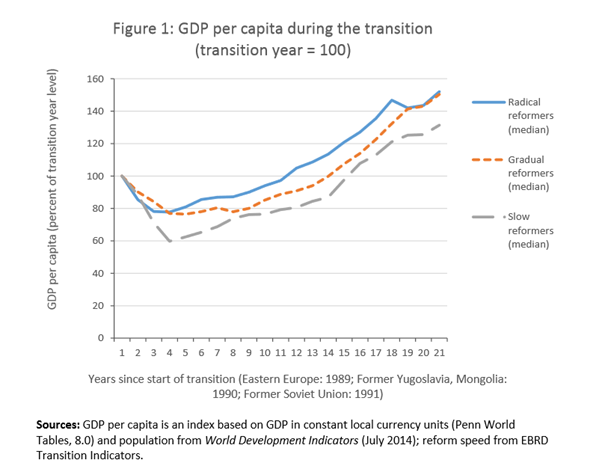
Should economic reform have been slower in the transitional economies?
03 Jun 2015 1 Comment
in comparative institutional analysis, constitutional political economy, development economics, economics of bureaucracy, growth disasters, growth miracles, Marxist economics, Public Choice, rentseeking Tags: collapse of communism, economics of socialism, economics of transition, former USSR, Russia
A Quick Question for All Advocates of Minimum Wages
31 May 2015 Leave a comment
in applied price theory, comparative institutional analysis, constitutional political economy, labour economics, minimum wage Tags: expressive voting, rational irrationality

The first citizen initiated binding referenda will be on…
29 May 2015 Leave a comment
in comparative institutional analysis, constitutional political economy, politics - New Zealand, Public Choice Tags: citizen initiated referendums, Colin Craig, Conservative Party, Edmund Burke, expressive voting, Joseph Schumpeter, parliamentary sovereignty, rational ignorance, rational irrationality
The Conservative Party of New Zealand in the 2014 general election was very much formed around the notion of introducing citizen initiated binding referendums in a country with the Parliament is sovereign. The first referendum is likely to be on one of the following:
· decriminalising marijuana,
· banning smoking,
· voluntary euthanasia,
· a living wage,
· life means life in prison,
· same-sex marriages,
· marriage is between a man and a woman,
· entrenching the Treaty of Waitangi,
· abolishing the Maori seats,
· entrenching the Maori seats,
· stop school closures, and
· capital punishment; and
· future referendums not be binding
Binding referenda are unworkable. Parliament can’t amend them later as we learn from the implementation of the law and unintended consequences arise. Every new law is riddled with unintended consequences and blow-backs.
Do you really want to have to have another referendum to undo a binding referendum that turned out to be a bit of a mistake? One of the few redeeming features of the Parliament that is sovereign – a parliament for can make or unmake any law whatsoever – is it can repeal its mistakes quickly.
The first citizens initiated referendum was held on 2 December 1995. The question was
Should the number of professional fire-fighters employed full-time in the New Zealand Fire Service be reduced below the number employed in 1 January 1995?
Turnout was low as the referendum was not held in conjunction with a general election, and the measure was voted down easily, with just over 12% voting “Yes” and almost 88% voting “No”.
The key to constitutional design is not empowering you and yours – it is how to restrain those crazies to the Left or the Right of you, as the case may be, when they get their hands on the levers of power, as they surely will in three, six or nine years’ time.
The one inevitability of democracy is power rotates – unbridled power and binding referenda lose their shine when you must share that power with the opposing side of politics who put up their own referendum question.
Constitutions are brakes, not accelerators. Much of constitutional design is about checks and balances and the division of power to slow the impassioned majority down.
Constitutional constraints are basically messages from the past to the present that you must think really hard, and go through extra hurdles before you do certain things.
The 18th and 19th century classical liberals were highly sceptical about the capability and willingness of politics and politicians to further the interests of the ordinary citizen, and were of the view that the political direction of resource allocation retards rather than facilitates economic progress.
Governments were considered to be institutions to be protected from but made necessary by the elementary fact that all persons are not angels. Constitutions were to constrain collective authority.
The problem of constitutional design was ensuring that government powers would be effectively limited. The constitutions were designed and put in place by the classical liberals to check or constrain the power of the state over individuals.
The motivating force of the classical liberals was never one of making government work better or even of insuring that all interests were more fully represented. Built in conflict and institutional tensions were to act as constraints on the power and the size of government.
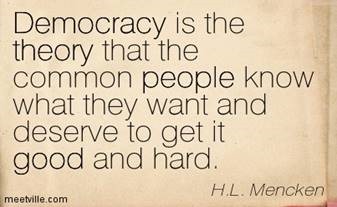
Representative democracy is a division of labour in the face of information overload. John Stuart Mill had sympathy for parliaments as best suited to be places of public debate on the various opinions held by the population and as a watchdog of the professionals who create and administer laws and policy:
Their part is to indicate wants, to be an organ for popular demands, and a place of adverse discussion for all opinions relating to public matters, both great and small; and, along with this, to check by criticism, and eventually by withdrawing their support, those high public officers who really conduct the public business, or who appoint those by whom it is conducted.
Representative democracy has the advantage of allowing the community to rely in its decision-making on the contributions of individuals with special qualifications of intelligence or character. Representative democracy makes a more effective use of resources within the citizenry to advance the common good.
Members of parliament are trustees who follow their own understanding of the best action to pursue in another view. As Edmund Burke wrote:
Parliament is not a congress of ambassadors from different and hostile interests; which interests each must maintain, as an agent and advocate, against other agents and advocates; but parliament is a deliberative assembly of one nation, with one interest, that of the whole; where, not local purposes, not local prejudices ought to guide, but the general good, resulting from the general reason of the whole.
You choose a member indeed; but when you have chosen him, he is not a member of Bristol, but he is a member of parliament. … Our representative owes you, not his industry only, but his judgment; and he betrays instead of serving you if he sacrifices it to your opinion.
Modern democracy is government subject to electoral checks. Citizens do have sufficient knowledge and sophistication to vote out leaders who are performing poorly or contrary to their wishes. Modern democracy is the power to replace governments at periodic elections.
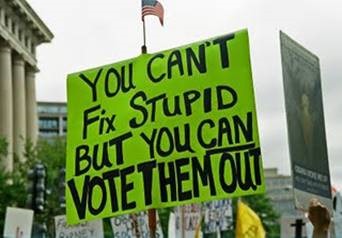
The power of the electorate to turn elected officials out of office at the next election gives elected officials an incentive to adopt policies that do not outrage public opinion and administer the policies with some minimum honesty and competence.
Richard Posner argued that a representative democracy enables the adult population, at very little cost in time, money or distraction from private pursuits commercial or otherwise:
- to punish at least the flagrant mistakes and misfeasance of officialdom,
-
to assure an orderly succession of at least minimally competent officials,
-
to generate feedback to the officials concerning the consequences of their policies,
-
to prevent officials from (or punish them for) entirely ignoring the interests of the governed, and
-
to prevent serious misalignments between government action and public opinion.
Enough of politics and elections, I have a life to lead. Don’t you? Too many want to remake democracy with the faculty workshop as their model.

Such deliberation has demanding requirements for popular participation in the democratic process, including a high level of knowledge and analytical sophistication and an absence, or at least severe curtailment, of self-interested motive. The same goes for citizen initiated binding referendums.
Further evidence that street politics is counter-productive
14 May 2015 Leave a comment
in constitutional political economy, politics - Australia, politics - New Zealand, politics - USA, Public Choice Tags: activists, civil disobedience, Leftover Left, protesters, street politics
Public disorder and rioting by a large leads to a law and order response among the public and a hardening of social attitudes against whatever the desired social reform might be when it is tainted by civil disorder.
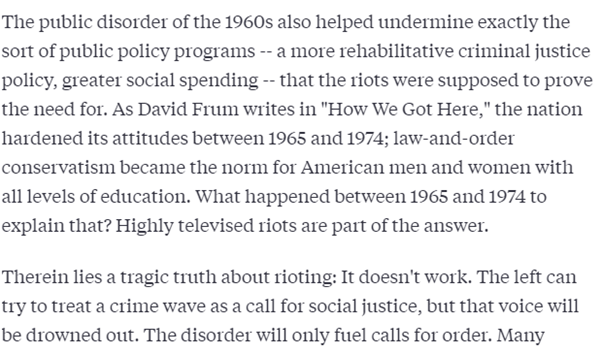
The Left, the Green Left and the watermelons in particular want to believe that street protests change things. They have to validate their youthful offences against public order.
Sadly, no; sadly for them but not for the law-abiding rest of us who resolve our differences by trying to persuade each other and elections.
The law-abiding rest of us believe in democratic equality. Your vote counts as much as mine in a democracy with free speech. The only way you can change my vote is by free speech, not by public disorder, threats and intimidation and taking the law into your own hands.
Is Marxism hate speech? Is it safe to be allowed on campus?
13 May 2015 Leave a comment
in constitutional political economy, economic history, laws of war, liberalism, Marxist economics, Public Choice, rentseeking, war and peace Tags: campus speech codes, hate speech, Leftover Left, Marxism, trigger warnings



Do violent protests win votes for your cause?
12 May 2015 Leave a comment
in constitutional political economy, economic history, economics of crime, law and economics, politics - Australia, politics - New Zealand, politics - USA, Public Choice Tags: 1960s, activists, civil disobedience, Democratic Party, George Wallace, nonviolent protest, Richard Nixon, riots, Vietnam war, violent protests
Monkey Cage blogged on a very timely study on the impact of violent and nonviolent protests on voting behaviour. Non-violent protest in the 60s enticed sympathy and increased voter support for the Democratic Party in the 1964, 1968 to 1972 presidential elections:
Black-led nonviolent protests… exhibit a statistically significant positive relationship with county-level Democratic vote-share in the same period.
This is not surprising because nonviolent protest acknowledge fidelity to law and democratic equality. No one likes to be bullied and one of the purposes of the secret ballot is to prevent voters from being bullied because no one knows how you voted.
Indeed, there is a long history of anonymous pamphleteering, which has evolved into anonymous trolling as a way of people expressing their political views without facing backlash from both the majority and a vindictive minority.
In a democracy, it’s up to me to persuade you to change your mind – that what you took for granted for so long is not so. That’s how liberal democracies work: by trying to persuade each other and voting.
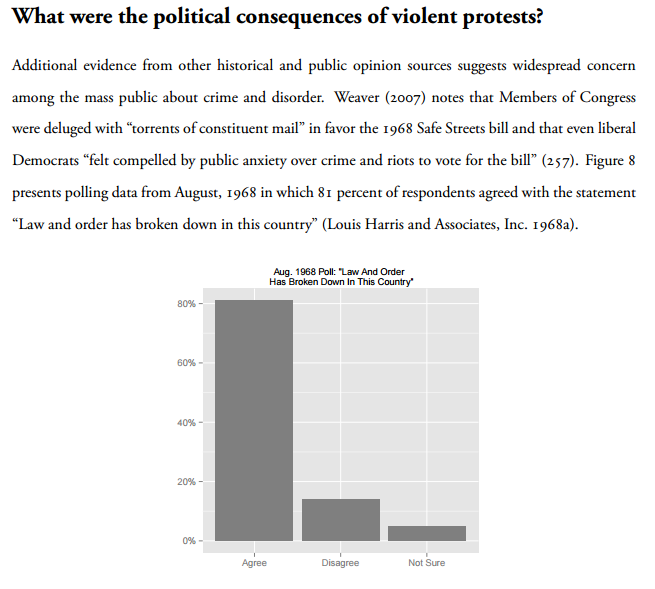
Violent protests had the exact opposite effect to peaceful protests on Democratic Party voting shares in the 1964, 1968 in 1972 presidential elections. There was a law and order backlash among voters against what were relatively widespread rioting and civil disorder:
…black-led protests in which some violence occurs are associated with a statistically significant decline in Democratic vote-share in the 1964, 1968 and 1972 presidential elections.
This is a roundabout way of saying that a Republican won the 1968 election on a law and order platform, not a Democrat on a peace platform. The country was convinced, including Liberal Democrats, that law and order had broken down and that the Democratic Party could not restore law and order.
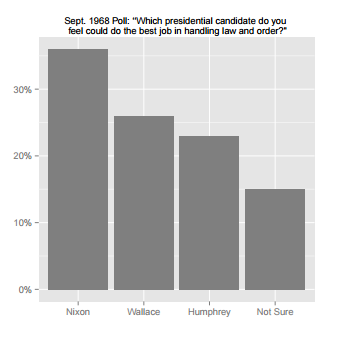
In the 1968 presidential election, there is a third party candidate, George Wallace, who won won almost ten million popular votes and 46 electoral votes, including in the electoral college on an even harsher law and order platform than Nixon.
Wallace was a racist Southern Democrat the Democratic Party would prefer us to forget and a nasty political opportunist to boot. His political rhetoric included the only words four letter words the protesters didn’t know was work and soap.
As I recall warmed over Marxism, the idea of violent protests is to provoke a law and order backlash, initially with popular support of the working class. The resulting police repression will overreach and cause the proletariat to breakthrough their false consciousness to see that capitalists for whom they are and rise up to overthrow them.

Rise up ye workers, rise up for you have nothing to lose but your chains. These days that call to the barricades would have to be rise up ye workers, rise up for you have nothing to lose what your smart phone and air points.


Recent Comments