A 2012 poll found that 62% of British voters agreed that “politicians tell lies all the time” econ.st/1ANQGPS http://t.co/3oH0FsHf0V—
The Economist (@EconEconomics) May 10, 2015
Russians are surprisingly trusting of their politicians
12 May 2015 Leave a comment
The Ten Pillars of Economic Wisdom
10 May 2015 Leave a comment
in applied price theory, applied welfare economics, Austrian economics, comparative institutional analysis, constitutional political economy, development economics, economic history, economics of education, economics of information, economics of media and culture, economics of regulation, energy economics, entrepreneurship, financial economics, health economics, history of economic thought, industrial organisation, survivor principle Tags: David Anderson, evidence-based policy, offsetting behaviour, pretence to knowledge, The fatal conceit, unintended consequences
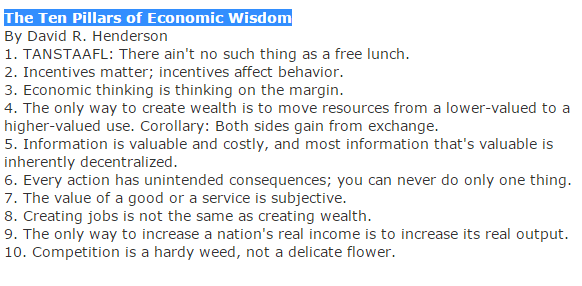
via The Ten Pillars of Economic Wisdom, David Henderson | EconLog | Library of Economics and Liberty.
FA Hayek on piecemeal analysis such as cost benefit analysis and evidence-based policy
09 May 2015 Leave a comment
in applied price theory, applied welfare economics, Austrian economics, comparative institutional analysis, constitutional political economy, economics of regulation, F.A. Hayek Tags: Constitution of Liberty, cost benefit analysis, evidence-based policy, offsetting behaviour, The fatal conceit, The pretence to knowledge, unintended consequences
Happy Birthday, F.A. Hayek!
(8 May 1899 – 23 March 1992) http://t.co/K431Kj9nok—
Screwed by State (@ScrewedbyState) May 09, 2015
The shy Tory voter versus the shy Labour voter (waiting for those hard left policies) – updated
09 May 2015 1 Comment
in constitutional political economy, politics - Australia, politics - New Zealand, politics - USA, Public Choice Tags: British general election, British Labour Party, expressive voting, Leftover Left, New Zealand general election, New Zealand Labour Party, opinion polls, rational ignorance, rational irrationality, UK politics, voter demographics
The go left young man, go left strategy is a view of many in the Labour Party in New Zealand, Australia and the UK is if they present hard left policies to the electorate, they will mobilise many more votes from people who are currently don’t vote or who are mysteriously parking their vote with the Tory party or other centre parties.

Michael Foot’s attempt at to get out shy Labour voters with a hard left campaign in the 1983 British general election, which lead to his manifesto earning the title the longest suicide note in history.
The eight foot high stone monolith Ed Miliband planned to erect in the garden of number 10 Downing Street, if he could get planning permission, was dubbed the heaviest suicide note in history.
The heaviest suicide note in history http://t.co/1xDQlnnWU7—
Phil Rodgers (@PhilRodgers) May 03, 2015
The New Zealand Labour Party went left at the 2014 general election and for its troubles earned its lowest party vote since the party was founded in 1919.
Central to the strategy of the New Zealand Labour Party in the 2014 general election was mobilising non-voters in their working-class electorates.

The median voter theorem be dammed! The New Zealand Labour Party in the 2014 general election honestly believed that hard left policies would induce these non-voters to vote.
These non-voters are called the missing million by the New Zealand left . Almost one million people did not vote in 2014; 250,683 were not enrolled, while 694,120 were enrolled but did not turn out to vote. Many of these voters were thought to be just parking their vote pending the arrival of true believers to lead the Labour Party if the Left over Left is to be believed! Many of these non-voters are younger voters who generally are more likely to vote left.
The Internet – Mana party also spent an immense amount of the $4 million donated by Kim.com in trying to turn out to the youth voter as well.
Chris Trotter was wise and prophetic on go left young man, go left and the shy Labour voters will come:
[T]he Left has been given an extraordinary opportunity to prove that it still has something to offer New Zealand …..
If Cunliffe and McCarten are allowed to fail, the Right of the Labour Party and their fellow travellers in the broader labour movement (all the people who worked so hard to prevent Cunliffe rising to the leadership) will say:
“Well, you got your wish. You elected a leader pledged to take Labour to the Left. And just look what happened. Middle New Zealand ran screaming into the arms of John Key and Labour ended up with a [pitiful] Party Vote …
So don’t you dare try peddling that ‘If we build a left-wing Labour Party they will come’ line ever again! You did – and they didn’t.”
Be in no doubt that this will happen – just as it did in the years after the British Labour Party’s crushing defeat in the general election of 1983. The Labour Right called Labour’s socialist manifesto “the longest suicide note in history” and the long-march towards Blairism … began.
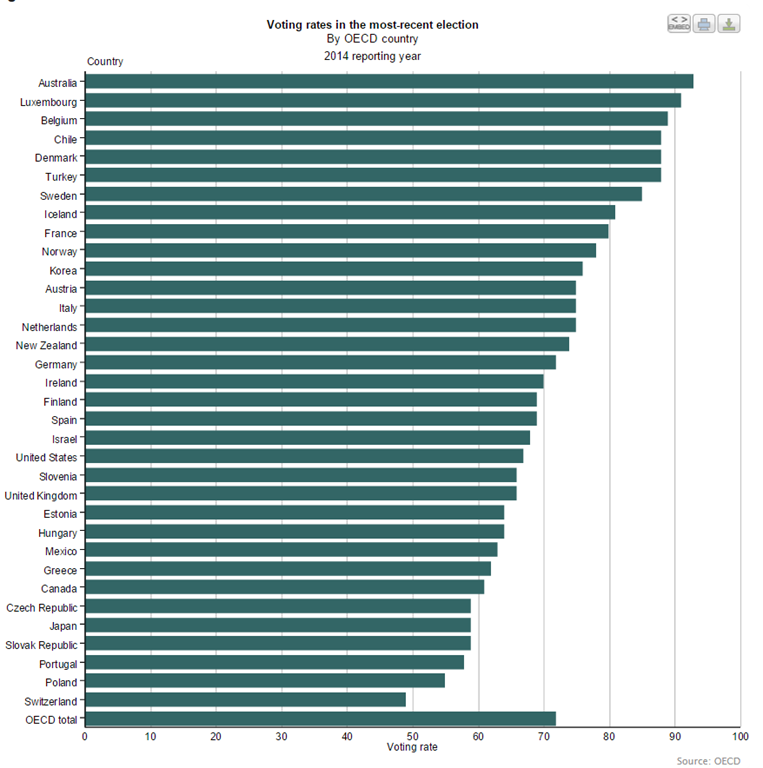
The most obvious flaw in the missing million and non-voter argument where they are waiting for true believers to offer hard left policies is a countries with much higher rates of voter turnouts and compulsory voting are not more likely to have left-wing governments.
There is much more evidence of shy Tory voters rather than shy Labour voters.
Shy Tory voters is a name invented by British opinion polling companies in the 1990s. The share of the vote won by the Tories in elections was substantially higher than the proportion of people in opinion polls who said they would vote for the party.
The final opinion polls gave the Tories between 38% and 39% of the vote – 1% behind the Labour Party. In the final results, the Conservatives had a lead of 7.6% over Labour and won their fourth successive general election.
Because of this turnout of shy Tory voters, the Tories won 3 million more votes than the Labour Party. This 14 million votes was more votes than they or any other British political party is ever won in a British general election, breaking the record set by Labour in 1951.
In a subsequent marketing research port, it was found a significant number of Tory party supporters refusing to disclose their voting intentions both the opinion poll companies, and exit polls.
This shy Tory factor is so large that opinion poll companies attempt to account for it in the weights they assign in their opinion polls surveys.
One of the explanations behind the turnout of the shy Tory vote in the 2015 British general election was a fear that a Labour Party minority government would be be holding to the hard left Scottish nationalists.
A number of British media commentators talked about running into many ordinary people expressing that very fear and they were undecided voters. About 20% of British voters were undecided on the eve the election, which is an unusually high amount.
Ironically, Neil Kinnock, the British Labour Party leader in the 1992 election, warned of a shy Tory factor a few days before the current British general election.
Tony Blair was much blunter a few months before the British general election about the relevance of the median voter theorem to British politics and the future of the British Labour Party. The most electorally successful politician in Labour history said that May’s general election risks becomes one in which a
traditional left-wing party competes with a traditional right-wing party, with the traditional result.
Asked by the Economist magazine if he meant that the Conservatives would win the general election in those circumstances, Mr Blair replied: “Yes, that is what happens.”
The post-mortem by the New Statesman called “10 delusions about the Labour defeat to watch out for” equally blunt about the role of Tony Blair in rescuing British labour from permanent oblivion:
Many of your drinks will be prompted by variations on this perennial theme. Labour accepted the austerity narrative. Labour weren’t green enough. Labour weren’t radical (which has somehow come to be used as a synonym for left-wing).
Given that the last time Labour won an election without Tony Blair was 1974 it’s hard to believe people still think the answer is to move left. But people still do. I sort of love these people for their stubbornness. But I don’t want them picking the next leader.
The shy Tory vote stirred by the fears of a hard left government happened in the 2014 New Zealand general election. On the Monday night for the election that Saturday, the Internet – Mana party board had an hour of television for their Moment of Truth. This included Edward Snowden beamed in from Moscow put forward a whole range of bizarre conspiratorial theories about NASA surveillance of New Zealand and analysis by base in Auckland.
David Farrar reported that in Tuesday night opinion polling, the National party’s party vote rose from 44% to 47%. In the subsequent general election that Saturday, the national party led all night for the first time. It won as many votes as it did in the previous election when it was expected to lose votes because the national party government was going into its third term.
One reason for shy Tory voters is expressive voting. People obtain more sense of identity by proclaiming themselves to be a left-wing voter than they do from saying that they are a right-wing voter.
The expressive aspect of voting is “action that is undertaken for its own sake rather than to bring about particular consequences” (Brennan and Lomasky 1993, 25). There is almost never a causal connection between an individual’s vote and the associated electoral outcome. Hence, a vote is not disciplined by opportunity cost.

With no opportunity cost of how you vote in terms of deciding the outcome, people vote expressively to affirm their identity. Voting is about who and what you boo and cheer for and how you present yourself to the world.

Through the fatal conceit and the pretence to knowledge, a left-wing vote allows people to identify with doing good and changing the world for the better. No point in voting that way if you don’t go around thumping your chest proclaiming yourself as doing good for others by voting Left including telling the truth to polling companies.
Labour Party betrays working class again: nanny state obligations to enrol to vote
09 May 2015 Leave a comment
in constitutional political economy, politics - New Zealand, politics - USA, Public Choice, Richard Posner Tags: compulsory voting, expressive voting, Internet, Joseph Schumpeter, Labour Party, nanny state, non-voting, rational ignorance, rational irrationality, Richard Posner, Robert McCormick, Robert Tollison, voter demographics, William F. Shughart

Extraordinary. Political junkies don’t realise that there are people out there that have better things to do with their lives than take an interest in politics.

It’s a free society. They are free not to listen, not engage and not vote for anyone. Free speech includes a right not to speak and not to participate. If you disappointed with that political apathy, put forward a party platform that excites them enough to vote. Get out the vote by being worth voting for.
What is more extraordinary is a party that claims to speak for the working class first opposed obligations on welfare benefit receipt regarding looking more intensively for work and paying court fines and so forth, but it is happy to use the same provisions for their own political advantage because they are on the ropes. The New Zealand Labour Party’s party vote at the last election was at record low levels. It is still at the same level in the opinion polls.
As for voter registration drives in working-class electorates, the New Zealand Labour Party has no large donors apart from unions. The reason for this is as their former president, Mike Williams says " if you don’t ask, you don’t get ".
Voter registration is voluntary in the USA and for all its flaws, and I think there are far fewer than people say, Richard Posner could still give an excellent defence of political participation in the USA:
American democracy enables the adult population, at very little cost in time, money or distraction from private pursuits commercial or otherwise, to punish at least the flagrant mistakes and misfeasances of officialdom, to assure an orderly succession of at least minimally competent officials, to generate feedback to the officials concerning the consequences of their policies, to prevent officials from (or punish them for) entirely ignoring the interests of the governed, and to prevent serious misalignments between government action and public opinion.
Too many as Richard Posner has argued well in his writing want to remake democracy with the faculty workshop as their model. Such deliberation has demanding requirements for popular participation in the democratic process, including a high level of knowledge and analytical sophistication and an absence, or at least severe curtailment, of self-interested motives.
Much empirical research demonstrates that citizens have astonishingly low levels of political knowledge. Most lack very basic knowledge of political parties, candidates and issues, much less the sophisticated knowledge necessary to meet the demands of a deliberative democracy.
One reason for these low levels of political knowledge is a large number of people are simply not interested in politics even if they have the time to take an interest.
Because of this political ignorance and apathy, Posner championed Schumpeter’s view of democracy. Schumpeter disputed the widely held view that democracy was a process by which the electorate identified the common good, and that politicians carried this out:
- The people’s ignorance and superficiality meant that they were manipulated by politicians who set the agenda.
- Although periodic votes legitimise governments and keep them accountable, their policy programmes are very much seen as their own and not that of the people, and the participatory role for individuals is limited.
Schumpeter’s theory of democratic participation is that voters have the ability to replace political leaders through periodic elections. Citizens do have sufficient knowledge and sophistication to vote out leaders who are performing poorly or contrary to their wishes.
The power of the electorate to turn elected officials out of office at the next election gives elected officials an incentive to adopt policies that do not outrage public opinion and administer the policies with some minimum honesty and competence.
The outcome of Schumpeterian democracy in the 20th century, where governments are voted out rather than voted in, is that most of modern public spending is income transfers that grew to the levels they are because of support from the average voter.
Political parties on the Left and Right that delivered efficient increments and stream-linings in the size and shape of government were elected, and then thrown out from time to time, in turn, because they became tired and flabby or just plain out of touch.
I wouldn’t revel too much on the higher voter turnout as as yet another saviour on the horizon to bring the Left over Left back from the political wilderness. The most votes ever won by a political party in the UK was 14 million by John Major’s Tory party in 1992 when the shy Tories came out in force to re-elected the incumbent government much the surprise of the opinion polls.
Higher voter turnout is not necessarily always a good thing in terms of good governance. William Shughart found that voter participation increases in gubernatorial elections in the USA when evidence of corruption mounts. Candidates, political parties, and interest groups have incentives to invest in mobilising support on Election Day.
Those who stand to gain from being office through their corruption invest considerable resources in mobilising voter turnout that is in their favour. Corruption increase the value of winning public office and strengthens the demand-side efforts to build winning coalitions.
In a prophetic article at the dawn of the Internet, Robert Tollison, William F. Shughart II, and Robert McCormick wrote in 1999 about how voting is not the only way in which people express their political preferences effectively.
Observers of American democracy complain that voter turnout and voter registration are low and had been low from 50 years. Tollison, Shughart, and McCormick reminded these critics that:
Voters now have more political information available to them than ever before, and they are no longer confined to expressing their political preferences at the polls once every two or four years.
Newly available technologies have lowered voters’ costs of becoming informed about political issues and of communicating with their political representatives.
Voter registration and voter turnout is lowest among young people who also happen to be the most Internet savvy. This is not surprising considered the prophetic observation of Tollison, Shughart, and McCormick in 1999 that:
What is more important, the opinions voters form on the basis of the information available to them can be communicated to policy makers rapidly and effectively.
E-mails, faxes, and phone calls are substitutes for ballots. By the time an election rolls around, politicians and policy makers already know what the voters think and, hence, their wishes have already been incorporated into laws and policies.
Tollison, Shughart, and McCormick asked why vote when you have already influenced political outcomes through alternative means between elections such as social media:
Having affected policy outcomes, voters are naturally less interested in voting on candidates. Low turnout rates on election day may paradoxically be evidence of greater voter participation in the political process.
In fact, we are fast approaching a return to the town meeting, where individuals register their preferences on specific policy proposals and politicians can assess the intensities of those preferences by reading their e-mail. Indeed, voters can vote as much and as often as they want in the information age.
It is not surprising therefore in this prophetic article that Tollison, Shughart, and McCormick predicted that politicians would pay close regard to social media, and if they did, democracy works:
As long as politicians are good agents who read their faxes and e-mails correctly, voters will correspondingly have less need to go to the polls.
Voters will vote only when their representatives ignore their electronic opinions. Indeed, that is the implicit threat.
And because voters don’t have to go to the barricades to voice those opinions, political discourse should become more civil and political protests less frequent and disruptive.
HT: Nick Kearney
By-election and death watch starts in the House of Commons tomorrow!
07 May 2015 Leave a comment
in constitutional political economy, economic history, politics, Public Choice Tags: British general election, by-elections
With a razor-thin majority likely after the British general election today, by-elections will be of unusual significance in Parliament of 650 middle-aged and older parliamentarians working under great stress with easy access to alcohol, food and little exercise. Backbench revolts will also take on a new meaning when there is a razor-thin majority.
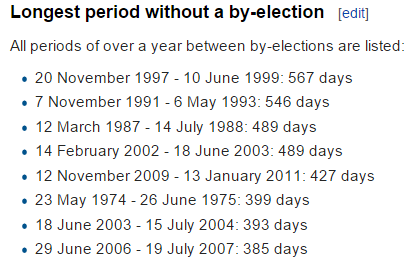
1992, 1998 and 2010 are the only calendar years in history without a single by-election in the House of Commons.
Peter Kellner’s final seat prediction – y-g.co/1byCjZ4 http://t.co/TFmg7vFUf0—
(@YouGov) May 06, 2015
The British Labour governments elected in 1964 and 1974 had small majorities. The majority was three seats after the 1974 election; four seats after the 1964 election. There was an early election in 1966 and two elections in 1974.
The Fixed Term Parliament Act rules out another general election unless a government is voted down on a motion of no confidence and another government is not formed within 14 days.
The Callaghan government fell on a no-confidence vote by one vote in 1979 after seeing its majority eroded by defeats in by-elections.

One of the jobs of the whips in the British House of Commons is to marshal sick and dying MPs for crucial votes. They have a rule that a vote of an MP goes in on the nod as long as his ambulance is parked in the speaker’s courtyard.
At least two ambulances were so parked when the Callaghan government lost its no confidence vote in 1979.
Legend has it that the Tory party whip prodded one of the patients in the back of the ambulance to check if he was still alive. He was so that the Tory whip told the Labour party whip ‘you lose’ and the Callaghan government fell by one vote.
Sir Alfred Broughton, a Labour MP who was on his death bed was not asked to come in despite offering to do so. He died four days after the vote.
Why tomorrow's UK election is looking good for Ed Miliband, via our majority-builder: econ.st/1IhUiBG http://t.co/zg6gFZq2eF—
The Economist (@EconBizFin) May 07, 2015
When asked to honour a gentlemen’s agreement about pairing sick MPs, Tory whip Bernard Weatherill said pairing had never been intended for votes on Matters of Confidence and it would be impossible to find a Conservative MP who would agree to abstain.
After a moment’s reflection, Weatherill offered to abstain because he felt it would be dishonourable to break his word to deputy Chief Whip for the Labour Party, Walter Harrison about pairing conventions, which was a gentlemen’s agreement.
Harrison was so impressed by Weatherill’s offer – which would have ended his political career – that he released Weatherill from his obligation and the Government fell by one vote on the agreement of gentlemen. Weatherill was later elected Speaker of the House of Commons.
Democracy in Australia
07 May 2015 Leave a comment
in constitutional political economy, Federalism, politics - Australia, Public Choice Tags: bicameralism, minor parties, new parties, protest votes, small parties, vote splitting
Vindicating my long-standing view that anybody can get into Parliament as long as they’re not a Trot, the Animal Justice Party has been elected to the New South Wales Legislative Council last month.
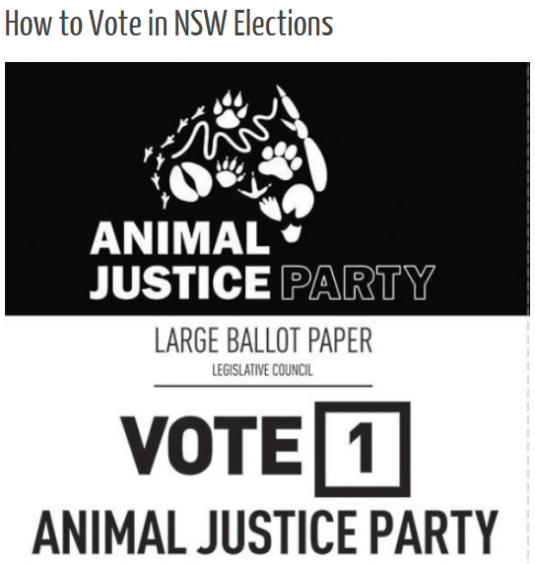
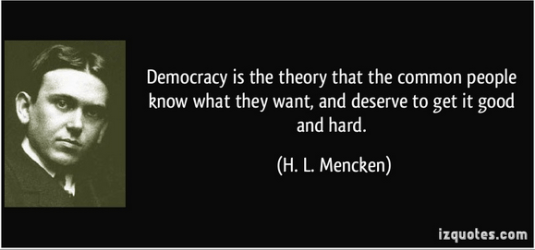
The federal and state upper houses in Australia a democracy at its finest with the voters getting what they voted for, good and hard. These upper houses are powerful, with the ability to reject any bill with varying limitations on their ability to reject or amend money bills in a few of the upper houses.
Many Australian voters – at least 20% now – don’t like the major parties , including the Greens so they vote for a wide range of minor parties and independents in upper house elections if only as a protest vote that will go back to the major parties if they lift their game. Voters don’t have this option of vote splitting and protest voting in Queensland because a Labour government abolish their upper house in the 1930s in the name of democracy.
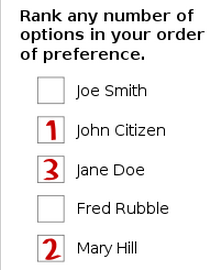
All but one of the Australian federal and state upper houses is elected by proportional representation, often with the option of a group ticket. That is, instead of filling out every box to cast a valid vote, you vote above the line put in a 1 against party you prefer.
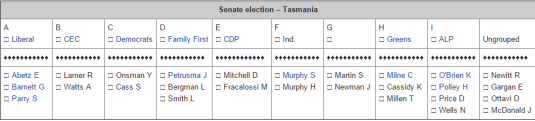
Under group ticket voting, the party whose group you voted for decides how your preferences are distributed, which plays a vital role in deciding who gets elected. More importantly, the small parties engage in preference swapping so that they accumulated enough second and subsequent preference votes to win the last seat.
The Tasmanian Legislative Council is the exception to proportional representation in Australian upper houses with 15 single member constituencies. Naturally, 12 of these 15 legislative councillors are independents. That’s a little bit low by historic standards in my home state were normally the political parties have no success in getting members elected to the Tasmanian upper house.
Minor parties and independents control the balance of power in most Australian upper houses, including the Federal Senate.
The 40 member Victorian Legislative Council is a mixed bag with the balance of power depending on which particular combination of Green plus minor party legislative councillors get together to support the governing Labour Party government. I must admire the Vote 1 Local Jobs party as a brand name.
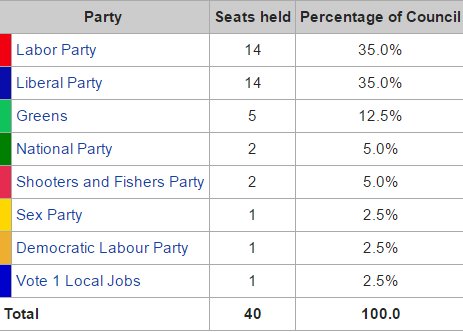
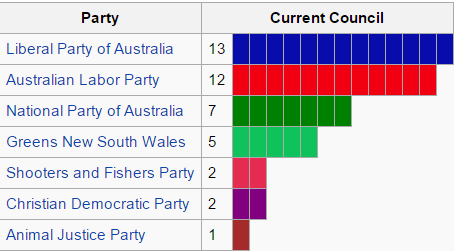
In the 42 member New South Wales Legislative Council, the Liberal National Party government relies on the god squad and anti-pornography campaigners in the Christian Democratic Party for the balance of power. If they fall short, they can always turn to the Shooters and Fishers party.
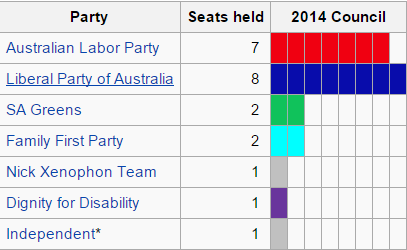
In the 22 member South Australian Legislative Council, neither of the major parties are particularly popular, nor are the South Australian Greens. To pass a bill with 12 votes, the Labour Party government must string together its seven members with a combination of the South Australian Greens, the Family First Party, Dignity for Disability, an independent and the Nick Xenophon team. Good luck.
In the Western Australian Legislative Council, the Liberal National party government has a majority, so what the Western Australian Greens and the Shooters and Fishers Party legislative councillors think don’t matter that much.
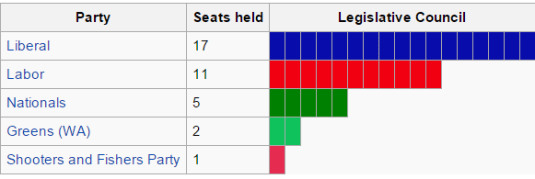
The Western Australian Legislative Council is the only upper house in Australia elected all at one time for four-year terms. For the other upper houses, half of each is elected at each lower house election for six or eight years terms. Tasmania is again the exception to this with two or three of their legislative councillors elected every year for six-year terms.
In the 76 strong Federal Senate, what could not be a more mixed bags of independents, minor parties and minor party defectors and renegades control the balance of power.
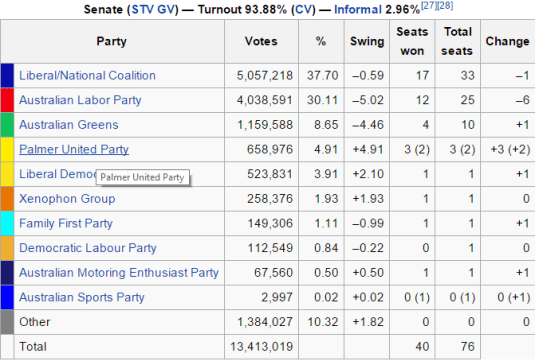
The strength of democracy lies in the ability of small groups of concerned and thoughtful citizens to band together and change things by running for office and winning elections.
That is how new Australian parties in the 20th century such as the Australian Labour Party, the Country Party, Democratic Labour Party, Australian Democrats and Greens changed Australia. Most of these parties started in someone’s living room, full of concerned citizens aggrieved with the status quo.
In the 21st century, Australian democracy could not be more democratic, with a wide range of totally obscure new political parties winning seats in the state upper houses and Federal Senate at every election.
In a democracy, we resolve our differences by trying to persuade each other and voting at elections.
The Australian Federal democracy with upper houses elected through proportional representation show that democracy could not be stronger or work any better.
In Australia, it is possible for just about anyone except a Trot to win a seat at the next election on issues that are important to them because they don’t need that many others to share their concerns and aspirations to win that last upper house seat on preferences.
Libya is blessed with more than a few competing governments
01 May 2015 Leave a comment
in constitutional political economy, law and economics Tags: Arab Spring, Libya
#Dailychart: Three years after Qaddafi's death, Libya is violently split econ.st/1sGKSWk http://t.co/aRSCmfaAPR—
The Economist (@ECONdailycharts) October 20, 2014
UKIP are a bunch of fellow travellers
27 Apr 2015 Leave a comment
in applied welfare economics, constitutional political economy, income redistribution, Public Choice, rentseeking Tags: British election, expressive voting, rational ignorance, rational irrationality, UK politics, UKIP
Should we redistribute money from rich to poor? What voters of each party said. blogs.lse.ac.uk/generalelectio… http://t.co/aqc8yO3OYE—
Martin Hickman (@martin_hickman) April 26, 2015
Murphy’s Law of Economic Policy
26 Apr 2015 Leave a comment
in applied price theory, applied welfare economics, comparative institutional analysis, constitutional political economy, economic history, economics of bureaucracy, Public Choice, rentseeking Tags: Alan Blinder, evidence-based policy, expressive politics, free trade, protectionism, rational ignorance, rational irrationality, rent seeking
Greg Mankiw on one of the few things economists agree on: free trade. That's the problem. nyti.ms/1GrLisQ http://t.co/WrLuP3oBSW—
The Upshot (@UpshotNYT) April 25, 2015
The role of the courts in end of life choices for the terminally ill
26 Apr 2015 Leave a comment
in comparative institutional analysis, constitutional political economy, law and economics, politics - New Zealand, Public Choice Tags: assisted dying, assisted suicide, euthanasia, Justice Scalia
Lindsay Mitchell has a nice summary of the latest developments on an application to the High Court of New Zealand by a terminally ill patient for a declaration that her assisted suicide would not be unlawful and subject to the criminal law. This application currently before the court is specific to that individual and is crafted to claim that it will set no general precedent.
I’m with Justice Scalia when he argues that fundamental issues such as these should be decided by parliaments. As he says regarding general social change:
The virtue of a democratic system [with a constitutionally guaranteed right to free speech] is that it readily enables the people, over time, to be persuaded that what they took for granted is not so and to change their laws accordingly.
The amount of social change in the mid to late 20th century has been stunning. Yes, assisted dying years a passionate issue and some people are impatient, but again I believe Justice Scalia is right when he said:
We might have let the People decide. But that the majority will not do. Some will rejoice in today’s decision, and some will despair at it; that is the nature of a controversy that matters so much to so many. But the Court has cheated both sides, robbing the winners of an honest victory, and the losers of the peace that comes from a fair defeat. We owed both of them better. I dissent.
That importance of a fair defeat at the ballot box and in Parliament is important both to when and if a bill on end of life choice is passed, and to how quickly support opposition to that bill will be mobilised before such a bill even is put into the Parliamentary ballot of private member’s bills.
Nothing stirs up the impassioned (and most other people as well) more than depriving them of their right to support or oppose what is important to them through political campaigns and at an election. The losing side, we all end up on the losing side at one time or another, are much more likely to accept an outcome if they had their say and simply lost the vote at the election or in Parliament.
A decision by the High Court authorising assisted dying in some way does not offer the peace of a fair defeat where the votes are added up where your vote counted as much as mine and one side or the other lost as must always be in a democracy. That’s how majority rule works.
The last bill before the New Zealand Parliament to allow a death with dignity through an assisted suicide for the terminally ill was in 2003 and it failed by three votes: 60 votes to 57 votes.
It is not the role of the courts to hurry up the marshalling of those extra few votes to change the law to judicial action and dispensation. Again, when Scalia dissented on a parental rights case:
I have no reason to believe that federal judges will be better at this than state legislatures; and state legislatures have the great advantages of doing harm in a more circumscribed area, of being able to correct their mistakes in a flash, and of being removable by the people
As Justice Scalia explains, the purpose of the law is to slow the impassioned majority down, not speeding it up:
Judges are sometimes called upon to be courageous, because they must sometimes stand up to what is generally supreme in a democracy: the popular will.
Their most significant roles, in our system, are to protect the individual criminal defendant against the occasional excesses of that popular will, and to preserve the checks and balances within our constitutional system that are precisely designed to inhibit swift and complete accomplishment of that popular will.
Those are tasks which, properly performed, may earn widespread respect and admiration in the long run, but — almost by definition — never in the particular case.
The intervention in a court to grant that right before Parliament is willing to act will only mobilise opposition to any future private member’s bill because they have been denied the right to oppose it through normal democratic means. What are those normal democratic means? Scalia explains when discussing the right to an abortion:
The States may, if they wish, permit abortion on demand, but the Constitution does not require them to do so. The permissibility of abortion, and the limitations upon it, are to be resolved like most important questions in our democracy: by citizens trying to persuade one another and then voting.
Assisted suicide has had popular support for many decades in New Zealand. The reason political parties do not act is those who are against assisted suicide are passionately against it and will change their vote because of such a bill. Those who are for assisted suicide are unlikely to change their vote if a bill is not passed by Parliament.
 For these reasons regarding strong passionate minority opposition and weak majority support, the Labour Party’s new leader pressured a member of his caucus to withdraw a private member’s bill on end of life choice.
Similarly, the Green Party showed equal political cowardice in this matter. They don’t regard a death with dignity to be a priority for them, despite their alleged social liberalism and a willingness to champion the right to abortion in the most recent general election in 2014, which is a socially contentious issue.

The reason is a private member’s bill on abortion in New Zealand won’t get anywhere because the current compromise works – a point to which I shall return. A private member’s bill on end of life choice sponsored by a Green MP would attract too much political flak for the Green Party to handle.
The law has long acted to prevent, by force if necessary, suicide – including suicide by refusing to take appropriate measures necessary to preserve one’s life after the point at which life become unbearable. Justice Scalia argued that:
I believe in liberal democracy, which is a democracy that worries about the tyranny of the majority, but it is the majority itself that must draw the lines.
Whether the patient’s wishes to be honoured in this area is left to elected representatives to legislate. Justice Scalia asks
Are there, then, no reasonable and humane limits that ought not to be exceeded in requiring an individual to preserve his own life? There obviously are, but they are not set forth in the Due Process Clause.
What assures us that those limits will not be exceeded is the same constitutional guarantee that is the source of most of our protection – what protects us, for example, from being assessed a tax of 100% of our income above the subsistence level, from being forbidden to drive cars, or from being required to send our children to school for 10 hours a day, none of which horribles is categorically prohibited by the Constitution.
Our salvation is the Equal Protection Clause, which requires the democratic majority to accept for themselves and their loved ones what they impose on you and me.
The biggest threat to an End of Life Choice bill passing the New Zealand Parliament is judicial intervention in this charged social issue that will only mobilises the opponents of the very right the applicants to the court seek. Scalia again this time on the risks of the courts moving in advance of the popular will, and thereby poisoning the democratic process:
Leaving this matter to the political process is not only legally correct, it is pragmatically so. That alone… can produce compromises satisfying a sufficient mass of the electorate that this deeply felt issue will cease distorting the remainder of our democratic process.
As an example of the importance of democratic compromises in securing the votes in Parliament, there is a voluntary euthanasia bill currently before the Scottish Parliament. It has been stuck in committee for two years because it not only promises end of life choice, it also grants a right of euthanasia to those with progressive degenerative diseases.
By overreaching to progressive degenerative diseases, this Bill in the Scottish Parliament is bogged down because euthanasia as distinct from a death with dignity is a step too far from many members of Parliament willing to support end of life choice for the terminally ill such as provided for in the House of Lords Private Member’s Bill on end of life choice.

Any private member’s bill that does pass the New Zealand Parliament on end of life choice will be riddled with compromises and will have a genuine concern to prevent abuse and guard against questionable decisions made when judgements of the terminally ill is clouded in some way. No court in a single judgement can provide all those details and compromises.

The law attracts more than its share of reformers wanting to use the courts and judge-made law for political purposes. If you want to reform the world, do what we ordinary people have to do: change your vote, write to an MP, protest, donate to or even join a political party, or run for parliament.
The great strength of democracy is a small group of concerned and thoughtful citizens can band together and change things by mounting single issue campaigns or joining a political party and running for office and winning elections or influencing who wins.
Indeed, it is that very strength of democracy – small groups of concerned citizens banding together – is what is holding up legislating on an end of life choice. It is not that minorities are powerless and individuals are voiceless. Exactly the opposite.
Many people have passionate opinions for and against an End of Life Choice Bill. These opinions are taken into account by members of Parliament in fine detail depending on how voters will vote at the next election.
What can be undemocratic about members of Parliament paying attention to how a wide range of ordinary members of the community might vote if they disappoint them.
The key safeguard of minorities against the majority is their ability to block vote. Yes, those in the majority will be annoyed at the power of the minority to slow down the passage of a End of Life Choices Bill.
Yet on some other matter passionate to them those currently in the majority will one day or another end up in a minority. The rotation of power is common in democracies, and the worst rise to the top.
It is wise to design constitutional safeguards to minimise the damage done when those crazies to the right or left of you get their chance in office, as they will sooner or later rather than focus on the powers you and those that currently agree with you should have in your few days in which you fleetingly have a majority.
Too many policies and ideas of the one political party or another assume that they are the face of the future, rather than just another political party that will hold power as often as not and always for an uncertain time.
New Zealand Parliamentary elections are always close because of proportional representation. This makes reality of ending up in the minority again very quickly in a few years very real.
Yesterday’s majority of the vote sooner or later and often sooner than they expect will break off into different minorities on the next big issue of the day.
These newly formed minorities will use that same ability to band together as a minority to block vote to protect what they think is important and advance agendas they think are to be wider benefit despite the opinion of the current majority to the contrary. All reforms start as a minority viewpoint.
You can’t complain about democracy not working because it’s working precisely as it should: parliamentarians paying attention to a great number of people from all walks of life vote in light of how they as members of Parliament voted on specific issues that are important to them.
Maybe the European Union membership isn’t that bad after all, especially if you’re a former Eastern Bloc country
24 Apr 2015 Leave a comment
in applied price theory, applied welfare economics, comparative institutional analysis, constitutional political economy, development economics, growth disasters, growth miracles Tags: European Union, transitional economies


Recent Comments