I didn’t have too much problem with either the Reserve Bank Governor’s speech a couple of weeks ago on a framework for how monetary policy might deal with the oil shock, or with this week’s OCR review release from the Monetary Policy Committee. It was really all very orthodox stuff, much as any of the […]
Buckingham Palace has finally announced that the King and Queen’s planned visit to the US will indeed go ahead at the end of April 2026. After US President Donald Trump launched a string of verbal attacks on the UK Prime Minister, there had been growing calls for Keir Starmer to cancel the King’s visit, which […]
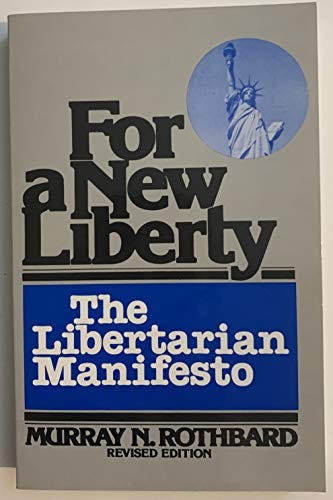
SummaryThis chapter, on “Welfare and the Welfare State,” argues that the welfare state gives the poor perverse incentives. A superficial reader might say, “However original this was in 1973 when it was first written, it’s now old hat. Clinton made the same arguments for welfare reform.” However, on closer examination, Rothbard’s analysis remains distinctive both…
I began this series by reviewing the terrible shape of the Argentinian economy when Javier Milei took over at the end of 2023. I then wrote four columns (here, here, here, and here) on the steps that Milei has taken to restore prosperity. The good news is that his reforms have produced very good results. […]
I’ve written a four-part series (here, here, here, and here) explaining why socialism is a bad idea, but let’s use today’s column to define this evil ideology. As I mentioned in the video, genuine socialism is based on three very specific concepts. Government ownership of the means of production Central planning to determine the allocation […]
Last year, as part of a series on the additional reforms Milei needs to enact in Argentina, I shared this video on reducing protectionism. Since the video was only one-minute long, there was no chance to provide details. But at the conference in Buenos Aires this week, Professor Jorge Streb shared some fascinating details on […]
Part I of this series reviewed the horrible economic conditions that plagued Argentina when Javier Milei took office. Part II looked at Milei’s spending restraint and some of the subsequent improvements in fiscal outcomes. For today’s column, let’s focus on what Milei has achieved in areas other than fiscal policy, and it will be based […]
Part I of this series focused on the horrible economic conditions that led to Javier Milei’s election in late 2023. For Part II, let’s start with this segment from an interview I did last week while in Slovenia. In less than two minutes, I tried to summarize Milei’s achievements. Let’s take a more detailed look, […]
Given my enthusiasm for Javier Milei and his libertarian reforms, I’m excited to be in Buenos Aires for a week-long program on “Understanding Argentina’s Transformations Under Milei.” This means a heavy does of Milei-ism this week. For today’s column, I’m going to share some slides from a presentation by Alejandro Rodriguez on the “Inheritance” Milei […]
The retirement of Lord Salisbury in 1902 marked the end of the last premiership undertaken from the House of Lords, but in the nineteenth century, more prime ministers led governments from the Lords than the Commons. In this article, Dr Kathryn Rix, of our House of Commons, 1832-1945 project, explores the history and significance of…
His famous 1968 book, “The Population Bomb,” changed the world. He famously predicted that human “overpopulation” would soon outstrip food supplies, leading to catastrophic famines, and societal collapse. He predicted that hundreds of millions of people would starve to death in the 1970s and 1980s, that India would be unable to feed its population by 1980, and…
Professor Anaru Eketone claims the Māori electorates were a cynical device to suppress Māori political influence.(paywalled) The historical record suggests the opposite: the Māori seats were created to bring Māori into the parliamentary system and guarantee representation, rather than exclude them. By 1867, when the Māori Representation Act 1867(1) passed, Europeans outnumbered Māori roughly four to one. […]
Tweet… is from page 103 of Historical Impromptus, a 2020 collection of some of Deirdre McCloskey’s work on economic history; this quotation, specifically, is from McCloskey’s 2000 review, in the Minnesota Journal of Global Trade, of Thomas Friedman’s The Lexus and the Olive Tree and John Gray’s False Dawn [original emphasis]: Globalization encourages the capitalist…
Why Evolution is True is a blog written by Jerry Coyne, centered on evolution and biology but also dealing with diverse topics like politics, culture, and cats.
In Hume’s spirit, I will attempt to serve as an ambassador from my world of economics, and help in “finding topics of conversation fit for the entertainment of rational creatures.”







Recent Comments