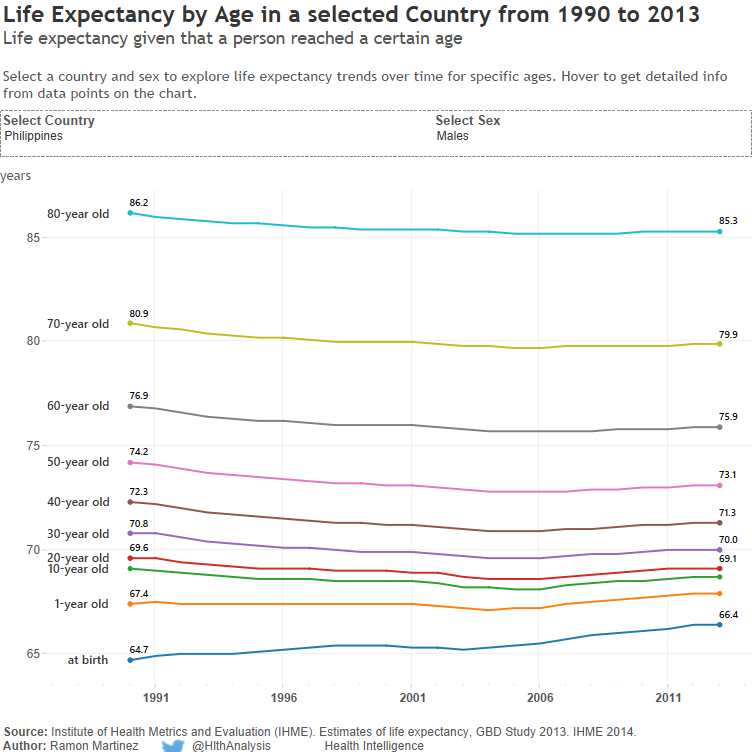
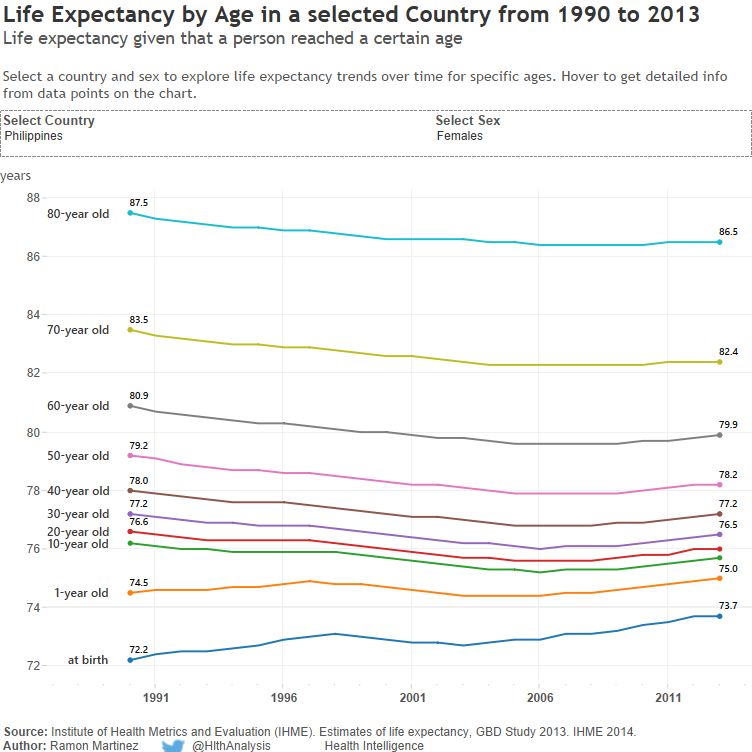
via Life Expectancy by Age in selected Country from 1990 to 2013 | Health Intelligence.
Celebrating humanity's flourishing through the spread of capitalism and the rule of law
22 Aug 2015 Leave a comment
in development economics, economic history, health economics Tags: life expectancies, Philippines, The Great Escape
22 Aug 2015 Leave a comment
in economic history, economics of love and marriage, labour economics, labour supply, politics - Australia, politics - New Zealand, politics - USA Tags: Australia, British economy, marriage and divorce, taxation and labour supply
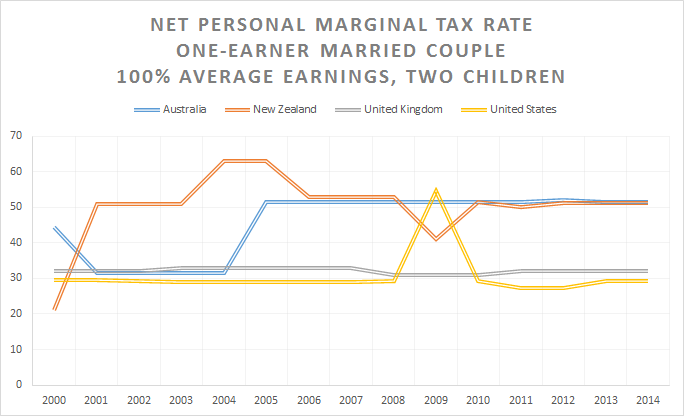
Source: OECD StatExtract.
22 Aug 2015 2 Comments
in economic history, labour economics, politics - New Zealand, poverty and inequality, welfare reform Tags: child poverty, family poverty, Leftover Left, measurement error, New Zealand Greens
Summary of the 222 pages of MSD's Household Incomes report: kids are still missing out BIG time. #itsnotchoice http://t.co/4x7dm1O0Wg—
Child Poverty NZ (@povertymonitor) August 13, 2015
AHC = after deducting housing costs
BHC = before deducting housing costs
‘anchored line’:
- this is the line set at a chosen level in a reference year (now 2007), and held fixed in real terms (CPI adjusted)
- the concept of ‘poverty’ here is – have the incomes of low-income households gone up or down in real terms compared with what they were previously?
‘moving line’:
- this is the fully relative line that moves when the median moves (e.g. if median rises, the poverty line rises and reported poverty rates increase even if low incomes stay the same)
- the concept of ‘poverty’ here is – have the incomes of low-income households moved closer or further away from the median?
Bryan Perry, Household Incomes in New Zealand: trends in indicators of inequality and hardship 1982 to 2014 – Ministry of Social Development, Wellington (August 2015), p. 133.
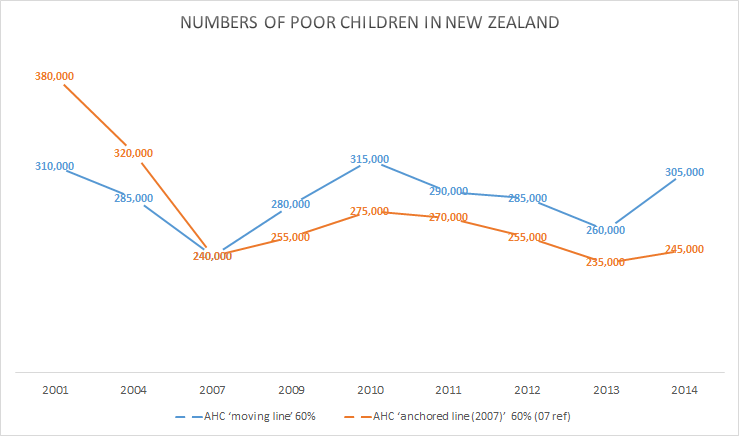
Source: Bryan Perry, Household Incomes in New Zealand: trends in indicators of inequality and hardship 1982 to 2014 – Ministry of Social Development, Wellington (August 2015), p. 133.
Is child poverty in New Zealand 245,000 children or 305,000 children?
260,000 kids in income poverty, 180,000 in material hardship, 10% in severe poverty, 3in5 in poverty for a long time http://t.co/Oy5cWftvwU—
Child Poverty NZ (@povertymonitor) May 21, 2015
If you base your estimate of child poverty on the 60% of median income after housing costs moving line, which is the number of low income households who moved further away from 60% of median income, a median which increased by 5% last year, the figure is 305,000 children after housing costs. 45,000 children are in households that is not as close to the median as last year but are not necessarily any poorer than last year in terms of money coming into the house.
45k more children in #poverty this year than last, that’s 305k Kiwi kids without life's basics. C'mon @johnkeypm! http://t.co/K8zeQpgA79—
UNICEF New Zealand (@UNICEFNZ) August 13, 2015
If you base your estimate on the anchored line, which is the number of low income households whose income has gone up on down compared to what they were on previously,the number of children in poverty has increased from 235,000 to 245,000 after housing costs. About 10,000 children are poorer than last year – poorer enough than last year to be classified as in poverty.

22 Aug 2015 Leave a comment
in applied price theory, applied welfare economics, economic history, economics of regulation, energy economics, environmental economics, environmentalism, politics - USA Tags: doomsday prophecies, doomsday prophets, environmental law, environmental protection, environmental regulation, free market environmentalism, green scaremongering, tear pollution, The Great Escape, The Great Fact, water pollution
U.S. population has grown since 1980, yet pollution rates either haven't moved or are falling. buff.ly/1ILu7RM http://t.co/PXriaKlsZO—
HumanProgress.org (@humanprogress) August 14, 2015
22 Aug 2015 Leave a comment
in economic history, politics - USA Tags: Abraham Lincoln, coincidence, conspiracy theories, conspiracy theorists, JFK
22 Aug 2015 Leave a comment
in economic history, labour economics, politics - USA, poverty and inequality, welfare reform Tags: 1996 U.S. welfare reforms, child poverty, family poverty
Half as many blacks in the U.S. today are living in poverty as in 1960. buff.ly/1KTT5Sz http://t.co/PKK5REXr0P—
HumanProgress.org (@humanprogress) August 07, 2015
21 Aug 2015 Leave a comment
in applied price theory, applied welfare economics, development economics, economic history, economics of information, economics of media and culture, growth miracles, liberalism, Public Choice Tags: Bryan Caplan, capitalism and freedom, makework bias, The Great Enrichment, The Great Escape, The Great Fact
21 Aug 2015 Leave a comment
in applied price theory, business cycles, economic growth, economic history, labour economics, labour supply, macroeconomics, politics - Australia, politics - New Zealand, politics - USA, public economics Tags: Australia, British economy, productivity shocks, real business cycles, taxation and labour supply
Interesting to notice that in New Zealand and the USA after these increases in marginal tax rates on single taxpayers, their economies slowed down. What appears to have happened is a number of people reached the next income tax marginal tax rate threshold.
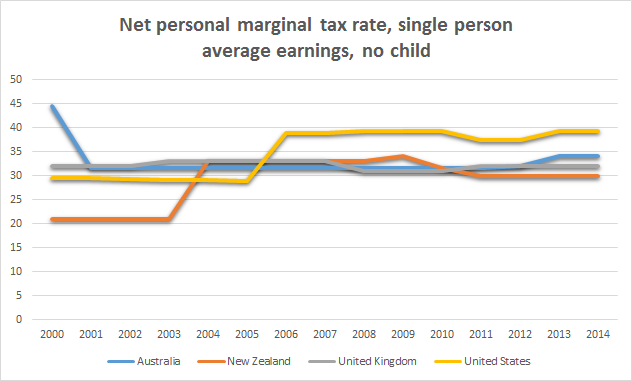
Source: OECD StatExtract.
20 Aug 2015 Leave a comment
in economic history, labour economics, labour supply, politics - Australia, politics - New Zealand, politics - USA, public economics Tags: Australia, British economy, taxation and labour supply
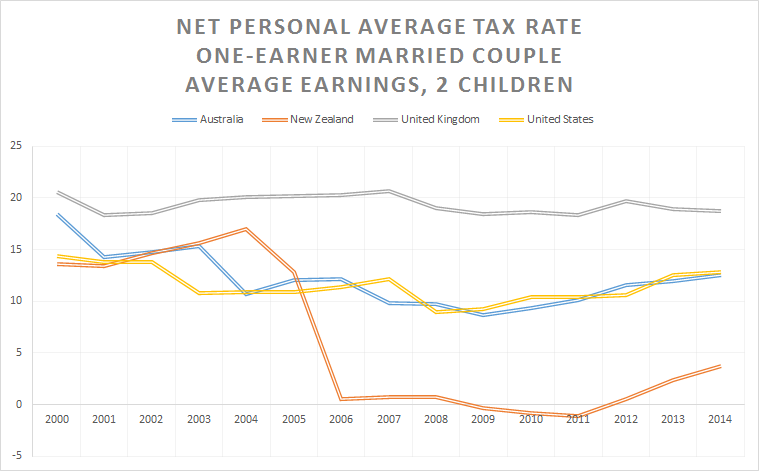
Source: OECD StatExtract.
20 Aug 2015 Leave a comment
in economic history, economics of regulation, transport economics Tags: air crash investigations, aviation safety, The Great Escape
19 Aug 2015 Leave a comment
in constitutional political economy, economic history, Public Choice, rentseeking Tags: age of empires, British empire, British imperialism, colonialism, imperialism
A map showing the depth and breadth of European colonization 1500-1900: thesocietypages.org/socimages/2015… http://t.co/37234ZzDfj—
(@SocImages) March 21, 2015
19 Aug 2015 Leave a comment
in applied price theory, development economics, economic history, economics of information, economics of media and culture, economics of regulation, environmental economics, environmentalism, growth disasters, growth miracles, health economics, liberalism Tags: Anti-Science left, expressive voting, GMOs, golden rice, Greenpeace, Luddites, New Zealand Greens, precautionary principle, rational ignorance, rational irrationality, The Great Escape
Good as Gold: Can Golden Rice and Other Biofortified Crops Prevent Malnutrition? ow.ly/QQ1VT #Harvard http://t.co/O3SwpGhsXD—
Golden Rice (@Golden_Rice) August 13, 2015
INFOGRAPHICS: The Impacts of #Biotechnology: A Close Look at the Latest Study ow.ly/GUi4U @FoodInsight http://t.co/JQsmrm2Lv1—
Golden Rice (@Golden_Rice) January 07, 2015
Anti-Golden Rice keyboard
Used by opponent to debate against supporters of #goldenrice
@EcoSenseNow @Golden_Rice http://t.co/q6xt5j7hb1—
Golden Rice Now (@paulevans18) August 21, 2015
.@gpph If this girl could have eaten #goldenrice for lunch, she would not be blind today. ALLOW GOLDEN RICE NOW http://t.co/3UlwHAdWdZ—
Golden Rice Now (@paulevans18) July 29, 2015
19 Aug 2015 Leave a comment
in economic history, labour economics, labour supply, politics - Australia, politics - New Zealand, politics - USA Tags: Australia, British economy, taxation and labour supply

Source: OECD StatExtract.
18 Aug 2015 Leave a comment
in applied price theory, applied welfare economics, economic history, energy economics, entrepreneurship, environmental economics, environmentalism, liberalism, resource economics Tags: commodity prices, creative destruction, entrepreneurial alertness, Julian Simon, peak oil, The Great Enrichment, The Great Escape, The Great Fact, William Buckley
18 Aug 2015 Leave a comment
in economic history, energy economics, entrepreneurship, environmental economics, global warming, politics - USA, Public Choice, rentseeking Tags: Big Solar, creative destruction, green rent seeking, renewable energy, renewable resources, solar energy
Celebrating humanity's flourishing through the spread of capitalism and the rule of law
Celebrating humanity's flourishing through the spread of capitalism and the rule of law
Celebrating humanity's flourishing through the spread of capitalism and the rule of law
Celebrating humanity's flourishing through the spread of capitalism and the rule of law
Celebrating humanity's flourishing through the spread of capitalism and the rule of law
Celebrating humanity's flourishing through the spread of capitalism and the rule of law
Celebrating humanity's flourishing through the spread of capitalism and the rule of law
Celebrating humanity's flourishing through the spread of capitalism and the rule of law
Celebrating humanity's flourishing through the spread of capitalism and the rule of law
Celebrating humanity's flourishing through the spread of capitalism and the rule of law
Celebrating humanity's flourishing through the spread of capitalism and the rule of law
Celebrating humanity's flourishing through the spread of capitalism and the rule of law
A History of the Alt-Right
Econ Prof at George Mason University, Economic Historian, Québécois
Celebrating humanity's flourishing through the spread of capitalism and the rule of law
Scholarly commentary on law, economics, and more
Beatrice Cherrier's blog
Celebrating humanity's flourishing through the spread of capitalism and the rule of law
Celebrating humanity's flourishing through the spread of capitalism and the rule of law
Celebrating humanity's flourishing through the spread of capitalism and the rule of law
Why Evolution is True is a blog written by Jerry Coyne, centered on evolution and biology but also dealing with diverse topics like politics, culture, and cats.
Celebrating humanity's flourishing through the spread of capitalism and the rule of law
A rural perspective with a blue tint by Ele Ludemann
DPF's Kiwiblog - Fomenting Happy Mischief since 2003
Celebrating humanity's flourishing through the spread of capitalism and the rule of law
The world's most viewed site on global warming and climate change
Tim Harding's writings on rationality, informal logic and skepticism
A window into Doc Freiberger's library
Let's examine hard decisions!
Commentary on monetary policy in the spirit of R. G. Hawtrey
Thoughts on public policy and the media
Celebrating humanity's flourishing through the spread of capitalism and the rule of law
Politics and the economy
A blog (primarily) on Canadian and Commonwealth political history and institutions
Reading between the lines, and underneath the hype.
Economics, and such stuff as dreams are made on
"The British constitution has always been puzzling, and always will be." --Queen Elizabeth II
Celebrating humanity's flourishing through the spread of capitalism and the rule of law
Celebrating humanity's flourishing through the spread of capitalism and the rule of law
WORLD WAR II, MUSIC, HISTORY, HOLOCAUST
Undisciplined scholar, recovering academic
Celebrating humanity's flourishing through the spread of capitalism and the rule of law
Res ipsa loquitur - The thing itself speaks
In Hume’s spirit, I will attempt to serve as an ambassador from my world of economics, and help in “finding topics of conversation fit for the entertainment of rational creatures.”
Researching the House of Commons, 1832-1868
Reflections on books and art


Recent Comments