I wonder what caused that negative inflation print? ec.europa.eu/eurostat/docum… http://t.co/rYI5VnZOzI—
Lorcan Roche Kelly (@LorcanRK) September 30, 2015
Energy poverty and Euro inflation rates
04 Oct 2015 Leave a comment
in energy economics, environmental economics, global warming Tags: climate alarmism, energy poverty, energy prices, EU, green rent seeking, power prices
@World_Wildlife on the cost of moving to a low carbon economy @jamespeshaw @GreenpeaceNZ @NZGreens
01 Oct 2015 Leave a comment
in applied price theory, environmental economics, global warming, Public Choice, rentseeking Tags: climate alarmism, evidence-based policy, expressive voting, global warming, green rent seeking, low carbon economy, rational ignorance, rational rationality

RT @GreenpeaceNZ are right: Do not send anyone to @cop21 The summit is waste of time
25 Sep 2015 Leave a comment
in environmental economics, global warming, politics - Australia, politics - New Zealand, politics - USA, Public Choice Tags: China, climate alarmism, climate treaties, global warming, green tariffs, Greenpeace, international environmental law, Paris Summit 2015, Twitter left
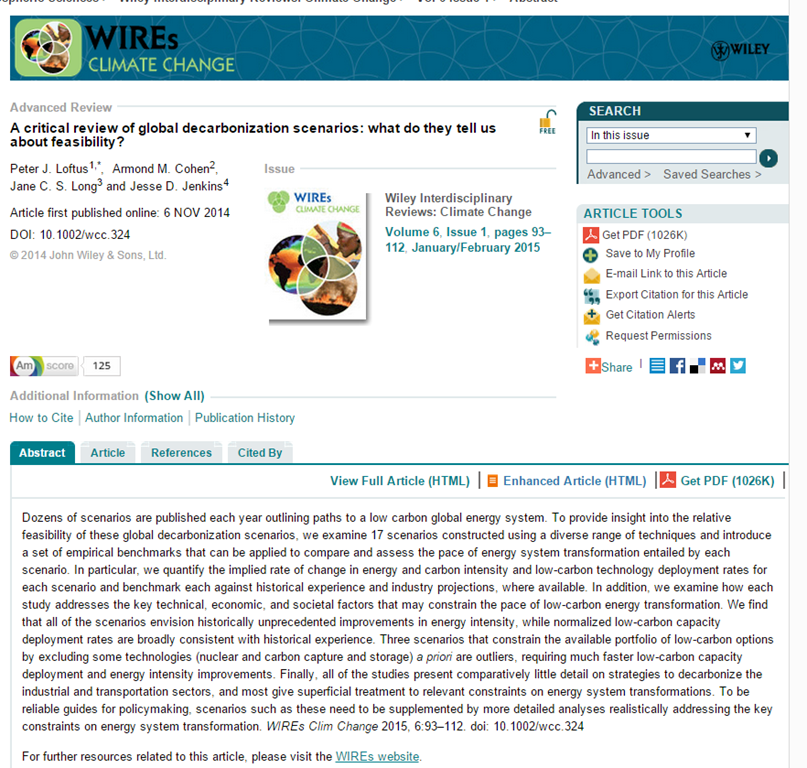
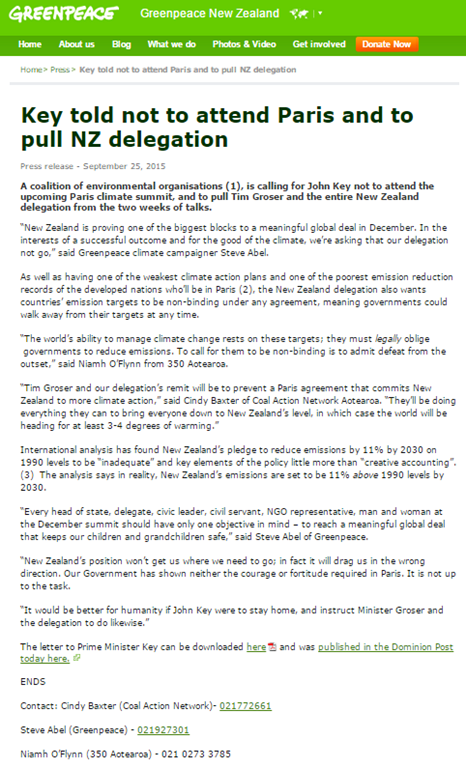
Greenpeace is right in saying in their open letter with others that New Zealand should not send a minister to the climate talks in Paris later this year. I agree for different reasons.
An open letter from @GreenpeaceNZ, @350nz & @coalaction to @johnkeypm not to send anyone to #climate talks in Paris. http://t.co/C1hBJ1teNU—
ActionStation (@actionstation) September 25, 2015
In common with many previous climate summits, the Paris talks will be a futile gesture that will have no significant effect on the pace of global warming and holding the summit is a waste of taxpayers money.
Nothing will come of them because the developing countries have no interest in postponing their development because of a minor inconvenience from global warming.
Do us all a favour @JohnKeyPM, don't send Tim to Paris >> stuff.co.nz/environment/cl… #GroserDontGo #COP21 http://t.co/DaqvPGZ4Ls—
Greenpeace NZ (@GreenpeaceNZ) September 25, 2015
The easy way to tell if there is anything going to happen at a climate summit is the seniority of the delegation.

The Chinese made it clear at the Copenhagen summit in 2009 that they were not interested in an agreement by sending a Vice Minister of Foreign Affairs to a key side meeting of the American and French presidents, the British Prime Minister and the German Chancellor. All subsequent policy manoeuvrings by the Chinese on global warming are an attempt to head off green tariffs on their exports.
Is renewable energy the face of the future?
23 Sep 2015 Leave a comment
in energy economics, environmental economics, global warming Tags: Big Solar, Big Wind, climate alarmists, hydropower, renewable energy, solar power, wind power
EIA Forecast for US Energy Sources to 2040. Fossil fuels will supply >80%, renewables 8%, it's a 'fossil fuel future' http://t.co/B923DH9ncW—
Mark J. Perry (@Mark_J_Perry) June 11, 2015
@GreenpeaceNZ should not support the vexatious claims of climate refugees @NZGreens
22 Sep 2015 Leave a comment
in Economics of international refugee law, environmental economics, global warming, international economics, law and economics, politics - New Zealand Tags: climate refugees, global warming, Greenpeace, Kiribati, nuisance suits, political refugees, vexatious litigation, war refugees
Political support is tenuous enough for admitting more political refugees and war refugees to New Zealand without visa overstayers trying it on with claims for asylum on the basis of climate change – that they are a climate refugee.
Currently New Zealand small refugee quota of 750 is under review. Chances of that been increased to 1000 are reasonable. If people are trying to open the floodgates to millions of people as potential refugees of climate change, if Greenpeace’s own alarmist rhetoric about global warming is to be believed, Greenpeace only strengthens the hand of the anti-immigration and xenophobic parties such as New Zealand First and within the National Party caucus.
Not everyone is a worthy cause, particularly those who make vexatious legal claims that were always going to fail in court. The High Court, the Court of Appeal and the Supreme Court all ruled that it is not their place to expand the scope of the international refugee convention to cover those displaced by climate change. As the Court of Appeal ruled
No-one should read this judgment as downplaying the importance of climate change. It is a major and growing concern for the international community. The point this judgment makes is that climate change and its effect on countries like Kiribati is not appropriately addressed under the Refugee Convention.
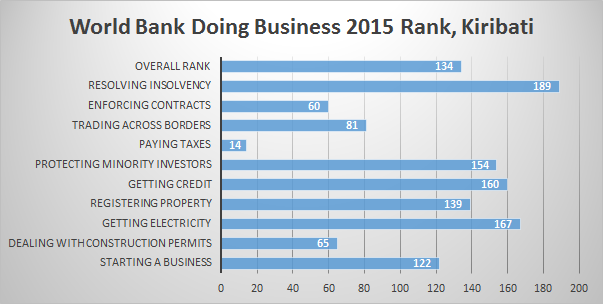
Source: Doing Business in Kiribati – World Bank Group
Kirabati can do a lot more to help itself rather than looking to others to solve its problems. It is ranked 133rd in the World Bank’s Doing Business database. This means it can do a lot to help its own development, which strengthens its resilience against climate change and rising sea levels. In the High Court, Priestley J observed:
The economic environment of Kiribati might certainly not be as attractive to the applicant and his fellow nationals as the economic environment and prospects of Australia and New Zealand. But he would not, if he returns, be subjected to individual persecution…
The appellant raised an argument that the international community itself was tantamount to the “persecutor” for the purposes of the Refugee Convention. This completely reverses the traditional refugee paradigm. Traditionally a refugee is fleeing his own government or a non-state actor from whom the government is unwilling or unable to protect him. Thus the claimant is seeking refuge within the very countries that are allegedly “persecuting” him.
Kiribati’s Human Development Index value for 2012 is 0.629—in the medium human development category—positioning the country at 121 out of 187 countries and territories. The rank is shared with Indonesia and South Africa. Kiribati is not unusually poor if it is similar in human development index ranking is to Indonesia and South Africa. Since 1980, Kiribati life expectancy at birth has increased from 55 years to 68 years. Average years of schooling is nearly 8 years and expected years of schooling for their children is now 12 years.
Economic impact of global warming: new evidence
18 Sep 2015 1 Comment
in applied welfare economics, development economics, environmental economics, global warming, growth disasters, growth miracles, politics - Australia, politics - New Zealand, politics - USA Tags: climate alarmism, global warming, Richard Tol
A nice summary of the latest research showing that once again the welfare cost of climate change is small except under the most extreme scenarios.

2% of national income is not something to declare a national emergency over unless you are in a very poor country.
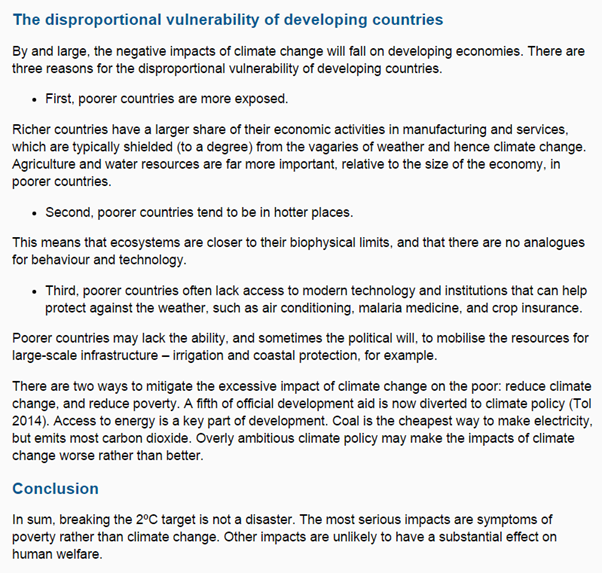
Richard Tol also mentions that there has only been 27 studies of the economic costs of climate change:
Twenty-seven estimates is a thin basis for any conclusion. Researchers disagree on the sign of the net impact; climate change may lead to a welfare gain or loss. At the same time, researchers agree on the order of magnitude. The welfare change caused by climate change is equivalent to the welfare change caused by an income change of a few percent.
- That is, a century of climate change is about as good/bad for welfare as a year of economic growth.
As Tol wrote elsewhere, the reason why there are so few studies of the welfare cost of global warming is governments and bureaucracies do not like the small numbers they yield so they pre-emptively do not fund such research.
Few economists work full-time on the economics of climate change as their research results are too moderate to win repeat business and further research grants. Importantly, there is vicious criticism of what you say. Much better to just work on other topics.
One of the great tactical victories of the climate activists, I resisted the temptation to call them climate alarmists, is they keep going on about the science is settled and whether you are accepting the scientific results.
I have long argued let the science be settled, only the economics matters. The climate change activists do not want to talk about the economics that much except for the estimates by that political hack Lord Stern. Lord Stern has been on the losing side of history ever since he wrote a bad review of PT Bauer’s Dissent on Development where he said:
Dissent on Development is not a valuable contribution to the study of development.
The Stern Review puts the costs of unmitigated climate change at 5–20% of GDP (now and forever). The Fifth Assessment Report of the Intergovernmental Panel on Climate Change (IPCC) finds differently.

HT: Lorenzo M Warby
What do #McDonalds & @GreenpeaceNZ no longer have in common? @NZGreens @RusselNorman
12 Sep 2015 Leave a comment
in economics of regulation, environmental economics, environmentalism, global warming, health economics, politics - New Zealand Tags: anti-science left eye global warming, climate alarmism, GMOs, Greenpeace, Leftover Left, New Zealand Greens, Russell Norman, The Great Escape, The Great Fact, Twitter left
Like McDonalds, Greenpeace globally is a brand. I read the papers every day in detail but are utterly clueless as to who its leaders are. That is a deliberate branding decision so people cannot conflate the inevitably dodgy and far left backgrounds of its leaders and activist support base with self appointed environmental do-gooders brand.

That is no longer so in New Zealand where a middle-age political junkie retiring as co-leader of the New Zealand Greens will now be their CEO in New Zealand.
.@RusselNorman to lead @GreenpeaceNZ bit.ly/1K08JJj http://t.co/M4QNmeGQjr—
Greenpeace NZ (@GreenpeaceNZ) September 10, 2015
If Russell Norman wants to do his job properly, you should never give an interview, never appear in public.
Incoming @GreenpeaceNZ leader @RusselNorman says Greenpeace critical for humanity's future stuff.co.nz/national/polit… http://t.co/XqpxYjYmf4—
Greenpeace NZ (@GreenpeaceNZ) September 12, 2015
What is worse is the carrying on by the Greens about the retirement of Russell Norman to lead the Greenpeace in New Zealand.
If they wanted to maintain the political effectiveness of Greenpeace, they should have made a short press release congratulating him on his retirement and wishing him well in his new job and saying little more. The Greens should stop carrying on as though you have taken over Greenpeace New Zealand.
I do not wish Greenpeace well with its anti-growth, anti-science, anti-human agenda, so I hope this was a mistake and I hope I am not interrupting them in making that mistake.
@NZGreens @GreenpeaceNZ #NEWZEALAND best prepared for #climatechange almost
07 Sep 2015 1 Comment
in energy economics, environmental economics, environmentalism, global warming, health economics, politics - Australia, politics - New Zealand, politics - USA Tags: climate alarmism, global warming
The essence of science for the Anti-science Left @NZGreens @GreenpeaceNZ #GMOs
30 Aug 2015 Leave a comment
in economics of regulation, environmental economics, global warming, health economics Tags: Anti-Science left, climate alarmism, economics of agriculture, global warming, GMOs, Greenpeace, New Zealand Greens, precautionary principle
In 1985, Obama’s science advisor John Holdren predicted that by now we’d be approaching a billion CO2-related deaths from famine
28 Aug 2015 Leave a comment
in environmental economics, global warming, politics - USA Tags: climate alarmists, cranks, doomsday profits, doomsday prophecies, global warming, Quacks
Do the @NZGreens care about the fuel poverty consequences of carbon taxes?
24 Aug 2015 Leave a comment
in energy economics, environmental economics, global warming, politics - Australia, politics - New Zealand, politics - USA, poverty and inequality Tags: carbon tax, climate alarmism, expressive voting, fuel poverty, global warming
Who is harmed the most from higher energy costs? The poor, who spend almost 25% of their disposable income on energy? http://t.co/YOn28COXy8—
Mark J. Perry (@Mark_J_Perry) June 22, 2015
@GreenpeaceNZ @NZGreens environmentalism is not face of the future
24 Aug 2015 Leave a comment
in economic history, environmental economics, global warming, Public Choice Tags: air pollution, climate alarmism, global warming, The Great Escape, voter demographics, water pollution
Who profits from #climatechange alarmism #COP21 and #roadtoparis
23 Aug 2015 Leave a comment
in applied price theory, environmental economics, environmentalism, global warming, labour economics, occupational choice, personnel economics, Public Choice, rentseeking Tags: bribery and corruption, conjecture and refutation, consultants, green hypocrisy, green rent seeking, Left-wing hypocrisy, public intellectuals
https://twitter.com/RogerAPielkeSr/status/627888796562927616/photo/1
A schematic of climate system from nap.edu/openbook.php?r… Changes are much more than changes in CO2 concentrations http://t.co/g8gs44UnN8—
Roger A. Pielke Sr (@RogerAPielkeSr) August 05, 2015
@guardianeco slimes New Zealand’s record on #climatechange @NZGreens @GreenpeaceNZ
22 Aug 2015 Leave a comment
in economics of information, energy economics, environmental economics, global warming, politics - Australia, politics - New Zealand, Public Choice Tags: Australia, climate alarmism, global warming, Left-wing hypocrisy, The Guardian
https://twitter.com/guardianeco/status/634681114527797248
Excellent wrap up of carbon pricing globally, found here: worldbank.org/en/news/featur… #renewables http://t.co/Hocf9Z5cEC—
Danny Rose (@_DannyRose) August 19, 2015
Carbon pricing expanded in the last 21 months. New report shows where & how:
wrld.bg/R0EuZ http://t.co/VB69szI1je—
World Bank (@WorldBank) August 19, 2015
A carbon price gives investors a clearer view of the future risks of high-carbon assets: wrld.bg/R0GLE http://t.co/GuNnzlMMlZ—
World Bank (@WorldBank) August 21, 2015
Why do unilateral actions to combat global warming fail in Congress?
21 Aug 2015 Leave a comment
in economics of regulation, energy economics, environmental economics, global warming, politics - USA Tags: climate alarmism, evidence-based policy, expressive politics, expressive voting, global warming, rational irrationality


Recent Comments