
Another @ProfSteveKeen review
06 Apr 2020 Leave a comment
in applied price theory, history of economic thought Tags: cranks
Eamonn Butler on the knowledge problem
31 Mar 2020 Leave a comment
in Austrian economics, comparative institutional analysis, economics of bureaucracy, economics of regulation, entrepreneurship, history of economic thought, industrial organisation, law and economics, managerial economics, organisational economics, property rights, Public Choice, survivor principle Tags: offsetting behaviour, The fatal conceit, The pretence of knowledge, unintended consequences
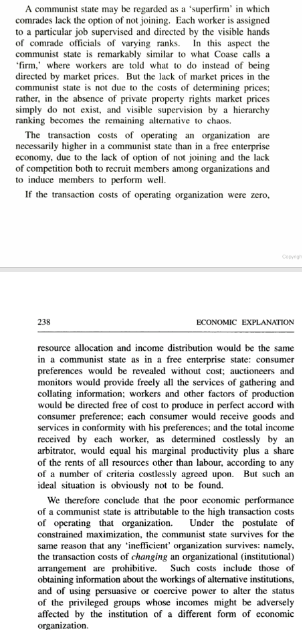
Steven N.S. Cheung on the Communist economy
29 Mar 2020 Leave a comment
in applied price theory, comparative institutional analysis, economics of information, history of economic thought, law and economics, Marxist economics, property rights, Public Choice, Ronald Coase, theory of the firm
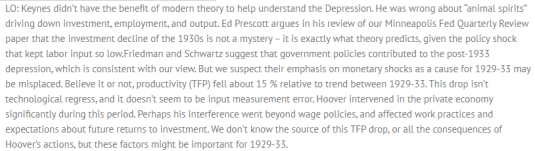
Lee Ohanian on were Keynes, and Friedman and Schwartz all wrong?
29 Mar 2020 7 Comments
in business cycles, economic history, financial economics, fiscal policy, history of economic thought, macroeconomics, Milton Friedman, monetarism, monetary economics

Determining the Value of Money: Next Steps for the Fiscal Theory of the Price Level
29 Mar 2020 Leave a comment
in budget deficits, business cycles, economic history, financial economics, fiscal policy, history of economic thought, macroeconomics, Milton Friedman, monetarism, monetary economics, Robert E. Lucas Tags: monetary policy
Lee Ohanian on dynamic general equilibrium models to study the Great Depression
26 Mar 2020 Leave a comment
in business cycles, econometerics, economic growth, economic history, financial economics, great depression, history of economic thought, macroeconomics, monetary economics

What is new and true in efficiency wage theory?
24 Mar 2020 Leave a comment
in applied price theory, history of economic thought, labour economics, labour supply, occupational choice, personnel economics
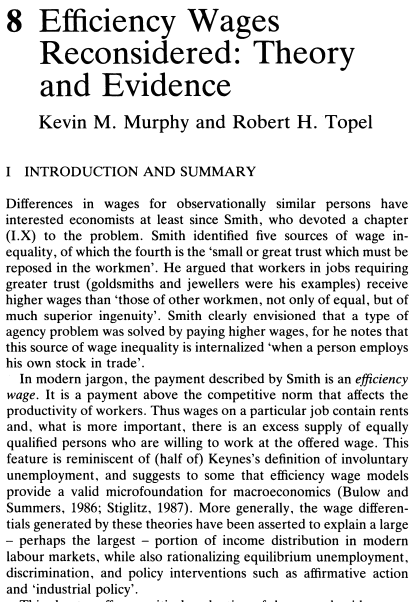
From Y. Weiss et al. (eds.), Advances in the Theory and Measurement of Unemployment
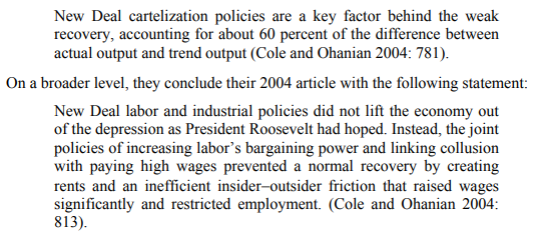

Ellen McGrattan in real business cycle models
21 Mar 2020 Leave a comment
in budget deficits, business cycles, economic growth, Edward Prescott, fiscal policy, history of economic thought, labour economics, labour supply, macroeconomics, monetary economics Tags: real business cycle theory

What is New Keynesian macroeconomics?
20 Mar 2020 Leave a comment
in budget deficits, business cycles, economic growth, fiscal policy, history of economic thought, macroeconomics, Milton Friedman, monetarism, monetary economics Tags: Keynesian macroeconomics, New Keynesian macroeconomics

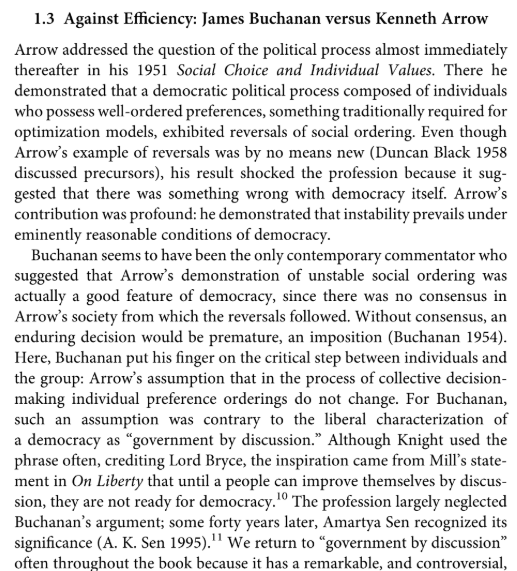
James Buchanan on highly undemocratic Arrow’s Impossibility Theorem
19 Mar 2020 Leave a comment
in applied welfare economics, constitutional political economy, history of economic thought, James Buchanan, Public Choice
From https://books.google.co.nz/books?id=92xzxQEACAAJ&pg=PA3&source=gbs_toc_r&cad=3#v=onepage&q&f=false
 Utopia, you are standing in it!
Recent Comments