Last year, as part of a series on the additional reforms Milei needs to enact in Argentina, I shared this video on reducing protectionism. Since the video was only one-minute long, there was no chance to provide details. But at the conference in Buenos Aires this week, Professor Jorge Streb shared some fascinating details on […]
Tweet… is from page 103 of Historical Impromptus, a 2020 collection of some of Deirdre McCloskey’s work on economic history; this quotation, specifically, is from McCloskey’s 2000 review, in the Minnesota Journal of Global Trade, of Thomas Friedman’s The Lexus and the Olive Tree and John Gray’s False Dawn [original emphasis]: Globalization encourages the capitalist…
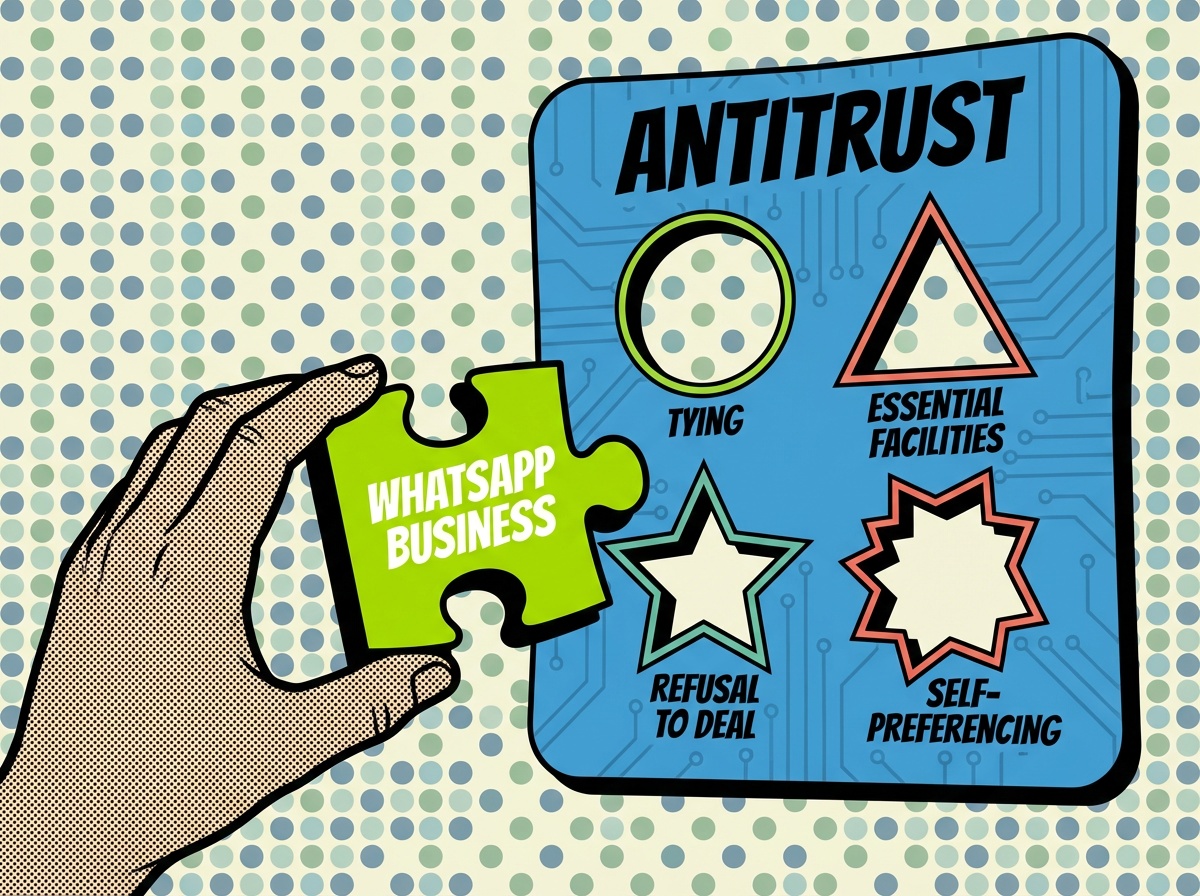
Meta’s decision to limit third-party AI access to WhatsApp Business has quickly drawn antitrust scrutiny across multiple jurisdictions. The Common Market for Eastern and Southern Africa (COMESA) Competition and Consumer Commission (CCCC) is the latest authority to open an investigation. But before the case can answer whether Meta’s conduct harms competition, a more basic question…
By ChatGPT-5.2 If Iran’s oil exports alone stopped, the world would feel it, but it would probably be a serious price shock rather than an immediate global supply collapse. Iran has recently been exporting roughly 1.1–1.5 million barrels a day, close to its 2025 average of about 1.69 million barrels a day, with China buying more than 80% of those shipped […]
My First Theorem of Government is the simple observation that insiders are the biggest beneficiaries of government. I was motivated to release that theorem because bad news for taxpayers is good news for bureaucrats, consultants, contractors, lobbyists, and politicians. A classic example is the Department of Education in Washington, which has squandered more than $2.6 […]
Neither theory, history nor the latest data suggests a recession driven by AI job dislocation is likely By Greg Ip. Excerpts:”Technological advancements always cost some people their jobs—those whose skills can be easily substituted by tech. But their loss is more than offset through three other channels. The new technology enhances the skills of some survivors,…
Ask anyone in Australia’s competition law community what transformed the economy, and you will hear a familiar story. Australia was once a cartelised, complacent place where businesses divided up markets and consumers paid the price. Then came the Trade Practices Act in 1974, and competition law forced firms to compete. This is not a fringe […]
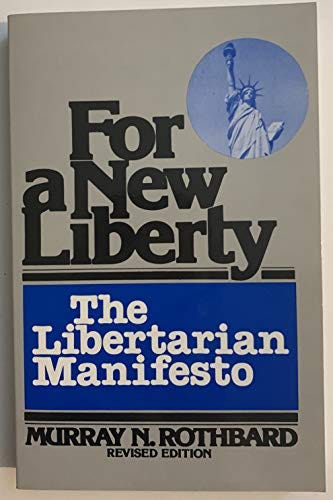
Update: I’m doing a Substack Live today on You Have No Right to Your Culture with the Boyd Institute’s Peter Banks. 4 PM ET.SummaryThis is the shortest chapter of the book, just six pages long. Rothbard makes a laundry list of what he calls “the major problem areas of our society” and argues that government…
When thinking about what makes an economy flourish, many of us tend to focus on the success stories of innovation and growth. After all, success stories involve an element of risk, which means a chance of failure. When it’s more expensive to fail, then avoiding the risk of failure–by avoiding innovative but risky business choices–starts…
The Post reports: The Government has lifted a looming cap on rocket launches over New Zealand waters, in a move pitched as clearing the way for the country’s fast-growing space and advanced aviation industries. Space Minister Judith Collins and Environment Minister Penny Simmonds on Thursday confirmed the permitted number of launches that can drop rocket debris…
Finding out that GLP-1 drugs can help reduce weight has been life changing for many and could stem the social costs of being overweight. Recently, prices have fallen dramatically. I asked ChatGPT to for some summary data for Wegovy & Zepbound which I plot below. Competition matters. Initially, Wegovy was the effective monopolist selling at a list price…
See The Weight-Loss Price Wars Are Breaking Big Pharma’s Business Model: Prices for GLP-1s are falling fast and forcing companies to adapt by David Wainer of The WSJ.”Two years ago, a GLP-1 prescription could cost an uninsured patient more than $1,000 a month. Today, Novo Nordisk’s Wegovy pill starts at just $149 through cash-pay programs.””Typically, drug…
It is not often I am speechless but that is exactly what I was when I saw some of these advertisements and products from days of yore. You would not get away with it by today’s standards. Vintage newspaper ad for heroin Who doesn’t like a bit of cocaine on their candy. Stay fit and […]
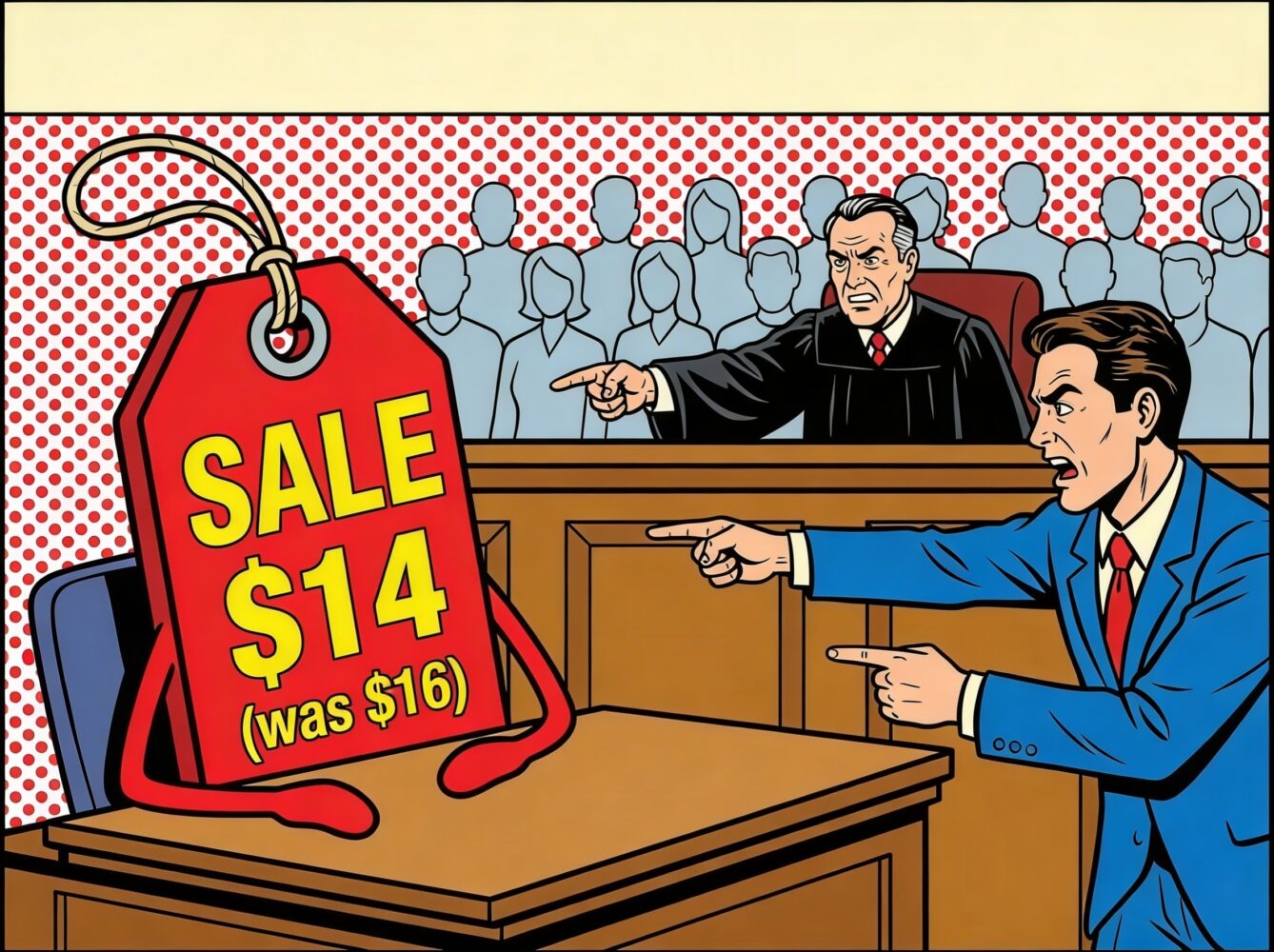
Antitrust has always been a strange regulatory enterprise. Businesses are largely free to engage in various commercial practices involving price, output, product design, distribution, research, and innovation—until they’re not. Outside the paradigmatic examples of explicit agreements among competitors to fix price and output, many business practices live in a gray zone. Whether a particular pricing…
Why Evolution is True is a blog written by Jerry Coyne, centered on evolution and biology but also dealing with diverse topics like politics, culture, and cats.
“We do not believe any group of men adequate enough or wise enough to operate without scrutiny or without criticism. We know that the only way to avoid error is to detect it, that the only way to detect it is to be free to inquire. We know that in secrecy error undetected will flourish and subvert”. - J Robert Oppenheimer.





 Utopia, you are standing in it!
Recent Comments