By ChatGPT-5.2 If Iran’s oil exports alone stopped, the world would feel it, but it would probably be a serious price shock rather than an immediate global supply collapse. Iran has recently been exporting roughly 1.1–1.5 million barrels a day, close to its 2025 average of about 1.69 million barrels a day, with China buying more than 80% of those shipped […]
If Iran stopped exporting oil
If Iran stopped exporting oil
16 Mar 2026 Leave a comment
in business cycles, defence economics, economic growth, energy economics, industrial organisation, international economics, International law, macroeconomics, resource economics, war and peace Tags: Iran
Stagflation, Recession? Probably Not
16 Mar 2026 1 Comment
in defence economics, energy economics, international economics, war and peace Tags: Iran
See Why the Oil Shock Probably Won’t Derail the Economy. And One Way It Might: The U.S. is a net petroleum exporter and productivity is improving, but the bigger risk is stubborn inflation by Greg Ip of The WSJ. Stagflation combines the words stagnation and inflation. If oil prices rise, supply shifts to the left because the…
Stagflation, Recession? Probably Not
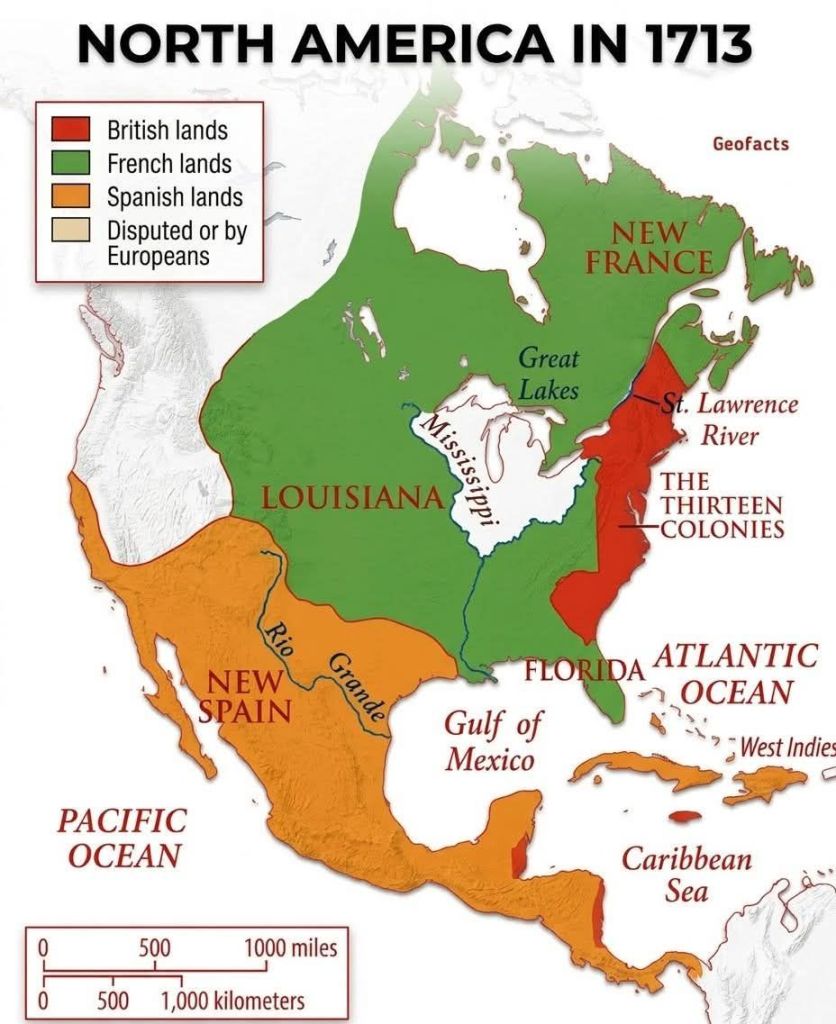
I like maps
15 Mar 2026 Leave a comment
in economic history, international economics, International law, law and economics Tags: economics of borders, maps
Travel advice for vapers
03 Mar 2026 Leave a comment
in economics of regulation, health economics, international economics Tags: nanny state
The Telegraph has written a guide for vapers travelling to parts of the world that are even more hostile to e-cigarettes. I am quoted in it. Christopher Snowdon, head of lifestyle economics at the Institute of Economic Affairs and editor of the Nanny State Index, which ranks countries by how much they interfere with people’s lifestyle…
Travel advice for vapers
The Macroeconomic Effects of Tariffs
02 Mar 2026 Leave a comment
in applied price theory, econometerics, economic history, history of economic thought, international economics Tags: free trade, tariffs
We study the macroeconomic effects of tariff policy using U.S. historical data from 1840–2024. We construct a narrative series of plausibly exogenous tariff changes – based on major legislative actions, multilateral negotiations, and temporary surcharges – and use it as an instrument to identify a structural tariff shock. Tariff increases are contractionary: imports fall sharply,…
The Macroeconomic Effects of Tariffs
The Economic Burden of Protectionism, Part III
23 Feb 2026 Leave a comment
in applied price theory, econometerics, economic history, history of economic thought, industrial organisation, international economics, politics - USA, survivor principle

In Part I and Part II of this series, we looked at research showing that Americans are bearing the burden of Trump’s trade taxes. Those findings are a useful antidote to Trump’s silly and illiterate claim that foreign companies are swallowing the added cost. In both of those columns, however, I pointed out that I’m […]
The Economic Burden of Protectionism, Part III
Trump’s Tariffs Have Not Shifted the Trade Deficit
21 Feb 2026 1 Comment
in international economics, politics - USA Tags: free trade, tarrifs

The recent Supreme Court decision that President Trump did not have arbitrary and unbounded powers he has claimed to impose or retrace tariffs came as no surprise, for a variety reasons laid out in earlier posts here, here, and here. But here I want to focus on a different claim: that the reason for tariffs…
Trump’s Tariffs Have Not Shifted the Trade Deficit
The Economic Burden of Protectionism, Part II
18 Feb 2026 Leave a comment
in applied price theory, industrial organisation, international economics, politics - USA Tags: free trade, tarrifs

In Part I of this series, we reviewed some new research from the New York Federal Reserve. That study showed that Americans bear about 90 percent of the burden of Trump’s Liberation Day trade taxes. Though I added my own two cents because I don’t actually care that much about who bears the burden of […]
The Economic Burden of Protectionism, Part II
The economic impacts of the 2008 NZ-China Free Trade Agreement
06 Feb 2026 1 Comment
in applied price theory, econometerics, industrial organisation, international economics, politics - New Zealand Tags: China, free trade, free trade agreements, tariffs

New Zealand was the first Western developed country to sign a free trade agreement with China, and it came into force in 2008. At the time, the New Zealand government estimated an increase in exports to China of between NZ$225 million and NZ$350 million (between US$180 million and US$280 million), and Ministry of Foreign Affairs…
The economic impacts of the 2008 NZ-China Free Trade Agreement
Tariffs and Inflation: Where Are We?
05 Feb 2026 Leave a comment
in applied price theory, econometerics, international economics, politics - USA Tags: free trade, tariffs

One of the predictions made by economists when President Trump announce the start of his freewheeling tariff policies in April 2025 was that the costs of the tariffs would ultimately be passed through to consumers, leading to overall higher inflation. Well, President Trump has been tossing out tariff threats, keeping some and withdrawing others. However,…
Tariffs and Inflation: Where Are We?
Debunking Trump’s Error-Filled WSJ Column
04 Feb 2026 Leave a comment
in applied price theory, budget deficits, economic growth, economic history, fisheries economics, history of economic thought, income redistribution, industrial organisation, international economic law, international economics, macroeconomics, politics - USA, Public Choice, rentseeking Tags: free trade, tarrifs
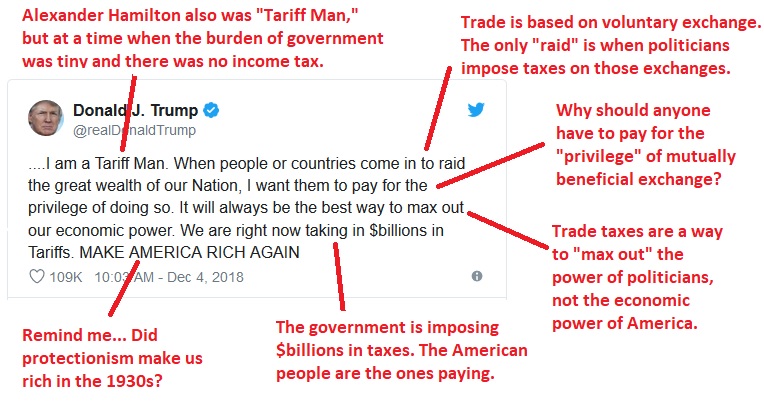
Donald Trump, who describes himself as “Tariff Man,” recently wrote a column in defense of his protectionist trade policy for the Wall Street Journal. After reading the column, my first thought was that Trump was trying to show he is more economically illiterate than Joe Biden (a big challenge, as seen here and here). And […]
Debunking Trump’s Error-Filled WSJ Column
Some Links
26 Jan 2026 Leave a comment
in applied price theory, economic history, history of economic thought, international economics, liberalism, Marxist economics, politics - USA, Public Choice
TweetPhil Magness’s new essay on the origins of the vague and derogatory term “neoliberalism” is superb. A slice: While most versions of the neoliberal label still come from the academic left today, the term has come back into favor within a certain, curious strand of the right. Conservative writers such as Patrick Deneen, Adrian Vermeule,…
Some Links
The economics of currency values
25 Jan 2026 1 Comment
in applied price theory, economic history, financial economics, international economics, macroeconomics, monetary economics Tags: Japan
That is the topic of my latest Free Press column, here is one excerpt: What else are currency values telling us today? The Japanese yen continues a very weak run, now coming in at about 158 to the U.S. dollar. I can recall when it was common for the yen to stand at about 100…
The economics of currency values
Quotation of the Day…
10 Jan 2026 Leave a comment
in applied price theory, entrepreneurship, international economics

Tweet… is from page 11 of Menzie Chinn’s and Douglas Irwin’s superb 2025 textbook, International Economics: There is a parable about an entrepreneur who invents an amazing machine. Wheat, soybeans, lumber, and oil are fed into one end of the contraption. As if by magic, smartphones, coffee, and tea, and all manner of clothing and…
Quotation of the Day…
Why Care About Debt-to-GDP?
06 Jan 2026 Leave a comment
in econometerics, economic history, international economics, macroeconomics
Here is another piece for “contrarian Tuesday,” like it or not: We construct an international panel data set comprising three distinct yet plausible measures of government indebtedness: the debt-to-GDP, the interest-to-GDP, and the debt-to-equity ratios. Our analysis reveals that these measures yield differing conclusions about recent trends in government indebtedness. While the debt-to-GDP ratio has…
Why Care About Debt-to-GDP?


Recent Comments