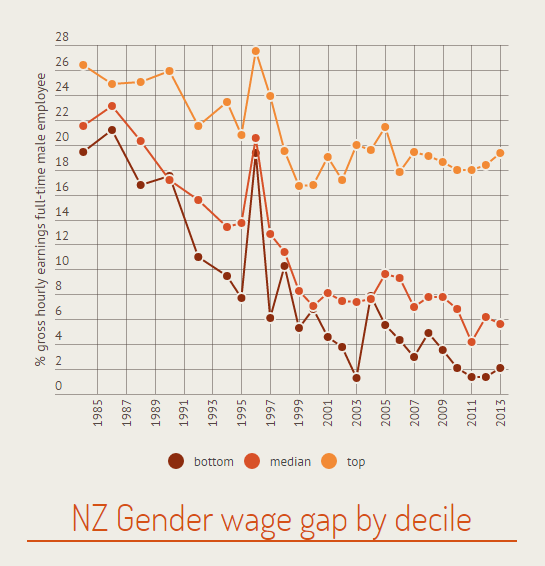
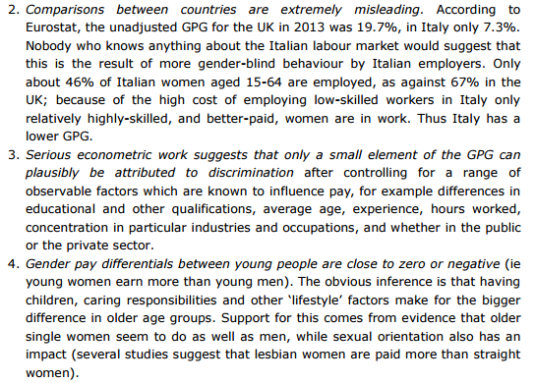
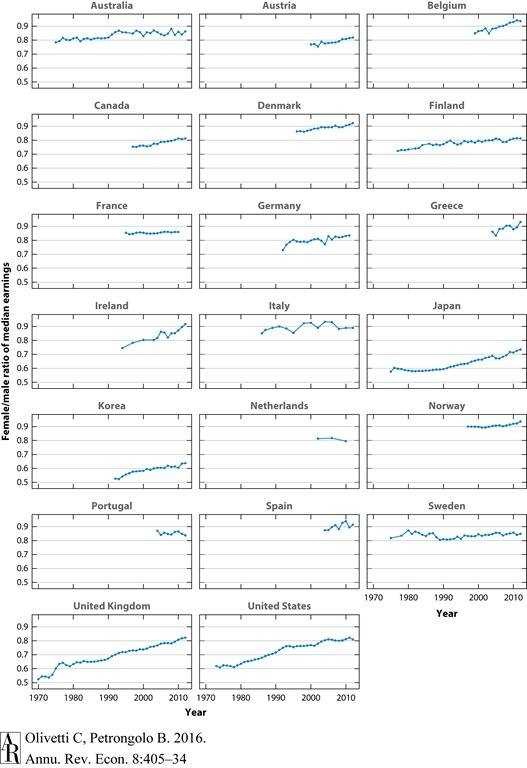
Source: http://www.oecd.org/els/emp/onlineoecdemploymentdatabase.htm
Celebrating humanity's flourishing through the spread of capitalism and the rule of law
08 Mar 2017 2 Comments
in discrimination, gender, human capital, labour economics, labour supply, politics - New Zealand Tags: compensating differences, gender wage gap, glass ceiling, work life balance
07 Mar 2017 Leave a comment
in discrimination, economics, gender, human capital, labour economics, managerial economics, occupational choice, organisational economics, personnel economics
06 Mar 2017 Leave a comment
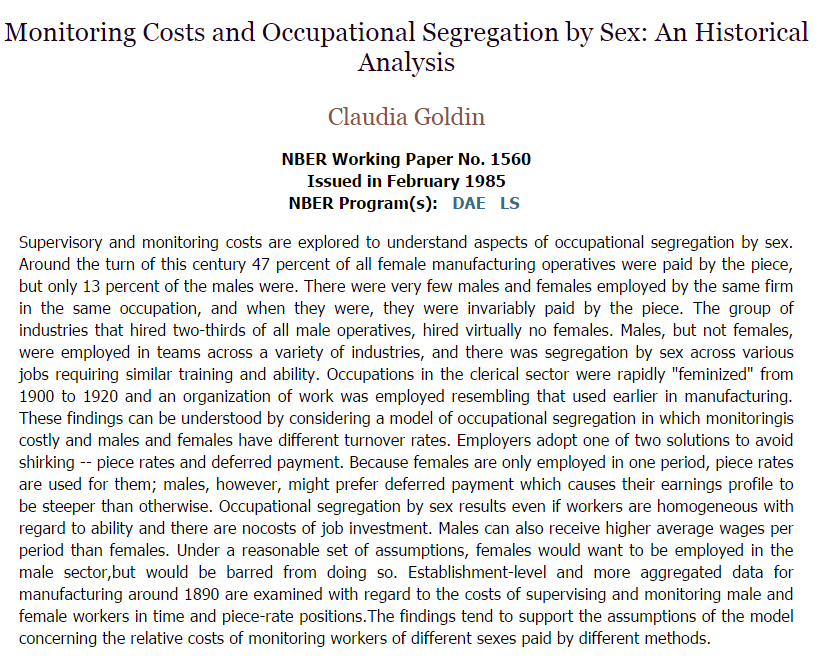
Published: Goldin, Claudia. “Monitoring Costs and Occupational Segregation by Sex: An Historical Analysis,” Journal of Labor Economics, Vol. 4, (January 1986), pp. 1-27.
06 Mar 2017 Leave a comment
in discrimination, gender, labour economics Tags: gender wage gap
28 Feb 2017 Leave a comment
in discrimination, economics of education, economics of religion, gender, liberalism, politics - New Zealand

As Catherine Delahunty MP said after visiting a fundamentalist religious community in New Zealand:
I looked at the gorgeous, yet regimented girls in their identical clothing and wondered how a physicist, an international lawyer or a plumber might blossom if the only role models she was exposed to were those in her own community. We agreed to disagree, because you can’t argue with religious certainty and a literal interpretation of a religious text. This community feels they are under attack by people like me and throughout the day the women and men I met did their best to share their vision of a safe, structured and practical world led entirely by men who consult with women.
24 Feb 2017 Leave a comment
in discrimination, econometerics, gender, labour economics, politics - New Zealand
24 Feb 2017 Leave a comment
in discrimination, gender, human capital, labour economics, occupational choice, transport economics Tags: gender wage gap
22 Feb 2017 Leave a comment
in discrimination, gender
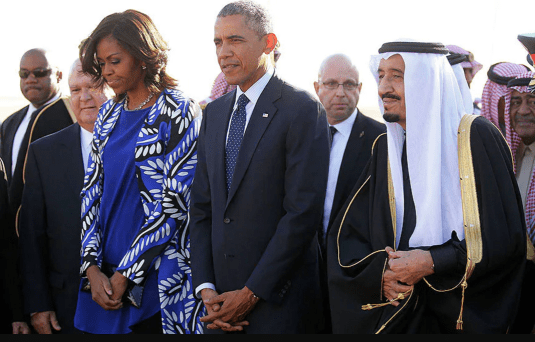
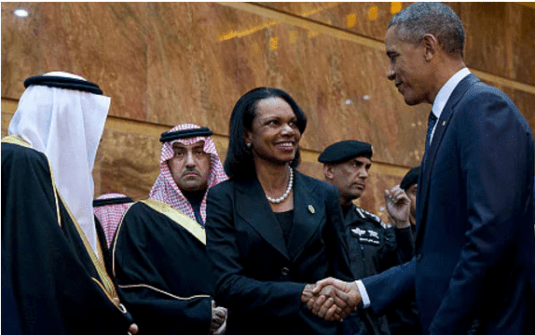
20 Feb 2017 Leave a comment
in applied price theory, discrimination, entrepreneurship, gender, industrial organisation, labour economics, labour supply, managerial economics, occupational choice, organisational economics, personnel economics Tags: gender wage gap
17 Feb 2017 Leave a comment
in applied price theory, discrimination, economics, gender, health and safety, human capital, labour economics, labour supply, occupational choice, poverty and inequality Tags: gender wage gap, occupational segregation
NZ has a gender wage gap of 6% according to the OECD and 12% according to the Ministry of Women’s Affairs, with 30% of that explained by occupational segregation. That is 2 to 4 percentage points.

You have to explain occupational segregation. Men are represented more in occupations that are riskier. They are paid more for that. There are systematic differences in the occupational choices of married parents, single parents and single mothers regarding the risks of injury. Again, that feeds into wages.
Occupational segregation explains 2 to 4 percentage points of wages. Given that risk premiums – danger money – and trading lower wages for greater flexibility in a job can easily reduce wages or increase them by 2-4%, occupational segregation is simply a proxy for measurement error.
Still more of wage premiums has to be poured into this 2-4% of wages such as occupational segregation in unsocial work hours. Many more women than men work 9 to 5 during the week. Men would then have a wage premium for working nights and weekends. A hell a lot has to be explained away by just 2 to 4% wages.
What does undervalued work mean? Does it mean it is very profitable to employ women in certain occupations such as caring. That implies that high profits will lead new firms to enter these industries bidding up wages and equalising them with other competing jobs.
09 Feb 2017 Leave a comment
in discrimination, economics of education, gender, human capital, labour economics Tags: behavioural genetics, educational psychology, gender gap, gender wage gap, reversing gender gap
07 Feb 2017 Leave a comment
in applied price theory, constitutional political economy, discrimination, human capital, labour economics, politics - New Zealand

The weekend newspaper here in Wellington profiled a refugee from each of the 7 countries currently subject to Donald Trump’s travel ban. Each of the 7 found paradise in New Zealand.
These 7 refugees were relatively young and grew up in a chaotic war-torn home country. They spent considerable time in refugee camps under dire conditions. All they needed to make good was to move to a free country.
https://twitter.com/faisalhalabi/status/828071014697361409
An old mate of mine at University was a son of the Ukrainian war refugee. His dad was rounded up by the Nazis during the Second World War to be a factory slave. He came to Australia because that was the first country that would accept him and his Dutch wife.
My old mate’s dad did not want to go back to the Ukraine because it was now Russian rather than Polish territory. All his sons graduated in economics. His daughter is a senator. He worked in a factory in Bernie.
Through the Canberra chess club, I got to know a few Second World War refugees. They all found paradise in Australia.
People recover surprisingly quickly from setbacks if they are in a free country. The story of refugees confirms that again and again.
My great grandparents fled the Irish potato famine. I do not feel that is holding me back in the 21st century. Likewise, my dad was raised to Protestants and a Catholic- Protestant marriage was not so popular back then.
Celebrating humanity's flourishing through the spread of capitalism and the rule of law
Celebrating humanity's flourishing through the spread of capitalism and the rule of law
Celebrating humanity's flourishing through the spread of capitalism and the rule of law
Celebrating humanity's flourishing through the spread of capitalism and the rule of law
Celebrating humanity's flourishing through the spread of capitalism and the rule of law
Celebrating humanity's flourishing through the spread of capitalism and the rule of law
Celebrating humanity's flourishing through the spread of capitalism and the rule of law
Celebrating humanity's flourishing through the spread of capitalism and the rule of law
A History of the Alt-Right
Econ Prof at George Mason University, Economic Historian, Québécois
Celebrating humanity's flourishing through the spread of capitalism and the rule of law
Scholarly commentary on law, economics, and more
Beatrice Cherrier's blog
Celebrating humanity's flourishing through the spread of capitalism and the rule of law
Celebrating humanity's flourishing through the spread of capitalism and the rule of law
Celebrating humanity's flourishing through the spread of capitalism and the rule of law
Why Evolution is True is a blog written by Jerry Coyne, centered on evolution and biology but also dealing with diverse topics like politics, culture, and cats.
Celebrating humanity's flourishing through the spread of capitalism and the rule of law
A rural perspective with a blue tint by Ele Ludemann
DPF's Kiwiblog - Fomenting Happy Mischief since 2003
Celebrating humanity's flourishing through the spread of capitalism and the rule of law
The world's most viewed site on global warming and climate change
Tim Harding's writings on rationality, informal logic and skepticism
A window into Doc Freiberger's library
Let's examine hard decisions!
Commentary on monetary policy in the spirit of R. G. Hawtrey
Thoughts on public policy and the media
Celebrating humanity's flourishing through the spread of capitalism and the rule of law
Politics and the economy
A blog (primarily) on Canadian and Commonwealth political history and institutions
Reading between the lines, and underneath the hype.
Economics, and such stuff as dreams are made on
"The British constitution has always been puzzling, and always will be." --Queen Elizabeth II
Celebrating humanity's flourishing through the spread of capitalism and the rule of law
Celebrating humanity's flourishing through the spread of capitalism and the rule of law
WORLD WAR II, MUSIC, HISTORY, HOLOCAUST
Undisciplined scholar, recovering academic
Celebrating humanity's flourishing through the spread of capitalism and the rule of law
Res ipsa loquitur - The thing itself speaks
In Hume’s spirit, I will attempt to serve as an ambassador from my world of economics, and help in “finding topics of conversation fit for the entertainment of rational creatures.”
Researching the House of Commons, 1832-1868
Articles and research from the History of Parliament Trust
Reflections on books and art
Posts on the History of Law, Crime, and Justice
Celebrating humanity's flourishing through the spread of capitalism and the rule of law
Exploring the Monarchs of Europe




Recent Comments