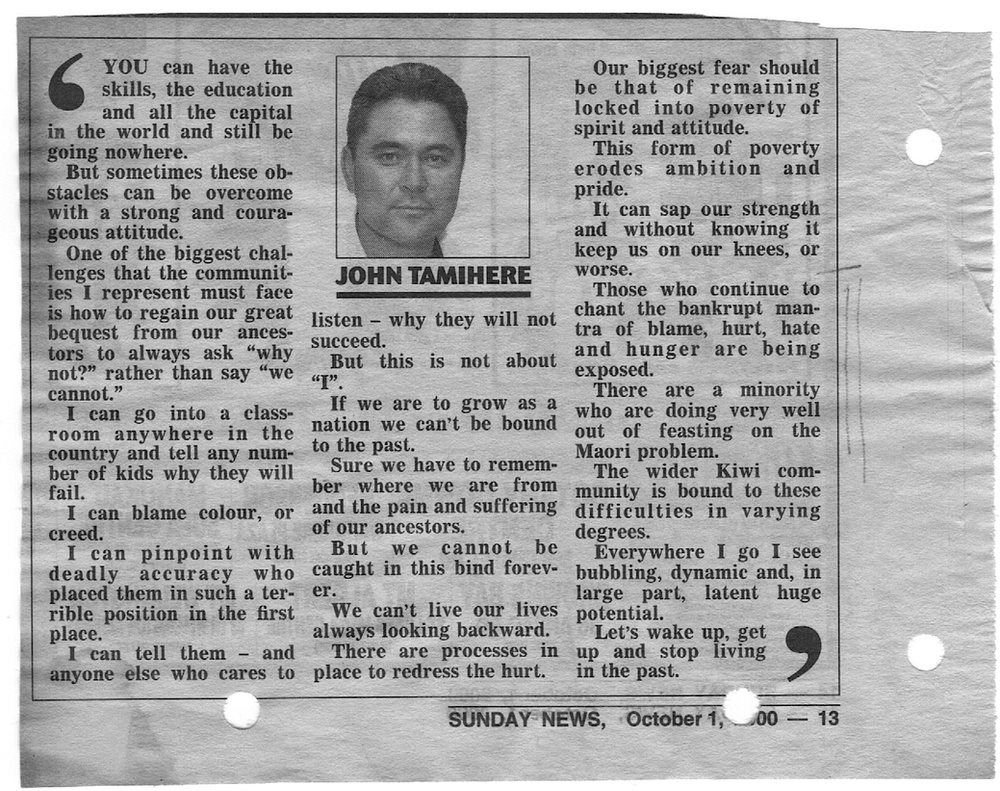
John Tamihere – Why did he change?
Celebrating humanity's flourishing through the spread of capitalism and the rule of law
18 Feb 2024 Leave a comment
in discrimination, economic history, economics of education, human capital, labour economics, labour supply, occupational choice, politics - New Zealand, poverty and inequality Tags: New Zealand, racial discrimination
16 Feb 2024 Leave a comment
in health and safety, labour economics, occupational choice Tags: Darwin awards, gender wage gap
15 Feb 2024 Leave a comment
in labour economics, labour supply, occupational choice, unemployment Tags: adverse selection, asymmetric information, moral hazard, screening, self-selection, signaling
15 Feb 2024 Leave a comment
in discrimination, econometerics, gender, human capital, labour economics, labour supply, occupational choice, poverty and inequality Tags: gender wage gap

In some countries, like Norway, your income tax forms are public information, so any one can look up what anyone else earns. In a US context, income is mostly considered to be private information, unless you are a public employee or an executive at a public company. Would it be a good thing to have…
Pay Transparency: What’s Good to Know?
13 Feb 2024 Leave a comment
in discrimination, economics of education, gender, health and safety, human capital, labour economics, labour supply, occupational choice, poverty and inequality Tags: evolutionary biology, evolutionary psychology, gender wage gap, sex discrimination
I suggest, Men and women tend to think alike in societies where there is Close-knit interdependence, religosity and authoritarianism, or Shared cultural production and mixed gendered offline socialising. Gendered ideological polarisation appears encouraged by: Feminised public culture Economic resentment Social media filter bubbles Cultural entrepreneurs. Here is the full piece, currently the best piece on […]
Alice Evans on the ideological gender divide
11 Feb 2024 Leave a comment
in discrimination, economic history, economics of education, gender, human capital, labour economics, labour supply, occupational choice
08 Feb 2024 Leave a comment
in applied price theory, economics of education, gender, human capital, labour economics, labour supply, occupational choice, politics - New Zealand, poverty and inequality, welfare reform Tags: child poverty, family poverty
Lindsay Mitchell writes- When National became government in 2008, Finance Minister Bill English’s determination to understand the extent of benefit-dependency led them to commission Taylor Fry to produce annual actuarial reports. These were duly published at the MSD website every year but ceased when the government changed in 2017. Now however, an Official Information request […]
LINDSAY MITCHELL: Labour hid developing welfare crisis
01 Feb 2024 Leave a comment
in applied price theory, econometerics, economics of education, economics of information, human capital, labour economics, labour supply, occupational choice, poverty and inequality Tags: screening, signaling

Douglas Belkin, who has an admirably adversarial publication record on higher ed, spotlights my The Case Against Education in his latest piece in The Wall Street Journal:One result of this transactional attitude has been a sharp increase in cheating. College is one of the few products whose consumers try to get as little out of…
*The Case Against Education* Makes the WSJ
17 Jan 2024 Leave a comment
in applied price theory, discrimination, economic history, economics of information, economics of regulation, health and safety, history of economic thought, human capital, industrial organisation, international economics, labour economics, labour supply, liberalism, macroeconomics, Marxist economics, minimum wage, occupational choice, occupational regulation, poverty and inequality, unemployment, unions
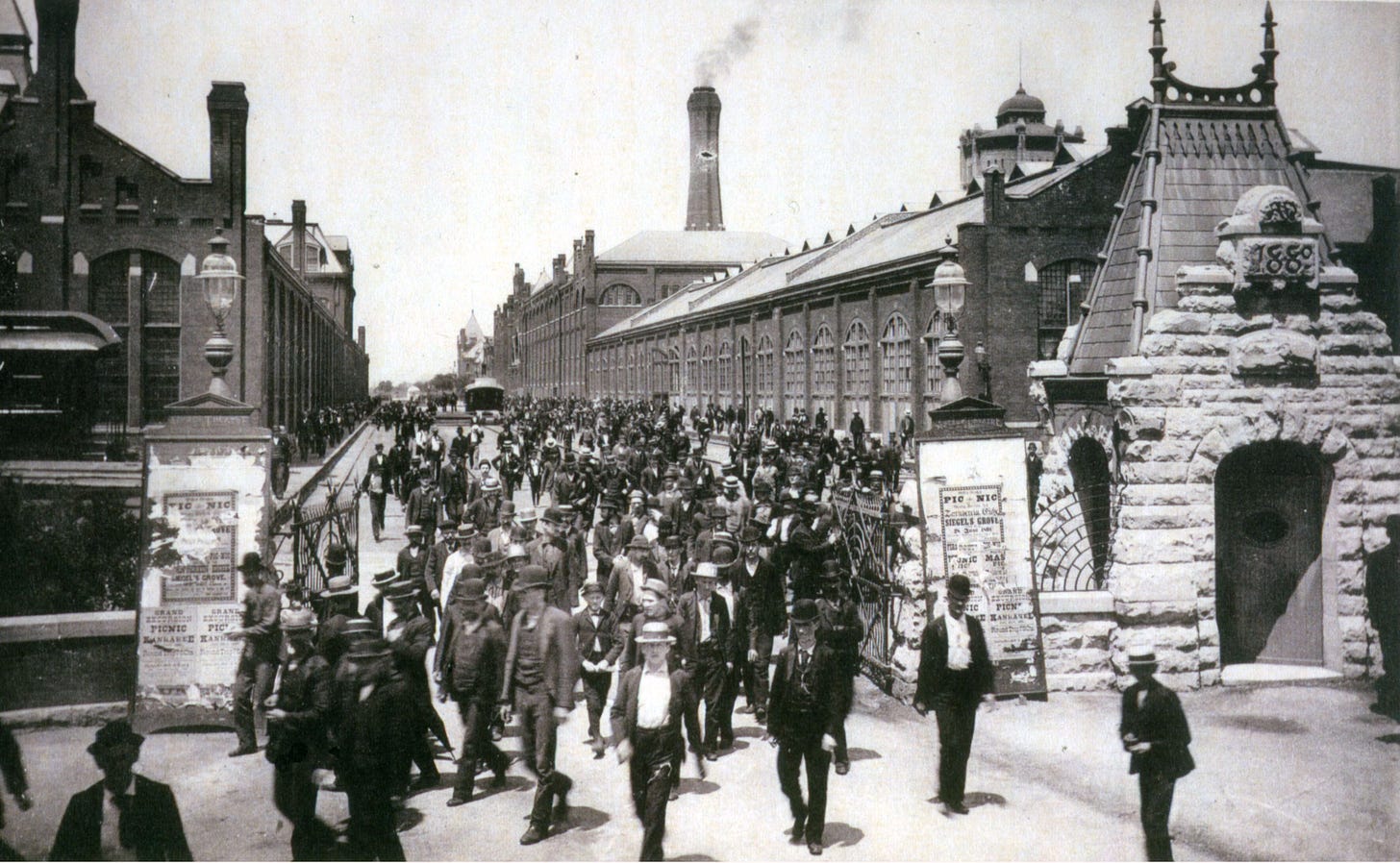
A quarter century ago, economist Price Fishback published “Operations of ‘Unfettered’ Labor Markets: Exit and Voice in American Labor Markets at the Turn of the Century” in the prestigious Journal of Economic Literature. Fishback’s article is packed with insight… and understatement. But let’s back up. Virtually every standard history textbook describes U.S. labor markets before…
Unfettered: Fishback 25 Years Later
16 Jan 2024 Leave a comment
in applied price theory, economic history, human capital, income redistribution, labour economics, labour supply, occupational choice, politics - USA, poverty and inequality, Public Choice, public economics, welfare reform Tags: child poverty, family poverty
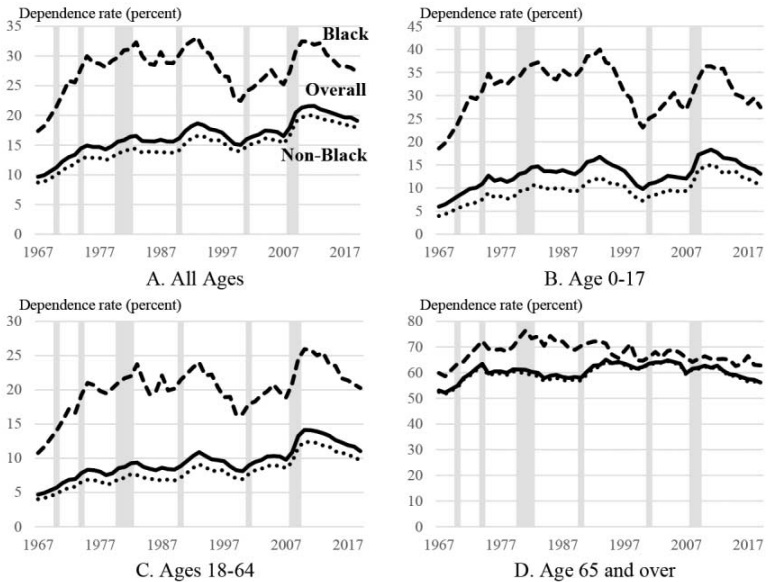
In Part I of this series, I explained that the War on Poverty, launched by Lyndon Johnson and expanded by other profligate presidents, has been bad news for both taxpayers and poor people. More specifically, I shared some academic research showing how it led to a big increase in dependency on government. Let’s expand on […]
The Right and Wrong Way to Reduce Poverty, Part II
16 Jan 2024 Leave a comment
in applied price theory, discrimination, econometerics, economic history, gender, human capital, labour economics, labour supply, occupational choice, poverty and inequality Tags: economics of fertility, family leave, gender wage gap, marriage and divorce, sex discrimination

The gender wage gap has been decreasing slowly and steadily over time. At least, that’s what I thought until I read this 2023 NBER Working Paper by Peter Blair (Harvard University) and Benjamin Posmanick (St. Bonaventure University). They present the following graph of the gender wage gap in the US (for White women, compared with White men,…
Family leave and the gender wage gap
01 Jan 2024 Leave a comment
in applied price theory, Austrian economics, behavioural economics, economic history, history of economic thought, human capital, industrial organisation, labour economics, labour supply, occupational choice Tags: capitalism and freedom, evolutionary psychology, The Great Enrichment
Tweet… is from my emeritus Nobel-laureate colleague Vernon Smith‘s splendid speech “Human Betterment Through Globalization,” delivered in September 2005 at the Irvington-on-Hudson then-headquarters of the Foundation for Economic Education: The challenge is that we all function simultaneously in two overlapping worlds of exchange. First, we live in a world of personal, social exchange based on…
Quotation of the Day…
18 Dec 2023 Leave a comment
in applied price theory, discrimination, economic history, gender, history of economic thought, human capital, labour economics, labour supply, minimum wage, occupational choice Tags: gender wage gap, sex discrimination
13 Dec 2023 Leave a comment
in applied price theory, discrimination, econometerics, economic history, gender, human capital, labour economics, labour supply, minimum wage, occupational choice Tags: gender wage gap, sex discrimination
Celebrating humanity's flourishing through the spread of capitalism and the rule of law
Celebrating humanity's flourishing through the spread of capitalism and the rule of law
Celebrating humanity's flourishing through the spread of capitalism and the rule of law
Celebrating humanity's flourishing through the spread of capitalism and the rule of law
Celebrating humanity's flourishing through the spread of capitalism and the rule of law
Celebrating humanity's flourishing through the spread of capitalism and the rule of law
Celebrating humanity's flourishing through the spread of capitalism and the rule of law
A History of the Alt-Right
Econ Prof at George Mason University, Economic Historian, Québécois
Celebrating humanity's flourishing through the spread of capitalism and the rule of law
Scholarly commentary on law, economics, and more
Beatrice Cherrier's blog
Celebrating humanity's flourishing through the spread of capitalism and the rule of law
Celebrating humanity's flourishing through the spread of capitalism and the rule of law
Celebrating humanity's flourishing through the spread of capitalism and the rule of law
Why Evolution is True is a blog written by Jerry Coyne, centered on evolution and biology but also dealing with diverse topics like politics, culture, and cats.
Celebrating humanity's flourishing through the spread of capitalism and the rule of law
A rural perspective with a blue tint by Ele Ludemann
DPF's Kiwiblog - Fomenting Happy Mischief since 2003
Celebrating humanity's flourishing through the spread of capitalism and the rule of law
The world's most viewed site on global warming and climate change
Tim Harding's writings on rationality, informal logic and skepticism
A window into Doc Freiberger's library
Let's examine hard decisions!
Commentary on monetary policy in the spirit of R. G. Hawtrey
Thoughts on public policy and the media
Celebrating humanity's flourishing through the spread of capitalism and the rule of law
Politics and the economy
A blog (primarily) on Canadian and Commonwealth political history and institutions
Reading between the lines, and underneath the hype.
Economics, and such stuff as dreams are made on
"The British constitution has always been puzzling, and always will be." --Queen Elizabeth II
Celebrating humanity's flourishing through the spread of capitalism and the rule of law
Celebrating humanity's flourishing through the spread of capitalism and the rule of law
WORLD WAR II, MUSIC, HISTORY, HOLOCAUST
Undisciplined scholar, recovering academic
Celebrating humanity's flourishing through the spread of capitalism and the rule of law
Res ipsa loquitur - The thing itself speaks
In Hume’s spirit, I will attempt to serve as an ambassador from my world of economics, and help in “finding topics of conversation fit for the entertainment of rational creatures.”
Researching the House of Commons, 1832-1868
Articles and research from the History of Parliament Trust
Reflections on books and art
Posts on the History of Law, Crime, and Justice
Celebrating humanity's flourishing through the spread of capitalism and the rule of law
Exploring the Monarchs of Europe
Cutting edge science you can dice with





Recent Comments