My best read of the evidence is that a union raises wages by around 7% for currently unionized employees. The wage gains from a redistribution of rents evenly across workers. Wage compression exists, but redistribution from worker to worker is only a small part. These are the current effects – unionizing more of the economy […]
The economics of unions
The economics of unions
22 May 2026 Leave a comment
in applied price theory, comparative institutional analysis, econometerics, economic history, industrial organisation, labour economics, survivor principle, unions
UCLA Medical School Accused of Racial Discrimination in Defiance of the Supreme Court
18 May 2026 Leave a comment
in discrimination, economics of education, politics - New Zealand Tags: affirmative action, racial discrimination

We previously discussed a disturbing account of how medical students at the David Geffen School of Medicine at the University…
UCLA Medical School Accused of Racial Discrimination in Defiance of the Supreme Court
Reform’s trolling policy
17 May 2026 Leave a comment
in labour economics, labour supply, politics Tags: British politics, economics of immigration
The Guardian reports: A Reform government will not put any migrant detention facilities in any constituency with a Reform MP. Nor will we put them where Reform controls the council. And of the remaining areas, we will prioritise Green controlled parliamentary constituencies and Green controlled councils to locate the detention centres. Put simply, if you…
Reform’s trolling policy
Iceland’s Superb Private Retirement System
17 May 2026 Leave a comment
in fiscal policy, labour economics, macroeconomics, Public Choice, public economics Tags: Iceland

Over the years, I’ve written about the successful private retirement systems in jurisdictions such as Australia, Chile, Switzerland, Hong Kong, Netherlands, the Faroe Islands, Denmark, Israel, and Sweden. Today’s column will add to the collection because we’re going to look at Iceland’s remarkable system of personal retirement accounts. We’ll start with two charts. Here’s a […]
Iceland’s Superb Private Retirement System
Do Market Reforms Cause Growth?
08 May 2026 Leave a comment
in applied price theory, development economics, econometerics, economic growth, economic history, history of economic thought, labour economics, macroeconomics, unemployment
Do market-oriented reforms cause economic growth? This paper revisits this question using a cross-country panel of reform episodes identified from various changes in well-known economic freedom and structural reform indices. We exploit the timing of reforms using distributed-lag and event-study frameworks that trace the dynamic response of per-capita GDP. We find little evidence of immediate…
Do Market Reforms Cause Growth?
The population bust
07 May 2026 Leave a comment
in economics of love and marriage, gender, labour economics, labour supply, law and economics, population economics Tags: ageing society, population bust

The Tragic Hysteria of Abortion
06 May 2026 Leave a comment
in discrimination, economics of crime, gender, health economics, law and economics Tags: abortion law reform
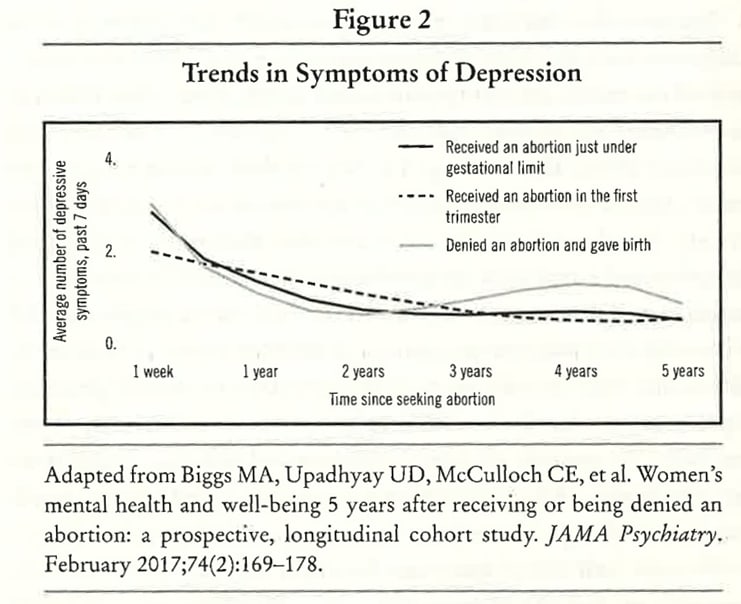
The radical pro-life position — “Abortion is as immoral as murdering a baby” — is easily refuted with a simple thought experiment. Namely: If you could either save one human baby from a fire, or a dozen human embryos, what are you morally obliged to do? 2,263 more words
The Tragic Hysteria of Abortion
African and Muslim roles in the African slave trade
01 May 2026 Leave a comment
in economic history, economics of crime, labour economics, labour supply, law and economics Tags: economics of slavery

The False Simplicity of Blaming “the West” Alone for the African Slave Trade On March 25, 2026, the UN General Assembly adopted a controversial resolution declaring the transatlantic slave trade and racialized chattel enslavement of Africans as the “gravest crime against humanity,” championed by Ghana on behalf of the African Union. The resolution, passed with 123 votes […]
African and Muslim roles in the African slave trade
Technological unemployment in Victorian Britain
29 Apr 2026 Leave a comment
in applied price theory, econometerics, economic history, human capital, labour economics, labour supply, occupational choice Tags: creative destruction
We do not know whether technological unemployment swept across England in the wake of the British Industrial Revolution. In this paper, I propose an approach to quantify jobs lost to, and created by, creative destruction in the 19th century. Using over 170 million individual records from the full-count British census (1851–1911), I generate sub-industry “task”…
Technological unemployment in Victorian Britain
Quotation of the Day…
28 Apr 2026 Leave a comment
in discrimination, labour economics, Thomas Sowell

Tweet… is from page 125 of Thomas Sowell’s 1999 book, Barbarians Inside the Gates: Ironically, both affirmative action and the argument for genetic inferiority of blacks use the same logic. They assume that statistical results not explainable by obvious gross differences must be explainable by the underlying factor they prefer to believe in. DBx: Indeed.…
Quotation of the Day…
The Luddites Were the First to Attack AI
28 Apr 2026 Leave a comment
in applied price theory, economic history, industrial organisation, labour economics, labour supply Tags: creative destruction
Everyone knows the Luddites smashed looms. What is less appreciated is that the loom was the first serious programmable device — the direct ancestor of the computer. Thus, the Luddites weren’t just the first to resist automation. They were the first to attack AI. The Jacquard loom, introduced in France circa 1805, used a chain…
The Luddites Were the First to Attack AI
Why do Americans No Longer Work So Much More Than Non-Americans?
27 Apr 2026 Leave a comment
in applied price theory, econometerics, economic history, labour economics, labour supply
In the 1990s, Americans used to work much more than non-Americans. Nowadays, about half of the gap in hours worked has reversed. To evaluate the convergence of working hours, we develop a tractable model of labor supply enriched with multiple sources of heterogeneity across individuals, an extensive margin of participation, multi-member households, and an elaborate…
Why do Americans No Longer Work So Much More Than Non-Americans?
Quotation of the Day…
25 Apr 2026 Leave a comment
in applied price theory, history of economic thought, industrial organisation, international economics, labour economics, labour supply Tags: India

Tweet… is from page 150 of Columbia University economics professor Arvind Panagariya’s brilliant 2019 book, Free Trade and Prosperity: In India, Bihar is the poorest state and Kerala one of the richest. Going by the Gini coefficient, Bihar is among the states with the least inequality and Kerala among those with the highest inequality. If…
Quotation of the Day…
The Washington Post vs Elizabeth Warren
25 Apr 2026 Leave a comment
in applied price theory, economics of media and culture, fiscal policy, human capital, income redistribution, labour economics, labour supply, macroeconomics, politics - USA, Public Choice, public economics Tags: taxation and entrepreneurship, taxation and investment, taxation and labour supply
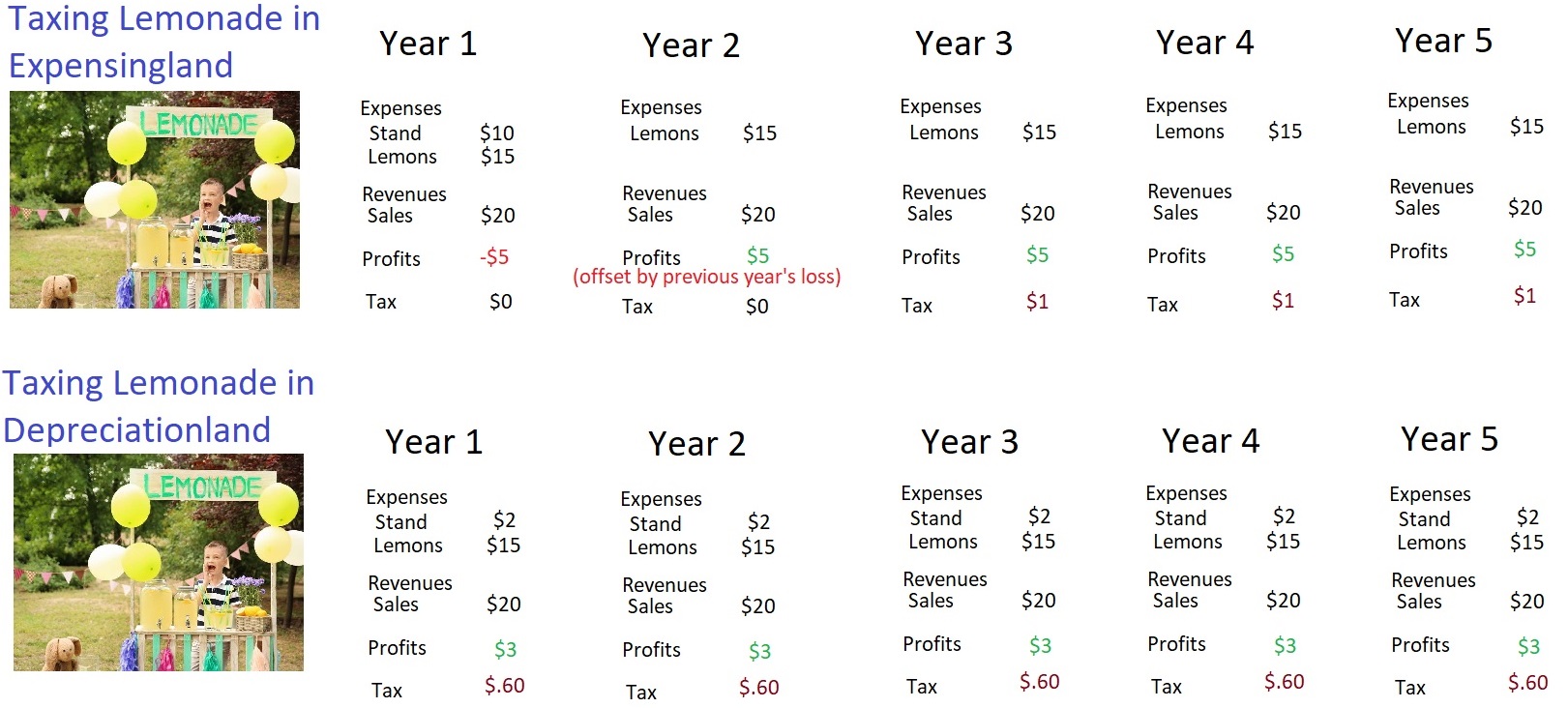
People sometimes will get excited about big-picture tax fights – whether politicians should raise taxes, whether they should add a VAT, or whether they should scrap the IRS for a flat tax. On the other had, there are a handful of tax issues that induce drowsiness but are nonetheless very important for purposes of tax […]
The Washington Post vs Elizabeth Warren
The Chinese Current Account Imbalances
21 Apr 2026 Leave a comment
in applied price theory, development economics, econometerics, economic history, economics of love and marriage, financial economics, growth miracles, labour economics, labour supply, population economics Tags: China
The subtitle of the paper is Puzzles, Patterns, and Possible Causes. Here is the abstract: China’s large current account surplus has been an irritant to its trading partners. While industrial and trade policies often lead to sector-level imbalances, they play a relatively limited role in the economy-wide surplus. Structural factors such as an unbalanced sex…
The Chinese Current Account Imbalances


Recent Comments