Poverty rates by number of children – USA, UK, Canada and Australia
08 Jul 2015 Leave a comment
in labour economics, politics - Australia, politics - USA, population economics, poverty and inequality, welfare reform Tags: child poverty, family poverty, single mothers, single parents
Figure 1: poverty rates of adults aged 20 to 54 by presence of children, 2004

Are the rich getting richer, poor getting poorer as @MaxRashbrooke once again suggests?
08 Jul 2015 Leave a comment
in applied welfare economics, economic history, labour economics, politics - New Zealand, poverty and inequality, technological progress Tags: child poverty, family poverty, Leftover Left, Max Rashbrooke, The Great Enrichment, top 1%
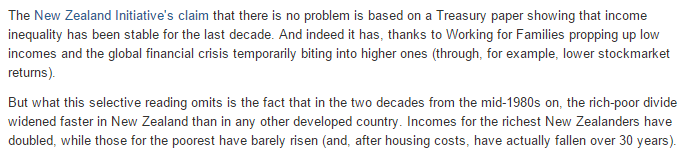
Max Rashbrooke has been at it again in the paper today.

Don’t these graphs show that everyone is richer in New Zealand than 30 years ago and there has been not much change in either child poverty or inequality for coming on for 20 years? The fall in child poverty started before the introduction of Working for Families.
Technological progress in the form of new goods and product upgrades are poorly captured in measures of living standards over time as is increases in life expectancies.
1993 vs 2013: http://t.co/tdnNqmRmcS—
History Pics (@HistoryPixs) January 08, 2014
HT: Suffer the little children – Inequality and child poverty – Closer TogetherCloser Together.
Why gender analysis is essential to empirical labour economics
07 Jul 2015 Leave a comment
U.S. wage growth doesn't look as weak when you account for benefit costs covered by employers on.wsj.com/1JJ2EmV http://t.co/s0tJutTjBy—
Nick Timiraos (@NickTimiraos) July 06, 2015
Poverty in the UK
07 Jul 2015 Leave a comment
in poverty and inequality Tags: British economy, child poverty, family poverty
More young adults in poverty as rate drops to record low for pensioners bit.ly/1qZiPnZ http://t.co/3QhofXekWP—
Guardian Data (@GuardianData) November 24, 2014
Fabian Society and Church of England caught out as hypocrites on London Living Wage of £18,000
06 Jul 2015 Leave a comment
in income redistribution, industrial organisation, labour economics, minimum wage, poverty and inequality, Public Choice, rentseeking, survivor principle Tags: British economy, British politics, Church of England, expressive voting, Fabian Society, hard budget constraints, Left-wing hypocrisy, living wage, market selection


Dual income nation
05 Jul 2015 Leave a comment
in economics of love and marriage, labour economics, labour supply, politics - USA, poverty and inequality Tags: asymmetric marriage premium, dual income couples, economics of families, reversing gender gap
@MaxCRoser only one line in this chart about India matters
05 Jul 2015 Leave a comment
in comparative institutional analysis, constitutional political economy, development economics, economic history, growth disasters, growth miracles, poverty and inequality, Public Choice Tags: capitalism and freedom, extreme poverty, global poverty, India, Leftover Left, The Great Escape, The Great Fact, top 1%
In #India poverty is falling very, very rapidly – while inequality is rising.
More at: bit.ly/1KLT8Lh http://t.co/xTxlW1i06o—
Max Roser (@MaxCRoser) June 29, 2015
The role of low wages in poverty
04 Jul 2015 Leave a comment
in labour economics, politics - USA, poverty and inequality Tags: expressive politics, Leftover Left, poverty, rational ignorance, rational irrationality
Child poverty certainly didn’t go up after the 1996 federal welfare reforms
01 Jul 2015 1 Comment
in gender, labour economics, labour supply, poverty and inequality, welfare reform Tags: 1996, child poverty, economics of fertility, single mothers, single parents, taxation and the labour supply, welfare reforms
Working population poverty is unchanged despite declines in elderly and child poverty #PovertyIs http://t.co/i7O7dTEUg2—
Political Line (@PoliticalLine) June 19, 2015
What are alternatives to the minimum wage?
30 Jun 2015 Leave a comment
in labour economics, minimum wage, poverty and inequality, public economics Tags: earned income tax credit, family tax benefits, working for families
What are alternatives to the minimum wage, and how do they effect workers and taxpayers? buff.ly/1c4BYhd http://t.co/hf67ujjvOK—
MRUniversity (@MRevUniversity) May 20, 2015
Poverty rates in Canada, UK and USA since 1985
28 Jun 2015 Leave a comment
in labour economics, politics - USA, poverty and inequality, welfare reform Tags: British economy, Canada, top 1%
Despite 30 years of the ravages of neoliberalism, Reagan, Thatcher, and Blair, the whole lot, poverty has not gone up or down much at all.
Figure 1: relative poverty rate (% of persons living with less than 50% of equivalised disposable income), USA, UK and Canada
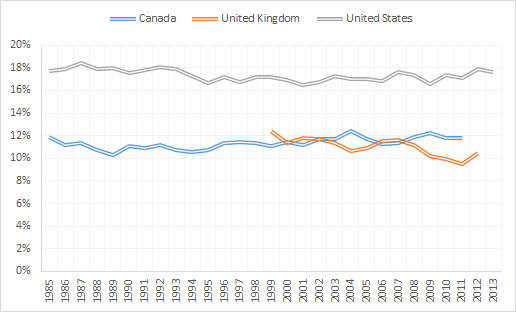
Source: In It Together – Why Less Inequality Benefits All – © OECD 2015
Child poverty across Europe
28 Jun 2015 Leave a comment
in Euro crisis, poverty and inequality Tags: child poverty, EU, Eurosclerosis, family poverty
Spain's lost decade: one in three Spanish kids live in poverty or at risk of social exclusion: gu.com/p/42yx7/tw http://t.co/qg8PDla19z—
Guardian Data (@GuardianData) October 28, 2014
All in less cash transfers average income tax rates at average wage, USA, UK, Australia and New Zealand
27 Jun 2015 Leave a comment
in labour supply, politics - Australia, politics - New Zealand, politics - USA, poverty and inequality, public economics Tags: Australia, British economy, family tax credits, family taxation, in-work tax credits, social insurance, taxation and the labour supply, welfare state
Figure 1: All in less cash transfers average income tax rates at average wage, 2014
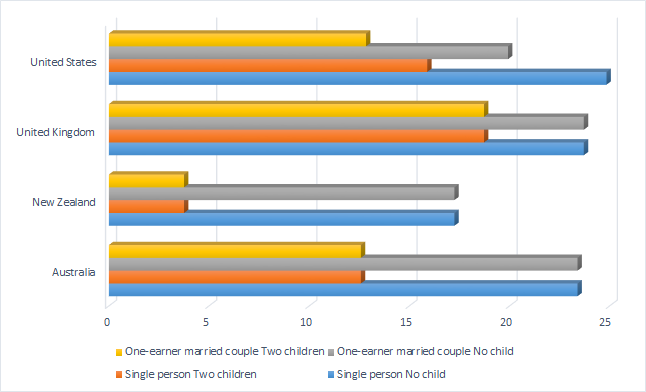
Source: OECD tax database
 Utopia, you are standing in it!
Recent Comments