14 Jul 2015
by Jim Rose
in international economics, labour supply, minimum wage, politics - Australia, politics - New Zealand, politics - USA, poverty and inequality, welfare reform
Tags: Australia, British economy, Canada, low pay, New Zealand, social insurance, welfare state, working poor
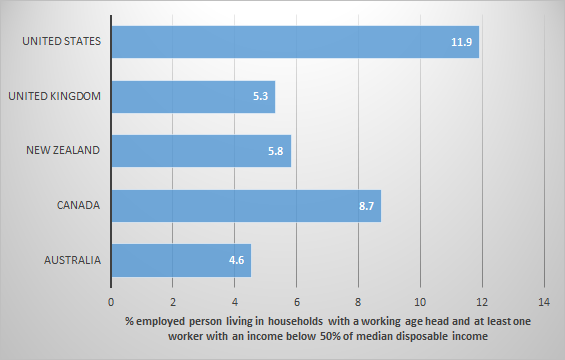
Figure 1: working poor – proportion of employed persons with income below the poverty line (50% of median disposable income) living in households with a working age head and at least one worker in USA, UK, Canada, Australia and New Zealand, 2013

Source: In It Together – Why Less Inequality Benefits All – © OECD 2015, OECD Income Distribution Database (IDD), www.oecd.org/social/income-distribution-database.htm, Table 1.A1.1. Key indicators on the distribution of household disposable income and poverty, 2007, 2011 and 2013 or most recent year.
11 Jul 2015
by Jim Rose
in economics of love and marriage, labour economics, labour supply, law and economics, politics - Australia, politics - USA, poverty and inequality, welfare reform
Tags: Australia, British economy, Canada, child poverty, family poverty, marriage and divorce, single mothers, single parents
Figure 1: poverty rates by age of youngest child, 2004

Source: LIS Cross-National Data Center in Luxembourg.
09 Jul 2015
by Jim Rose
in applied welfare economics, fiscal policy, income redistribution, labour economics, politics - Australia, politics - USA, poverty and inequality, Public Choice, welfare reform
Tags: distributive justice, social insurance, social justice, top 1%, welfare state
03 Jul 2015
by Jim Rose
in applied price theory, applied welfare economics, currency unions, economic growth, economics of bureaucracy, economics of regulation, Euro crisis, health and safety, income redistribution, industrial organisation, labour economics, law and economics, minimum wage, occupational regulation, property rights, Public Choice, rentseeking, survivor principle, unions, welfare reform
Tags: cost of doing business, Eurosclerosis, Greece, Italy, PIGS, Portugal, Spain
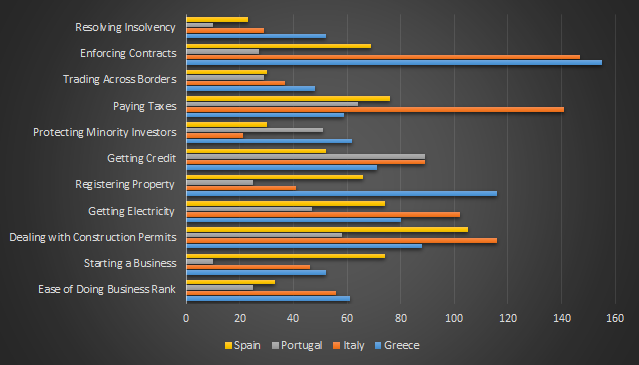
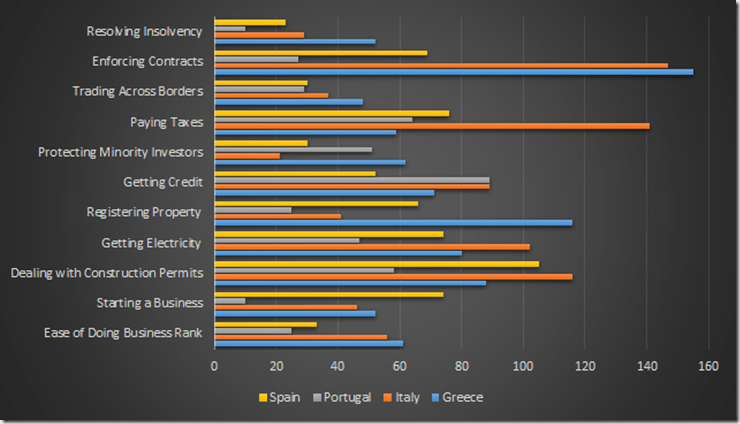
Figure 1: Doing Business rankings, PIGS, 2014
Source: World Bank Doing Business 2015.
All in all, Italy and Greece are a dog of a place to enforce a contract. The long-suffering taxpayer is better off paying taxes in Greece than in Italy! Not surprisingly, trading across borders is the greatest strength in doing business in the PIGS. The European Union does have some benefits.
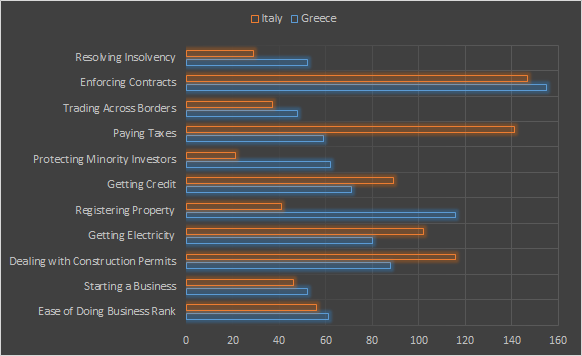
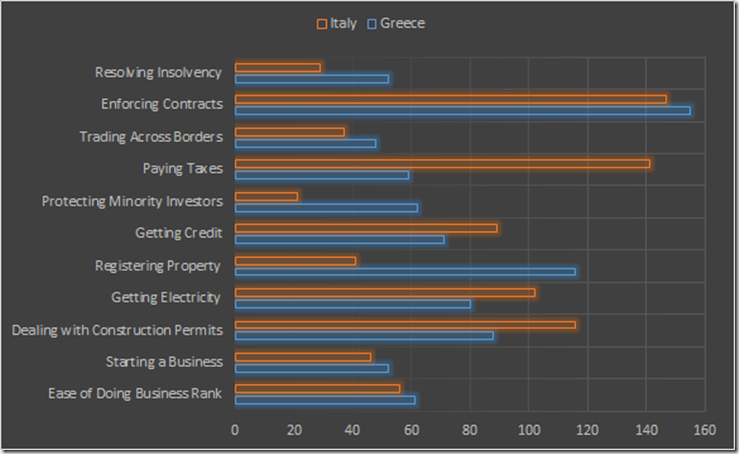
Figure 2: Doing Business rankings, Greece and Italy, 2014
Source: World Bank Doing Business 2015.
All in all, Italy and Greece are equally bad places to do business and Italy is much worse when it comes to taxes. About the only saving graces of Italy is the registration of property and the protection of minority interests in companies.
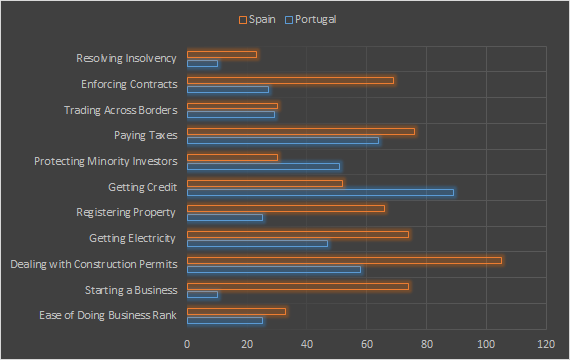
Figure 3: Doing Business rankings, Spain and Portugal, 2014
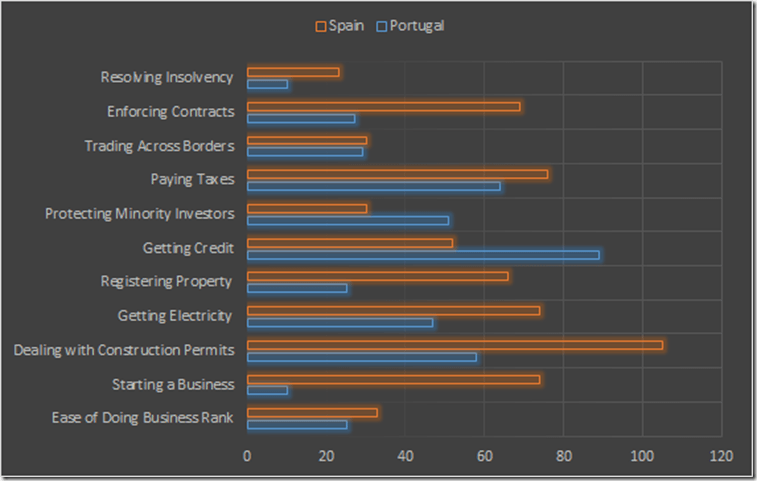
Source: World Bank Doing Business 2015.
Spain and in particular Portugal are much better places to do business than Italy and Greece.
01 Jul 2015
by Jim Rose
in gender, labour economics, labour supply, poverty and inequality, welfare reform
Tags: 1996, child poverty, economics of fertility, single mothers, single parents, taxation and the labour supply, welfare reforms
28 Jun 2015
by Jim Rose
in labour economics, politics - USA, poverty and inequality, welfare reform
Tags: British economy, Canada, top 1%
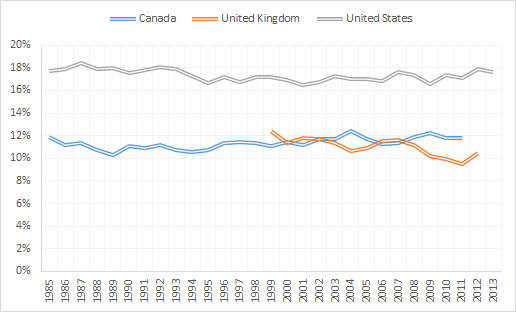
Despite 30 years of the ravages of neoliberalism, Reagan, Thatcher, and Blair, the whole lot, poverty has not gone up or down much at all.
Figure 1: relative poverty rate (% of persons living with less than 50% of equivalised disposable income), USA, UK and Canada

Source: In It Together – Why Less Inequality Benefits All – © OECD 2015
22 Jun 2015
by Jim Rose
in labour economics, politics - Australia, politics - New Zealand, politics - USA, population economics, poverty and inequality, welfare reform
Tags: Australia, British economy, Canada, child poverty, economics of the family, family poverty, Ireland, single mothers, single parents
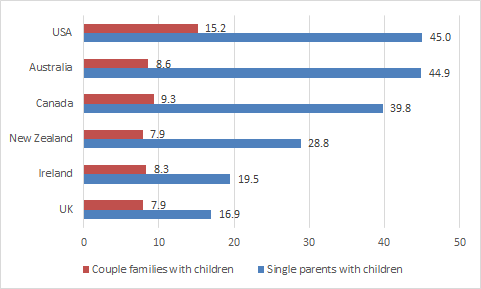
Figure 1: Child poverty rates by family type, Anglo-Saxon countries, 2010

Source: OECD Family Database; Poverty thresholds are set at 50% of the median income of the entire population.
21 Jun 2015
by Jim Rose
in economics of love and marriage, labour economics, labour supply, law and economics, politics - Australia, politics - New Zealand, politics - USA, population economics, poverty and inequality, welfare reform
Tags: Australia, British economy, Canada, child poverty, economics of families, family poverty, Ireland, labour force participation, single parents
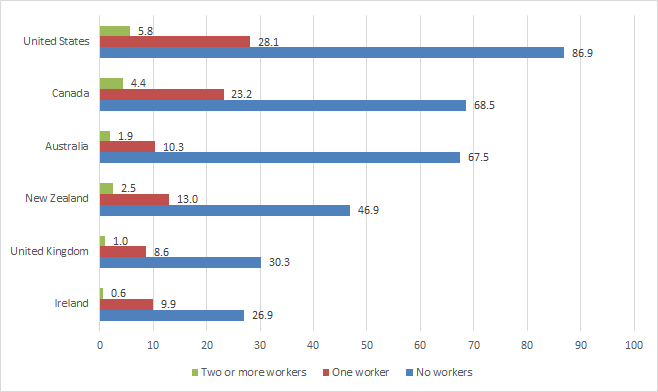
Figure 1: child poverty rates in couple families by employment status, Anglo-Saxon countries, 2010

Source: OECD Family Database; Poverty thresholds are set at 50% of the median income of the entire population.
20 Jun 2015
by Jim Rose
in labour economics, politics - Australia, politics - New Zealand, politics - USA, poverty and inequality, welfare reform
Tags: Australia, British economy, Canada, child poverty, economics of the family, family poverty, female labour force participation rates, Ireland, maternal labour supply, single mothers, single parents
Figure 1: Child poverty rate by employment status of single parent, Anglo-Saxon countries, 2010

Source: OECD Family Database; Poverty thresholds are set at 50% of the median income of the entire population.
Previous Older Entries Next Newer Entries
Recent Comments