Working population poverty is unchanged despite declines in elderly and child poverty #PovertyIs http://t.co/i7O7dTEUg2—
Political Line (@PoliticalLine) June 19, 2015
Child poverty certainly didn’t go up after the 1996 federal welfare reforms
01 Jul 2015 1 Comment
in gender, labour economics, labour supply, poverty and inequality, welfare reform Tags: 1996, child poverty, economics of fertility, single mothers, single parents, taxation and the labour supply, welfare reforms
Poverty rates in Canada, UK and USA since 1985
28 Jun 2015 Leave a comment
in labour economics, politics - USA, poverty and inequality, welfare reform Tags: British economy, Canada, top 1%
Despite 30 years of the ravages of neoliberalism, Reagan, Thatcher, and Blair, the whole lot, poverty has not gone up or down much at all.
Figure 1: relative poverty rate (% of persons living with less than 50% of equivalised disposable income), USA, UK and Canada
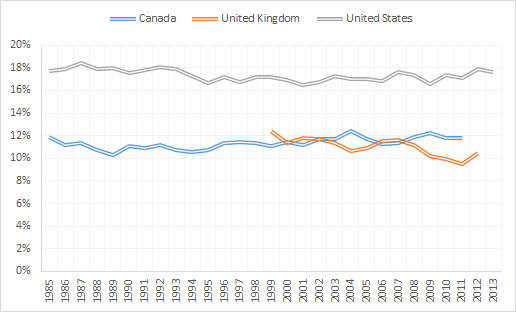
Source: In It Together – Why Less Inequality Benefits All – © OECD 2015
Food is now much smaller share of the average family’s budget than in the 60s
28 Jun 2015 Leave a comment
in applied welfare economics, labour economics, population economics, welfare reform Tags: child poverty, family poverty, poverty line, poverty measurement, statistics
% of children living with 2 parents
23 Jun 2015 Leave a comment
% of children living with 2 parents
Israel 92%
Egypt 89
Turkey 88
Brazil 72
US 69
S Africa 36worldfamilymap.org/2014/e-ppendix… http://t.co/GveypeU6tK—
Conrad Hackett (@conradhackett) June 22, 2014
Child poverty rates in single parent and couple families, Anglo-Saxon countries
22 Jun 2015 Leave a comment
in labour economics, politics - Australia, politics - New Zealand, politics - USA, population economics, poverty and inequality, welfare reform Tags: Australia, British economy, Canada, child poverty, economics of the family, family poverty, Ireland, single mothers, single parents
Figure 1: Child poverty rates by family type, Anglo-Saxon countries, 2010
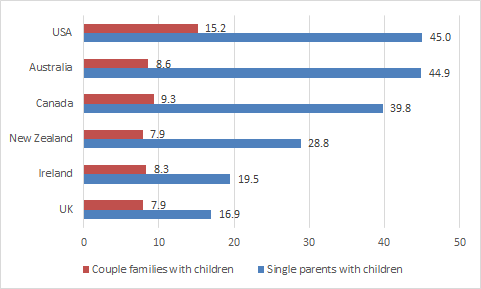
Source: OECD Family Database; Poverty thresholds are set at 50% of the median income of the entire population.
The impact of parental employment on child poverty in couple families, Anglo-Saxon countries
21 Jun 2015 Leave a comment
in economics of love and marriage, labour economics, labour supply, law and economics, politics - Australia, politics - New Zealand, politics - USA, population economics, poverty and inequality, welfare reform Tags: Australia, British economy, Canada, child poverty, economics of families, family poverty, Ireland, labour force participation, single parents
Figure 1: child poverty rates in couple families by employment status, Anglo-Saxon countries, 2010
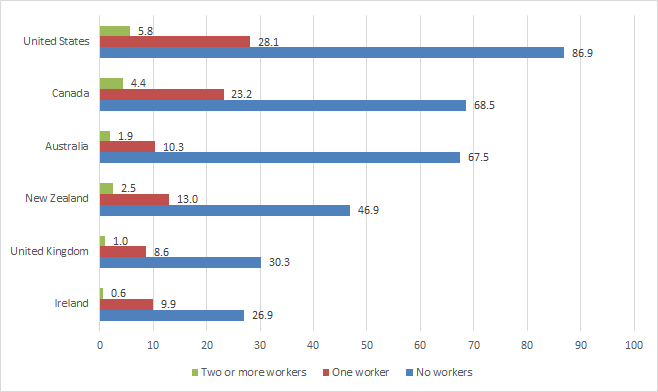
Source: OECD Family Database; Poverty thresholds are set at 50% of the median income of the entire population.
The impact of single parent employment on child poverty rates, Anglo-Saxon countries
20 Jun 2015 Leave a comment
in labour economics, politics - Australia, politics - New Zealand, politics - USA, poverty and inequality, welfare reform Tags: Australia, British economy, Canada, child poverty, economics of the family, family poverty, female labour force participation rates, Ireland, maternal labour supply, single mothers, single parents
Figure 1: Child poverty rate by employment status of single parent, Anglo-Saxon countries, 2010
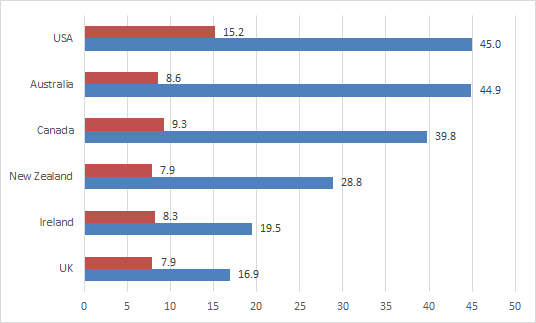
Source: OECD Family Database; Poverty thresholds are set at 50% of the median income of the entire population.
Education and single motherhood
18 Jun 2015 Leave a comment
in economics of education, gender, labour economics, labour supply, occupational choice, politics - Australia, politics - New Zealand, politics - USA, welfare reform Tags: single mothers
There's a clear increase in single-parent households for parents who haven’t gone to college: on.wsj.com/1B1Xeuq http://t.co/eW2fH8bX5O—
Real Time Economics (@WSJecon) May 17, 2015
Trends in what drives single motherhood
11 Jun 2015 Leave a comment
Divorce used to be biggest engine of single parenthood in America. No more. It's nonmarital childbearing cc@davidfrum http://t.co/J5yZtUukNW—
W Bradford Wilcox (@WilcoxNMP) June 10, 2015
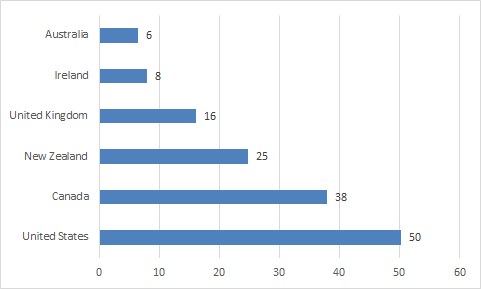
In which Anglo-Saxon country is full-time work not enough to escape family poverty on the minimum wage?
07 Jun 2015 1 Comment
in labour economics, minimum wage, politics - Australia, politics - New Zealand, politics - USA, population economics, poverty and inequality, welfare reform Tags: earned income tax credit, poverty traps, single parents, taxation and the labour supply, welfare state
Figure 1: Weekly working hours needed at minimum-wage to move above a 50% relative poverty line after taxes, mandatory social or private contributions payable by workers, and family benefits for lone parent with two children, Anglo-Saxon countries, 2013
Which Anglo-Saxon country has the largest after-tax pay increase after a minimum wage increase?
06 Jun 2015 Leave a comment
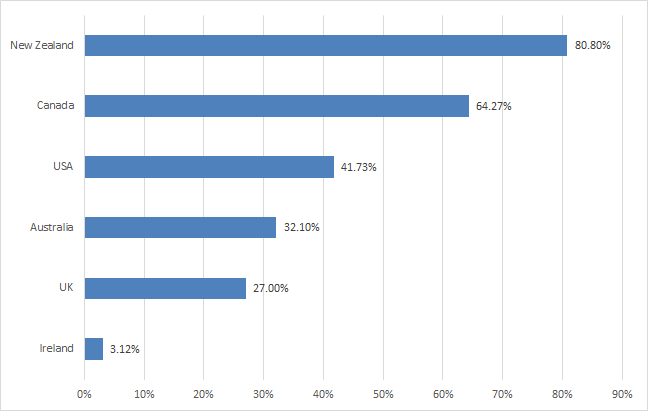
in labour economics, minimum wage, welfare reform Tags: poverty traps, single parents, taxation and the labour supply, welfare reform, welfare state
Figure 1: Net gain after income taxes, Social Security contributions and benefit reductions after a 5% minimum wage increase for a lone parent family
New Zealand does rather well on many measures of poverty and inequality
05 Jun 2015 Leave a comment
in labour economics, minimum wage, poverty and inequality, welfare reform Tags: child poverty, family poverty, living wage, welfare state
Tough times? On #MayDay, compare % of low-paid #workers in yr country bit.ly/1EFrrV7 #LabourDay http://t.co/jNBrmjcom9—
(@OECD) May 01, 2015
Working for minimum wage? See how your country compares, then read oe.cd/mw2015 ( PDF) #wages http://t.co/DJsLYawtfw—
(@OECD) May 06, 2015
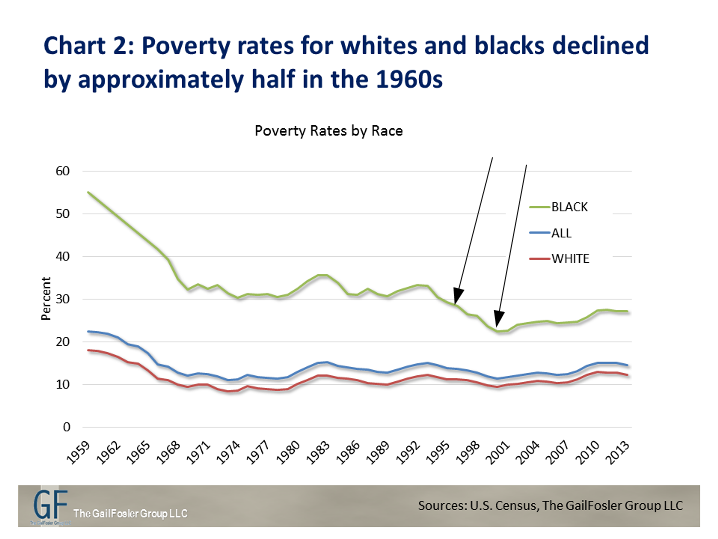
Who gained the most from US 1996 Federal welfare reforms?
01 Jun 2015 Leave a comment
in discrimination, gender, labour economics, labour supply, politics - USA, poverty and inequality, welfare reform Tags: 1996 US welfare reforms, racial discrimination, social insurance, welfare state


Recent Comments