CHART: Interesting trend in share of married US households, from 80% in 1948 to < 50% by 2010 and <49% in 2011-2014 http://t.co/qbI5VBRvKB—
Mark J. Perry (@Mark_J_Perry) July 02, 2015
Low pay across the OECD
18 Jul 2015 Leave a comment
in minimum wage, politics - Australia, politics - New Zealand, politics - USA, poverty and inequality, unions, welfare reform Tags: living wage, low pay, minimum wage
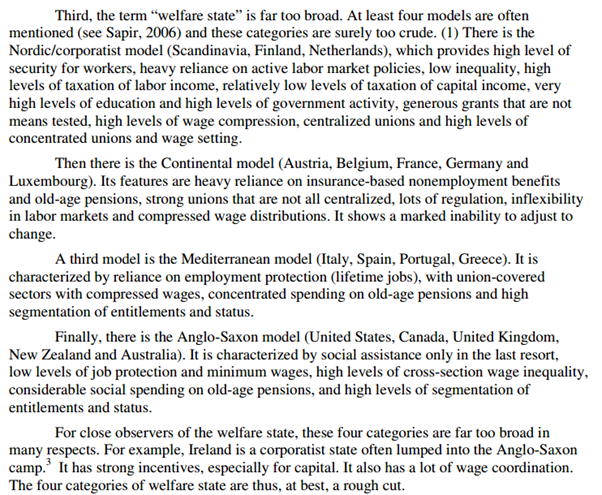
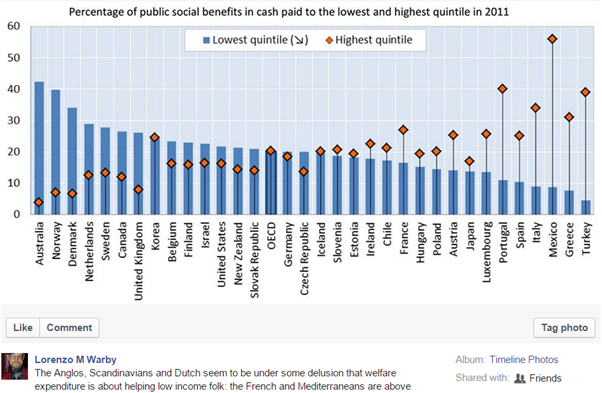
James Hackman and the four types of welfare state
16 Jul 2015 Leave a comment
in constitutional political economy, income redistribution, Public Choice, rentseeking, welfare reform Tags: Director's Law, James Hackman, social insurance, welfare state
Poverty rates among immigrants and natives across the OECD
16 Jul 2015 Leave a comment
in income redistribution, labour economics, politics - Australia, politics - New Zealand, politics - USA, poverty and inequality, welfare reform Tags: Australia, child poverty, economics of immigration, family poverty
If government “programmes have been doing very little to help children out of poverty”, what halved child poverty in the last 20 years? Economic growth?
16 Jul 2015 Leave a comment
in economic growth, labour economics, labour supply, minimum wage, politics - New Zealand, poverty and inequality, unemployment, welfare reform Tags: child poverty, family poverty, family tax credits, in-work tax credits, social insurance, welfare reform, welfare state

RNZ: Govt advised in 2013 "social mobility" approach won't materially address child poverty. rnz.to/1RwVWoj http://t.co/nfd2gY0qcH—
Alastair Thompson (@althecat) July 14, 2015
Figure 1: child poverty (%) in New Zealand (before and after housing costs), 1982 – 2013
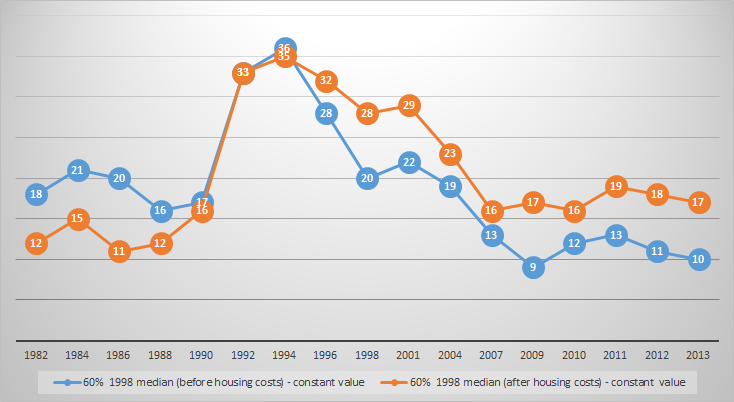
Source: Bryan Perry, Household incomes in New Zealand: Trends in indicators of inequality and hardship 1982 to 2013. Ministry of Social Development (July 2014), Tables F.6 and F.7.
There were large cross-country differences in long-term unemployment duration both before and after the GFC
15 Jul 2015 Leave a comment
in Euro crisis, global financial crisis (GFC), great recession, job search and matching, labour economics, labour supply, macroeconomics, unemployment, welfare reform Tags: equilibrium unemployment rate, Eurosclerosis, natural unemployment rate, unemployment duration
77% more long-term unemployed people than before the crisis – We need them back in work! bit.ly/1JTTzYm #Jobs http://t.co/EFRGclFVms—
OECD Social (@OECD_Social) July 10, 2015
Hysteresis in practice, Delong-Summers Variety @delong @LHSummers http://t.co/urqxQBi6NE—
Roger E. A. Farmer (@farmerrf) July 23, 2015
How many working poor in USA, UK, Canada, Australia and New Zealand?
14 Jul 2015 Leave a comment
in international economics, labour supply, minimum wage, politics - Australia, politics - New Zealand, politics - USA, poverty and inequality, welfare reform Tags: Australia, British economy, Canada, low pay, New Zealand, social insurance, welfare state, working poor
Figure 1: working poor – proportion of employed persons with income below the poverty line (50% of median disposable income) living in households with a working age head and at least one worker in USA, UK, Canada, Australia and New Zealand, 2013
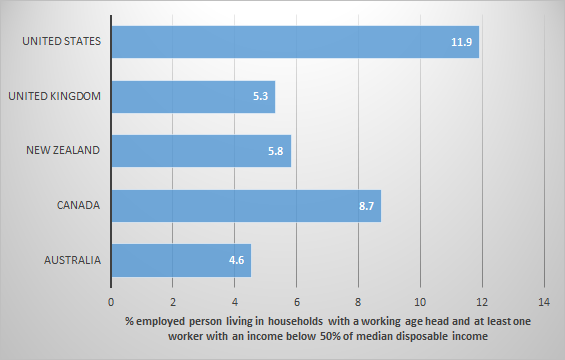
Source: In It Together – Why Less Inequality Benefits All – © OECD 2015, OECD Income Distribution Database (IDD), www.oecd.org/social/income-distribution-database.htm, Table 1.A1.1. Key indicators on the distribution of household disposable income and poverty, 2007, 2011 and 2013 or most recent year.
Poverty rates by age of youngest child – USA, UK, Canada and Australia
11 Jul 2015 Leave a comment
in economics of love and marriage, labour economics, labour supply, law and economics, politics - Australia, politics - USA, poverty and inequality, welfare reform Tags: Australia, British economy, Canada, child poverty, family poverty, marriage and divorce, single mothers, single parents
Figure 1: poverty rates by age of youngest child, 2004

Poverty rates by number of children – USA, UK, Canada and Australia
08 Jul 2015 Leave a comment
in labour economics, politics - Australia, politics - USA, population economics, poverty and inequality, welfare reform Tags: child poverty, family poverty, single mothers, single parents
Figure 1: poverty rates of adults aged 20 to 54 by presence of children, 2004

Why gender analysis is essential to empirical labour economics
07 Jul 2015 Leave a comment
U.S. wage growth doesn't look as weak when you account for benefit costs covered by employers on.wsj.com/1JJ2EmV http://t.co/s0tJutTjBy—
Nick Timiraos (@NickTimiraos) July 06, 2015
Doing business in the PIGS (Portugal, Italy, Greece and Spain) – World Bank rankings
03 Jul 2015 Leave a comment
in applied price theory, applied welfare economics, currency unions, economic growth, economics of bureaucracy, economics of regulation, Euro crisis, health and safety, income redistribution, industrial organisation, labour economics, law and economics, minimum wage, occupational regulation, property rights, Public Choice, rentseeking, survivor principle, unions, welfare reform Tags: cost of doing business, Eurosclerosis, Greece, Italy, PIGS, Portugal, Spain
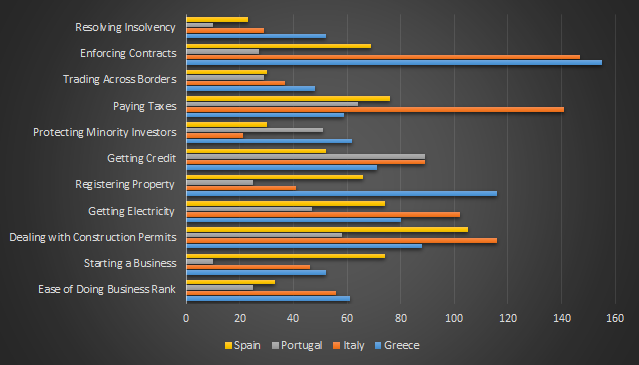
Figure 1: Doing Business rankings, PIGS, 2014
Source: World Bank Doing Business 2015.
All in all, Italy and Greece are a dog of a place to enforce a contract. The long-suffering taxpayer is better off paying taxes in Greece than in Italy! Not surprisingly, trading across borders is the greatest strength in doing business in the PIGS. The European Union does have some benefits.
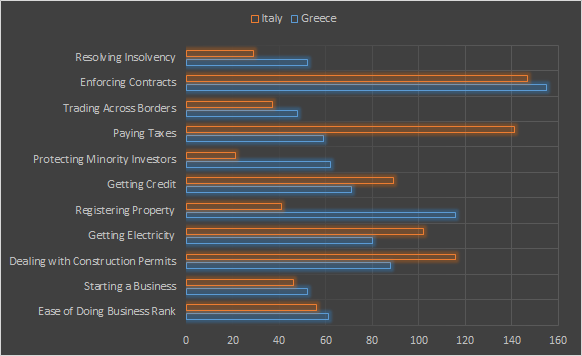
Figure 2: Doing Business rankings, Greece and Italy, 2014
Source: World Bank Doing Business 2015.
All in all, Italy and Greece are equally bad places to do business and Italy is much worse when it comes to taxes. About the only saving graces of Italy is the registration of property and the protection of minority interests in companies.
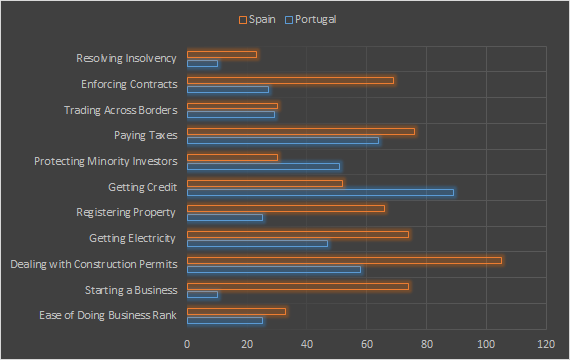
Figure 3: Doing Business rankings, Spain and Portugal, 2014
Source: World Bank Doing Business 2015.
Spain and in particular Portugal are much better places to do business than Italy and Greece.


Recent Comments