How religious are so-called “Islamic terrorists”?
15 Jul 2016 Leave a comment
in defence economics, economics, economics of crime, economics of religion, law and economics Tags: economics of oppositional identities, war against terror
Crime and punishment on Star Trek
14 Jul 2016 Leave a comment
in economics of crime, television
One of the things I have noticed after watching most of the original Star Trek and more recently a few seasons of Star Trek Next Generation is the original was pretty tough on law and order.

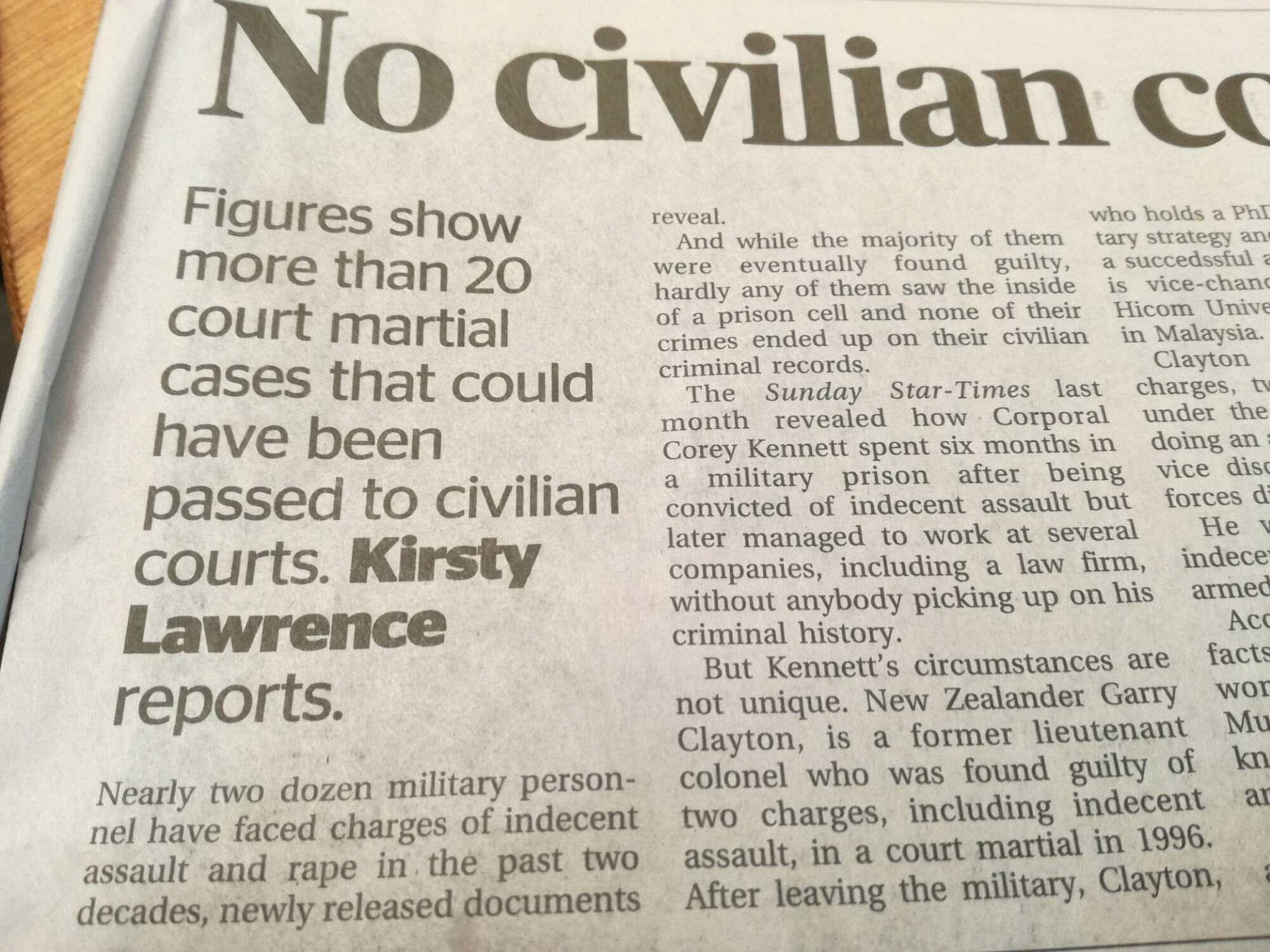
The original Star Trek frequently had discussions with penal colonies. Captain Kirk was always getting court-martial for something or Spock was. Miscreants were marched off to penal colonies
In Star Trek Generation, crime repeatedly goes unpunished and phasers always set to stun.
Rumpole on the Golden Thread of British Justice
10 Jul 2016 Leave a comment
in economics, economics of crime Tags: trial by jury
#Dallaspoliceshooting brought out best and worst in @ACLUTx @ACLU
09 Jul 2016 Leave a comment
in economics of crime, politics - USA
The American Civil Liberties Union seems to be against making policing safer.

Source: Was using the Dallas robot bomb legal? – The Washington Post.
Police are workers with the same right of any other worker not only to go home to their families safely and uninjured at the end of the day, they have the same right under the common law to defend their lives and the lives of others with reasonable force.
Whether there is a deadly threat to police, they are lawfully entitled to defend their own lives and those of others with deadly force. If the police reasonably believe that someone poses an imminent danger of death to others, and that killing him is necessary to prevent that danger, they can try to kill him.
Armed criminals can always lay down their arms and surrender. I am all for technologies that make policing safer and therefore the rest of us safer.
Despite the media hype, surprisingly few people are shot by police who are unarmed and not resisting. The Washington Post estimated that less than 5% of police killings are in any way suspicious.
Police shootings by threat level since 1 January 2016
08 Jul 2016 Leave a comment
in economics of crime, law and economics, politics - USA Tags: law and order, police shootings
The Washington Post no longer classifies whether the deceased was attacking police or not in its online database. That filter on its 2016 database has been removed. It is possible to filter the data to say whether particular weapons were present.
Source: Fatal force: A Washington Post investigation of people shot and killed by police in 2016 – Washington Post. Downloaded at 10:25 p.m., 7 July 2016 New Zealand standard time.
Looking up individual shooting reports in the database provides information on whether the unarmed suspect was doing in terms of resisting police or not. The seven undetermined cases involve disputed facts over whether the suspect was armed or was resisting the police..
Odd @SundayStarTimes story on surveillance of New Zealand mosques
26 Jun 2016 Leave a comment
in defence economics, economics of crime, economics of religion
The Sunday Star Times today took an unfortunate big brother angle to a one-page feature story who second half was about cooperation between New Zealand Muslims and the police and security services. Like any law-abiding people, they report potential criminal behaviour and mentally disturbed people.

Source: Marked by their religion – is the threat of homegrown terrorism real? | Stuff.co.nz.
The fact that these wannabe jihadists go blabbing about their plans at the local mosque despite knowing that their leadership and members are open about reporting suspicious behaviour to the police shows how stupid these people are.
That does not mean that these wannabe jihadists are not dangerous, but they are still stupid. Being completely useless appears to not disqualify them from joining either Al Qaeda or ISIS.
There are ratbags attracted to many large groups, be they secular or religious. Plenty of parties on the left and the right have at their wings a few wild men and one or two potentially violent people who are often off their medication. There are rat-bags everywhere.
Expressive voting, more gun control or fewer gun free zones
18 Jun 2016 Leave a comment
in applied price theory, applied welfare economics, comparative institutional analysis, economics of crime, economics of regulation, law and economics, politics - USA Tags: expressive voting, game theory, gun control, offsetting the, unintended consequences
https://twitter.com/Thomas_Conerty/status/649800146528563200
If you want fewer mass shootings, reduce the supply of gun free zones where even the craziest gunmen have been able to find despite being tormented by the voices as John Lott explains
Time after time, we see that these killers tell us they pick soft targets. With just two exceptions, from at least 1950, the mass public shootings have occurred in these gun-free zones. From last summer’s mass public killers in Santa Barbara and Canada, to the Aurora movie theatre shooter, these killers made it abundantly clear in their diaries or on Facebook how they avoided targets where people with guns could stop them.
And even when concealed handgun permit holders don’t deter the killers, the permit holders stop them. Just a couple of weeks ago, a mass public shooting at a liquor store in Conyers, Ga., was stopped by a concealed handgun permit holder.
The USA is in an arms race between criminals and law-abiding citizens. Both have lots of guns so the only people who gain from disarmament to those who obey the law to have fewer guns. They are in a high gun equilibrium where it very difficult to get out of this arms race.
Demands for more gun control and bans on specific weapons postpone the hard work of how to reduce mass shootings in a society with easy gun access. It is expressive politics at its worse.
What does U.S. gun ownership really look like? Load up with #PollPosition’s @Johnnydontlike: bit.ly/1y2EMjX http://t.co/fn5EpM75U7—
(@PJTV) March 25, 2015
An Australian politician today in an unrelated context regarding universal health insurance in Australia called Medicare made this point about politics is hard work, not political theatre
It’s so much easier today to be a cynical poseur than a committed democrat, it’s easier to retreat to observer status than convince your friends of the merits of incremental change.
It required hard slog to ensure those institutions could survive the heat of adversarial politics. Then it took election campaign after election campaign, tough political negotiation, administrative effort, and the making and breaking of careers and governments to finally make Medicare stick,” she said.
The creation of Medicare took more than a hollow-principled stand, it took more than just wishful thinking, it took more than slogans, it took more than protests. It took real, tough politics. It took idealists who were prepared to fight to win government.
Expressive politics is about what voters boo and cheer, not whether policies actually work if adopted. Voters want to feel good about what they voted for and find a sense of identity in who they oppose and what they support. After a mass shooting, voters feel they must do something, cheer for something better and cheering for more gun control is an easy way to feel better.
Gun control is not going to happen in the USA because of the poor incentives for law-abiding individuals to retreat from high levels of legal private gun ownership when criminals will keep their guns. Harry Clarke pointed out that:
The political popularity of guns is strengthened by Prisoner’s Dilemma disincentives for individuals to retreat from high levels of gun ownership.
Accepting a gun buyback would be unattractive to citizens who would recognize high levels of overall gun ownership in the community and, hence, their own personal increased vulnerability if those with criminal intent acted rationally and kept their weapons.
If you want fewer mass shootings, fewer gun free zones is the way to go. That might have other unintended consequences but more mass shootings is not likely to be one of them. Ready access to guns in moments of despair increases suicide rates. Suicides in the Israeli Defence Force fell 40% when young soldiers were not allowed to take their guns home at the week-end. Suicides do not increase during the week so the lack of weekend access to guns got them through dangerous moments of despair where ready access to a firearm would have led to a suicide.
The last thing spree killers want is to be quickly shot down like the dogs they are such as at an American church in 2007. The last wannabe jihadist to try it on in Texas died in a hail of gunfire.
The U.S. Department of Justice’s National Crime Victimization Survey showed the risk of serious injury from a criminal attack is 2.5 times greater for women offering no resistance than for women resisting with a gun. 97% of murders are by men. Any arguments about gun control should be about gun control for men.
The sharemarket perception of gun control is every time there are calls for more gun controls, the share prices of gun manufacturers surge of the back of an anticipated spike in sale. Buying two gun shares on the first trading day after 12 recent mass shootings and selling them 90 days later produces a return of 365% over a nine-year period compared to 66 percent for the S&P 500 Index. A buy-and-hold bet on Smith & Wesson stock starting in January 2007returns 137%.
What gun-control headlines mean for gun-industry bottom lines: reut.rs/20LPJGf via @specialreports https://t.co/R3QiG4MuSM—
Reuters Top News (@Reuters) February 05, 2016
The key to the success of Australian and New Zealand gun laws was low levels of gun crime and minimal use of guns for self-defence. There was no arms race as compared to the USA where criminals and civilians are both armed. It is easy to control an arms race that has not started. The New Zealand, Australian and even the British police rarely have to discharge their weapons.
Martin Luther King was a gun owner for obvious reasons. Tom Palmer was the lead litigant in the recent Supreme Court case on gun control in the USA. He saved himself and a fellow gay man from a severe beating in 1987 by gang of 20 men by pulling a gun on them. Pink pistols has been in the thick of anti-gun control litigation in the USA.
Repugnant markets and the demand and supply for counterfeit legal ivory
17 Jun 2016 Leave a comment
in applied price theory, economics of crime, entrepreneurship, law and economics, property rights Tags: black markets, counterfeit goods, economics of prohibition, endangered species, offsetting the, unintended consequences
A huge legal sale of ivory in 2008 backfired. Instead of crashing the price of ivory and undermining poaching, poaching exploded in East Africa. It increased by 65%.
The international trade in ivory was banned in 1989. In 2008, China and Japan were allowed to pay $15m for 107 tonnes of ivory from elephants that died naturally in four African nations.
Source: Study finds global legalization trial escalates elephant poaching | Berkeley News.
Hsiang and Sekar this week found that this legal sale of ivory was followed by “an abrupt, significant, permanent, robust and geographically widespread increase” in ivory poaching. They were right to conclude that the legal sale provided a cover for poached ivory.
The economic intuition was that if we allow the sale of some legal ivory in Japan and China, then there would be fewer people left to purchase it illegally. We found that that intuition was incorrect. The black market for ivory responded to the announcement of a legal sale as an opportunity to smuggle even more ivory.
The legal sale of ivory created new demand for ivory in China, where it no longer had the stigma of an illicit product. The presence of legal ivory provided cover for smugglers trying to peddle illegal ivory sourced from poachers.
As illegal ivory can now masquerade as legal ivory in China, transporting and selling illicit ivory has gotten easier and cheaper, which can boost illegal production even though prices are falling.
Ivory is a repugnant market. Many friends will be revolted by you having ivory products.
The presence of legal ivory made it possible for counterfeit legal ivory to be passed off as legal ivory and therefore your friends will not reject you. This is a real and striking example of a unintended consequence. The solution to poaching is property rights.
The OJ Simpson Ford Bronco Chase Today, 1994
17 Jun 2016 Leave a comment
The OJ Simpson Ford Bronco Chase June 17, 1994. http://t.co/FItxFyOJFD—
Historical Pics (@HistoricalPics) June 22, 2015
How #drugs travel the world
13 Jun 2016 Leave a comment
in economics of crime, industrial organisation, international economics, law and economics Tags: black markets, drug decriminalisation, economics of prohibition, marijuana decriminalisation, smuggling
Where European Imperial powers sent their convicts
13 Jun 2016 Leave a comment
in economic history, economics of crime, labour economics, law and economics, occupational choice Tags: age of empires, economics of prisons
When I grew up, we never locked the house when away
05 Jun 2016 Leave a comment
I grew up in a country town in a large family. We never locked the house when we were away because someone might be coming back and will not have the key.

There is one key to the front door and one to the back door. I never had a key to the house because it would always be unlocked. I think we locked the door when mum and dad went away for holidays.
Times change suddenly in the 1980s with a burglary epidemic associated with the increased availability of drugs. The house was always locked.
VCRs had just came out and so there was something lightweight and easy to spot that was well worth burglarising by addicts and criminal opportunists. The VCR was worth several weeks’ wages back then.
Recent Comments