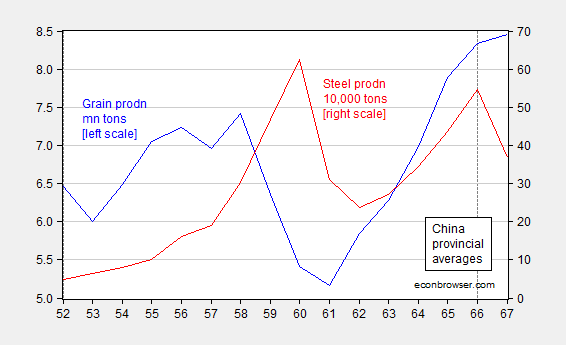
Thinking about The Great Leap Forward | Econbrowser
19 Apr 2016 Leave a comment
in applied price theory, applied welfare economics, comparative institutional analysis, development economics, economic growth, economic history, growth disasters, industrial organisation, law and economics, Marxist economics, Public Choice, rentseeking Tags: China, economics of planning, extreme poverty, famine, Great Leap Forward
#Morganfoundation discovers that #Ukraine is a dodgy place to buy credence goods
19 Apr 2016 Leave a comment
in economics of climate change, economics of crime, economics of information, environmental economics, global warming, industrial organisation, international economic law, international economics, International law, law and economics, politics - New Zealand, survivor principle Tags: adverse selection, asymmetric information, carbon trading, climate alarmism, climate alarmists, credence goods, experience goods, inspection goods
Morgan Foundation yesterday put out a report pointing out that many of the carbon credits purchased from the Ukraine under the carbon trading scheme are fraudulent.
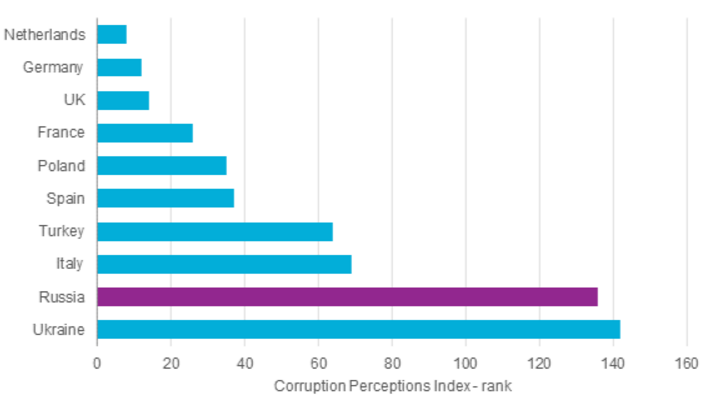
That comes with no surprise to anyone vaguely familiar with business conditions and the level of official corruption in the former Soviet Union. Russia is a more honest place to do business.
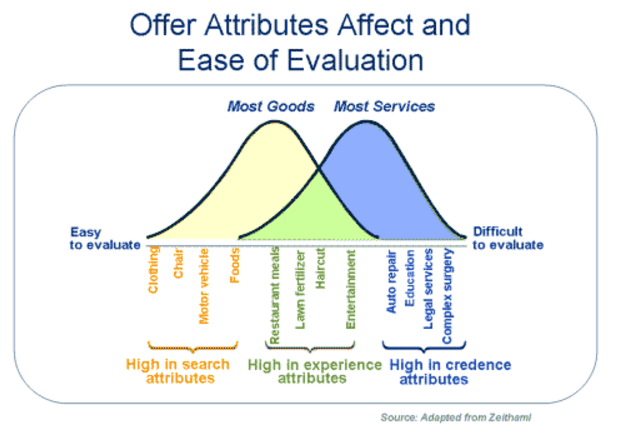
Carbon traders who buy from the Ukraine are not buying an inspection good. An inspection good is a good whose quality you can ascertain before purchase.

They are not buying an experience good. An experience good is a good whose quality is ascertained after purchase in the course of consumption.

Source: Russia, Ukraine dodgy carbon offsets cost the climate – study | Climate Home – climate change news.
What these carbon traders in New Zealand are doing is buying credence goods from the Ukraine. The credence goods are the carbon credits, which the Morgan Foundation and others have found often to be fraudulent.
A credence good is a good whose value is difficult or impossible for the consumer to ascertain. A classic example of a credence good is motor vehicle repairs.
You must trust the seller and their advice as to how much you need to buy of a credence good. Many forms of medical treatment also require you to trust the seller as to how much you need.
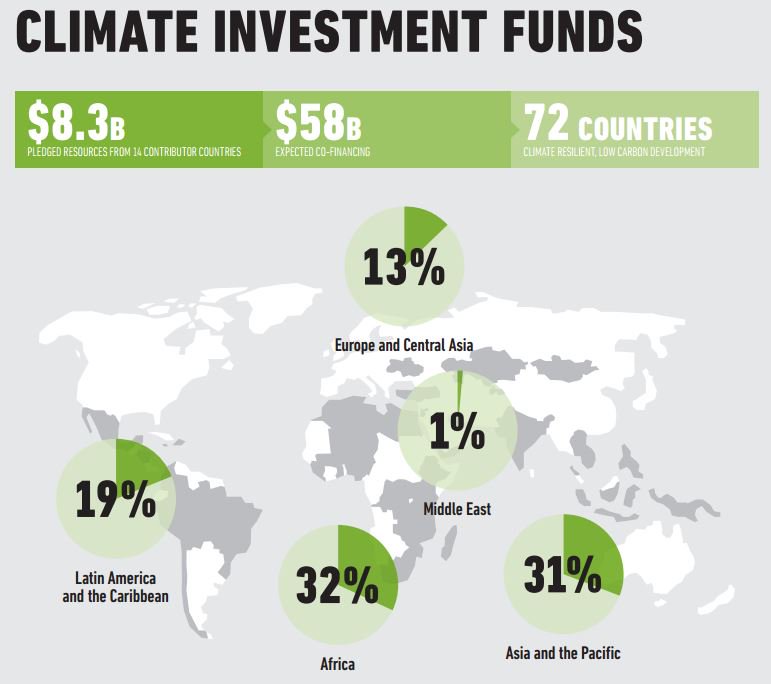
Carbon credits are such a credence good. You know there is corruption in the Ukraine and many other countries that supply them. You may never know at any reasonable cost whether the specific carbon credits you buy were legitimate.
The reason why carbon credits are purchased from such an unreliable source is expressive voting. As is common with expressive politics, what matters is whether the voters cheer or boo the policy. The fact whether it works or not does not matter too much.
The Greens are upset about this corruption in carbon trading. They did not mention the corruption in international carbon trading and climate aid when they welcomed the recent Paris treaty on global warming but that is for another day.
https://twitter.com/kadhimshubber/status/721831502372302849
Co-ordinated international action on global warming is rather pointless if some of the key countries with carbon emission caps are corrupt, which they are.
As Geoff Brennan has argued, CO2 reduction actions will be limited to modest unilateral reductions of a largely token character. There are many expressive voting concerns that politicians must balance to stay in office and the environment is but one of these.

Once climate change policies start to actually become costly to swinging voters, expressive voting support for these policies will fall away, and it has.
Networked Carbon Markets

Source: World Bank Networked Carbon Markets.
One way to stem that fading support is to buy carbon credits on the cheap and there is plenty of disreputable suppliers of cheap carbon credits. Buying dodgy carbon credits as a way of doing something on global warming without it costing more than expressive voters will pay.
One of the predictions of the adverse selection literature is that if consumers cannot differentiate good and bad goods from each other, such as with used cars, the market will contract sharply or even collapse because buyers cannot trust what is on offer. This risk of adverse selection undermining a market applies with clarity to carbon trading.

Source: How Can Your Vote Shape a Low Carbon Future? It Starts with Carbon Pricing.
The cost of starting a business in Europe and North America
18 Apr 2016 Leave a comment
in economics of regulation, industrial organisation, law and economics, politics - USA, property rights Tags: barriers to entry, Belgium, British economy, Canada, Denmark, doing business, France, Germany, Greece, Italy, Portugal, Spain
These measures including the full cost of starting a business. Not only are official fees included, the opportunity cost of the waiting times for various permits are issued are added as well.
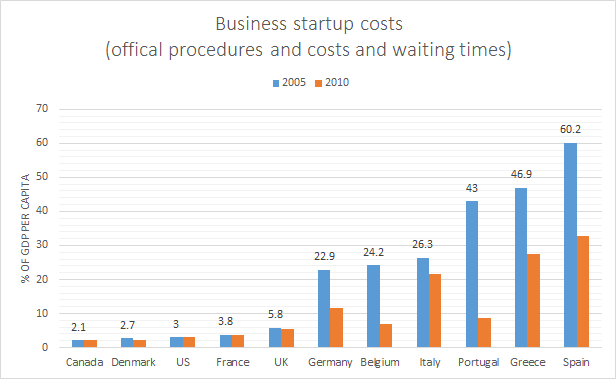
Source: Markus Poschke, Entry regulation: Still costly | VOX, CEPR’s Policy Portal (2011).
Note: The value of time is set to a business day’s output per day of waiting time at 22 business days per month.
Water Policies for People, by David Zetland
18 Apr 2016 Leave a comment
in economics, economics of regulation, environmental economics, industrial organisation, law and economics, privatisation, property rights, survivor principle Tags: Economics of water
The future should sue today’s climate activists for slowing The Great Escape
16 Apr 2016 Leave a comment
in development economics, economic history, economics of media and culture, energy economics, environmental economics, global warming, growth miracles, law and economics Tags: climate activists, climate alarmism, extreme poverty, The Great Enrichment, The Great Escape, vexatious litigation
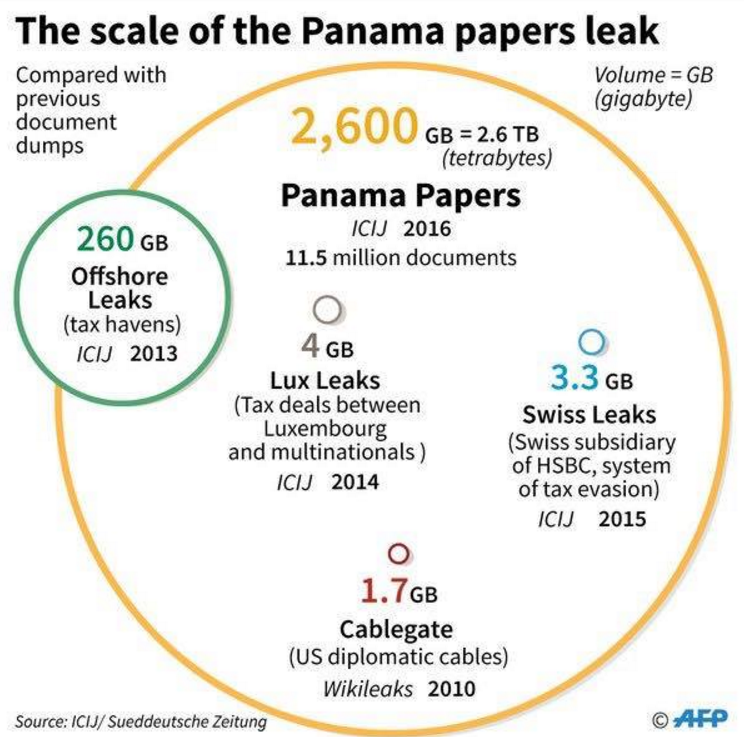
The scale of the #Panamapapers leak
16 Apr 2016 Leave a comment
in economics of crime, law and economics, property rights, public economics Tags: conspiracy theories, tax havens
Why Thieves Steal Soap
15 Apr 2016 Leave a comment
in applied price theory, economics of crime, labour economics, law and economics, occupational choice Tags: crime and punishment, law and order
Stealing soap is almost as good as stealing cash.
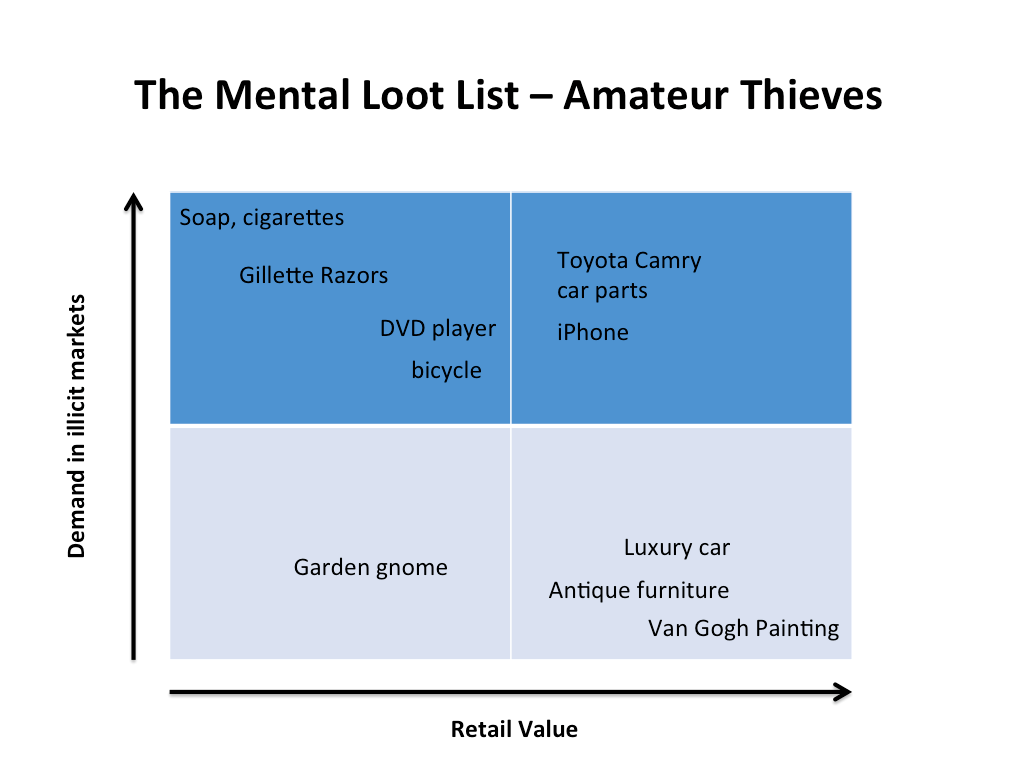
Soap and razor blades are surprisingly valuable to petty thieves because they are easy to offload at the pub or the local market stalls

Source: Why Thieves Steal Soap
Interesting critique of the Big Short (moral hazard)
15 Apr 2016 Leave a comment
in applied price theory, business cycles, economics of media and culture, global financial crisis (GFC), law and economics, macroeconomics Tags: moral hazard, The Big Short
Ohio State University Gives us the Video of the Day: This Is How to Confront Campus Crybabies
15 Apr 2016 Leave a comment
in economics of media and culture, law and economics
Source: Ohio State University Gives us the Video of the Day: This Is How to Confront Campus Crybabies
Forever Contemporary – The Economics of Ronald Coase | Free book from Institute of Economic Affairs
11 Apr 2016 Leave a comment
in history of economic thought, industrial organisation, law and economics, property rights, Ronald Coase, theory of the firm
Summary:
- R. H. Coase (1910–2013), a leading modern figure in the classical liberal tradition, was awarded the Nobel Prize in Economics in 1991 for his analysis of the significance of transaction costs and property rights for the functioning of the economy.
- Before Coase’s work in the 1930s, there was no real understanding of the relation between the theory of the firm and the theory of markets. Coase showed that the size and structure of firms, and the location of the border between internal exchange within the firm and external exchange through markets, are systematically related to the costs of transactions.
- These transaction costs, which Coase termed ‘costs of using the price mechanism’, include search and information costs (those involved in finding business partners, rather than having to produce your own inputs), bargaining costs (which rise sharply with the number of contractual partners) and enforcement costs (which, in the absence of a strong and effective legal framework, depend largely on trust in partners). When these costs alter dramatically, for example, as a result of introducing innovative technology, we can expect substantial alterations in firm and market structures.
- Coase was a pioneer in the modern analysis of environmental issues. He showed that, with clear property rights and low transactions costs, private solutions to many environmental problems can be achieved without government regulation. Such solutions were logically independent of the initial distribution of property rights. This is highly relevant to a number of modern economic problems which the government currently handles badly, such as land-use planning.
- His work has had a profound effect on later generations of economists, several of whom themselves won Nobel Prizes. His work on environmental issues, for example, influenced another Nobel Prizewinner in Elinor Ostrom, whose work focused on how common pool resources could be used effectively with minimal government intervention. This is especially relevant to debates about environmental and ecological degradation in forestry, fishing and game animal resources – perhaps particularly in developing economies.
- Similarly his work on the firm led to the development of the ‘New Industrial Economics’, now associated with Oliver Williamson, which has changed our understanding of issues of economic governance. This is relevant to current concerns over corporate social responsibility.
- Coase’s editorship of the Journal of Law and Economics over many years did much to stimulate economic analysis of legal institutions, an innovation which has had a major influence on public policy, particularly in the US. It has fed, for instance, into recommendations for accident compensation.
- Coase’s insights have challenged economists’ assumptions about the nature of public goods, which he demonstrated could often be provided more effectively by various forms of private initiative. He also illuminated such varied topics as the allocation of spectrum bandwith, the regulation of financial institutions and water resource management.
- Methodologically, Coase was opposed to ‘blackboard economics’ which relied on theory or econometric analysis at the expense of more practical investigation. He favoured careful examination of case studies and the history of industries when analysing economic policy issues.
- His work retains considerable significance in the twenty-first century. Coase’s analysis of China’s economic advance, published shortly before his death, sheds light on its future prospects, while his transaction cost approach can be argued to explain the new phenomenon of the ‘sharing’ economy which is reshaping businesses and employment. Furthermore his work should continue to be at the forefront of debates surrounding regulation, broadcasting and the environment. If policymakers and the economists who advise them ignore Coase, they are in danger of perpetuating policies which may work ‘in theory’ but do not work effectively in practice.
Source: Forever Contemporary – The Economics of Ronald Coase | Institute of Economic Affairs
1992 Camille Paglia trashes Gloria Steinem wing of feminism
10 Apr 2016 Leave a comment
in discrimination, economics of love and marriage, economics of media and culture, gender, labour economics, law and economics, politics - Australia, politics - New Zealand, politics - USA, television Tags: feminism
Is Kiwibank profitable enough to take on the big banks?
09 Apr 2016 Leave a comment
in applied price theory, economic history, entrepreneurship, financial economics, George Stigler, industrial organisation, law and economics, politics - New Zealand, survivor principle Tags: anti-trust economics, antimarket bias, competition law, economics of banking, New Zealand Greens
if Kiwibank is part of the competitive fringe of an oligopoly made up of the 4 Australian banks, it is not very profitable for a competitive fringe of a cartel as the chart below shows. The other New Zealand owned small banks in that competitive fringe are not that profitable at all. Undercutting an oligopoly and its high prices and above-average cost and above marginal cost pricing is not what it used to be for the competitive fringe in New Zealand banking, if there ever was a cartel.

Source: G1 Summary information for locally incorporated banks – Reserve Bank of New Zealand.
Bank customers can choose between four major banks and a competitive fringe. If those major banks are indeed overcharging because of price-fixing by a cartel or an oligopoly, that competitive fringe which includes Kiwibank has a real opportunity to expand profitably and with little risk.
The prospect of expansion by the competitive fringe that includes Kiwibank only increases the incentives on each of the four big banks to cheat on the cartel price. The first bank to cheat on the cartel will profit the most; the other banks who are colluding know this. As George Stigler concluded in his 1964 paper “The Theory of Oligopoly” as Peltzman and Carlton explain:
…once a price is somehow agreed upon, there will be incentives for individual rivals to cheat on the [collusive] agreement. Whether cheating occurs depends on weighing the profits from not cheating against the profits from cheating and then being detected and having competition break out…
any agreement among sellers cannot ignore the incentives to cheat provided by lags in detection. So understanding when a price elevated above the competitive level can be an equilibrium requires an analysis of the dynamic consequences of cheating versus not cheating…
Collusion over retail banking services and prices faces major hurdles that will lead to most attempts at price-fixing having a short life. These barriers to successful collusion include:
- numerous competitors,
- expansion by the smaller banks were not part of the cartel or cheat on the cartel
- the entry and expansion of new banks,
- the lack of a standard product, and
- a rapidly changing business environment.
Implicit understandings among the colluding banks may break down owing to conflicts over the most suitable price, the complexities of co-ordinating pricing across a diverse range of banking products, or the simple presence of a maverick bank.
As time passes, destabilising pressures within a banking cartel or oligopoly will build due to long-run substitution and the threat or actuality of entry by new banks and expansion by banks In the competitive fringe, which includes Kiwibank.
The first firm in any market may charge a high price relative to costs, but the entry of one or two more firms usually results in effective competition. Once there are three to five suppliers in a market, an additional entrant has little impact on prices because pricing is already as competitive as it can be.
When ANZ sought to acquire the National Bank of New Zealand in 2003, the Commerce Commission did not oppose this merger. The Commission did not consider that a substantial lessening of competition would follow this merger. The Commission said:
…the merger is unlikely to increase the likelihood of co-ordinated market power in the supply of transaction accounts because the fringe players are likely to provide some competition, the banks have different strengths and weaknesses and in particular ASB is unlikely to have the incentive to participate in co-ordinated power at the expense of its recent growth and customer satisfaction levels.
This analysis of co-ordinated market power applies to each of the relevant markets. Therefore the Commission concludes that the merger is unlikely to result in a substantial lessening of competition in the supply of transaction accounts.
In the supply of mortgages, savings accounts and credit cards the merger is unlikely to lead to a substantial lessening of competition, as in each of these markets, ASB, Westpac and BNZ are likely to provide sufficient competition to the combined entity.
An important driver of a competition in the mortgage market in 2003 was a high incidence of fixed-rate mortgages and the tendency of these fixed rate mortgagees to reconsider all their options at the end of each fixed rate term.
The Commission Commission noted that there was a large re-mortgaging market in New Zealand. Banks offer to do all the work for customers wishing to switch over bank accounts and direct debit arrangements.
In a very atypical move for a purported cartel, in 2010 the bank owned Payments New Zealand agreed to change over direct debits over automatically when a customer switched banks, which made switching banks even more easier.
At the time of the ANZ and National Bank merger, the Commerce Commission noted that Kiwibank was offering lower rates on its mortgages as a way of gaining a foothold in the market.
The Commerce Commission could not have been more right about the vigour in competition in retail banking with regard to re-mortgaging and switching between fixed and floating mortgages in New Zealand.
As the chart below of fixed and floating mortgage shares a New Zealand bank balance sheets shows, there is a rapid exodus from fixed rate mortgages at the time of the Global Financial Crisis.

Source: S8 Banks: Mortgage lending ($m) – Reserve Bank of New Zealand.
I cannot see how any cartel or oligopoly could sustain price-fixing against such dynamic changes in market shares and product switching.
Cartels are is much more difficult to agree when there are many products about which to fix prices and market shares. At a minimum, this rapid movement of customers between mortgage products will sow suspicions that one or more rival banks is stealing customers thereby cheating on the cartel agreement. Not surprisingly, the history of cartels is a history of double-crossing. Banking is no exception.
The enormous costs of socialism in Eastern European @BernieSanders @jeremycorbyn @johnmcdonnellMP
09 Apr 2016 Leave a comment
in applied price theory, applied welfare economics, development economics, economic history, growth disasters, growth miracles, law and economics, Marxist economics Tags: 2016 presidential election, British politics, collapse of communism, economics of socialism, Leftover Left

 Utopia, you are standing in it!
Recent Comments