The NZ Initiative has a research note out on how fiscal policy needs to work with monetary policy. They comment: This analysis does not dispute that the RBNZ’s high interest rates were the proximate cause of the downturn. However, it argues the Bank had little choice. It was confronted with the insidious threat of inflation […]
Monetary policy needs mates
Monetary policy needs mates
29 Sep 2025 Leave a comment
in budget deficits, business cycles, economic growth, fiscal policy, inflation targeting, macroeconomics, monetary economics, politics - New Zealand Tags: monetary policy
Revisiting Empirical Macroeconomics with Robert Barro (Harvard Economics…
28 Sep 2025 Leave a comment
in budget deficits, business cycles, economic growth, fiscal policy, history of economic thought, macroeconomics, monetary economics
Part I: Yes, Taxes Change Behavior
26 Sep 2025 Leave a comment
in applied price theory, economic growth, entrepreneurship, fiscal policy, human capital, labour economics, labour supply, macroeconomics, Public Choice, public economics Tags: taxation and entrepreneurship, taxation and investment, taxation and labour supply
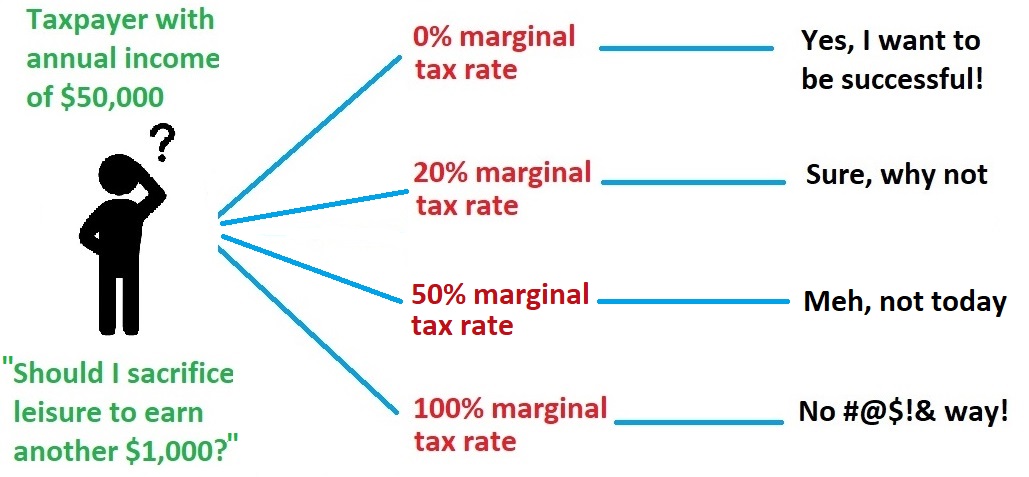
From a big-picture economic perspective, I worry most about the damage of high tax burdens on innovation, entrepreneurship, and investment. Those are things that generate enormous benefits for society, yet also things that are very sensitive to bad tax policy (specifically high marginal tax rates and the tax code’s bias against saving and investment). Sadly, […]
Part I: Yes, Taxes Change Behavior
Michael Clemens on H1-B visas
24 Sep 2025 1 Comment
in applied price theory, econometerics, economic growth, economic history, entrepreneurship, human capital, international economics, labour economics, labour supply, macroeconomics, politics - USA Tags: economics of immigration
From 1990 to 2010, rising numbers of H-1B holders caused 30–50 percent of all productivity growth in the US economy. This means that the jobs and wages of most Americans depend in some measure on these workers. The specialized workers who enter on this visa fuel high-tech, high-growth sectors of the 21st century economy with skills like computer […]
Michael Clemens on H1-B visas
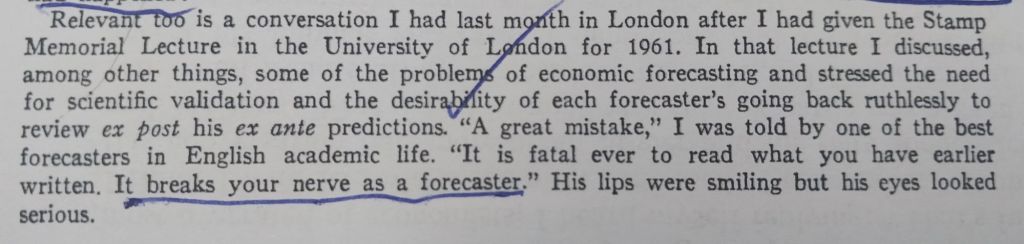
Samuelson on forecasting as a vocation
23 Sep 2025 Leave a comment
in budget deficits, business cycles, economic growth, fiscal policy, human capital, labour economics, macroeconomics, occupational choice Tags: forecasting errors
Intangible Capital and Measured Productivity
23 Sep 2025 Leave a comment
in business cycles, economic growth, economic history, global financial crisis (GFC), great recession, macroeconomics Tags: real business cycle theory
The United States vs. Europe, Part IV
17 Sep 2025 Leave a comment
in applied price theory, economic growth, economic history, economics of regulation, labour economics, labour supply, macroeconomics, Public Choice, rentseeking Tags: European Union

I put a lot of focus on “convergence” and “divergence” because economic theory says rich countries should not grow faster than poor countries. So when there are examples of divergence, especially when looking at decades of data, we can learn very important lessons about economic policy. Those lessons, in every single case, teach us that […]
The United States vs. Europe, Part IV
PRESCOTT on quality adjusted medical price indexes
17 Sep 2025 Leave a comment
in economic growth, economic history, Edward Prescott, health economics, macroeconomics
Predistribution, Not Redistribution, in the Nordic Countries
15 Sep 2025 Leave a comment
in applied price theory, economic growth, economics of education, fiscal policy, income redistribution, labour economics, labour supply, macroeconomics, poverty and inequality, Public Choice, public economics, rentseeking Tags: Denmark, Finland, Norway, Sweden
Maybe it’s just because I live in Minnesota, a state where the differences between immigrants from Sweden, Norway, and Finland are still apparent in the names of towns and the surnames of people. But when I run into people who would prefer that the US distribution of income be more equal, they often point to…
Predistribution, Not Redistribution, in the Nordic Countries
Abundance 2025 – Preview
09 Sep 2025 Leave a comment
in economic growth, macroeconomics, politics - USA

Five questions I’ll be bringing to the conference this week
Abundance 2025 – Preview
Do rising house prices damage economic growth?
01 Sep 2025 Leave a comment
in applied price theory, economic growth, economics of bureaucracy, economics of regulation, macroeconomics, politics - New Zealand, Public Choice, regulation, rentseeking, urban economics Tags: housing affordability
Don Brash writes – In recent years, when addressing Rotary and other audiences, I often talk about the five big challenges facing New Zealand – persistently slow growth in productivity, and therefore in income levels; ridiculously unaffordable house prices; the increasing division of our society into those with a Maori ancestor and those without; the […]
Do rising house prices damage economic growth?
The Most Important Election(s) of 2025
28 Aug 2025 Leave a comment
in applied price theory, Austrian economics, development economics, economic growth, economics of regulation, fiscal policy, growth disasters, labour economics, labour supply, law and economics, liberalism, libertarianism, macroeconomics, monetary economics, Public Choice, unemployment Tags: Argentina

Javier Milei has generated amazingly good results in just 20 months. But more reform is needed to undo the damage of 80 years of Peronism, which is why I explain that Argentina’s mid-term elections will be very important. Milei wants to turn Argentina into the world’s freest economy. That won’t be possible so long as […]
The Most Important Election(s) of 2025
If the election was scheduled for next week, Hipkins could win – but (luckily for Luxon) it’s next year
26 Aug 2025 Leave a comment
in economic growth, inflation targeting, macroeconomics, monetary economics, politics - New Zealand, Public Choice Tags: 2026 general election
Chris Trotter writes – “There is a tide in the affairs of men, which taken at the flood, leads on to fortune”. Those words, taken from Shakespeare’s Julius Caesar, are often quoted in the context of politicians facing the hard choice between doing it now, or not doing it at all.
If the election was scheduled for next week, Hipkins could win – but (luckily for Luxon) it’s next year
Reading Grant Robertson
25 Aug 2025 Leave a comment
in budget deficits, business cycles, economic growth, economic history, economics of bureaucracy, fiscal policy, inflation targeting, macroeconomics, monetary economics, politics - New Zealand, Public Choice Tags: economics of pandemics, monetary policy

I got home from Papua New Guinea at 1:30 on Saturday morning and by 3:30 yesterday afternoon I’d finished Grant Robertson’s new book, Anything Could Happen, and in between I’d been to two film festival movies, a 60th birthday party, and church. It is that sort of book, a pretty easy read. In some respects, […]
Reading Grant Robertson
Why is Europe Falling Behind?
23 Aug 2025 Leave a comment
in applied price theory, economic growth, labour economics, labour supply, macroeconomics Tags: European Union
WSJ: Europe is Losing Europeans live longer, have more leisure time and less income inequality, and often live in stunning cities and towns built over the centuries. But increasingly, Americans enjoy a higher standard of living. They have over 50% more living space on average per person. More than four in five Americans have air…
Why is Europe Falling Behind?
 Utopia, you are standing in it!
Recent Comments