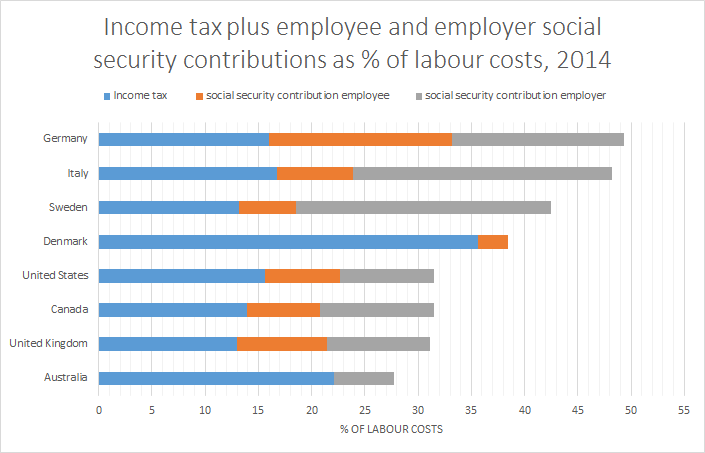
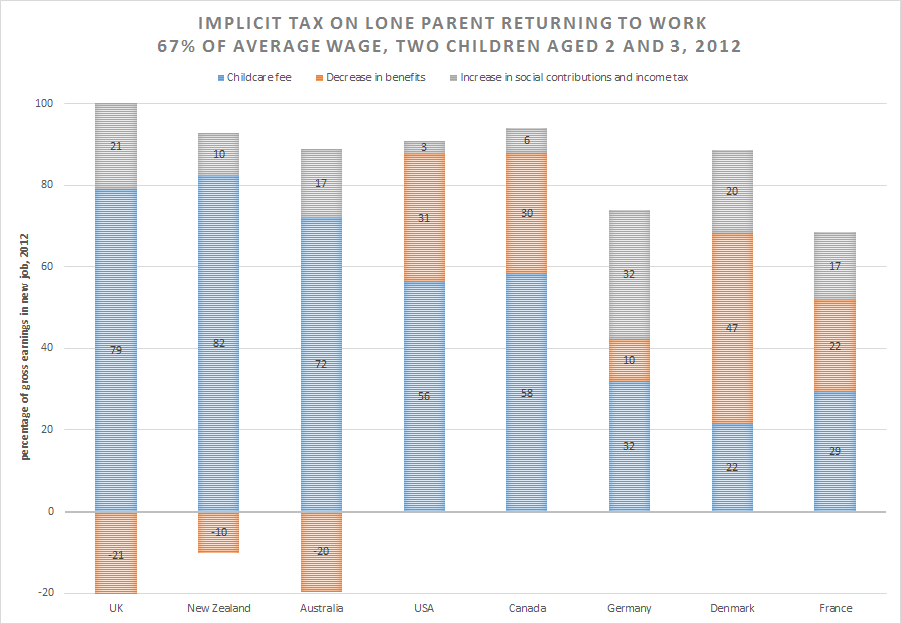
Source: Taxing Wages 2015 – OECD 2015.
.
Celebrating humanity's flourishing through the spread of capitalism and the rule of law
03 Mar 2016 Leave a comment
in fiscal policy, public economics Tags: Australia, British economy, Canada, Denmark, Germany, Italy, social insurance, Social Security, Sweden, taxation and labour supply
03 Mar 2016 Leave a comment
in business cycles, Euro crisis, global financial crisis (GFC), macroeconomics
28 Feb 2016 Leave a comment
in economic history, fiscal policy, macroeconomics, politics - USA, public economics Tags: British economy, Canada, growth of government, Margaret Thatcher, size of government, Thatchernomics, Tony Blair
Both the British and Canadian economies experienced major winding backs in the size of government. Only the UK, under neoliberal pawn and closet Thatcherite Tony Blair, was that undone. He is now despised by many Labour Party members including its current leader for this record.
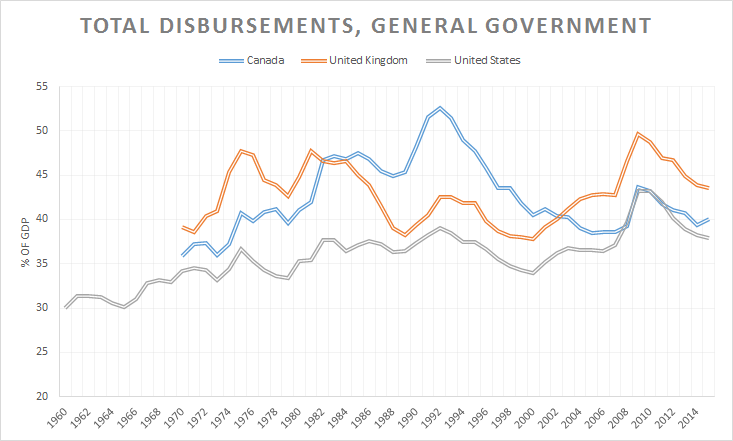
Data extracted on 23 Feb 2016 07:45 UTC (GMT) from OECD.Stat.
28 Feb 2016 Leave a comment
in applied price theory, fiscal policy, labour economics, labour supply, politics - Australia, politics - New Zealand, politics - USA, poverty and inequality, public economics, welfare reform Tags: poverty traps, single mothers, single parents, social insurance, taxation and labour supply, welfare state
24 Feb 2016 Leave a comment
in economic history, macroeconomics, public economics
Notice that the welfare states in Scandinavia were recent creations subsequent to post-war prosperity.
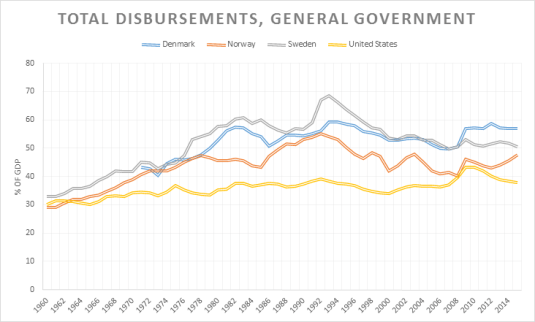
Data extracted on 23 Feb 2016 07:45 UTC (GMT) from OECD.Stat.
24 Feb 2016 Leave a comment
in economic growth, economic history, Euro crisis, fiscal policy, macroeconomics, public economics Tags: Greece, growth of government, Italy, Portugal, size of government, Spain
I do not think any of these countries have governments who can really handle managing half of national income on a regular basis. The Italian, and I assume Greek GDPs at least are topped up quite considerably to take account of their underground economies. The top up for Italy is 20%.
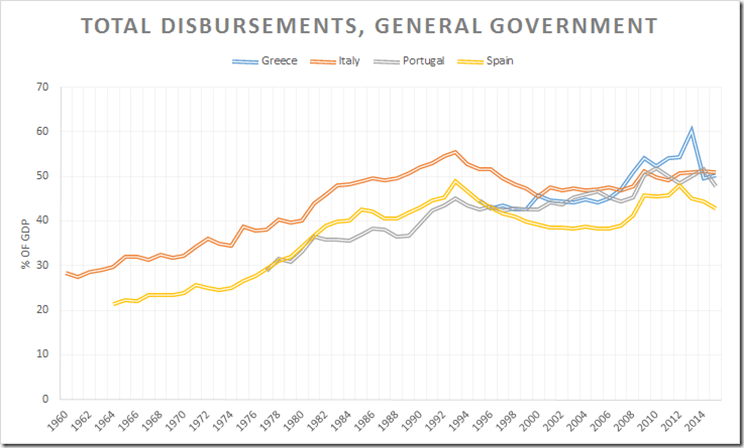
Data extracted on 23 Feb 2016 07:45 UTC (GMT) from OECD.Stat.
24 Feb 2016 Leave a comment
in currency unions, economic growth, Euro crisis, fiscal policy, macroeconomics Tags: Greece, sovereign debt, sovereign defaults
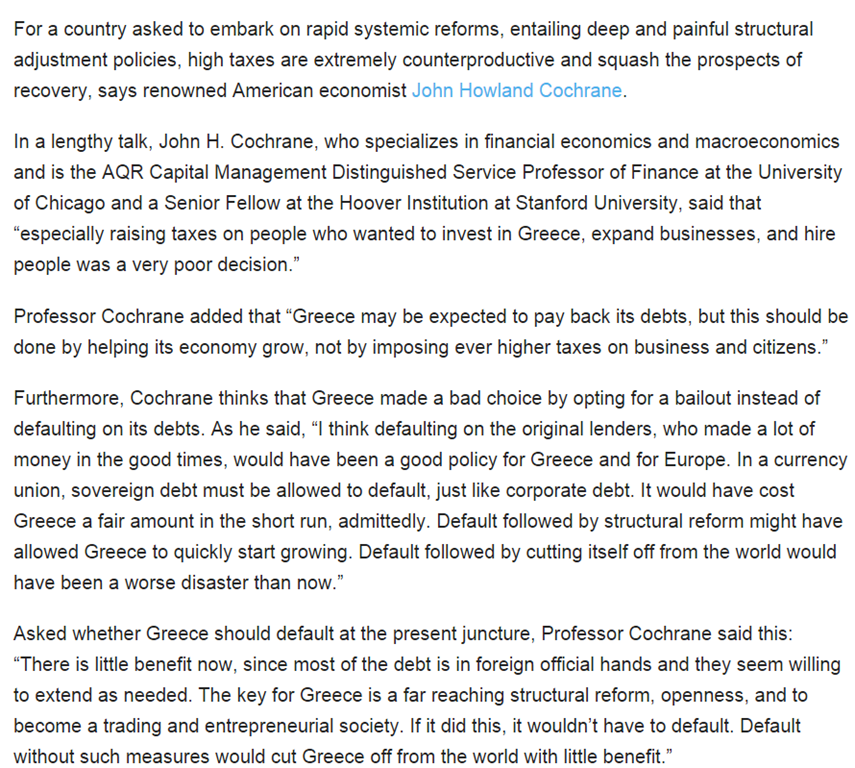
John Cochrane is the latest to join the list of economists who pointed out that Greece should have defaulted several years ago rather than put up taxes. Tax rises just made everything worse and put off the day when Greece had to reform through deregulation and privatisation.
Source: Renowned U.S. Economist Says High Taxes Squash Greece’s Prospects for Recovery | GreekReporter.com.
As early as 2011 , Jeffrey Miron was arguing the best way forward for Greece was to default and leave the Euro:
If Greece defaults, the country gets immediate relief from the crushing interest payments on its debt, leaving it with a relatively modest primary deficit which excludes the big interest payments Greece is faced with now.
In such a scenario, the pressure for austerity would therefore diminish. This would allow Greece to choose policies that encourage growth, rather than ones that shrink the deficit but retard growth by imposing higher taxes.
By abandoning the euro and adopting a properly valued currency, Greece can restore its international competitiveness. This means greater employment demand from both domestic and foreign sources.
The potential negative of default is that Greece will likely lose access, for a while, to international credit markets (although it will be a much safer investment after default than it is now).
But being cut off from foreign lending for a few years is not a disaster; if anything, it might encourage cuts in the wasteful components of government spending.
A bigger risk of default is that ending the crisis might reduce pressure for Greece to address the economy’s fundamental problems: crony capitalism, a Byzantine tax code, excessive regulation, and a bloated government sector.
If Greece fails to reform, it will suffer slow growth and a new crisis soon, regardless of what it does now.
Arellano, Conesa, and Kehoe explained in Chronic Sovereign Debt Crises in the Eurozone, 2010–2012 that the post-GFC recession in many Eurozone countries created an incentive to gamble for redemption. This gamble for redemption is betting that the post-2008 recession will soon end:
The global bond markets will anticipate this prospect of default as a country’s government debt accumulates and will seek higher and higher interest for new bonds, and importantly, to roll over existing Greek Government bonds.
EU policies that result in lower interest rates and lower the cost of a sovereign default provide incentives for a government to gamble for redemption. The interventions taken to date by the EU and the IMF – lowering the cost of borrowing and reducing default penalties, the bailouts and the 50% write-off of the existing Greek government debts – encourage southern Eurozone governments to gamble for redemption.
Through history, sovereign defaults come in clusters. Is Greece the start of one? on.wsj.com/1V3XkxR via @WSJ http://t.co/Oy9aMPoHrt—
Greg Ip (@greg_ip) July 15, 2015
Greece and a few others are gambling for redemption by betting that the recession will end soon, selling more bonds to smooth government spending in the interim, and reducing the enlarged debt if their economies recover. The Greeks initially did a fine job in squeezing huge subsidies and debt write-offs!
If the recession continues for too long, the government will have to stop increasing debt or default on its bonds. Greece has been in default in more than 50% of the time since it became independent in 1822.
Greece’s problem is that it is 119th in the 2014 index of economic freedom, just ahead of India. The World Bank ranks Greece 161st in the world for ease of registering property and 91st for enforcing contracts; it takes an average of 1,300 days to enforce a contract through the Greek courts. This low base says something about how Greek politics works and will work for some time to come.
Cristina Arellano in a recent paper pointed out that if default is inevitable, raising taxes just makes everything worse:
Fiscal defaults occur because of the government’s inability to raise tax revenues. Aggregate defaults occur even if the government could raise tax revenues; debt is simply too high to be sustainable.
In a quantitative exercise calibrated to Greece, we find that our model can predict the recent default, but that increasing taxes would not have prevented it. In fact, increasing taxes would have made the recession deeper because of the distortionary effects of taxation.
24 Feb 2016 Leave a comment
in fiscal policy, labour economics, labour supply Tags: ageing society, demographic crisis, old-age pension, retirement ages
24 Feb 2016 Leave a comment
in economic growth, economic history, macroeconomics, politics - USA Tags: 2016 presidential election, grates, left-wing populists, Paul Krugman, quackery, rational irrationality
23 Feb 2016 Leave a comment
in applied price theory, economic growth, fiscal policy, macroeconomics, politics - USA
https://twitter.com/TheNewDeal/status/696864555658539008
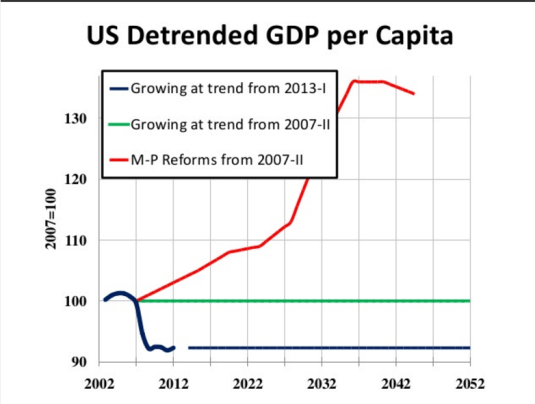
As a contrast against the Bernie Sanders tax-and-spend high-growth plan, the Edward Prescott plan is:
Source: Edward C. Prescott – Importance of Good Governance for Economic Prosperity.
The difference between the Prescott and Sanders plans is Prescott delivers high growth through massive supply-side reforms that include the abolition of taxes on income from capital, mandatory savings for retirement along with much lower marginal tax rates.
The Sanders plan argues that if you tax people a lot more, there is more growth, more investment, more innovation and entrepreneurship and greater labour supply. There is no historical precedent for that as an outcome from higher taxes.
In the case of Prescott, the disagreement is over how large are his growth dividends. In the case of the Sanders band, only one economist agrees that his plan will increase growth. Despite that, he is still voting for Hillary Clinton.
23 Feb 2016 Leave a comment
in applied price theory, fiscal policy, public economics
23 Feb 2016 Leave a comment
in energy economics, environmental economics, fiscal policy, politics - USA, public economics, rentseeking
23 Feb 2016 Leave a comment
in applied price theory, comparative institutional analysis, constitutional political economy, economic history, economics of media and culture, economics of regulation, labour economics, macroeconomics, Marxist economics, politics - USA Tags: 2016 presidential election, antiforeign bias, antimarket bias, British politics, Leftover Left, make-work bias, rational ignorance, rational irrationality, renegade Left, Twitter left

22 Feb 2016 Leave a comment
in fiscal policy, politics - USA
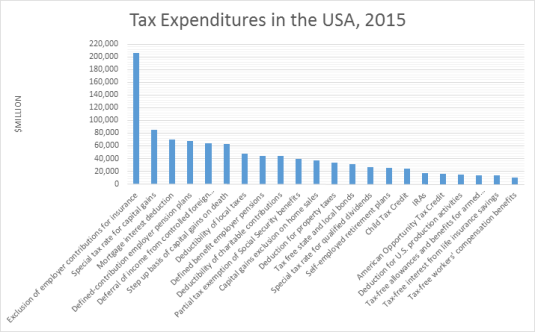
Source: Closing Tax ‘Loopholes’ Would Choke the Middle Class – Bloomberg View from Office of Management and Budget.
22 Feb 2016 Leave a comment
in applied price theory, fiscal policy, labour economics, labour supply, macroeconomics, politics - USA Tags: 2016 presidential election, ageing society, cranks, demographic crisis, older workers, quackery, rational ignorance, rational irrationality
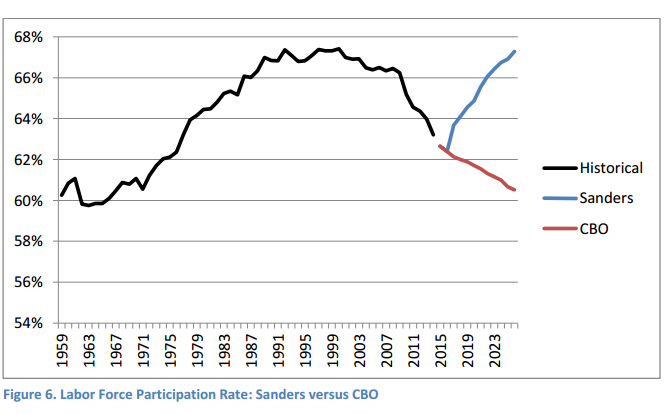
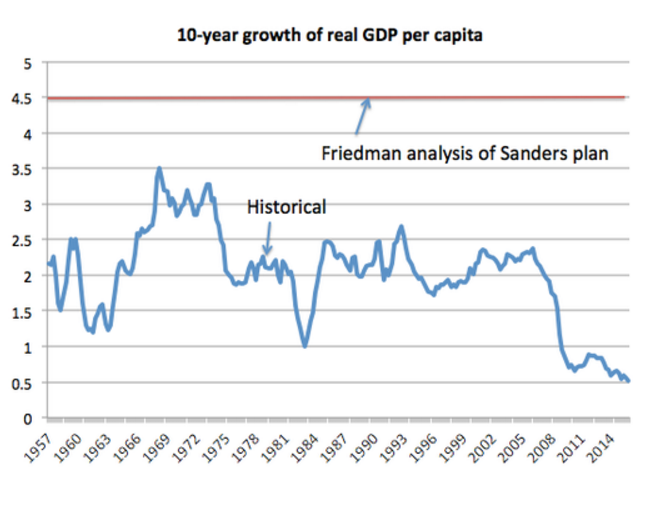
The economist costing the economic plan of a 74-year-old candidate forgot there is an ageing society in his labour force participation rate projections.
Source: Gerald Frieldman (2016).
Celebrating humanity's flourishing through the spread of capitalism and the rule of law
Celebrating humanity's flourishing through the spread of capitalism and the rule of law
Celebrating humanity's flourishing through the spread of capitalism and the rule of law
Celebrating humanity's flourishing through the spread of capitalism and the rule of law
Celebrating humanity's flourishing through the spread of capitalism and the rule of law
A History of the Alt-Right
Econ Prof at George Mason University, Economic Historian, Québécois
Celebrating humanity's flourishing through the spread of capitalism and the rule of law
Scholarly commentary on law, economics, and more
Beatrice Cherrier's blog
Celebrating humanity's flourishing through the spread of capitalism and the rule of law
Celebrating humanity's flourishing through the spread of capitalism and the rule of law
Celebrating humanity's flourishing through the spread of capitalism and the rule of law
Why Evolution is True is a blog written by Jerry Coyne, centered on evolution and biology but also dealing with diverse topics like politics, culture, and cats.
Celebrating humanity's flourishing through the spread of capitalism and the rule of law
A rural perspective with a blue tint by Ele Ludemann
DPF's Kiwiblog - Fomenting Happy Mischief since 2003
Celebrating humanity's flourishing through the spread of capitalism and the rule of law
The world's most viewed site on global warming and climate change
Tim Harding's writings on rationality, informal logic and skepticism
A window into Doc Freiberger's library
Let's examine hard decisions!
Commentary on monetary policy in the spirit of R. G. Hawtrey
Thoughts on public policy and the media
Celebrating humanity's flourishing through the spread of capitalism and the rule of law
Politics and the economy
A blog (primarily) on Canadian and Commonwealth political history and institutions
Reading between the lines, and underneath the hype.
Economics, and such stuff as dreams are made on
"The British constitution has always been puzzling, and always will be." --Queen Elizabeth II
Celebrating humanity's flourishing through the spread of capitalism and the rule of law
Celebrating humanity's flourishing through the spread of capitalism and the rule of law
WORLD WAR II, MUSIC, HISTORY, HOLOCAUST
Undisciplined scholar, recovering academic
Celebrating humanity's flourishing through the spread of capitalism and the rule of law
Res ipsa loquitur - The thing itself speaks
In Hume’s spirit, I will attempt to serve as an ambassador from my world of economics, and help in “finding topics of conversation fit for the entertainment of rational creatures.”
Researching the House of Commons, 1832-1868
Articles and research from the History of Parliament Trust
Reflections on books and art
Posts on the History of Law, Crime, and Justice
Celebrating humanity's flourishing through the spread of capitalism and the rule of law
Exploring the Monarchs of Europe
Cutting edge science you can dice with
Small Steps Toward A Much Better World
“We do not believe any group of men adequate enough or wise enough to operate without scrutiny or without criticism. We know that the only way to avoid error is to detect it, that the only way to detect it is to be free to inquire. We know that in secrecy error undetected will flourish and subvert”. - J Robert Oppenheimer.


Recent Comments