Trigger Warning: This Tweet might make you uncomfortable.
theatlantic.com/magazine/archi… http://t.co/7kyG6kGSZo—
Mark J. Perry (@Mark_J_Perry) August 11, 2015
Israel outdoes Canada in venture capitalism
10 Aug 2015 Leave a comment
in entrepreneurship, financial economics, industrial organisation, managerial economics, organisational economics, survivor principle Tags: creative destruction, Israel, venture capital

The workplace payoff of Myers Briggs personality types
03 Aug 2015 Leave a comment
in human capital, labour economics, managerial economics, occupational choice, organisational economics, personnel economics Tags: compensating differentials, economics of personality traits, occupational choice
https://twitter.com/businessinsider/status/626968055046926336/photo/1
Human Resources will assign you a personality…. #HRhumour HT @ssmoir_1973 http://t.co/Vz6vs5ODLw—
Gem Reucroft (@HR_Gem) July 30, 2015
If bureaucrats were any good at picking winners, they would be hedge funds managers
30 Jul 2015 Leave a comment
in applied price theory, comparative institutional analysis, economics of bureaucracy, entrepreneurship, financial economics, human capital, industrial organisation, labour economics, managerial economics, occupational choice, organisational economics, rentseeking, survivor principle Tags: active investing, corporate welfare, efficient markets hypothesis, entrepreneurial alertness, hedge funds, industry policy, passive investing, picking winners, The fatal conceit, The pretence to knowledge
Page 32 of "An Illustrated Guide to Income" more economic #dataviz at: bit.ly/12SEI9p http://t.co/HYm0II2UNI—
Catherine Mulbrandon (@VisualEcon) May 08, 2013
Page 33 of "An Illustrated Guide to Income" more economic #dataviz at: bit.ly/10M7lqR http://t.co/FcmaqZWB32—
Catherine Mulbrandon (@VisualEcon) May 09, 2013
The hedge fund industry held $2.9 trillion of assets in June. Exchange-traded funds did better econ.st/1DdXgWS http://t.co/CK2foqMOpw—
The Economist (@EconEconomics) August 01, 2015
Entrepreneurial alertness in filming police brutality
25 Jul 2015 1 Comment
in economics of crime, entrepreneurship, law and economics, managerial economics, market efficiency, organisational economics, personnel economics Tags: crime and punishment, criminal deterrence, entrepreneurial alertness, law enforcement, police, police brutality
Labour is incoherent & self-defeating in its opposition to private prisons
21 Jul 2015 Leave a comment
in economics of crime, industrial organisation, law and economics, managerial economics, organisational economics, personnel economics, politics - New Zealand, politics - USA, survivor principle Tags: creative destruction, entrepreneurial alertness, evidence-based policy, Leftover Left, New Zealand Labour Party, prison privatisation, private ownership, private prisons, privatisation, state ownership, Tony Blair
The New Zealand Labour Party would make a lot more progress in its opposition to private prisons if it would drop its ideologically blinkered opposition to privatisation. If it was to do that, it would have a much stronger case against private prisons.
That case would be based on the modern economics of industrial organisation and state and private ownership. In particular, the make or buy decision that any organisation, be they public or private must face when deciding whether to make a particular production input in-house or source it externally.
Labour’s current case against private prisons is a bunch of ideological clichés as it illustrated today in a post on Facebook by Jacinda Ardern. Her post was based on her speech in the House of Representatives:
Yes, part of that opposition is my view that no one should make a profit from incarceration, but it’s also about the complete fallacy that somehow a company like SERCO will do the job better.
The notion that no one should make a profit from incarceration is farcical. There are a whole range of private profit making suppliers of goods and services to prisons and prison officers draw a wage.
The case was state ownership, as well stated by Andrei Shleifer is no different than any other ownership decision taken by an organisation facing the inability to contract fully over hard to measure quality issues with the goods or services supplied to it.
Shleifer in “State versus Private Ownership” argues that you make in-house rather than buy in the market under the following conditions:
- opportunities for cost reductions that lead to non-contractible deterioration of quality are significant;
- innovation is relatively unimportant;
- competition is weak and consumer choice is ineffective; and,
- reputational mechanisms are also weak.
What particularly should focus Labour’s attention on Andrei Shleifer’s State versus Private Ownership is it is a simplified version of Hart, Oliver, Andrei Shleifer, and Robert W Vishny. 1997. “The Proper Scope of Government: Theory and an Application to Prisons.” Quarterly Journal of Economics. The abstract to that longer paper says the following:
When should a government provide a service in-house, and when should it contract out provision? We develop a model in which the provider can invest in improving the quality of service or reducing cost.
If contracts are incomplete, the private provider has a stronger incentive to engage in both quality improvement and cost reduction than a government employee has. However, the private contractor’s incentive to engage in cost reduction is typically too strong because he ignores the adverse effect on non-contractible quality. The model is applied to understanding the costs and benefits of prison privatization.
The privatisation of prisons is at the margin of the case was state versus private provision of a good or service.
Labour forecloses this entire literature to itself and bases its arguments on ideology. Any other argument Labour makes are just talking points to a fixed ideological position.There is no give-and-take. When one argument is knocked down, Labour just looks for other arguments to defend the same fixed position.
The reason Labour forecloses this large economic literature on state versus private ownership and its application to private versus public prisons is embracing that literature would mean admitting that same literature makes a strong case for the privatisation of a number of other government services and state-owned enterprises. As Shleifer says in State versus Private Ownership:
Private ownership should generally be preferred to public ownership when the incentives to innovate and to contain costs must be strong.
The main argument, the best argument, against the privatisation of publicly provided services and state-owned enterprises is the dilution of quality once it is supplied privately. This risk of compromises and quality to enhance profits is higher when the privatisation is contracting back to government. Detailed contracts must be written to assure quality. As Hart, Shleifer and Vishny say:
Critics of private schools fear that such schools, even if paid for by the government (e.g., through vouchers), would find ways to reject expensive-to-educate children, who have learning or behavioural problems, without violating the letter of their contracts. Critics also worry that private schools would replace expensive teachers with cheaper teachers’ aides, thereby jeopardizing the quality of education.
In the discussion of public versus private health care, the pervasive concern is that private hospitals would find ways to save money by shirking on the quality of care or rejecting the extremely sick and expensive-to-treat patients. In the case of prisons, concern that private providers hire unqualified guards to save costs, thereby undermining safety and security of prisoners, is a key objection to privatization.
Our model tries to explain both why private contracting is generally cheaper, and why in some cases it may deliver a higher, while in others a lower, quality level than in-house provision by the government.
By basing the argument on the strengths and weaknesses of contracting over quality for specific services, Labour would have to drop its straight ideological opposition to privatisation and run on a case-by-case basis over the ability to successfully contract to assure quality.
That sounds far too much like becoming a Blairite – the horror, the horror if you are a Labour Party member in the 21st century concerned more about ideological purity than winning office and improving the lot of the people claim to you represent.
If it were to embrace the modern economics of state versus private ownership, Labour would have to agree with Hart, Shleifer and Vishny when they say:
the case for privatization is stronger when quality reducing cost reductions can be controlled through contract or competition, when quality innovations are important, and when patronage and powerful unions are a severe problem inside the government.
When the government cannot fully anticipate, describe, stipulate, regulate and enforce exactly what it wants and prisons are a good case this and has difficulty enforce in any contract with regard to quality assurance, it’s better to make it in-house as Hart, Shleifer and Vishny show.
A call to the barricades is not be very uplifting if based on incomplete contracting over service quality rather than the evils of capitalist profit. It is unfortunate that the Labour Party sacrifice the interests of those incarcerated in the prison system to its unwillingness to be denounced as a Blairite.
The case for private prisons is based on public prisons may have fewer incentives to keep costs down, including keeping costs down by skimming on quality to increase profits as Andre Shleifer explains:
Ironically, the government sometimes becomes the efficient producer precisely because its employees are not motivated to find ways of holding costs down.
The modern case for government ownership can often be seen from precisely this perspective. Advocates of such ownership want to have state prisons so as to avoid untrained low-wage guards, state water utilities to force investment in purification, and state car makers to make them invest in environmentally friendly products.
As it turns out, however, this case for state ownership must be made carefully, and even in most of the situations where cost reduction has adverse consequences for non-contractible quality, private ownership is still superior.
That is the twist in the tale for Labour. The case against privatisation is merely a balancing act requiring detailed scrutiny of the potential to successfully enforce contracts with private providers over quality assurance.
The case against prison privatisation is simply for the public sector as fewer incentives to weaken quality because this increases the bottom line of the contractor or salaries of management. It’s a trade-off between cost control and quality dilution. Publicly run prisons have fewer incentives to control costs, but they also have fewer incentives to deliberately cut corners on quality to increase dividends or managerial salaries .
There’s nothing new about the non-profit provision of goods and services in the marketplace. A whole range of non-profit firms emerged through market competition in situations where contracting over quality or trust was costly.
Most life insurance companies were initially mutually owned by customers. Because they were a non-profit firm, there were fewer avenues to run off with the premiums through excessive dividends.
Many private universities and private schools are run by charitable trusts as a way of quality assurance. Another way of quality assurance is heavy involvement of alumni through giving and sports to police the reputation of the university or school they once attended or want their children to attend.
An arguable case can be made against prison privatisation, based on sound economic principles as long as you’re willing to admit that in many cases privatisation is a good idea based on the same economic principles. That’s a bridge too far from the Labour Party in New Zealand.
Maybe the reason is Labour knows that although they may be able to make an arguable case against prisons privatisation, they may still lose to better arguments and, in particular, successful experiments in prison privatisation at home and abroad. Better to keep the debate away from evidence-based policy. This awkwardness in seeking out the best argument is due to the proclivity of Labour in opposition to repudiate the successes of its last time in office and look for reasons to make themselves even less electable by going left rather than going back into the centre.

Personal cameras as evidence that criminal deterrence works and works well
16 Jul 2015 1 Comment
in economics of crime, law and economics, managerial economics, organisational economics, personnel economics, politics - New Zealand, politics - USA Tags: body cameras, crime and punishment, criminal deterrence, police, prisons
Hutt City Council parking wardens are the latest in a long line of frontline staff to wear lapel cameras to deter assaults and verbal abuse. These lapel cameras are another illustration about how criminals and miscreants respond to incentives and are deterred by a greater prospect of being caught, convicted and punished. In the case of lapel cameras, there is a greater prospect of been identified and recorded for later proceedings.

The introduction of personal cameras in New Zealand prisons in high risk areas lead to a large reduction in the number of incidents of violence and abuse towards prison staff. Chief custodial officer Neil Beales said:
The use of on body cameras has led to a 15 to 20 per cent reduction in disruptive incidents (which can range from very minor to more serious) in units where cameras were used, compared with units where they were not used.
Even hardened prison inmates respond to incentives and a greater prospect of being caught and punished.

The introduction of personal cameras is not a priority for the New Zealand police. Mention was made of a six year long budget freeze as one of the reasons.
The first randomized controlled trial of police body cameras in the USA showed that cameras sharply reduce the use of force by police and the number of citizen complaints.

In Seattle, where a dozen officers started wearing body cameras in a pilot program in December, the police department has set up its own YouTube channel, broadcasting a stream of blurred images to protect privacy.
Scientific Misbehavior in Economics and Publish or Perish
11 Jul 2015 Leave a comment
in economics of crime, economics of education, managerial economics, occupational choice, organisational economics, personnel economics Tags: academic fraud, promotion tournaments, rate races


Can NZ double migrant investors and entrepreneurs from $3.5 billion to $7 billion at no cost to taxpayers!?
07 Jul 2015 Leave a comment
in applied price theory, applied welfare economics, comparative institutional analysis, economics of bureaucracy, entrepreneurship, income redistribution, industrial organisation, managerial economics, organisational economics, politics - New Zealand, Public Choice, public economics, rentseeking, survivor principle Tags: corporate welfare, entrepreneurial alertness, industry policy, industry targeting, The fatal conceit, The pretence to knowledge
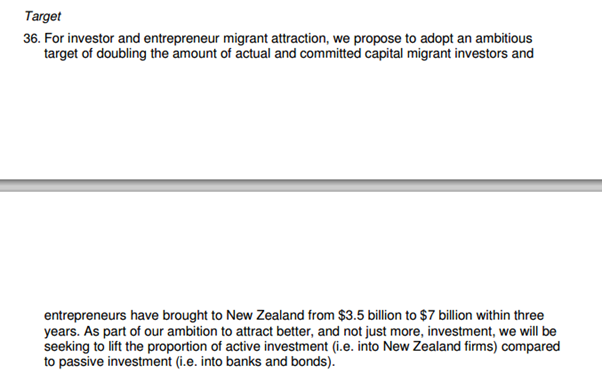

I didn’t notice any discussion in the Cabinet paper of a government doing this before and whether their investment promotion efforts succeeded or not. This latest policy proposal cannot even count as evidence-based policy dreaming, much less a serious contribution to public policy.

Hoping to double incoming foreign investor and entrepreneur migration from $3.5 billion to $7 billion inside three years without spending any extra public money is breathless public policy making. I am sure lots of governments previously tried to get something for nothing.

It will be helpful if ministers pointed to where overseas governments have been successful in doubling foreign investment by simply reprioritising existing investment promotion efforts.

There are at least 2,500 national, provincial and city investment promotion agencies out. Some of them must have been subject to some sort of evaluation as to their success.

This overseas literature review would be in addition to the recent findings of the Ministry of Economic Development about the poor performance and perhaps futility of the foreign direct investment promotion by New Zealand Trade and Enterprise.
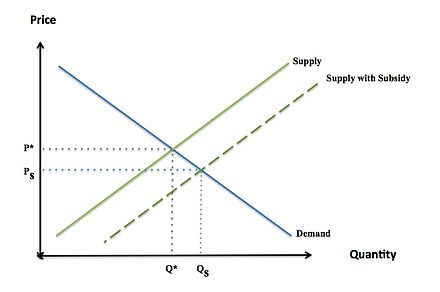
Imagine how much bigger a boost in foreign investor and entrepreneur migration lays before us if actual real new money was put on the table.
via beehive.govt.nz – Strategy targets international investors and Evaluation of NZTE investment support activities [929 KB PDF]
.
The costs of teacher tenure in the USA
18 Jun 2015 Leave a comment
in economics of education, labour economics, labour supply, law and economics, managerial economics, occupational choice, organisational economics, personnel economics, rentseeking, unions Tags: employment protection laws
How to show the emergence of a working super rich while attempting to argue they are a rentier class
28 May 2015 Leave a comment
in financial economics, industrial organisation, managerial economics, organisational economics, survivor principle, theory of the firm Tags: CEO pay, Leftover Left, leveraged buyouts, market for corporate control, mergers and takeovers, superstar wages, superstars, Twitter left
The Washington Centre for Equitable Growth in a review of Thomas Piketty accidentally contradicted their own arguments about the emergence of the top 0.1%. They quote Piketty:
on page 302 of his book that the rise in labour income “primarily reflects the advent of ‘supermanagers,’ that is, top executives of large firms who have managed to obtain extremely high, historically unprecedented compensation packages for their labour.”
according to the Washington Centre for Equitable Growth:
these supermanagers were being vastly overly compensated given their questionable contributions to productivity.
The Washington Centre for Equitable Growth then goes on the argue that in 1979, most of the top managers worked for large, publicly traded firms but by 2005 more were working in closely held firms.
Who are today’s supermanagers and why are they so wealthy? equitablegrowth.org/research/today… http://t.co/Ts2OkOUk5g—
Equitable Growth (@equitablegrowth) December 03, 2014
I wish to explore this point about the biggest gains in both percentage terms and magnitude were among privately held business professionals and they are vastly overcompensated relative to their productivity. The key to the argument as explained in a link to a Robert Solow article by the Washington Centre for Equitable Growth is:
Piketty is of course aware that executive pay at the very top is usually determined in a cosy way by boards of directors and compensation committees made up of people very like the executives they are paying.
Piketty is equally direct about the ability of top managers to set their own pay:
It is only reasonable to assume that people in a position to set their own salaries have a natural incentive to treat themselves generously or at the least to be rather optimistic in gauging their marginal productivity.
Emmanuel Saez is less coy:
…while standard economic models assume that pay reflects productivity, there are strong reasons to be sceptical, especially at the top of the income ladder where the actual economic contribution of managers working in complex organizations is particularly difficult to measure. In this scenario, top earners might be able partly to set their own pay by bargaining harder or influencing executive compensation committees.
When arguing that the optimal top income tax rate is 83%, Piketty, Saez, and Stantcheva push for that high top tax rate in part because top executives are more likely to bargain for higher pay when tax rates are lower and receive funds that might go elsewhere within the firm.
Emmanuel Saez and Gabriel Zucman explore the new wealth divide in the U.S. equitablegrowth.org/research/explo… http://t.co/WKJKAigAPN—
Equitable Growth (@equitablegrowth) October 24, 2014
The only comment I could find on the increasing number of privately held companies that pay top executives so well is frustration by the Washington Centre for Equitable Growth that it complicates statistical collection. No other analysis is undertaken.
Xavier Gabaix and Augustin Landier found back in 2008 that what a major company’s CEO earns is directly proportional to the size of the firm that they are responsible for running. Executive compensation closely track the evolution of average firm value. During 2007 – 2009, firm value decreased by 17%, and CEO pay by 28%. During 2009-2011, firm value increased by 19% and CEO pay by 22%. Xavier Gabaix and Augustin Landier also found that compensation for executives has risen with the market capitalization. From 1980 to 2003, the average value of the top 500 companies rose by a factor of six. Two commonly used indexes of chief executive compensation show close to a proportional six-fold matching increase.
What intrigued me about this casual reference to the great number of super managers employed by privately held firms is the argument that they have a cosy relationship with their board of directors immediately collapses. That argument about executive pay is usually in the context of the separation of ownership from control. In large publicly held companies the executives are subject to less scrutiny by shareholders as few of them have a large enough individual stake in the company to gain from the extra effort of monitoring their pay packages.
When the pay packages of top executives is questioned, it is always pointed out that there is an easy way to test for whether top executives cheat shareholders by overpaying themselves.

This simple test is comparing the pay of large private companies and public companies with a large or a few share holders with public companies with diffuse share holdings. Private equity typically also pay its top executives very well, even though the capacity to dupe public shareholders are not a factor.
Privately owned companies and public companies with a few large shareholders can easily keep track of the pay packages of the executives and the board of directors hired to monitor them. Private equity ownership have high pay-for-performance but also significant CEO co-investment.
The standard argument for excessive compensation for CEOs is free rider problems prevent shareholders from doing sufficient monitoring of executive compensation practices, and that the problems have been getting worse over time. For example, in a classic paper, Bebchuk and Fried (2004) argued that executive compensation is set by CEOs themselves rather than boards of directors on behalf of shareholders,
This argument does not apply to private companies with a few shareholders but they still offer large pay packages to their top executives. Companies, be they public or private that pay any employee more than they contribute risks takeover and loss of market share and failure through higher costs.

The burst of takeovers and leverage buyouts in the 1980s were partly driven by opportunities to profit from reducing corporate slack and downsizing flabby corporate headquarters of large publicly listed companies. Cleaning out the overpaid executives and overstaffing in the headquarters of large corporations was an express purpose of these takeovers and leveraged buyouts.
The response of the Left over Left of the day was support regulation to stop these mergers and takeovers rather than applauding them as giving lazy, overpaid top executives a kick up the backside and from the boot out the door. This regulation to make hostile takeovers more difficult undermined the market the corporate control rather than strengthened it as Michael Jensen explains:
This political activity is another example of special interests using the democratic political system to change the rules of the game to benefit themselves at the expense of society as a whole.
In this case, the special interests are top-level corporate managers and other groups who stand to lose from competition in the market for corporate control. The result will be a significant weakening of the corporation as an organizational form and a reduction in efficiency.
Central to the hypothesis of the Twitter Left of CEOs overpaying themselves is there is free cash within the business they pocket in pay rises, fringe benefits and lavished corporate headquarters rather than pay out in dividends or invest in profitable investments.

CEOs with high pay packages are now much more likely than 20 or 30 years ago to be employed in private companies where the shareholders have far greater opportunities to ensure they get value for money.
All modern theories of the focus in part or in full on reducing opportunistic behaviour, cheating and fraud in employment and commercial relationships. The market for corporate control, and mergers and takeovers realise large benefits from displacing underperforming manager teams. Premiums in hostile takeover offers historically exceed 30% on average. Acquiring-firm shareholders on average earn about 4% in hostile takeovers and roughly zero in mergers.
Another reason for high CEO pay in both public and private companies is CEOs tend to be more risk adverse than their shareholders. The shareholders in any one company has a diversified portfolio and protected by limited liability if the company fails because of a risky venture. Moreover, shareholders receive nothing in dividends if the company breaks even so they would prefer that managers pursue business ventures likely to do more than break even.
The agent principal conflict ears as long as the company breaks even, the CEO gets paid. Out of career concerns, a CEO does not want to be at the head of a company that fails because his re-employment prospects are quite grim. High-risk/high-reward ventures are less attractive to top executives because if they fail, their human capital that is specific to the failed company is worthless elsewhere.
To encourage CEOs to take risks, paying them were share options makes them more interested in risky ventures because their pay goes up in line with the risks they take which they would otherwise not take but for option being paid in options. Privately owned companies are well aware of this risk aversion among their chief executives which is why they pay them so well and often in share options and bonuses for taking risks.
The Washington Centre for Equitable Growth simply did not address the reasons for privately owned companies paying the top executives so well.
The incomes of executives, managers, financial professionals, and technology professionals who are in the top 0.1% is very sensitive to stock market fluctuations. This volatility in the pay of CEOs is inconsistent with the notion that their pay is linked to their ability to form cosy relationships with the boards of directors rather than with their performance.

These top 0.1% CEOs are working super rich whose fortunes rise and fall with the businesses they direct. Top CEOs are paid so much more because they direct the fortunes of large enterprises. In such cases, a small amount of extra talent is worth because the benefits of that small amount of extra talent are spread over such a large firm.
 Utopia, you are standing in it!
Recent Comments